
What happens during a sports court surface assessment in Spokane?
Most folks think checking a sports court is just a quick walk-around. It’s not. After 11 years handling concrete work in Spokane Valley and all around Eastern Washington, I can tell you every solid assessment follows a strict process. Skip a step, and you’ll miss problems. Those oversights will cost real money later, every time.
Here’s how a proper court surface check breaks down from start to finish:
- Visual inspection of the full surface. This is our first pass. We’re scanning every square foot for cracks, spalling, and discoloration. We look for any spots where the surface has lifted or sunk. Spokane’s brutal freeze-thaw cycles do a real number on outdoor courts, so surface damage here often looks different than what you’d see in milder climates.
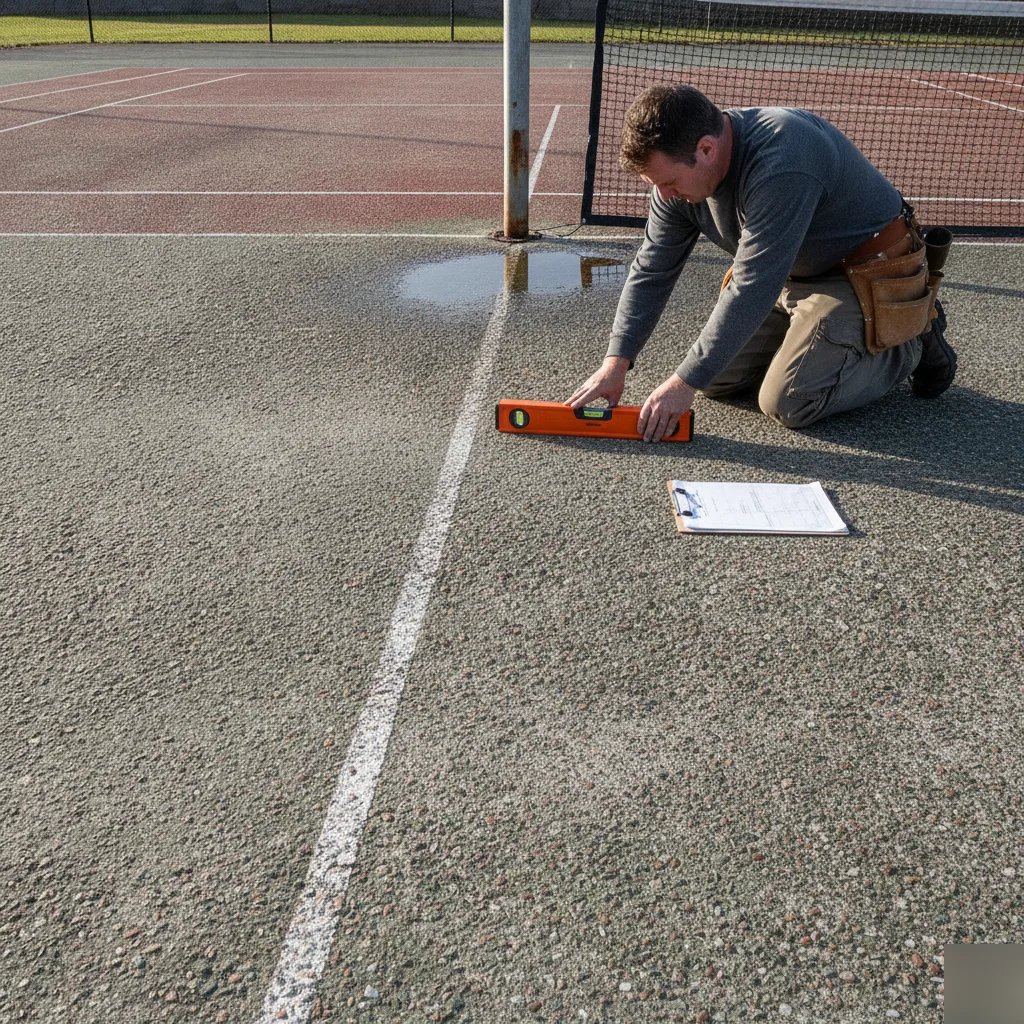
- Checking drainage and water flow. Standing water kills courts, plain and simple. We test the slope, finding low spots where puddles form. A court near the Sullivan Road corridor might drain differently than one tucked into a hillside property in Spokane Valley. The grade really matters.
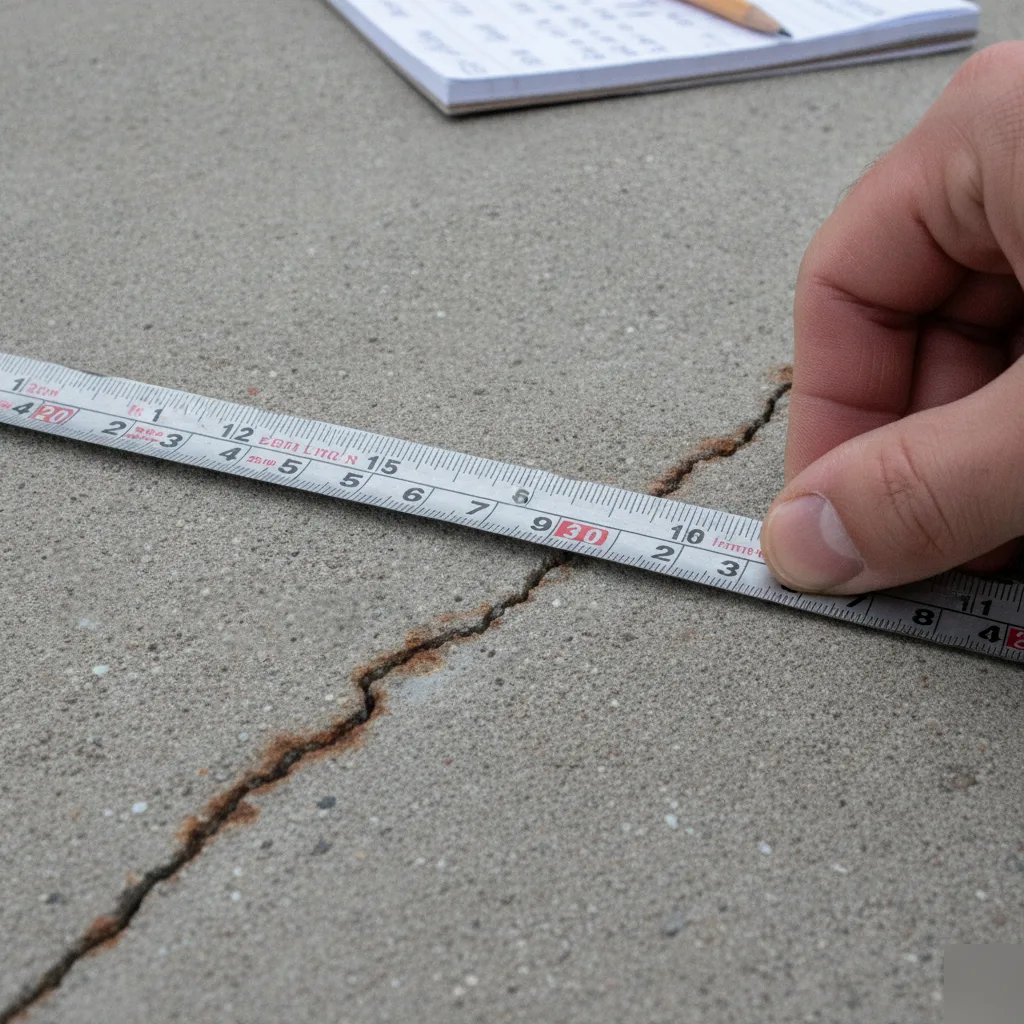
- Measuring cracks and joint conditions. Not all cracks are the same. Hairline cracks might just need a lasting concrete crack repair. But a crack that’s a quarter-inch wide and growing? That tells us the base underneath has shifted. We measure width, depth, and its direction.
- Evaluating the sub-base. This is the step most people don’t even realize exists. The concrete you see is only half the story. If the gravel or compacted soil underneath has eroded or settled, the surface will keep failing. It doesn't matter how many times you patch it.
- Testing surface texture and grip. A sports court needs traction. We check if the finish has worn smooth or if old coatings are peeling. This impacts playability, and it’s a safety issue.
- Documenting everything with photos and notes. Every finding goes into a report. We note locations, severity, and what we think is causing each issue. This becomes the roadmap for any concrete repair or concrete resurfacing work that follows.
I’ve seen homeowners along the North Side skip straight to resurfacing without doing a real assessment first. Six months later, the same cracks come back. The surface peels again. That’s just wasted time and money.
The whole process usually takes a couple hours for a standard residential court. Bigger commercial court surfacing take longer. Rushing it defeats the purpose.
And here’s something worth knowing. A solid assessment often reveals that a full tear-out isn’t needed. Sometimes concrete crack repair and a new surface coating fix 80% of the problems. Other times, we find the sub-base is badly compromised. The only real fix is to rebuild from the ground up, build it once, build it right. You won’t know which situation you’re in until someone actually does the work of looking.
Spokane’s temperature swings put real stress on court surfaces. We see 90-degree summers often. Then winters dip well below zero. That kind of brutal range creates expansion and contraction cycles that punish concrete. A proper assessment accounts for this local reality. It doesn't apply some standard that doesn’t fit our climate.
If you're wondering whether your court needs attention, a professional concrete contractor can walk through these steps. We’ll give you a clear picture of where things stand. No guessing, just facts about what’s happening under your feet. Call us for a free estimate.
Visual Inspection Is the Starting Point, But It Only Shows Part of the Picture
Every court evaluation starts with eyes on the ground. Literally. A professional concrete contractor walks the entire surface, looking for what’s obvious. Cracks. Spalling. Discoloration. Low spots where water pools. These are the things you’d probably notice yourself if you spent ten minutes out there.
But here's the thing most people don't realize. They figure it out only when it’s too late.
What you can see is only about half the story. A court surface might look rough in one corner but actually be structurally fine. Or it might look decent across the middle. All while hiding serious subsurface damage underneath. We’ve walked courts along the Sullivan Road corridor in Spokane Valley that appeared solid at first glance, only to find the base layer had shifted. That came from years of freeze-thaw cycling. That kind of damage doesn’t announce itself with a big crack right away.
What a Visual Inspection Actually Covers
During this first pass, the assessor is checking for specific things. Not just "does it look bad." There's a real method to it:
- Surface cracks: their length, width, direction, and whether they're active (still growing) or dormant
- Spalling or flaking: where the top layer of concrete is breaking apart
- Drainage patterns: standing water means trouble, especially before a Spokane winter
- Joint condition: expansion joints that have failed or filled with debris
- Color changes: uneven coloring can signal moisture intrusion or previous patch jobs that didn’t hold
Each of these tells a different story about what’s happening to your court. A single hairline crack across a basketball court? Probably not urgent. A network of cracks spreading out from one corner, with water sitting in the middle? That’s a very different conversation. You've got a concrete problem.
Why Visual Alone Falls Short
I’ve been doing concrete crack repair and surface work for over 11 years in this area. And I can tell you that some of the worst concrete failures I’ve seen started with surfaces that looked "not that bad." Spokane Valley gets temperature swings from over 90 degrees in summer down to single digits in winter. That constant expansion and contraction does things below the surface. You simply can’t see it by walking around.
Subsurface voids, for example. Water gets underneath the slab. It freezes, expands, then melts. That leaves a gap. The concrete above it still looks intact, for now, But it’s sitting on nothing in that spot. One heavy load or one more freeze cycle could cause a real, lasting failure. We see this often.
That’s why a thorough court surface inspection never stops at visual. It’s the starting point. It's the first layer of information. The assessor uses what they see to decide where to probe deeper. Think of it like a doctor’s checkup, they look at the obvious stuff first. Then they order tests based on what they find.
So if someone tells you they checked your court just by looking at it, that should raise a flag. A real inspection digs deeper. The visual pass tells us where to focus. It doesn't give us the full answer.
If you’ve got a court surface that’s showing any of these signs, getting a professional out to look is the smart first move. We offer free estimates. We can walk your surface to see what’s really going on beneath what’s visible. It's time for a professional concrete contractor.
Drainage Slope and Water Management Are Critical Measurements on Every Court
Standing water kills sports courts. It’s that simple. A puddle that sits for 24 hours does more damage than a full season of play. And in Spokane Valley, where freeze-thaw cycles can hit 30 or more times between November and March, trapped water becomes a wrecking ball inside your concrete. We see it every winter.
That’s why drainage slope is one of the first things we measure when evaluating any court surface.
What We're Actually Measuring
Every court needs a consistent slope to move water off the surface. The standard target is about a 1 percent grade in one direction. That means for every 10 feet of court, the surface drops roughly 1.2 inches. Sounds tiny. But it’s the difference between a dry court 30 minutes after rain and a court with puddles that freeze solid overnight.
We use a laser level and a straightedge to check slope across the entire playing area. We’re looking for three things:
- Consistent fall from one side to the other, with no flat spots or reverse grades
- Low areas where water pools, even if they’re only a quarter-inch deep
- Edge drainage paths that actually move water away from the court’s perimeter
Most people don’t realize their court has drainage problems until winter arrives. By then, ice has already started lifting the surface layer. It opens cracks that get worse every season. That's a real Spokane winter problem.
Why Spokane Valley Courts Fail at Drainage
Our soil conditions along the Sullivan Road corridor and throughout the Valley create real, unique problems. The ground shifts constantly. Frost heave pushes sections of concrete up. The thaw lets them settle back down, but they rarely settle evenly. After a few brutal Spokane winters, a court that was poured with perfect slope now has dips and high spots scattered across it. We see this with older suburban housing stock courts all the time.
We see this pattern constantly. A homeowner built a basketball court five or six years ago. It played great at first. Now there’s a low spot near the free-throw line. That spot holds water for days after a storm. That water freezes, the concrete cracks. Suddenly, you’re looking at serious concrete crack repair on a surface that should’ve lasted decades. It's a common concrete problem-solver call for us.
During the assessment, we map every drainage issue. We note where water enters the court from the surrounding landscape. We check whether downspouts or yard grading are pushing runoff onto the playing surface (a common mistake, by the way). These outside water sources cause just as much damage as poor court slope. Sometimes even more.
What Good Water Management Looks Like
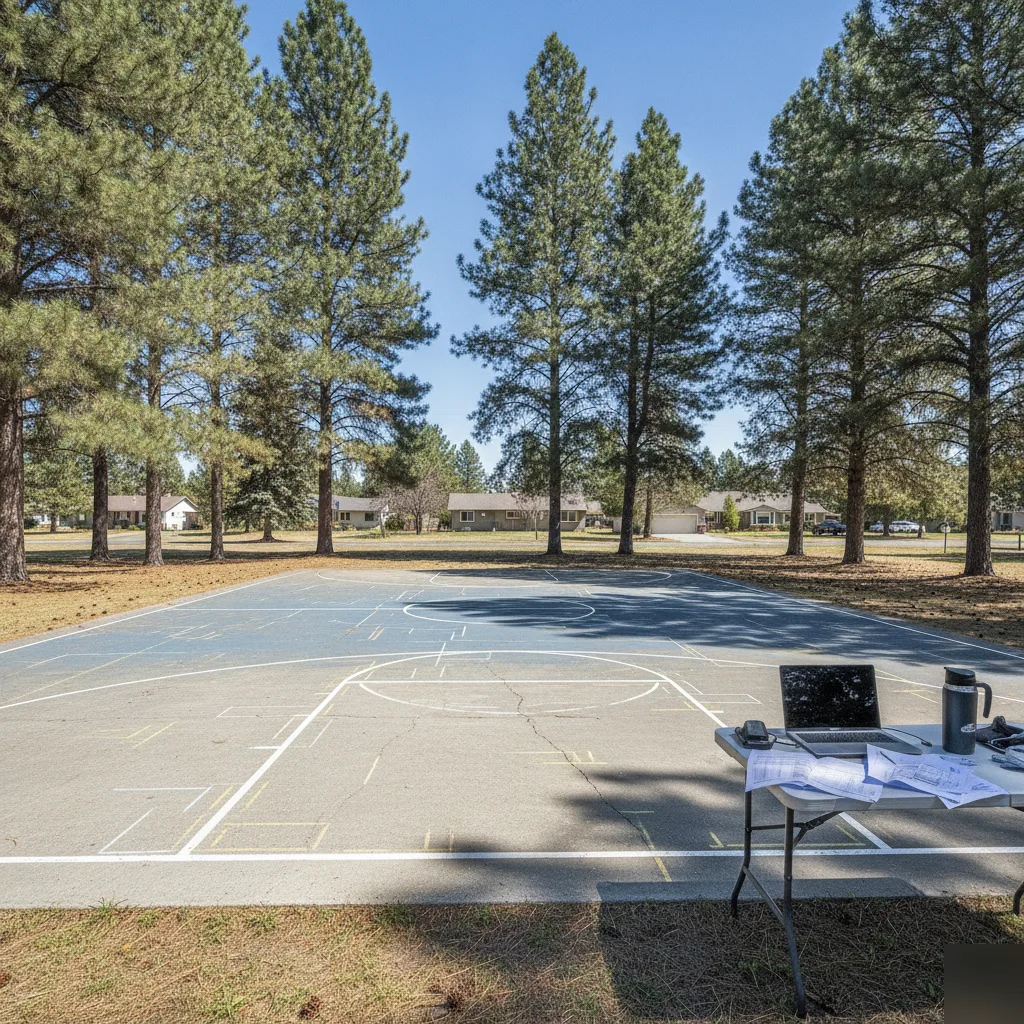
A well-draining court sheds water in one direction toward a collection point. No ponding. No standing moisture along the edges. The perimeter should have a clean path. Water moves off into grass, a drain channel, or gravel.
If we find drainage failures during the assessment, we document exactly where and how deep. That information drives the repair plan. Sometimes the fix is professional concrete resurfacing to restore proper grade. Other times, it’s addressing the surrounding landscape that’s funneling water where it shouldn’t go. We aim for lasting repairs.
But you can’t fix what you haven’t measured. That’s the whole point of checking drainage slope before anything else. It tells us whether the court’s foundation is working. Or if it’s fighting against itself every time it rains. We engineer every pour to survive Spokane's brutal freeze-thaw cycles, guaranteed.
If your court has visible puddles after storms or ice patches in winter, those are clear signs the slope has shifted. Getting a proper surface evaluation done early gives you a clear path. You can fix these problems before they turn into major concrete repair work. Get a free estimate from Concrete Revival today.
Frequently Asked Questions
How do Spokane Valley's winters affect a sports court surface assessment?
Spokane Valley's freeze-thaw cycles change what assessors look for and how they read damage. Temperatures swing from over 90 degrees in summer to single digits in winter. That range causes concrete to expand and contract constantly. An assessor here checks for subsurface voids, active cracks, and drainage problems that colder climates create. A court that looks fine in July can hide serious base damage that only shows after a hard winter.
Why does the sub-base matter during a court surface assessment?
The sub-base is the gravel and compacted soil under your concrete, and it controls whether the surface holds up long-term. If that layer has eroded or settled, the concrete above it will keep cracking no matter how many times you patch it. A proper assessment checks the sub-base condition, not just the surface you can see. This step is what separates a real assessment from a quick walk-around that misses the actual problem.
Is a full tear-out always necessary after a sports court assessment?
No, a full tear-out is not always needed. A thorough assessment often shows that concrete crack repair and a fresh surface coating can fix most of the problems. Other times, the sub-base is too far gone and rebuilding from scratch is the only lasting fix. You won't know which situation you're in until someone does a real assessment. Our sports court concrete repair page covers what comes next once the assessment is done.
What's the difference between a hairline crack and a crack that needs real repair?
A hairline crack is narrow, shallow, and usually not growing. It may only need a surface-level concrete crack repair. A crack that's a quarter-inch wide or wider, especially one that's spreading, usually means the base underneath has shifted. During an assessment, a professional measures width, depth, and direction to tell the difference. Getting that wrong means patching a symptom while the real problem keeps getting worse underneath.
Can a court along the Sullivan Road corridor in Spokane Valley drain differently than other properties?
Yes, drainage depends heavily on the grade and layout of each property. A court near Sullivan Road sits on different terrain than one on a hillside lot elsewhere in Spokane Valley. During an assessment, the contractor tests slope and finds low spots where water pools. Standing water is one of the fastest ways to destroy a court surface, especially heading into a Spokane winter. Drainage problems caught early are much cheaper to fix than the damage they cause later.
What's a common mistake homeowners make before getting a court surface assessment?
The most common mistake is skipping the assessment and going straight to resurfacing. It seems like a shortcut, but if the sub-base or drainage problems haven't been identified first, the new surface will fail just as fast as the old one. Six months later, the same cracks come back. A proper step-by-step assessment takes a couple of hours but saves you from repeating expensive work that didn't fix the real problem.
Ready to Experience the Concrete Revival Difference?
Complete Service Area Coverage
- Spokane and Spokane Valley
- Coeur d'Alene metro area
- Deer Park and Newport
- Liberty Lake and Otis Orchards
- Cheney and Medical Lake
- Post Falls and Rathdrum