
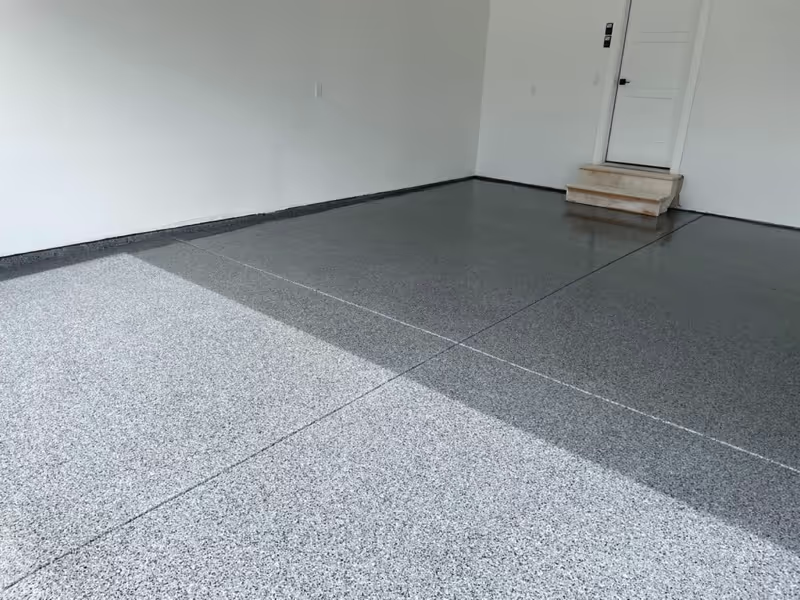
Epoxy Floor Coating in Spokane: Strong Floors for Garages, Basements & Businesses
In Spokane, epoxy floor coating turns old, worn concrete into strong, clean surfaces. These coated floors handle winter road salt and heavy cars with ease. You can use epoxy in your garage, basement, or business space. The coating fights off chemicals and needs very little care. It lasts for many years.
Epoxy Floor Coatings Last 10–20 Years When Done Right
Spokane homeowners and business owners want floors that last a long time. Professional epoxy floor coatings last 10–20 years when put on correctly. This makes them a smart choice for homes and businesses.
The secret to long-lasting epoxy is good prep work. Many epoxy floors fail because workers skip important steps. They don't fail because the epoxy is bad. Good epoxy surfaces handle oil spills, road salt, ice-melting chemicals, and car fluids. They don't stain or break down. This makes them perfect for Spokane garages. Cars bring in winter mess all season long.
Concrete must dry for at least 28 days before you add epoxy. Fresh concrete has too much water in it. This water stops the epoxy from sticking right. It causes bubbles and peeling. If you rush the job, problems show up months later. You might need to remove everything and start over.
Professional contractors check your concrete before coating. They test for water, check the pH level, and make sure the concrete is strong. These checks find problems early. This saves you thousands of dollars later. Industry standards for epoxy resin floor coating inspection show why these checks matter. Good prep work includes grinding to make the surface rough. It includes deep cleaning to remove all dirt. It also includes fixing cracks with special fills that bend with hot and cold weather.
Busy business floors need thicker coats. Home garages work fine with two coats. Picking the right system for your space makes floors last much longer.
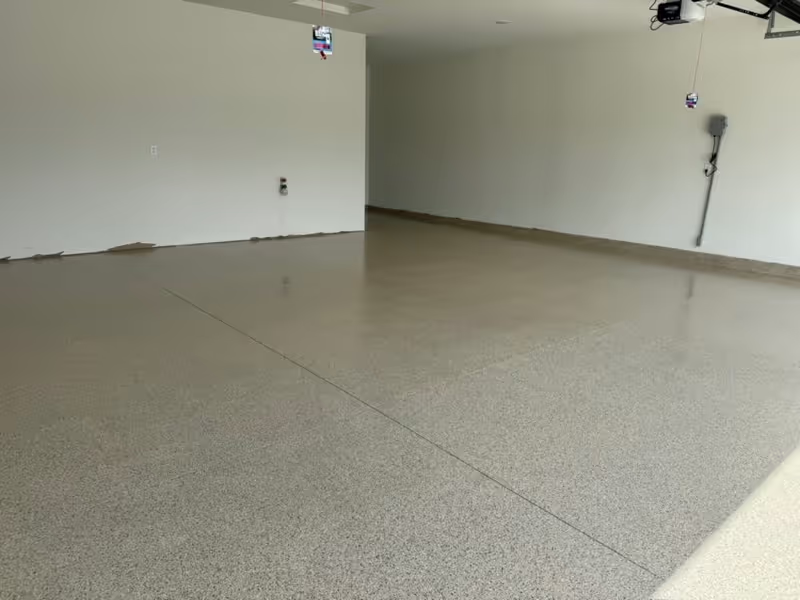
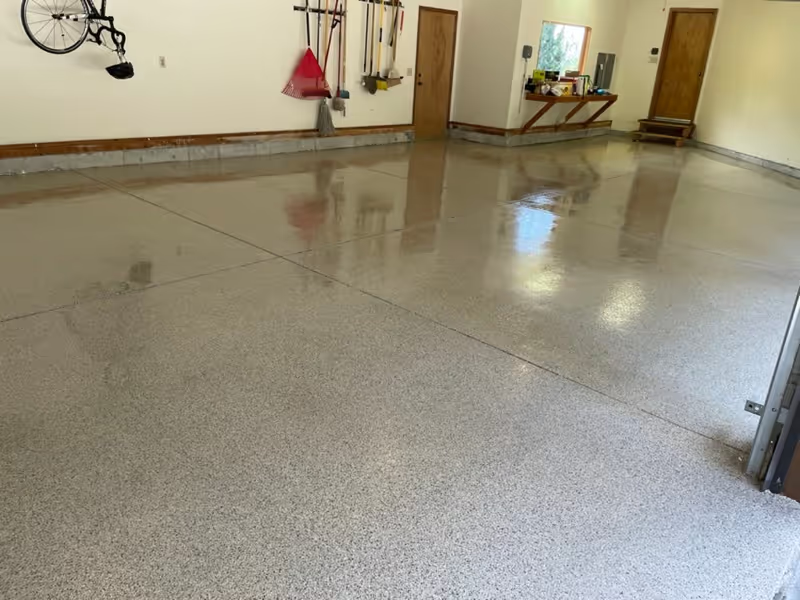
Spokane Garages Need Water Tests Before Epoxy Goes On
Homeowners in South Hill and North Spokane often have older concrete floors. These floors can have water problems. Water testing stops bubbling and peeling. It protects your money from bad results.Spokane basements often get water at certain times of year. Spring snowmelt makes water levels rise.
Concrete lets water vapor move up through it. When epoxy seals the top, trapped water has nowhere to go. It pushes up through the coating and makes it peel off.Professional water testing uses special tools. Some use calcium chloride tests. Others use humidity probes. These tools measure how much water vapor comes out of the concrete.
The results tell us if the concrete is dry enough. They tell us if we need to fix water problems first. Different epoxy products need different dryness levels. Most makers say concrete should release less than 3-5 pounds of water per 1,000 square feet in 24 hours.
High water readings mean we need to do more work first. You might need to:Let concrete dry longer
Some old Spokane homes don't have water barriers under garage floors at all. These floors always push ground water upward. Regular epoxy won't work well on them. We need to fix the water problem first. Sometimes we can add a special sealer that soaks into the concrete. This can reduce water enough to let epoxy work.
The time of year matters for Spokane jobs. Summer and early fall are driest. This reduces water problems. Winter and spring jobs need more care. We watch the concrete more closely. We make sure it gets dry enough before we start coating.
Old Concrete Floors Can Get Epoxy After Grinding and Crack Fixes
Spokane property owners with stained, cracked, or sealed concrete can make their floors look new. They don't need to replace everything. Diamond grinding removes old sealers. It makes a rough surface that epoxy grips well. This turns damaged concrete into a good base for coating.
Old sealers, paints, and coatings must come off completely before epoxy goes on. These old layers stop epoxy from sticking. They make the coating fail for sure. Diamond grinding machines use very strong discs. They scrape the surface hard. They open up the concrete pores. They remove all old treatments at the same time.The grinding makes the concrete rough. This rough texture is called a surface profile. The right profile is like medium sandpaper. It gives epoxy something to grip. This makes bonds stronger than the concrete itself. When you touch a properly ground surface, it feels rough.
Spokane's harsh winters crack concrete. Water freezes and thaws over and over. This makes cracks. These cracks need fixing before coating. If you don't fix them, they show through the epoxy. We use special flexible crack fillers called polyurea. These bend with hot and cold weather. Regular epoxy fillers are too stiff. They crack again when temperatures change.
Some cracks move with the seasons. They get wider and narrower. These need checking before coating. Small weather cracks fix easily. But moving cracks might mean foundation problems. These need a professional to look at them.
Oil stains and chemical marks sometimes go deep into concrete. Grinding removes surface dirt. But really bad stains might need extra cleaning or special chemicals. We test small areas first. This helps us find problem spots before we coat the whole floor.
Dust from grinding can be a problem in homes. Professional contractors use special grinders with vacuums. These catch 95% of the dust right away. This keeps your air clean. It makes cleanup easier. This equipment costs more but gives cleaner jobs and healthier air.
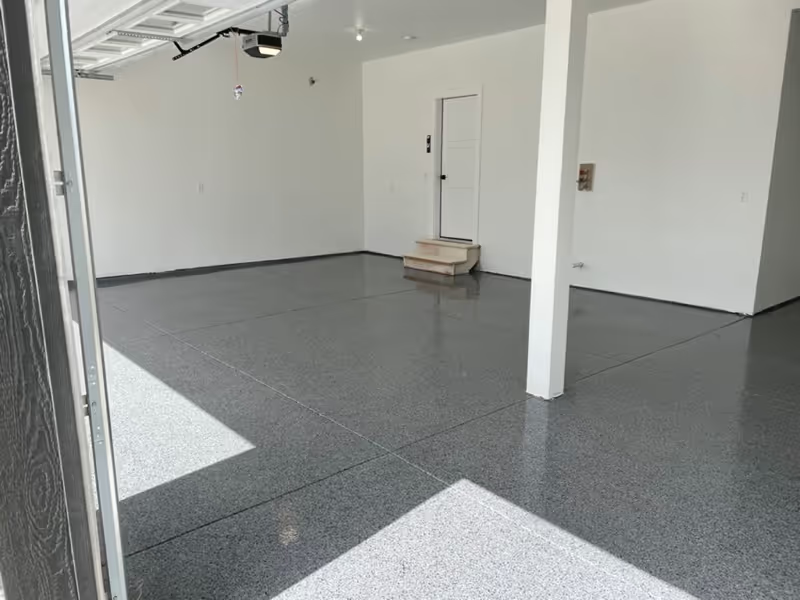
Flake and Metallic Epoxy Systems Handle Spokane's Freeze-Thaw Cycles
Homeowners in South Hill and North Spokane often have older concrete floors. These floors can have water problems. Water testing stops bubbling and peeling. It protects your money from bad results.
Spokane basements often get water at certain times of year. Spring snowmelt makes water levels rise. Concrete lets water vapor move up through it. When epoxy seals the top, trapped water has nowhere to go. It pushes up through the coating and makes it peel off.
Professional water testing uses special tools. Some use calcium chloride tests. Others use humidity probes. These tools measure how much water vapor comes out of the concrete. The results tell us if the concrete is dry enough. They tell us if we need to fix water problems first. Different epoxy products need different dryness levels. Most makers say concrete should release less than 3-5 pounds of water per 1,000 square feet in 24 hours.
High water readings mean we need to do more work first. You might need to:Let concrete dry longer
Some old Spokane homes don't have water barriers under garage floors at all. These floors always push ground water upward. Regular epoxy won't work well on them. We need to fix the water problem first. Sometimes we can add a special sealer that soaks into the concrete. This can reduce water enough to let epoxy work.The time of year matters for Spokane jobs. Summer and early fall are driest. This reduces water problems. Winter and spring jobs need more care. We watch the concrete more closely. We make sure it gets dry enough before we start coating.
Epoxy Creates Water Barriers That Stop Moisture in Concrete
Spokane homeowners finishing basements or making garage workshops get extra benefits from epoxy. Sealed surfaces stop water vapor. They make floors easy to clean with a mop. Regular concrete traps dirt and stains forever.Spring snowmelt raises water levels throughout Spokane. This puts pressure under concrete slabs from below.
Epoxy isn't a replacement for good drainage and waterproofing. But 100% solids epoxy blocks more water than water-based coatings. This makes them better for damp places.
Water vapor moving through concrete floors makes musty smells. It helps mold grow. It damages flooring put over the concrete. Epoxy coating stops these problems. It makes a solid waterproof layer. This keeps moisture from getting into living spaces. This matters a lot in finished basements. People use these as family rooms, home offices, or gyms.Concrete is naturally full of tiny holes. Water, oils, and chemicals soak deep inside. They stain forever. Epoxy-coated floors fight off all these things at the surface. Simple cleaning removes them completely. Car fluids, pet accidents, spilled paint, and household chemicals wipe clean. They don't leave marks.Taking care of epoxy floors is much easier than bare concrete.
Sweep once a week. Mop sometimes with mild soap. This keeps epoxy floors looking new for years. The smooth surface doesn't trap dirt in cracks and holes. Untreated concrete does. This cuts down cleaning time and work a lot.
Epoxy's waterproof nature helps in other ways too. It helps control temperature and dust. Sealed concrete doesn't release water into the air. This lowers humidity in closed spaces. The coating also locks concrete dust in place forever. This gets rid of the powder that concrete makes without sealing.Good installation needs attention to joints and edges. Water can sneak around the coating in these spots. Professional installers seal these weak areas. They use flexible caulks and special products. These keep water out. They also let the building move naturally.
Frequently Asked Questions About
Epoxy Floor Coating in Spokane
Can you put epoxy over painted concrete floors in Spokane?
Yes, but all paint must come off first. Diamond grinding removes paint. It makes a clean surface with tiny holes. Epoxy needs these holes to stick right. Putting epoxy over paint without removing it makes the coating fail. Epoxy sticks to the paint, not the concrete under it.
What does an epoxy floor look like after 5 years? Long-term durability explained
A professionally installed epoxy floor after five years typically shows minor wear in high-traffic areas, some degree of UV yellowing if exposed to sunlight, and surface scuffs — but remains structurally sound and functional when properly maintained.
The five-year mark is often considered the first real test of an epoxy floor's long-term performance, and the results vary significantly based on installation quality, product grade, traffic levels, and sun exposure. In residential garage settings with moderate use, a professionally applied epoxy floor at the five-year point typically still looks clean, solid, and presentable — with only minor scuffing or wear patterns visible in the highest traffic zones near entry points and vehicle pathways. The most common complaint at this stage is UV-induced yellowing or ambering, which occurs when standard epoxy formulations are exposed to direct sunlight over time — a problem that can be largely prevented by choosing a UV-stable polyaspartic or polyurea topcoat from the outset. Commercial or industrial epoxy floors subjected to heavy foot traffic, chemical exposure, or frequent vehicle movement may show more pronounced wear at five years, potentially requiring a fresh topcoat to restore appearance and protection. The single biggest factor separating epoxy floors that still look great at five years from those that are peeling or fading is the quality of surface preparation at installation — floors that were properly diamond ground, moisture tested, and primed before coating application consistently outperform those where prep steps were rushed or skipped entirely.
How much does it cost to epoxy a 20x20 floor in 2026?
In 2026, professionally epoxy coating a 20x20 floor — covering 400 square feet — typically costs between $1,200 and $3,200 for standard systems, with premium flake, metallic, or polyaspartic finishes pushing the total to $4,000 or more.
Epoxy floor coating costs in 2026 reflect a wide pricing spectrum that is driven by product grade, finish type, surface preparation requirements, and regional labor rates. For a standard 400 square foot 20x20 garage or basement floor, homeowners can generally expect to invest between $3 and $8 per square foot for a basic single-layer epoxy system, putting the project in the $1,200 to $3,200 range at the entry level. Mid-grade systems featuring decorative vinyl flake broadcasting — the most popular residential choice for garage floors — typically run $5 to $10 per square foot, or $2,000 to $4,000 for a 20x20 space, and deliver a significantly more durable and visually appealing result than basic single-coat applications. Premium metallic epoxy finishes, full polyaspartic systems, or multi-layer builds with decorative quartz broadcasting can climb to $10 to $15 per square foot or beyond, pushing a 20x20 project to $4,000 to $6,000 or more depending on design complexity and the number of coats applied. Surface preparation is one of the most variable cost factors — floors requiring extensive crack repair, oil stain remediation, or moisture mitigation work before coating can add $500 to $1,500 to the base installation price. As with any significant home improvement investment in 2026, obtaining two to three detailed quotes from licensed local epoxy flooring contractors remains the most reliable way to establish an accurate budget for your specific floor condition and finish preferences.
How long before you can drive on a new epoxy garage floor?
You can walk on it lightly after 24 hours. Wait 72 hours before driving cars on it. This is for normal Spokane temperatures. Cold weather makes it take longer to cure. Warm weather makes it cure faster. Full chemical protection takes seven days. This is how long epoxy needs to finish curing.
Will epoxy flooring stop mold growth on concrete?
Epoxy seals the concrete surface. Water can't feed mold spores. This stops new mold growth. But you must remove any mold that's already there first. You also need to fix where the water comes from. Epoxy traps problems underneath if you put it over bad concrete.
What are the disadvantages of epoxy flooring you should know before installing?
The primary disadvantages of epoxy flooring include lengthy installation and cure times, susceptibility to yellowing from UV exposure, slipperiness when wet, sensitivity to moisture during application, and the difficulty of removing or repairing it once installed.
Epoxy flooring delivers exceptional durability and a polished, professional appearance, but it comes with a set of practical limitations that every homeowner should weigh carefully before making the investment. One of the most significant drawbacks is the installation process itself — proper epoxy application requires meticulous surface preparation including diamond grinding, moisture testing, and priming, followed by cure times that can render your garage or space unusable for anywhere from 24 hours to several days depending on the product system used. UV sensitivity is another major concern for spaces with natural light exposure, as standard epoxy formulations yellow and amber noticeably over time when subjected to direct sunlight — a problem that requires upgrading to a UV-stable polyaspartic or polyurea topcoat to avoid. Moisture is epoxy's most unforgiving enemy during application — concrete slabs with high moisture vapor emission rates will cause epoxy coatings to bubble, peel, and delaminate prematurely, making professional moisture testing a non-negotiable pre-installation step. The surface also becomes dangerously slippery when wet unless an anti-slip additive is incorporated into the topcoat, which is a particularly important consideration for garage floors exposed to rain, snow, or vehicle fluid drips. Finally, while epoxy is celebrated for its longevity, repairing or removing a failed epoxy floor is an expensive and labor-intensive process — making the choice of a qualified, experienced installer one of the most important decisions in the entire project.
Same-Week Response Guarantee
Serving All of Greater Spokane
- Spokane and Spokane Valley
- Coeur d'Alene metro area
- Deer Park and Newport
- Liberty Lake and Otis Orchards
- Cheney and Medical Lake
- Post Falls and Rathdrum
Two Easy Ways to Get Started
Text for Quick Response Send us photos of your driveway damage to (509) 608-3211 and we can often provide preliminary recommendations and ballpark pricing within hours.