How do I know if my Spokane court needs resurfacing or full replacement?
Your court speaks to you. Not with a voice, but through cracks, chips, and color shifts, signs that tell its real story about its health. Most folks here in Spokane Valley miss these early cues. By the time they finally see the damage, it's often much deeper than just the top layer.
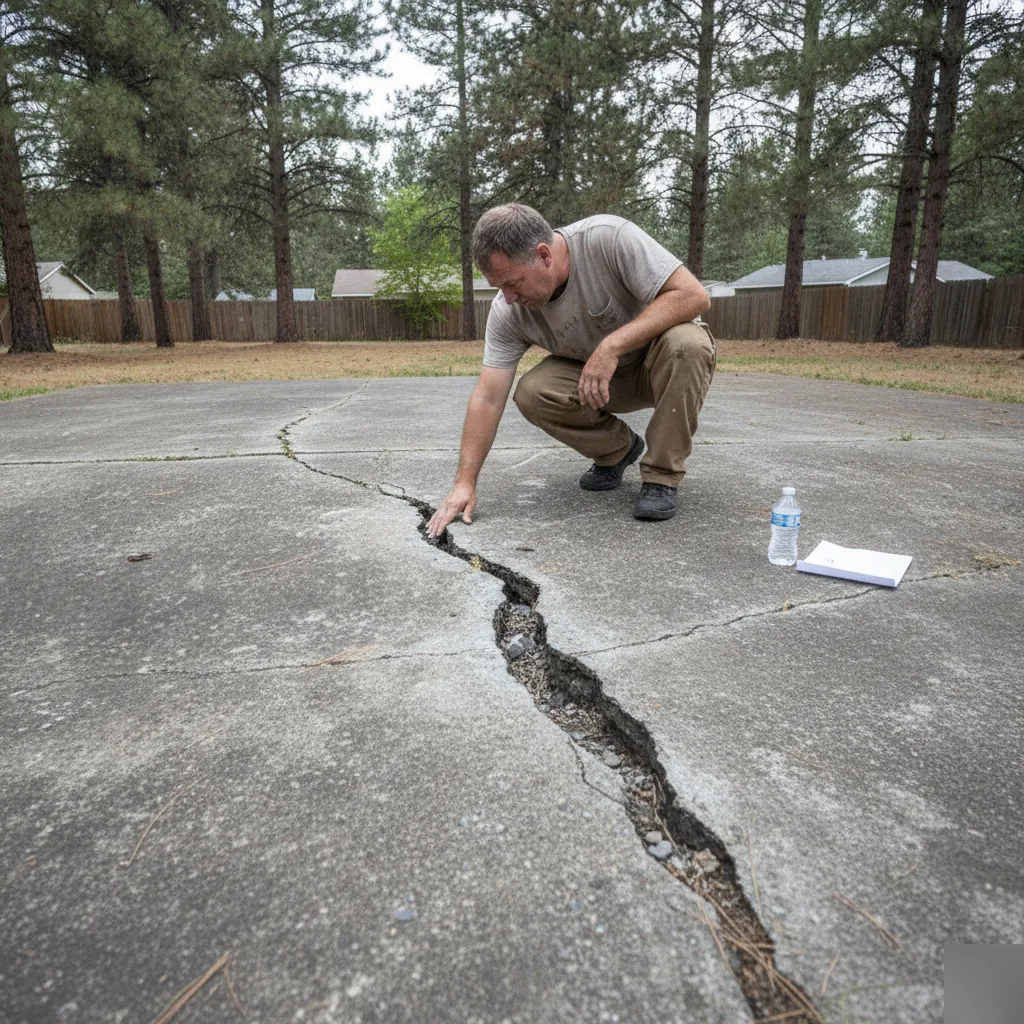
Our crew has put in over 11 years handling concrete work right here in Spokane Valley, seeing firsthand how brutal winters hit these surfaces. We've definitely learned to read a court like an open book. Here's what to keep an eye on.
Surface-Level Damage
Small hairline cracks, we see these on nearly every court. They pop up after just a few Spokane winters. A single thin crack won't condemn your entire court, though. But really, pay attention to the pattern you're seeing. If cracks are spreading out like a spiderweb, your concrete is definitely telling you moisture got inside and then it froze.
Spokane Valley gets hit hard with freeze-thaw cycles, late October clear through March. Water works its way into tiny concrete pores. Then it freezes. That expands. It pushes material apart from the inside, really damaging things. And, the Portland Cement Association confirms repeated freeze-thaw exposure is a main culprit for concrete surface failure in cold regions like ours.
These are the surface signs we see. They often mean resurfacing can still solve the issue.
- Hairline cracks under a quarter inch wide; no vertical movement at all.
- Minor spalling or flaking, but only on the very top layer.
- Faded or worn color, making the court look generally rough.
- Small pitting from deicing salts or just bad weather exposure we get.
These are cosmetic issues. The slab underneath is usually still solid, just needing a refresh. Concrete crack repair or a professional-grade resurfaced concrete overlay can handle every one of these problems, making your court look new again.
Deeper Structural Problems
Now, this is where things really shift. Some damage goes right past the surface layer, digging deep into the base or subgrade. And frankly, that's a whole different conversation about lasting repairs you'll want to hear.
We get calls all the time for courts along the Sullivan Road corridor, even way out past Cheney. Homeowners think they just need a quick patch. Then we show up. We find entire sections of the concrete slab have sunk two inches. Or maybe there's a crack you can literally fit your finger into, running the court's full length. That's not a resurface job, plain and simple.
You need to watch for these red flags.
- Cracks wider than a quarter inch. Watch if one side sits higher than the other.
- Whole sections of the court visibly sunk or heaved up.
- Standing water that pools in the exact same spot after every rain.
- Big chunks of concrete breaking loose right from the edges.
- A hollow sound when you tap the surface with a hammer, this is a huge one.
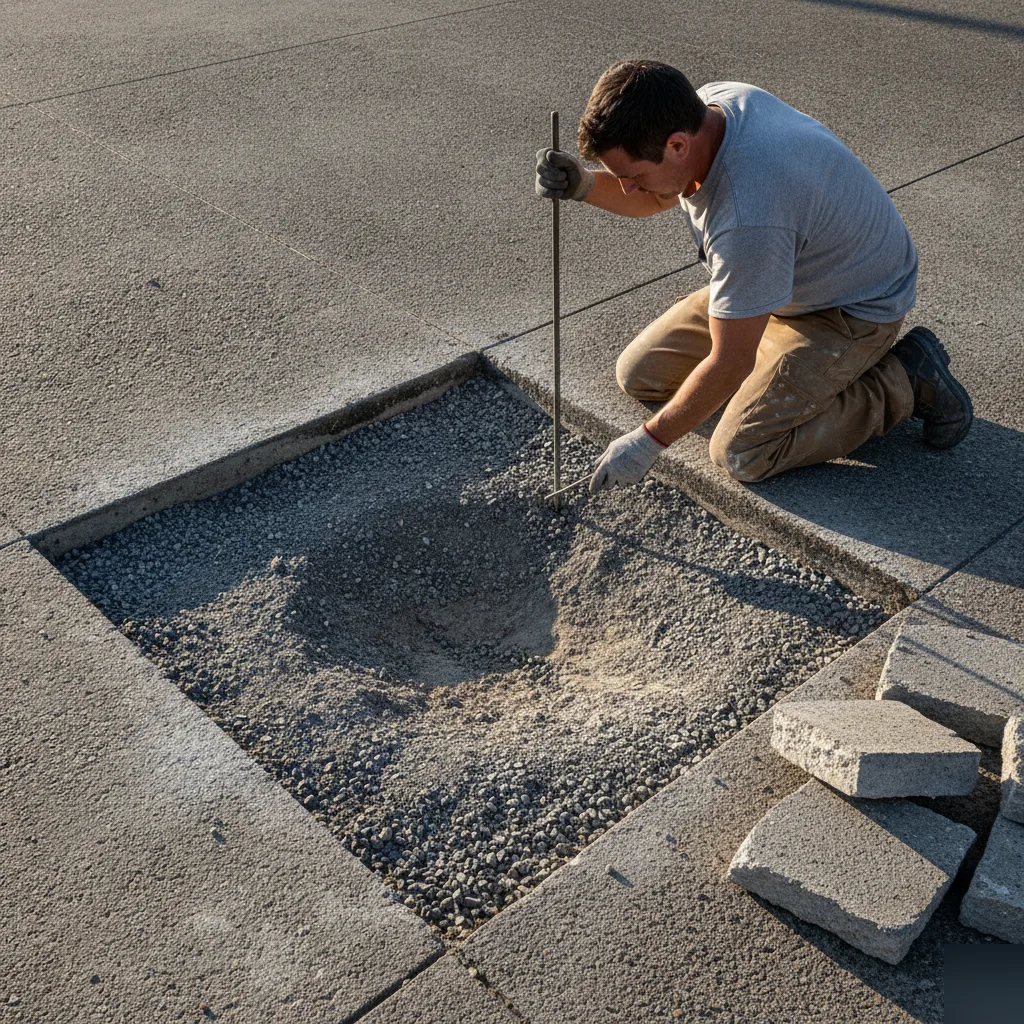
That hollow sound? That's a major red flag. It straight up means the concrete slab has separated from the base material underneath it. Seriously, putting a new surface on a failing base is like trying to paint over rotten wood, it might look decent for a month, but then everything just falls apart again, costing you more in the long run.
The Quick Test You Can Do Right Now
Grab yourself a flathead screwdriver. Just press it right into your court's surface and drag it across any cracked spot. If the concrete crumbles easily, or flakes off in bigger chunks, that material has lost all its strength. Resurfacing might still work, but only if the base beneath is truly stable. But if you can push that screwdriver into the crack and feel movement underneath? You're definitely looking at a full replacement, no two ways about it.
Most people simply don't grasp this until it's too late. They keep patching things up, throwing good money at fixes that never last because the problem sits deep below what they can even see. If you're unsure what your court's surface is telling you, a professional concrete contractor can quickly assess the slab and the subgrade. We can get it done in about 30 minutes, we offer free estimates for this exact scenario.
Here's the bottom line: your court's surface damage is either shallow, just skin deep, or it's genuinely structural. Understanding that difference upfront saves you real money. It definitely prevents real headaches down the road too, especially with brutal Eastern Washington winters.
Crack Patterns That Separate a Resurface Job From a Rebuild
Not every crack means the same thing. Some are just cosmetic. But others? They're screaming at you that the concrete slab underneath is totally failing. After over 11 years of concrete crack repair work right here across Spokane Valley, our crew can walk up to a court and literally read its cracks like a roadmap. The pattern tells us almost everything we need to know.
Here's the kicker most folks don't get until it's too late. A crack's direction, its width, even its depth, each points to a completely different root cause for the damage. And the right fix? It's always completely different for each.
Surface Cracks You Can Resurface Over
Hairline cracks under a quarter inch wide are usually just surface-level. They happen from normal shrinkage as new concrete cures. Or, more often, from years of Spokane's brutal freeze-thaw cycles slowly wearing down that top layer. These cracks stay shallow. You won't feel movement when you step near them. The concrete slab underneath is still solid.
Spider-web cracking, some call it map cracking, falls into this category as well. It looks alarming, sure, but it's usually just the surface layer breaking down. We see this all the time on courts near the Sullivan Road corridor. Many were simply poured without proper winter-proof sealing. A durable concrete resurfacing overlay bonds right to the existing slab. It then gives you a truly fresh playing surface.
These signs usually point right toward resurfacing.
- Cracks stay under a quarter inch wide; no vertical shift between the sides.
- Surface flaking or spalling, but without deep structural damage below.
- General roughness and wear, but the slab still sits flat and drains correctly.
- No rocking or movement at all when you press on sections near the crack.
These patterns tell us the base underneath is still solid, doing its job. The surface simply needs some expert help.
Deep Cracks That Demand Full Replacement
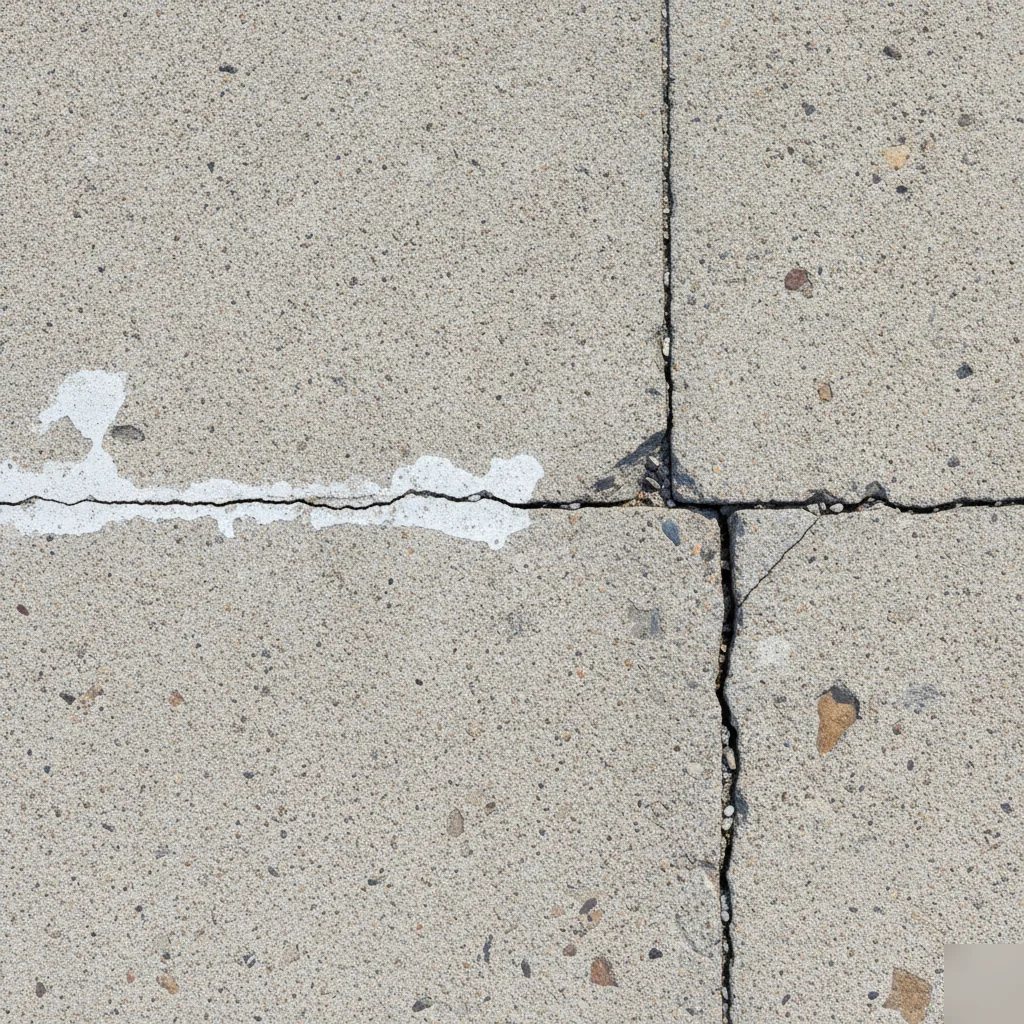
Now, this is where things turn serious. Cracks wider than a half inch, the ones running clear through the concrete slab, those tell a very different story. They signal the base layer beneath has shifted, settled, or, was never prepared correctly to begin with. Spokane Valley soil can be really tricky, by the way. We see areas with sandy loam that compacts unevenly, especially after heavy spring runoff.
Heaving? That's the real big red flag. If one side of a crack sits higher than the other, you've got ground movement underneath. No concrete overlay on Earth will fix that. The old slab will just keep shifting, and any new surface you put down will crack again within a season or two, guaranteed.
Corner breaks are another dead giveaway. When big chunks break off right at the joints or the edges of a court, it usually means water slipped underneath and then froze solid. Spokane winters hit hard, pushing temps below zero again and again. That constant freeze-thaw cycle builds up incredible hydraulic pressure under the slab, and once it starts lifting those corners, the whole structure's damage just accelerates quickly. Following resilient construction and maintenance standards during the original build can prevent many of these failures from ever starting.
Last spring, we got a call about a residential court surfacing in Spokane Valley. The owner had resurfaced it twice in four years. Both times, those cracks came right back in the same old spots, you know? When our crew pulled up a section, the sub-base was nothing but saturated clay, zero drainage. That court absolutely needed full removal, proper base prep, and a completely new pour. Resurfacing was never, ever going to hold up.
So, how do you tell the difference yourself? Get down real close to that crack. Stick a flathead screwdriver in there. If it slides in more than two inches, you're definitely past resurface territory. Check both sides of the crack with your foot. Any wobble or lip you feel means the concrete slab has completely separated from its base.
But if those cracks are tight, if they're shallow, and the entire slab feels solid when you stand on it, resurfacing is probably the right call. Our team offers free estimates. We can come out and assess your court's specific crack patterns right on-site, giving you a clear picture. Visit our concrete repair page to get that process started anytime.
How the Sub-Base Condition Decides the Real Answer
Most people just stare at the surface of their court. Cracks, chips, even simple discoloration, that's the stuff you see every single day. But here's the kicker: the real story, the one that matters for lasting repairs, is always underneath.
The sub-base? That's the compacted gravel and soil layer sitting right below your concrete slab. You should think of it like the foundation for your house. If that foundation shifts, nothing built on top of it will stay put, period. Your court surface might look rough on top. It could still have a totally solid sub-base, though. Or it might look decent on the surface, but the ground underneath has become a total mess of voids and settled soil, we see that plenty in Spokane Valley.
Frequently Asked Questions
What's the difference between resurfacing and full replacement for a Spokane Valley court?
Resurfacing adds a new layer on top of your existing slab. Full replacement means tearing out the old concrete and starting over. Resurfacing works when your base is still solid and damage stays shallow. Replacement is the right call when the slab has sunk, cracked all the way through, or separated from the ground beneath it. Our concrete court repair page walks through both options in detail so you can make the right call for your situation.
Can I just patch the cracks myself instead of calling a professional?
DIY patching works for very small hairline cracks under a quarter inch wide with no movement underneath. But most store-bought patch products don't bond well to old concrete, especially after Spokane winters. If you patch over a crack that has movement or a failing base, the patch fails fast. A professional can check whether the base is still solid in about 30 minutes. Patching the wrong crack the wrong way often costs more to fix later than just doing it right the first time.
Is spider-web cracking always a sign I need to replace my court?
No, spider-web cracking does not always mean full replacement. This pattern, sometimes called map cracking, usually means the surface layer is breaking down, not the whole slab. It looks alarming but is often just the result of years of freeze-thaw wear or a court that was never properly sealed. If the slab underneath is still solid and you don't feel movement when you walk near the cracks, resurfacing is usually enough to fix it.
How do Spokane Valley winters affect my court surface over time?
Freeze-thaw cycles are the biggest threat to courts in Spokane Valley. Water seeps into tiny concrete pores, then freezes and expands from late October through March. That repeated expansion pushes the material apart from the inside. The Portland Cement Association confirms freeze-thaw exposure is a leading cause of concrete surface failure in cold climates. Courts near Sullivan Road and other lower-elevation areas with poor drainage tend to show this damage faster than others.
What does a hollow sound mean when I tap my court surface?
A hollow sound means the concrete slab has separated from the base material underneath it. This is a serious warning sign. When you tap a healthy slab, it sounds solid and dense. A hollow thud tells you there is an air gap below. Resurfacing over a hollow section will not hold. The new layer has nothing stable to bond to. If you hear this on your Spokane Valley court, a full replacement of that section is almost always the right move.
How can I tell if my court's base is still solid before deciding on a repair?
Use a flathead screwdriver to press and drag across any cracked area. If the concrete crumbles or flakes off in chunks, the material has lost strength. If you feel movement underneath the crack when you press down, the base is failing. Also look for sections that have visibly sunk, standing water that pools in the same spot after rain, and edges where big chunks are breaking loose. Any of these signs point to a base problem, not just a surface problem.
Ready to Experience the Concrete Revival Difference?
Complete Service Area Coverage
- Spokane and Spokane Valley
- Coeur d'Alene metro area
- Deer Park and Newport
- Liberty Lake and Otis Orchards
- Cheney and Medical Lake
- Post Falls and Rathdrum