
Which Costs Less - Repaving a Driveway or Replacing It Entirely? A Spokane Valley Guide
Repaving vs. Replacing: What Each Option Involves
Repaving means pouring a new layer of concrete over your existing driveway base. Replacement means tearing out the old slab and starting fresh from the soil up. Repaving works when the base is solid and cracking is only surface-deep. Replacement is the real fix once the base has shifted, sunk, or heaved from years of freeze-thaw damage.
Repaving sounds simple, and it isn't always as simple as people assume. When we repave a driveway, we're adding a new concrete layer on top of what's already there, or in some cases stripping just the surface and repouring on the existing sub-base. Either way, the old base has to be in decent shape for this to work. If it's cracked deep or settling unevenly, a new layer on top just hides the problem for a year or two before it resurfaces.
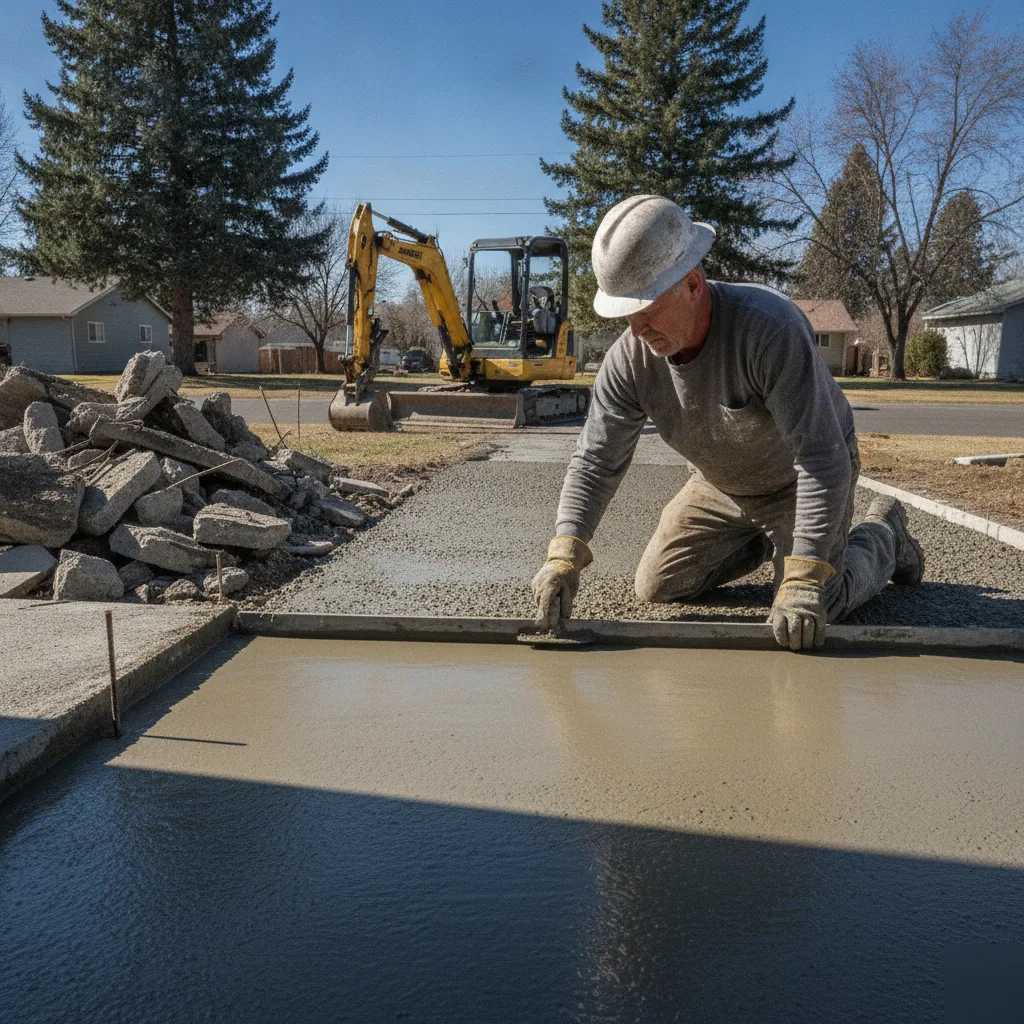
Driveway repair in Spokane is the bigger job. We tear out the whole slab, haul it off, and get down to the dirt, which is when we find out what's really been happening underneath. In Spokane Valley we see a lot of soil movement from winter freeze and spring thaw. Water gets under the slab, freezes, expands, and pushes everything out of place. Replacement lets us fix the base itself instead of just covering it back up.
- Repaving works best when the existing slab has minor surface cracks but no major settling
- Replacement is needed when you see large cracks, sunken sections, or standing water pooling near the garage
- Repaving usually takes less time since there's no demo and haul-off
- Replacement lets us regrade and add proper drainage before the new pour
- A driveway with tree root damage almost always needs full replacement, not a resurface
We had a job off the Sullivan Road corridor a couple years back where the homeowner wanted a quick resurface. Made sense on paper. But once we got out there, the slab had sunk almost two inches on one side from years of poor drainage. Repaving over that would've just cracked again by the next winter. We ended up doing a full tear-out and replacement, and it's held up fine ever since.
That's really the question behind which option costs less, repaving a driveway or replacing it entirely. It isn't about the price tag on day one. It's about whether the ground underneath can support a quick fix or needs a real rebuild.
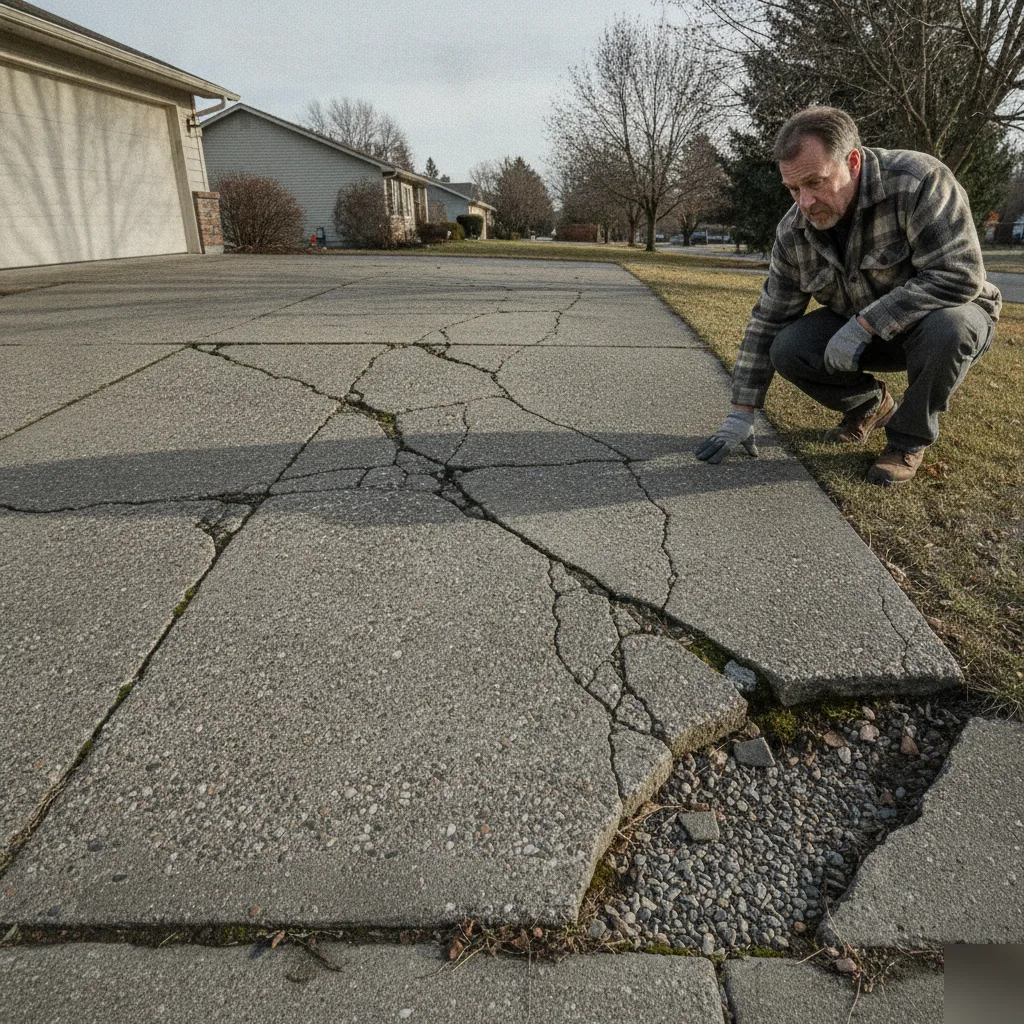
We've seen this crack pattern a hundred times: spiderwebbing near the garage door, a dip where water always collects, edges crumbling along the sides. Most of that points to base failure, not just surface wear.
Why the Base Layer Decides Which Option Costs Less
Here's what most homeowners miss: the surface cracks you see aren't the real story. What's happening under that slab is what decides everything.
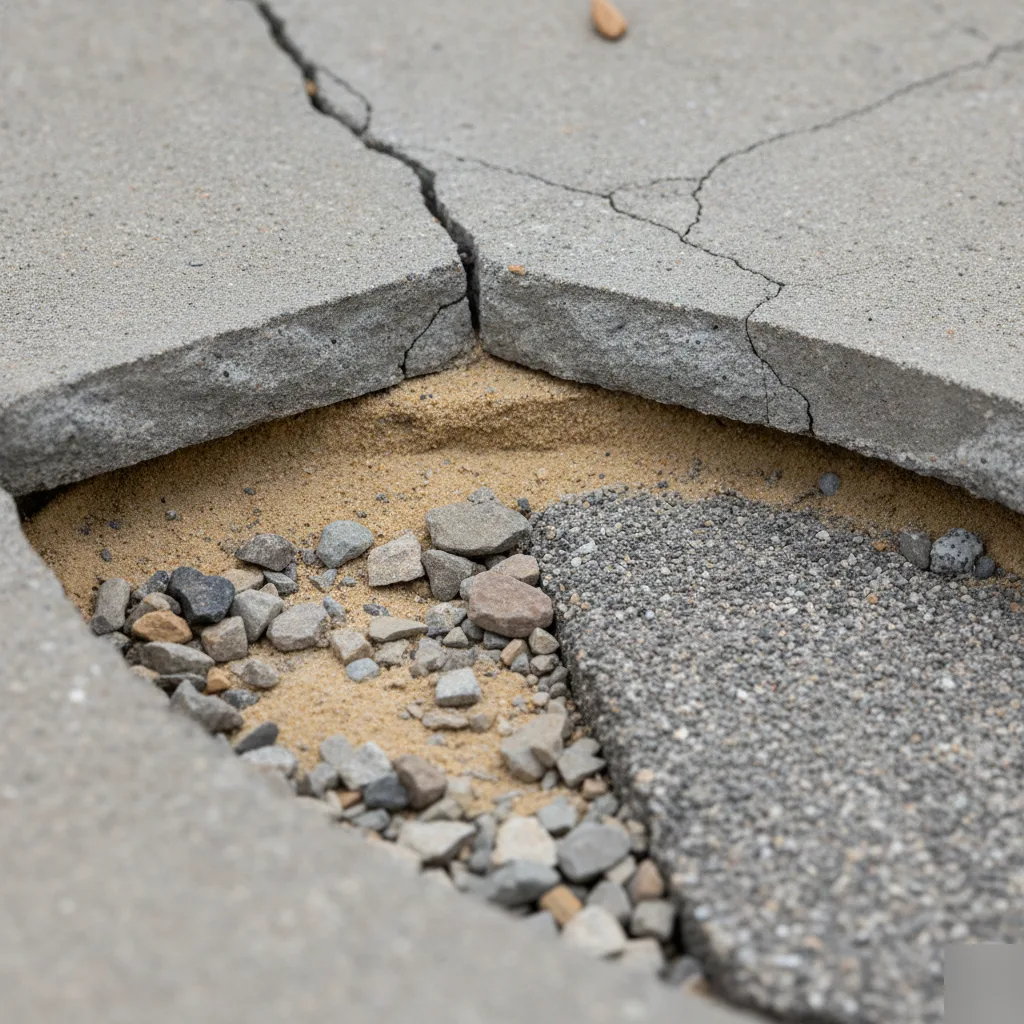
Every driveway sits on a gravel base, and that base does the real work. It drains water, absorbs ground movement, and keeps the slab steady through Spokane Valley's freeze-thaw swings. When that base is solid, a repaving job can work great. When it's washed out, shifted, or never compacted right in the first place, repaving just buys you a couple years before the same cracks come back.
We've pulled up hundreds of driveways over 11 years in Spokane Valley, and the pattern's almost always the same. Cracks that follow a straight line near the garage apron usually mean the base settled unevenly. Cracks spreading in a web pattern across the whole slab often mean moisture got under the concrete and froze. Once ice forms under a slab, it expands, and concrete doesn't flex. Something has to give.
- Base still compacted and draining well: repaving or resurfacing can add years of life for less cost than a full tear-out.
- Base has washed out or shifted: repaving is a band-aid, cracks come back within a season or two.
- Standing water pools near the slab edges after rain: usually a sign the base or grading has failed underneath.
- Slab sections have sunk or tilted: base failure, not a surface problem, and repaving won't fix it.
- Cracks run wider than a quarter inch and keep spreading: worth checking the base before spending on any surface fix.
So how do you know which situation you're in? You can't tell just by looking at the top. We check with a probe test along the crack lines and edges, feeling for hollow spots or soft give underneath. If the base pushes back firm, repaving makes sense. If it gives like a sponge, we'll tell you straight, replacement is the smarter money move.
A driveway on Sullivan Road we looked at last winter had surface cracking that looked minor. But the base underneath had eroded from years of poor drainage off the garage roof. Repaving that slab would've cracked again by the next freeze. We recommended a full driveway replacement instead, with proper base prep this time around.
This is the part a lot of contractors skip. It's faster to just resurface and move on. But if the base is shot, you're paying twice, once now and again in two or three years.
That's the real cost comparison nobody talks about upfront.
Three Driveway Scenarios and Which Option Wins
Numbers only get you so far. Let's walk through three driveways we see all the time in Spokane Valley, and what we'd tell each homeowner if they called us today.
Scenario one: the surface cracker. This driveway is maybe 10 to 15 years old. It's got a web of hairline cracks across the top and some flaking near the garage door, but the slab underneath is solid, no sinking, no big height differences between panels. This is a textbook resurfacing job. We've patched dozens like this along the Sullivan Road corridor, and the base held up fine, it was just the top layer taking the beating from freeze-thaw cycles year after year.
Scenario two: the sinking slab. This one's trickier, and more common than people think.
Here you've got a driveway where one section has dropped an inch or two below the rest. Maybe there's a gap forming where the driveway meets the garage slab. That's not a surface problem, that's a base problem. Water's gotten under there, washed out soil, and now the concrete has nothing solid to sit on. Resurfacing this driveway would be a waste of money. You'd cover the crack today and watch a new one open up by next spring, usually right along the same line. We've seen this pattern a hundred times, and it always comes back until the base gets fixed.
Scenario three: the old workhorse. This driveway is 25-plus years old, poured back when houses in the area were first going up. It's got multiple repairs already, patched cracks from three different contractors over the years, and the surface looks like a patchwork quilt. Even if the base is technically okay in spots, the cosmetic damage and inconsistent patch history make resurfacing a tough sell. You'd be layering new concrete over a driveway that's already been through more repairs than it can hide.
- Surface cracker with a solid base under it, usually a good resurfacing candidate
- Sinking or heaving slab with gaps or drop-offs, that's a base failure and points toward replacement
- Driveway with a long repair history and multiple patch jobs, often past the point where resurfacing makes sense
Most homeowners wait too long to make a call either way. They watch a small crack turn into a spiderweb, then wonder why the quote changed from a simple patch to a full tear-out. And that's the honest truth about concrete: it doesn't get cheaper to fix by waiting.
So which scenario sounds like your driveway? If you're not sure, that's fine, most people aren't. We've been doing driveway repair and driveway replacement work in Spokane Valley for 11 years and can usually tell within a few minutes on-site which category you fall into.
Frequently Asked Questions
How can I tell if my driveway needs repaving or a full replacement?
You can tell by looking at how the cracks behave, not just how many there are. Hairline cracks that stay in one spot usually mean the base is still solid. Cracks that widen, sink, or connect into a web pattern often mean the base has shifted or washed out. If you're unsure, a probe test along the crack lines can show whether the ground underneath is firm or soft. This is one of the first things we check before recommending which costs less, repaving a driveway or replacing it entirely.
What's the biggest misconception about repaving a driveway?
The biggest misconception is that repaving always saves money compared to replacement. If the base underneath has washed out or shifted, a new surface layer will crack again within a year or two. That means you end up paying for the repave and then paying again for the replacement you needed all along. Checking the base first is the only way to know which option saves you money in the long run.
Does standing water near my driveway mean I need a repave or replacement?
Standing water near your slab usually points to a bigger problem than the surface. It often means the base has settled or the grading around your driveway has failed. Repaving over that spot won't fix the drainage issue, so the cracking will return. A proper replacement lets us regrade and rebuild the base so water moves away from the slab instead of pooling against it.
Should I call a professional or try to patch cracks myself first?
Call a professional once cracks are wider than a quarter inch or you notice sinking. Small hairline cracks can sometimes wait, but patching over a failing base only hides the problem for a season. A pro can check what's happening underground before you spend money on a fix that won't last. This is especially true in Spokane Valley, where freeze-thaw cycles push small cracks into bigger ones fast.
Why does Spokane Valley's climate affect whether I need repaving or replacement?
Spokane Valley's freeze-thaw winters push water under driveway slabs, where it freezes and expands. This cycle repeats every winter and slowly breaks down the gravel base beneath the concrete. A base that's been through many freeze-thaw seasons is more likely to need full replacement instead of a simple resurface. That's why local driveways often show base failure earlier than driveways in milder climates.
How long does a driveway base usually last before it needs rebuilding?
A well-compacted base can last 20 years or more, but poor drainage or root damage can shorten that a lot. In Spokane Valley, we've seen bases fail in half that time when water wasn't draining properly from the start. Checking your base condition is the best way to know if you're due for a rebuild soon. If you're weighing your options, our guide on which costs less, repaving a driveway or replacing it entirely, walks through the signs to watch for before you decide.
Ready to Experience the Concrete Revival Difference?
Complete Service Area Coverage
- Spokane and Spokane Valley
- Coeur d'Alene metro area
- Deer Park and Newport
- Liberty Lake and Otis Orchards
- Cheney and Medical Lake
- Post Falls and Rathdrum