

What's the Most Budget-Friendly Way to Patch Up a Driveway?
Here's the straight talk. A driveway patch can fix a lot. But it can't fix everything.
We've handled concrete crack repair and driveway repairs in Spokane Valley for 11 years now. Most homeowners we meet want the same thing: stop the damage without tearing out the whole slab. That's a smart idea,. The trick is figuring out which cracks just need a patch, and which ones are hinting at something bigger going on down deep.
What a Patch Handles Well
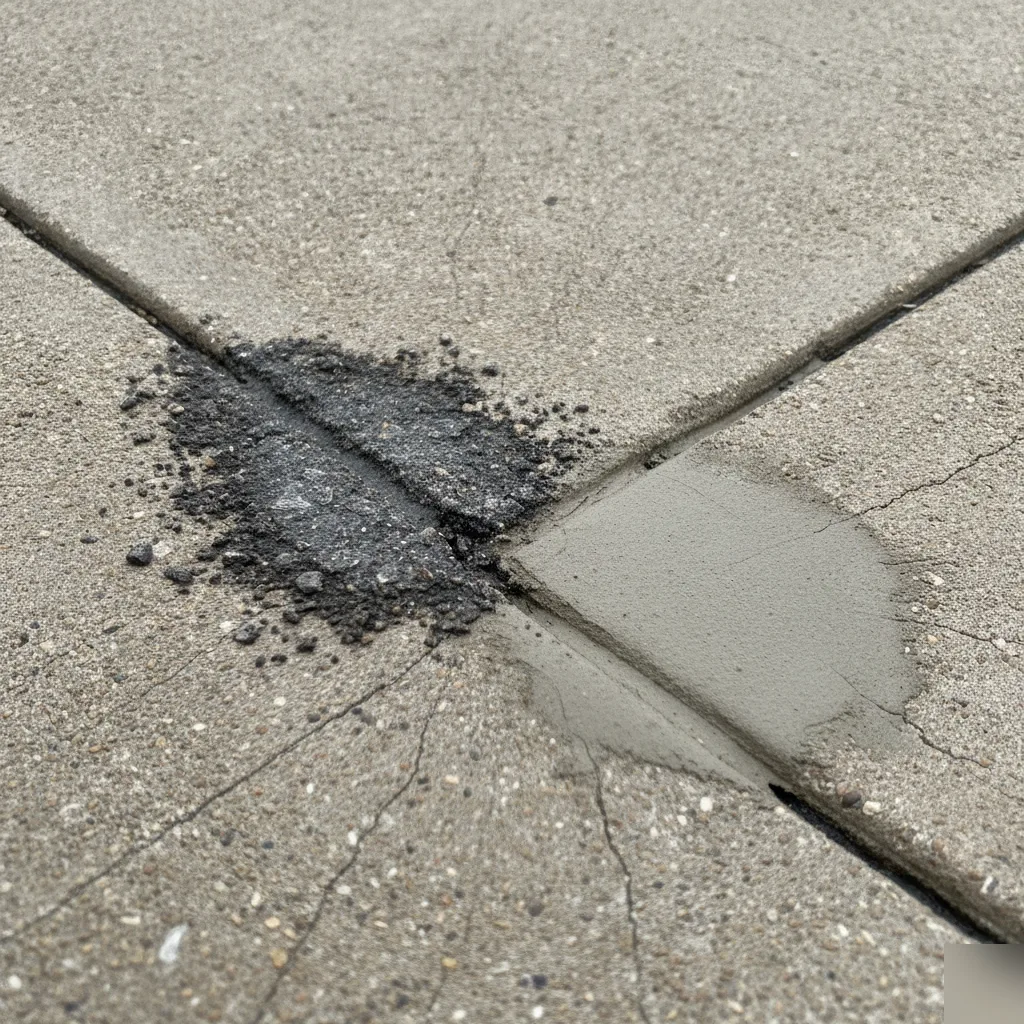
Surface-level damage is where patching truly works. Think hairline cracks, minor surface spalling, and small pop-outs from our brutal freeze-thaw cycles. These are cosmetic issues. They haven't reached the base layer yet. A proper patch, one that's professional-grade, bonds tight to the existing concrete. It stops water from sneaking any deeper. That’s critical in Eastern Washington, where winter moisture will freeze and expand inside even the smallest crack overnight.
Good candidates for a cost-effective driveway patch include:
- Cracks under half an inch wide. They won't shift when you step on them.
- Surface flaking or scaling. This is usually from salt damage or general weather wear.
- Small corner chips. You'll often see these near the garage apron or along the edges.
- Isolated thin spots. The top layer might be worn, but the slab underneath feels solid.
If your driveway looks like this, you're in good shape. A patch done right can add years to your driveway's life. No need for a full replacement, at least not yet.
What a Patch Can't Save
Then there's the other kind of damage. We see it constantly around the Sullivan Road corridor and in older neighborhoods like those near Pines Road. We're talking about a slab that's dropped two inches on one side. Or a crack running the whole width of the driveway, with both halves moving independently. That's not a surface problem, that's a base failure.
No patch material in the world fixes a failing subgrade. You can pour all the patch compound you want over a sinking slab, but it’s like putting a bandage on a broken bone. It might look better for a month. Then the crack comes right back, usually worse than it was before.
Signs your driveway needs more than just a patch:
- Cracks wider than half an inch. Or cracks that get bigger every season.
- Sections that have settled. Or heaved up in a noticeable way.
- New low spots where water pools. Areas that never collected water before.
- Crumbling that goes deeper. It's not just the surface layer anymore.
Most people don't realize this until it’s too late. They patch the same crack, say, three years in a row. They only call us when it's really bad. By then, the water's been working its way under the slab every Spokane winter. And the restoration job just got a lot bigger.
So, how do you tell the difference? Press on the crack's edges. If both sides are level and solid, a simple patching makes sense. But if one side moves, or feels hollow underneath, you're looking at a structural issue. That needs professional eyes on it.
We always tell homeowners the same thing. A budget-friendly fix, done at the right time, is a smart move. But a cheap fix for the wrong problem? That’s just money you'll spend twice. If you're not sure which category your driveway falls into, a job for our concrete contractor Spokane team, Concrete Revival can take a look. We'll give you a free estimate. No pressure. Just an honest read on what your concrete slab needs.
Comparing the Most Affordable Patch Materials
Not all patch materials are the same. And, not all of them will hold up through a Spokane Valley winter. Picking the wrong one means you're just doing the job twice. That’s not budget-friendly at all.
Pre-Mixed Concrete Patch
This is probably the most common choice. You'll find it at any hardware store. You open the tub, trowel it into the crack or hole, then smooth it out. It’s simple enough. It generally sticks well to existing concrete, assuming you prep the surface right. For small cracks, under half an inch wide, it gets the job done.
But here's the catch for Eastern Washington. Pre-mixed patch doesn't flex. Spokane Valley sees huge temperature swings, from 100°F scorching summers to single digits in January. That brutal freeze-thaw cycle puts serious stress on rigid patch materials. We've seen these pre-mixed patches pop right out after just one hard winter, especially along the Sullivan Road corridor. Homeowners end up right back where they started.
Vinyl Concrete Patch
Vinyl patch has a polymer additive mixed in. This gives it a little more flexibility than standard pre-mixed options. It also bonds better to older concrete. For driveway repairs involving surface-level damage, like shallow spalling or thin cracks, vinyl patch is a solid choice.
Still, it's not some magic product. You can't just fill a 3-inch deep pothole with vinyl patch and expect it to last. Most homeowners don't realize that the depth of the repair matters just as much as the material itself.
Hydraulic Cement
This stuff sets fast. Really fast, in fact. It also expands slightly as it cures, which helps it lock into place. Hydraulic cement works best for deeper holes. It's also good for those spots where water tends to pool. If your driveway has a low point near the garage that collects runoff every spring, hydraulic cement can handle that well. It's engineered for that kind of water problem.
The downside? Working time. You've got maybe 10 minutes before it starts to harden. If you're not experienced with it, you might end up with a lumpy patch that looks even worse than the original crack.
How to Pick the Right One
Here's a quick way to decide:
- Hairline cracks and surface chips: A basic pre-mixed concrete patch often works fine.
- Shallow surface spalling across a wider area: Vinyl concrete patch offers better adhesion.
- Deep holes or areas with ongoing water problems: Hydraulic cement sets strong and seals tight.
- Cracks that just keep coming back: You likely need professional concrete crack repair, not just another patch.
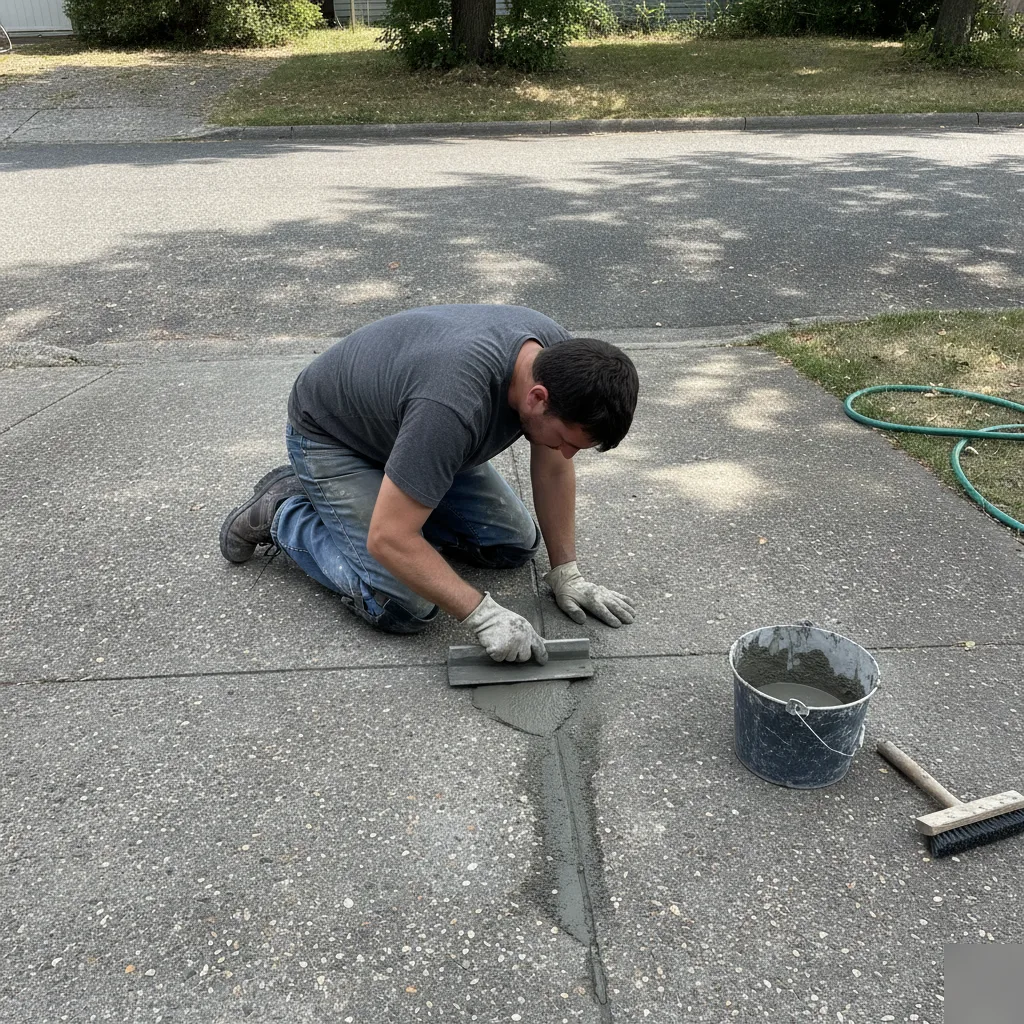
The material itself is only half the battle. Good prep work is. That means cleaning out all loose debris. You need to wet the area, so the old concrete doesn't suck moisture from the fresh patch. And apply it at the correct thickness. Skip any of those steps, and even the best patch material fails.
We see this mistake happen all the time. Someone grabs a bucket of patch compound, smears it over a dirty crack, and then wonders why it crumbled by March. The material wasn't the problem. The prep was, every single time.
One more thing, this is an opinion, but it's a useful one. None of these materials will match your existing concrete color perfectly. They'll be visible. If that bothers you, a full driveway resurfacing gives you a clean, seamless, uniform look across the whole slab. That's a different conversation entirely. But it's worth thinking about if your driveway has patches everywhere already and you want that curb appeal back.
For a single crack or one rough spot, a patch is definitely the budget-friendly move. But for a driveway failing in multiple places, those older ones, especially, patching each spot individually can cost more over time than fixing it right once. If you’re not sure where your driveway falls, reach out to our Spokane driveway repair team for a free estimate. We’ll help you understand exactly what you’re dealing with.
Why Timing Changes How Long a Cheap Patch Lasts
Most folks patch their driveway whenever they notice a crack. That's a mistake. The time of year you do the work matters just as much as the materials you choose.
Here’s the thing about Spokane Valley weather, particularly those Spokane winters. We get these wild temperature swings. A January day might hit 35°F, only to drop to 12°F overnight. That intense freeze-thaw cycle is brutal on fresh patch material. Water seeps in before the patch fully cures. Then it freezes, expands, and pops the repair right out. We've pulled up failed patches in February that were only three weeks old.
The Best Window for Driveway Repairs
Late spring through early fall generally gives you the best results for lasting repairs. You want consistent temperatures above 50°F for at least 48 hours after applying any patch compound. This allows the material to cure properly. It also lets it bond tightly to the existing concrete, building it to last. The American Concrete Institute, they know their stuff, and they note that concrete repair products need sustained warmth to reach their full strength, as outlined in this concrete repair application procedures guide.
Here’s what that ideal timing looks like in practice:
- Late April through May. This is ideal for catching damage from winter before the summer heat really sets in.
- June and July work well. But you'll need to keep the patch moist so it doesn't dry too fast in that dry Eastern Washington summer heat.
- September through mid-October. This gives you one last shot before overnight lows start dipping below freezing again.
That September window is our busiest time for concrete driveway repair Spokane, especially along the Sullivan Road corridor and throughout Spokane Valley. Homeowners notice the cracks all summer. They finally decide to act. And they want it done before the first hard freeze hits. Smart move,. That's our winter-proof system in action.
What Happens When You Patch at the Wrong Time
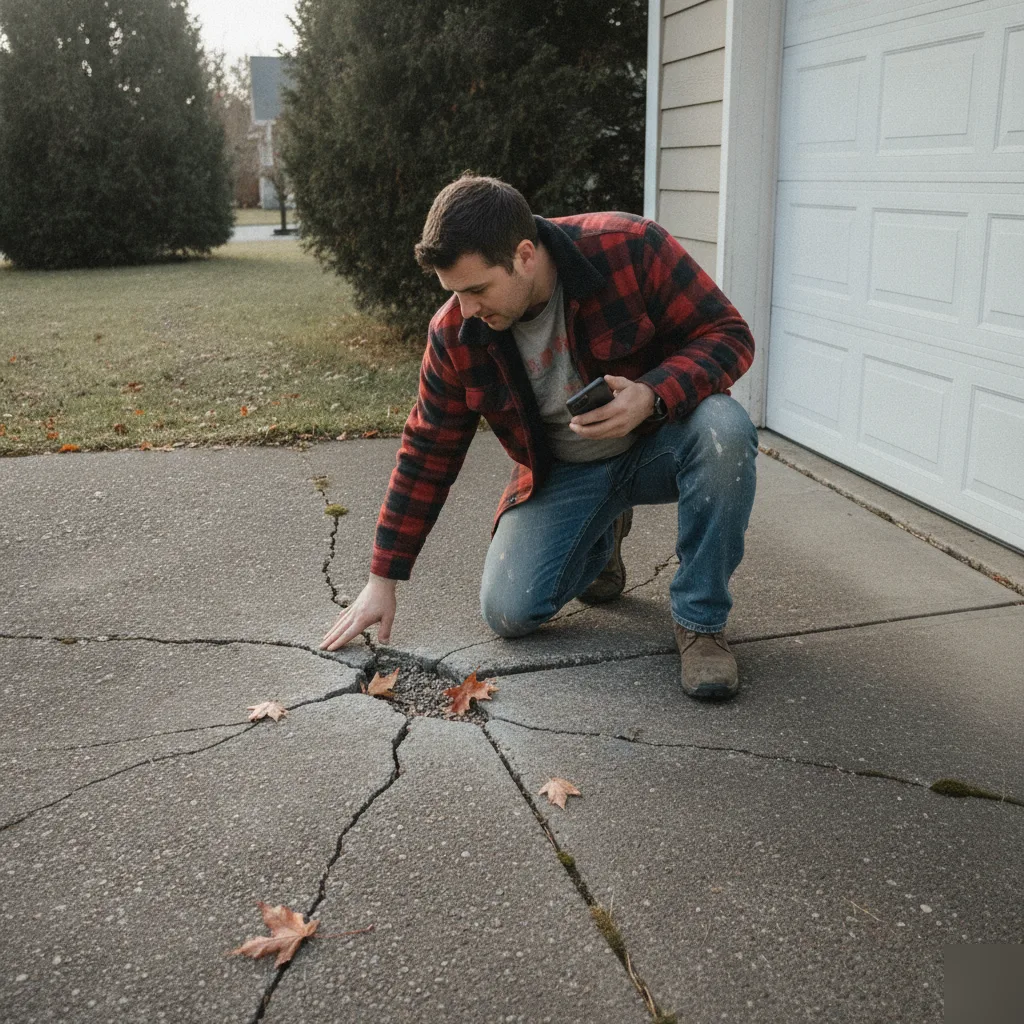
We had a homeowner out near Greenacres. He patched a big surface spalling spot in November. He even used decent material. Did the prep work right. But three weeks of intense freeze-thaw cycles just destroyed the repair before Christmas. The patch crumbled. It left the hole bigger than it was before.
That’s just money and effort wasted. Nobody wants that.
Cold-weather patching isn't impossible, but it requires specific fast-setting products engineered for low temperatures. Those products cost more. And they still don't last as long as a warm-weather repair. If your driveway damage isn’t a safety hazard right now, waiting until spring is almost always the smarter play.
And here’s something most people don’t often think about. Hot weather has its own risks. Temperatures above 90°F can cause patch material to skin over on top, while it stays soft underneath. You end up with a repair that looks solid. But it crumbles under tire weight within weeks. On those scorching July days, you have to work early in the morning. Or just wait for a cooler stretch. We’ve seen this pattern a hundred times.
Quick signs your timing might be off:
- Nighttime temperatures dropping below 40°F within a week of your planned repair.
- Rain in the forecast for the next 24 hours.
- Daytime highs above 95°F with direct sun beating down on the slab.
But what if you've got a concrete crack that’s growing fast right now? Don’t ignore it completely. A temporary fill can prevent water from getting deeper into the slab. Just plan on doing the real concrete crack repair when conditions improve, think of it as a bandage, not a lasting fix.
If you're not sure whether your local concrete contractor repair can wait, or if it needs attention now, that's exactly the kind of thing we help Spokane Valley homeowners figure out. Reach out for a free estimate. We'll tell you straight whether it's a patch-now or wait-for-spring situation. We're here to help you get it built once and built right.
Timing a budget-friendly repair correctly can double how long it holds up. Getting it wrong means you’ll be doing the same job twice. And that's no fun.
Frequently Asked Questions
How do I know if I can patch my driveway myself, or if I need a professional?
You can likely patch it yourself if the crack is under half an inch wide and both edges feel solid when pressed. That means the damage is only on the surface, not deep in the base. But if one side of the crack moves, feels hollow, or the slab has settled, call a professional. Those signs point to a base failure that patch material can't fix. A quick, honest look from a local concrete contractor can save you from redoing the work twice.
Why do driveway cracks seem to get worse every winter in Spokane Valley?
Freeze-thaw cycles are the main reason. Spokane Valley winters push water into tiny cracks, and that water freezes and expands overnight. Each freeze pushes the crack a little wider than before. Over a season or two, a hairline crack can turn into a real problem. This is why picking the right patch material matters so much here, more than in milder climates.
How long should a driveway patch last before it needs to be redone?
A properly done patch on surface-level damage can last several years, sometimes longer, if it's matched to the right conditions. Thin cracks and small chips patched correctly should hold up through multiple freeze-thaw seasons. If your patch fails within a year, the problem was likely bigger than a surface issue to begin with. That's usually a sign to get your driveway repair options checked by someone who can tell the difference between a quick fix and a real fix.
What's the biggest mistake homeowners make when patching a driveway on a budget?
The biggest mistake is patching the same crack year after year instead of asking why it keeps coming back. A crack that reappears each season usually means water is getting under the slab, not just sitting on top. Patching over that problem hides it for a few months at best. It doesn't fix it. If your patch fails more than once, that's your driveway telling you it needs more than a surface fix.
Are driveways near Sullivan Road and Pines Road more prone to serious damage?
Older driveways in these areas often show more advanced cracking because the base materials and construction methods used decades ago don't hold up as well to today's temperature swings. We see a lot of slab settling and wide, moving cracks in these older neighborhoods. If your driveway is in this area and showing more than surface wear, it's worth getting a professional read before you spend money on a patch that won't hold.
Can a driveway patch stop new cracks from forming nearby?
No, a patch only repairs the damage that's already there. It doesn't prevent new cracks from forming elsewhere on the slab. New cracks usually show up because of the same freeze-thaw stress, aging concrete, or an unstable base underneath. If you're seeing multiple cracks pop up across your driveway, it's worth having the whole slab checked rather than patching each spot one at a time.
Ready to Experience the Concrete Revival Difference?
Complete Service Area Coverage
- Spokane and Spokane Valley
- Coeur d'Alene metro area
- Deer Park and Newport
- Liberty Lake and Otis Orchards
- Cheney and Medical Lake
- Post Falls and Rathdrum