What Temperature Is Too Cold to Seal a Driveway? The Safe Range for Sealing in Spokane Valley
The Safe Temperature Range for Driveway Sealing Starts at 50°F
Here's the number you need to remember. Fifty degrees Fahrenheit. That's the minimum air temperature for applying sealcoat. Below that, the sealer won't cure right. It's really that simple.
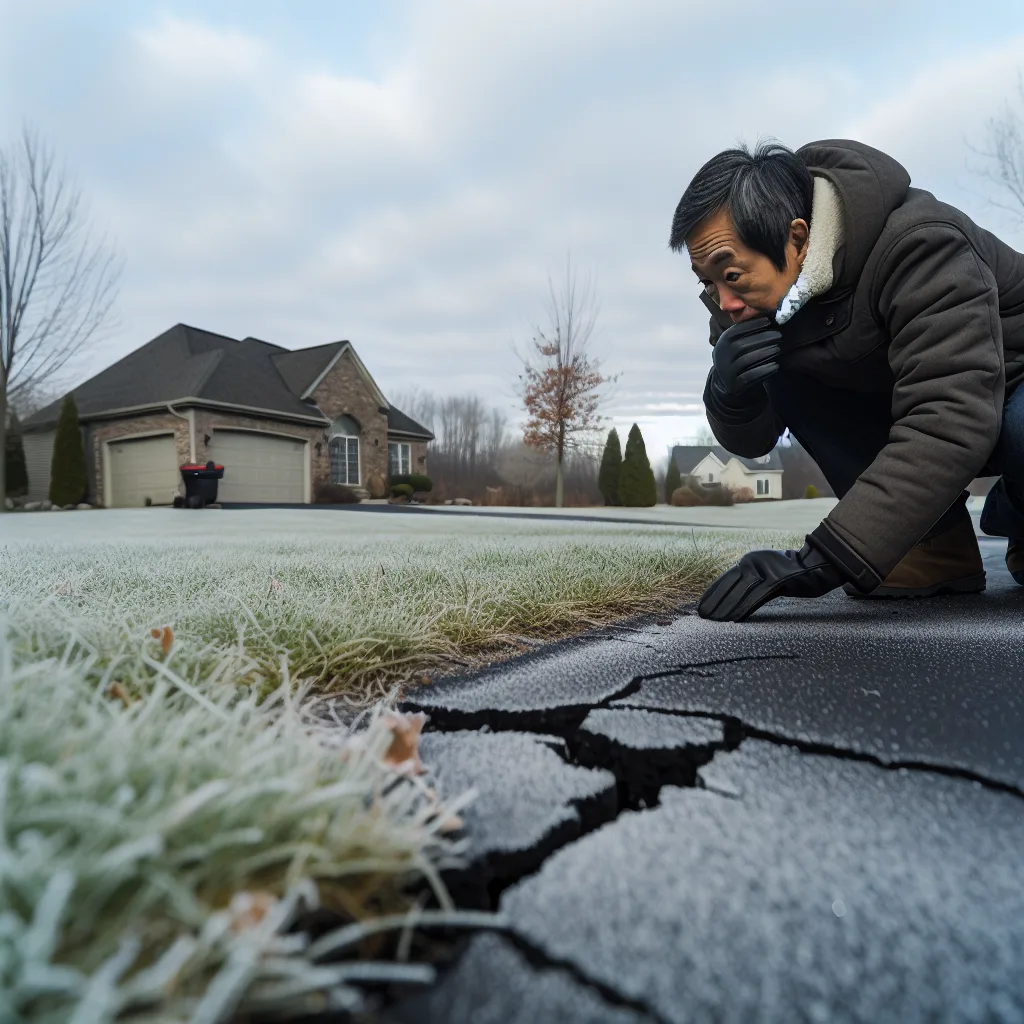
But there's more to it than just checking your phone's weather app once. The temperature needs to stay at or above 50°F for the entire curing window. That means at least 24 hours after application. And in Spokane Valley, where fall nights can drop fast, this catches a lot of people off guard.
Sealcoat is a water-based emulsion. It cures through evaporation. When air and pavement temperatures fall below 50°F, that evaporation slows way down. The sealer stays soft. It doesn't bond to the surface the way it should. You end up with a coating that peels, flakes, or washes away with the first rain. We've seen homeowners near Sullivan Road apply sealer on a 55-degree afternoon, only to have temperatures plunge into the low 30s overnight. The result? A sticky, uneven mess that needed to be stripped and redone.
So what's the ideal range? Most manufacturer guidelines recommend application between 50°F and 85°F. The sweet spot sits around 60°F to 75°F with low humidity and direct sunlight. Industry testing has shown that pavement temperature actually matters more than air temperature. Dark absorbs heat, so on a sunny 52-degree day, your driveway surface might read 58°F or higher. That's workable. But on a cloudy 52-degree day? The pavement could be sitting right at 48°F. Not good enough.
Most people don't realize this until it's too late. They see a decent forecast and grab a bucket of sealer from the hardware store. They don't check the overnight low. They don't think about whether their driveway sits in shade for half the day. And that's where driveway restoration projects go wrong — not from the wrong product, but from the wrong conditions.
Ground temperature is the hidden factor. You can buy an inexpensive infrared thermometer for under twenty dollars. Point it at your driveway in the morning and again in the afternoon. If the surface reads below 50°F at any point during the curing period, hold off. It's not worth the risk.
Here in Spokane Valley, our best sealing window typically runs from late May through mid-September. Early October can work in some years, but you're gambling. Nights along the Spokane River corridor cool faster than you'd expect, especially in neighborhoods like Greenacres and Trentwood where elevation and tree cover play a role.
And don't forget rising temperatures matter too. A morning low of 45°F that climbs to 65°F by noon isn't automatically safe. The sealer applied early could already be compromised before the warmth kicks in. Timing your application for late morning on a warming day gives you the best shot at a full cure before sunset.
Think of it like painting a house. You wouldn't paint exterior walls right before a freeze. Sealcoating works the same way. The product needs warmth, time, and dry conditions to do its job.
If you're planning a driveway sealing project and want to make sure conditions are right, our driveway sealing page walks you through what to expect from a professional application. Getting the timing right is half the battle.
Cold Weather Ruins Sealer in These Specific Ways
Most people think cold just slows the drying process. That's only part of the story. Low temperatures actually change the chemistry of what's happening on your driveway surface. And once that chemistry goes wrong, there's no fixing it after the fact.
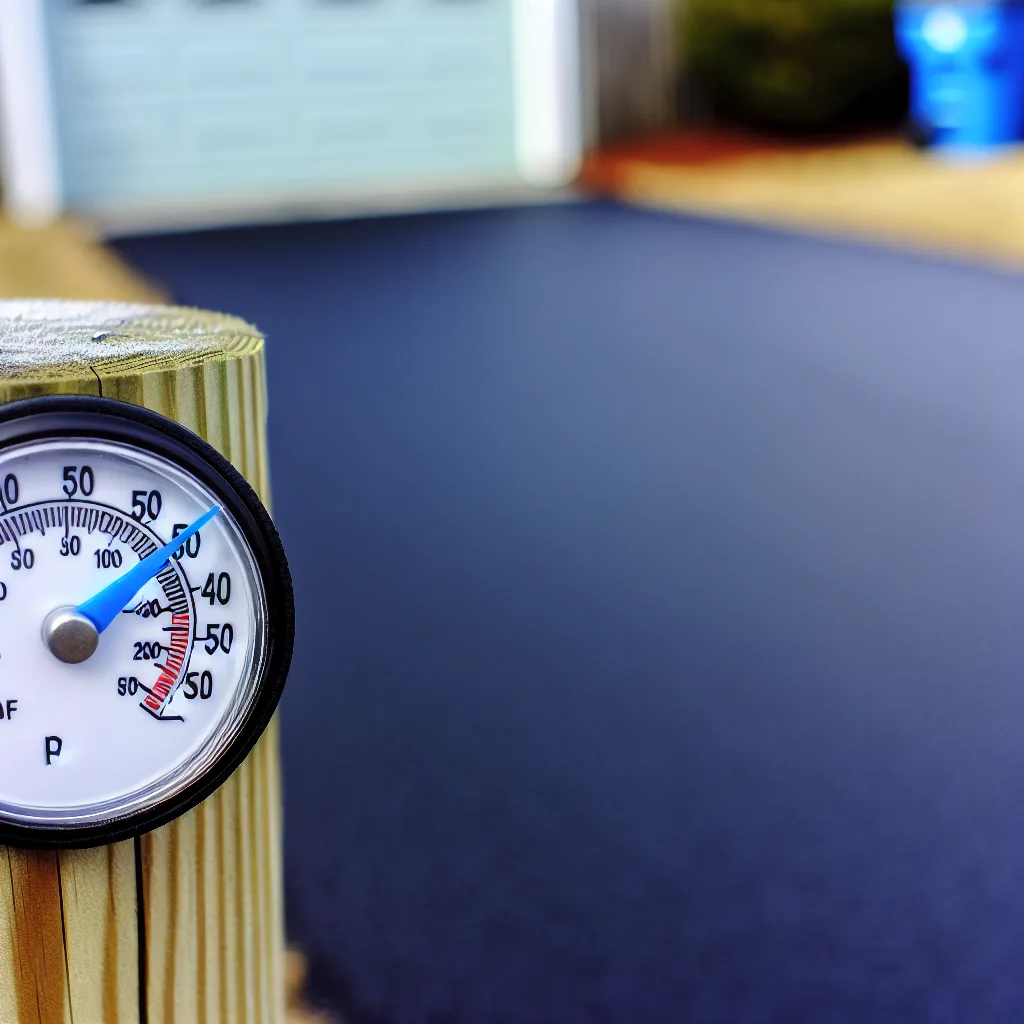
Driveway sealer is a water-based emulsion. Tiny particles of binder are suspended in water. As the water evaporates, those particles fuse together and form a tough, flexible film. That fusion process needs warmth. Below 50°F, the particles can't bond properly. They just sit there on the surface like wet sand that never becomes a sandcastle.
Here's what we actually see happen in Spokane Valley when someone seals too late in the fall or picks a cold morning that seemed "close enough."
Powdering and flaking within weeks. The sealer looks fine at first. Then you notice a chalky residue on your shoes. Run your hand across the surface and it comes up gray. The coating never fully cured. It's basically loose powder pretending to be a seal coat. A good rain washes half of it into your lawn.
White hazing across the entire surface. This one really frustrates homeowners. The driveway turns a blotchy, milky white instead of that rich black finish. It's called blushing. Moisture gets trapped inside the sealer film because cold temperatures slowed evaporation. The water couldn't escape before the surface skinned over. We see this mistake all the time on driveways near the Spokane River where morning humidity stays high well into October.
Tracking and peeling in tire paths. Your car tires pull up strips of sealer like peeling tape. That happens because the coating bonded to itself on top but never grabbed onto the underneath. Cold pavement rejects the sealer. Think of it like trying to stick a bandage on wet skin. It might hold for a minute, but it's coming off.
But cold doesn't just affect the sealer itself. It changes how the pavement behaves too. contracts in cold weather. The pores tighten up. So the sealer can't penetrate into those tiny surface voids where it needs to anchor. You end up with a coating sitting on top of the driveway instead of locking into it.
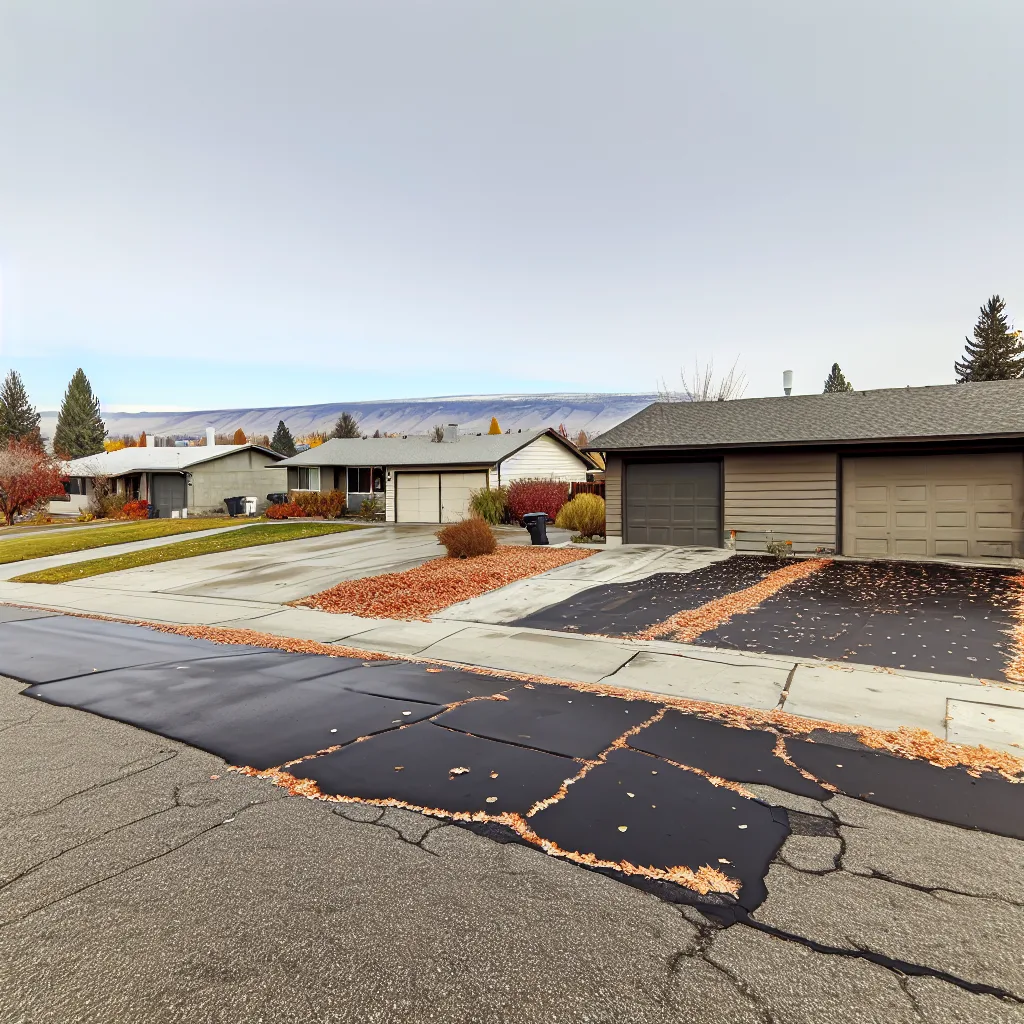
And here's something most people don't realize until it's too late. Ground temperature matters more than air temperature. Your driveway can be 8 to 10 degrees colder than the air on a clear Spokane Valley morning. So even if your weather app says 55°F at noon, that pavement might still be in the mid-40s. Product label directions on most sealcoat brands specify that both air and pavement temperatures should be at least 50°F and rising for proper cure.
One scenario we've run into more than once: a homeowner seals their driveway on a 58°F afternoon in late September. Looks great. Then overnight temps drop to 34°F before the sealer has cured. Frost forms right on top of the fresh coating. That single freeze event can destroy the entire application. The water inside the sealer expands as it freezes, cracking the film from within.
So it's not just about the temperature when you apply. It's about the 24 to 48 hours after application too. The sealer needs consistent warmth to finish curing. One cold night can undo a full day's work.
The damage from cold-weather sealing isn't cosmetic. It means the job has to be completely redone. The failed sealer needs to wear off or be cleaned before a new coat can go down. That turns one project into two.
Spokane Valley's Climate Makes Timing Critical for Driveway Sealing
Our weather here doesn't give you a long window. Spokane Valley sits in a climate zone where temperatures swing hard between seasons. We get hot, dry summers and cold winters that regularly dip below freezing. That narrow stretch of usable weather is exactly why so many people ask, "what temperature is too cold to seal a driveway?" The safe range for sealing matters more here than in most places.
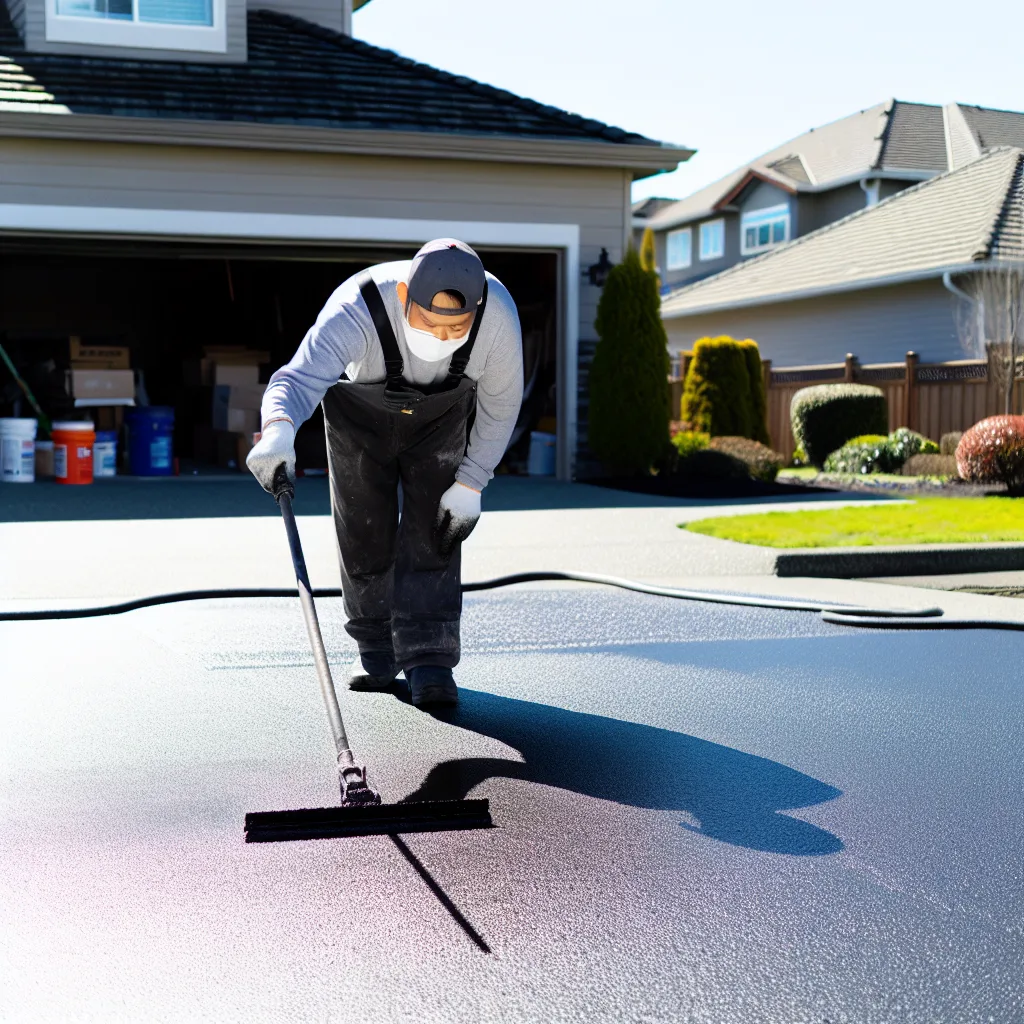
Here's the reality. Most sealcoat products need air and pavement temperatures at or above 50°F for proper curing. And that temperature needs to hold steady for at least 24 hours after application. Applying sealant below 50°F can prevent it from bonding correctly to the pavement surface. The directions on the bucket will tell you the same thing.
Think about what that means for Spokane Valley. By mid-October, overnight lows near the Spokane River corridor and along Sprague Avenue frequently drop into the upper 30s and low 40s. Even if daytime temps hit 55°F, that cold overnight air pulls heat right out of the pavement. The sealer never fully cures. It stays soft, tacky, and vulnerable to peeling.
We've seen this firsthand more times than we can count. A homeowner waits until the last warm weekend in fall, gets the driveway sealed on a Saturday afternoon, and by Sunday morning the temperature has crashed. The result? A patchy, gray mess that flakes off before spring. Most people don't realize that ground temperature matters just as much as air temperature. holds cold longer than you'd expect, especially in shaded areas near fences or along the north side of a house.
Spring brings its own challenges. March and April in Spokane Valley are unpredictable. You might get a 60°F day followed by a freeze warning. Snow can show up in late April near the foothills east of town. So even though the calendar says spring, the pavement might still be too cold.
The sweet spot? Late May through mid-September. That's your safest window. During those months, both daytime highs and overnight lows typically stay well above the 50°F threshold. July and August are ideal because the pavement absorbs heat all day and holds it through the night.
But don't just check the forecast for the day you plan to seal. Check the 48-hour outlook. You need dry conditions and warm temperatures the day of application and the full day after. Rain within 24 hours of sealing is just as damaging as cold. And Spokane Valley's late-summer thunderstorms can roll in fast from the west.
One more thing people overlook. Humidity plays a role too. Low humidity helps sealant cure faster. Spokane Valley's dry summer air is actually a huge advantage compared to cities in wetter climates. Your sealer dries quicker, bonds tighter, and lasts longer when conditions are right.
So the short answer is this: if you're in Spokane Valley, plan your driveway sealing for summer. Not early spring. Not late fall. The cost of getting the timing wrong isn't just wasted product. It's a driveway that looks worse than before you started. If you're unsure whether conditions are right for your project, our driveway sealing page walks you through what to expect and how to schedule at the right time.
Frequently Asked Questions
What is the minimum temperature to seal a driveway?
The minimum safe temperature is 50°F — and it needs to stay that way for at least 24 hours after you apply the sealer. Air temperature alone isn't enough. Your pavement surface also needs to read 50°F or higher. On a cloudy day, your driveway can be 8 to 10 degrees colder than the air. Use an inexpensive infrared thermometer to check the surface before you start. If either reading drops below 50°F during the curing window, the sealer won't bond correctly.
What happens if you seal a driveway when it's too cold?
Cold temperatures cause the sealer to fail in several ways. You may see powdering, white hazing, or strips of sealer peeling up in your tire tracks. These problems happen because the sealer never fully bonded to the pavement. Cold pavement tightens up and rejects the coating instead of absorbing it. The damage usually can't be fixed — the old sealer has to be stripped and the job redone. Our driveway sealing page explains what a proper professional application looks like from start to finish.
Is it a mistake to seal a driveway in the morning when temperatures are still rising?
Yes, sealing too early in the morning is one of the most common mistakes homeowners make. If the pavement is still cold from overnight, the sealer applied at 7 or 8 a.m. can already be compromised before the afternoon warmth arrives. The best approach is to wait until late morning on a warming day. That gives the sealer the most curing time before temperatures drop again at sunset. Both air and pavement temperatures need to be at 50°F and rising before you start.
When is the best time of year to seal a driveway in Spokane Valley?
The best window in Spokane Valley runs from late May through mid-September. That's when daytime highs and overnight lows stay reliably above 50°F. Early October can work in some years, but overnight temperatures drop fast here — especially in areas like Greenacres and Trentwood. One cold night after sealing can ruin the whole job. Check both the daytime forecast and the overnight low before you schedule anything.
Does it matter if my driveway is in the shade in Spokane Valley?
Yes, shade makes a real difference here in Spokane Valley. Shaded driveways stay colder longer, especially on fall mornings near the Spokane River corridor where humidity lingers. A driveway in full sun on a 52°F day might read 58°F on the surface — workable. The same driveway in shade could sit at 46°F. Always check the actual pavement temperature with an infrared thermometer. Don't assume the air temperature tells the whole story.
Should I seal my own driveway or call a professional?
DIY sealing can work if conditions are right, but most problems we see come from skipping the temperature check or misjudging the overnight low. A professional will check both air and pavement temperatures, time the application correctly, and know when to reschedule. If your driveway has cracks, low spots, or sits in partial shade, a professional can catch issues a first-timer might miss. When in doubt, getting a professional opinion before you start can save you from a costly redo.
Ready to Experience the Concrete Revival Difference?
Complete Service Area Coverage
- Spokane and Spokane Valley
- Coeur d'Alene metro area
- Deer Park and Newport
- Liberty Lake and Otis Orchards
- Cheney and Medical Lake
- Post Falls and Rathdrum