What's the Best Way to Go About Fixing a Damaged Driveway? A Spokane Valley Guide
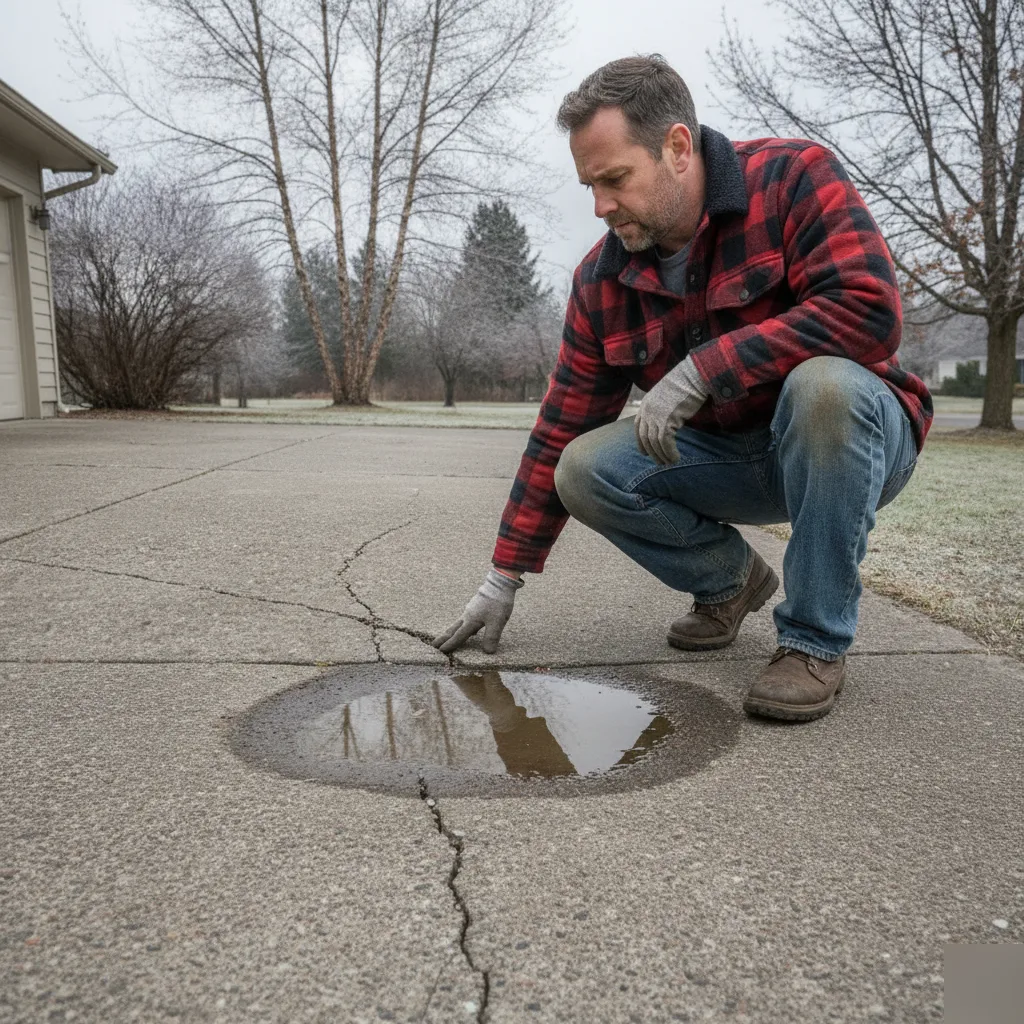
Why Most Driveway Damage Starts Below the Surface
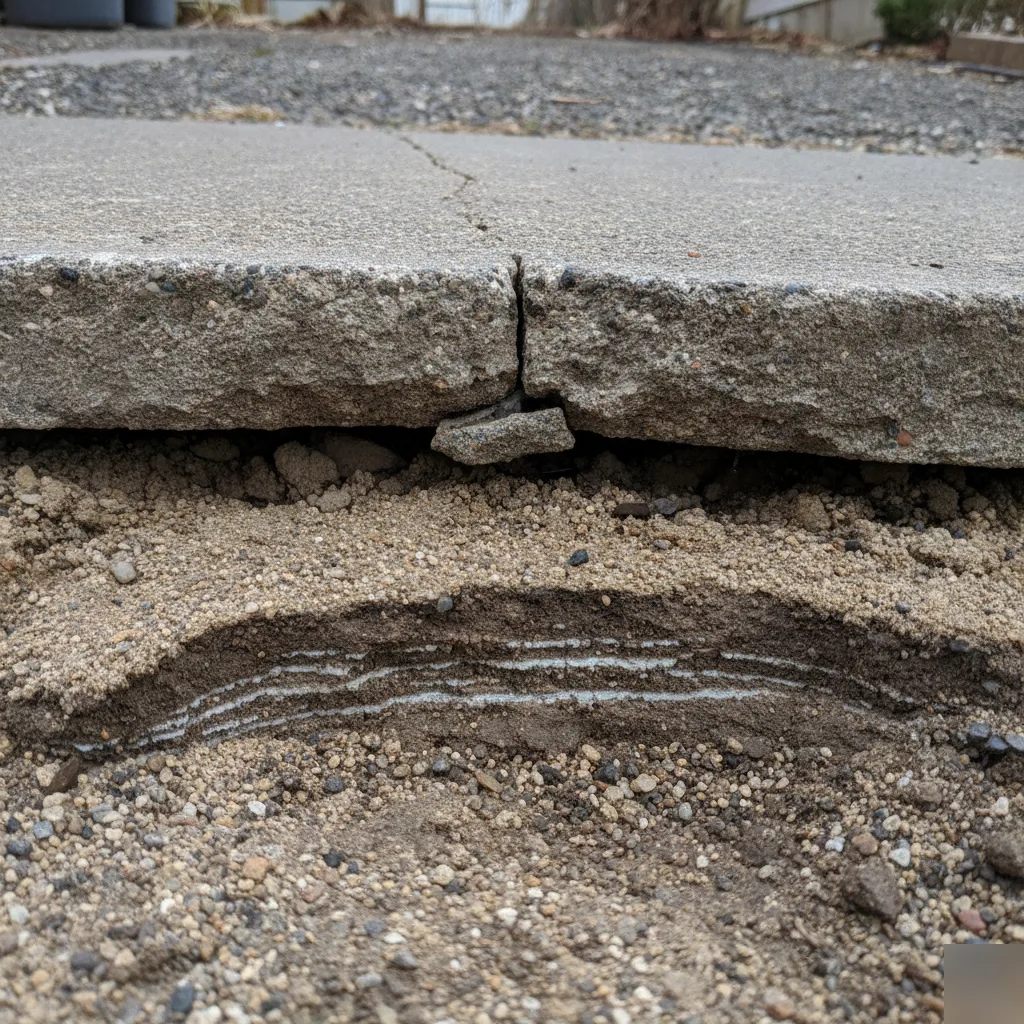
Most driveway damage in Spokane Valley doesn't start on top, it starts underground where freeze-thaw cycles push and shift the soil. Once that base moves, cracks and sinking follow no matter how good the concrete looks. Fixing the surface without fixing the base just buys you a few more months.
So what's the real fix for a damaged driveway? You start by figuring out what's happening under the slab, not just what's staring back at you from on top. We get calls all the time from homeowners pointing at a crack like it's the whole problem. It's not. That crack is usually just the messenger.
Spokane Valley sits in a spot where the ground freezes hard in January and thaws out by March, and that cycle repeats itself every winter without fail. Water gets into the soil under your driveway, freezes, and expands, pushing the base up. Then it thaws and settles back down, but not always evenly.
We've seen this crack pattern a hundred times, a straight diagonal line running corner to corner where the base shifted unevenly under the load. It's not random. It's physics doing what physics does in this climate, year after year.
- Poor soil compaction when the driveway was first poured, leaving soft spots that settle over time
- Water pooling near the edges and seeping down into the base instead of draining away
- Tree roots working their way under the slab and lifting sections unevenly
- Old or missing control joints that force cracks to form wherever the concrete wants instead of where it should
- Heavy vehicles or equipment parked in the same spot year after year, stressing a weak base
Most homeowners wait too long before calling anyone. A hairline crack seems harmless, so it gets ignored through another winter. Then water gets into that crack, freezes, and widens it, and by spring it's not a hairline anymore, it's a gap you could fit a coin into.
We've cut into plenty of Spokane Valley driveways over the past 11 years and found the same story underneath. The surface concrete was fine. The base was garbage. Nobody compacted it right, or the drainage never worked, and the slab just rode along on top of a shifting foundation until it finally cracked.
So what does this mean for you? It means patching the top of a crack without addressing the base is a short-term fix at best.
Concrete doesn't fail because it's bad concrete. It fails because of what's happening underneath it, and that's exactly what we check first on every driveway repair job we look at in the Spokane Valley area.
Signs Your Driveway Needs Repair
Not every crack means trouble. But some cracks are screaming at you, you just don't know how to listen yet. After years of walking Spokane Valley driveways, we can usually tell what's going on before we even grab a tool.
A hairline crack running straight across a slab? That's often just normal shrinkage from when the concrete cured. But a crack that's widening every winter, or one where you can see daylight through it, that's a different story. Freeze-thaw cycles here in Spokane Valley take a small crack and turn it into a real problem fast. Water gets in, freezes, expands, and pries the concrete apart bit by bit.
- Cracks wider than a quarter inch or ones that keep growing year over year
- Sections of slab that are sinking, tilting, or sitting higher than the panel next to them
- Crumbling edges or corners, especially near the garage door or street
- Pooling water after rain instead of proper drainage away from the house
- Potholes or soft spots that flex or give when you drive over them
We've seen this crack pattern a hundred times on homes off Sullivan Road and further into the Valley. Spider web cracking near a corner usually points to a base problem underneath, not just a surface issue. Fixing the surface without fixing the base is like putting a bandage on a broken bone. It might look better for a season, then the same crack comes right back.
Sinking or heaving slabs are another big red flag. This happens when the soil underneath shifts, often from poor drainage or years of freeze-thaw pounding. If one slab sits noticeably lower than its neighbor, that's not cosmetic anymore, it's a trip hazard and a sign the ground below is unstable.
Ever notice how some driveways just look tired, even without huge cracks? Fading, flaking, or a rough sandy texture on the surface means the top layer is breaking down, usually from age combined with our brutal winters and years of de-icing salt.
Here's the truth most homeowners don't want to hear: waiting rarely saves money. Most homeowners hope a crack will just stay put. It won't. Small problems caught early usually mean a straightforward concrete crack repair. Ignore it through two or three more Spokane winters, and you're often looking at driveway resurfacing or a full replacement instead.
If you're staring at your driveway right now wondering which category it falls into, that's exactly the kind of thing worth getting a second opinion on.
Repair, Resurface, or Replace: Matching the Fix to the Damage
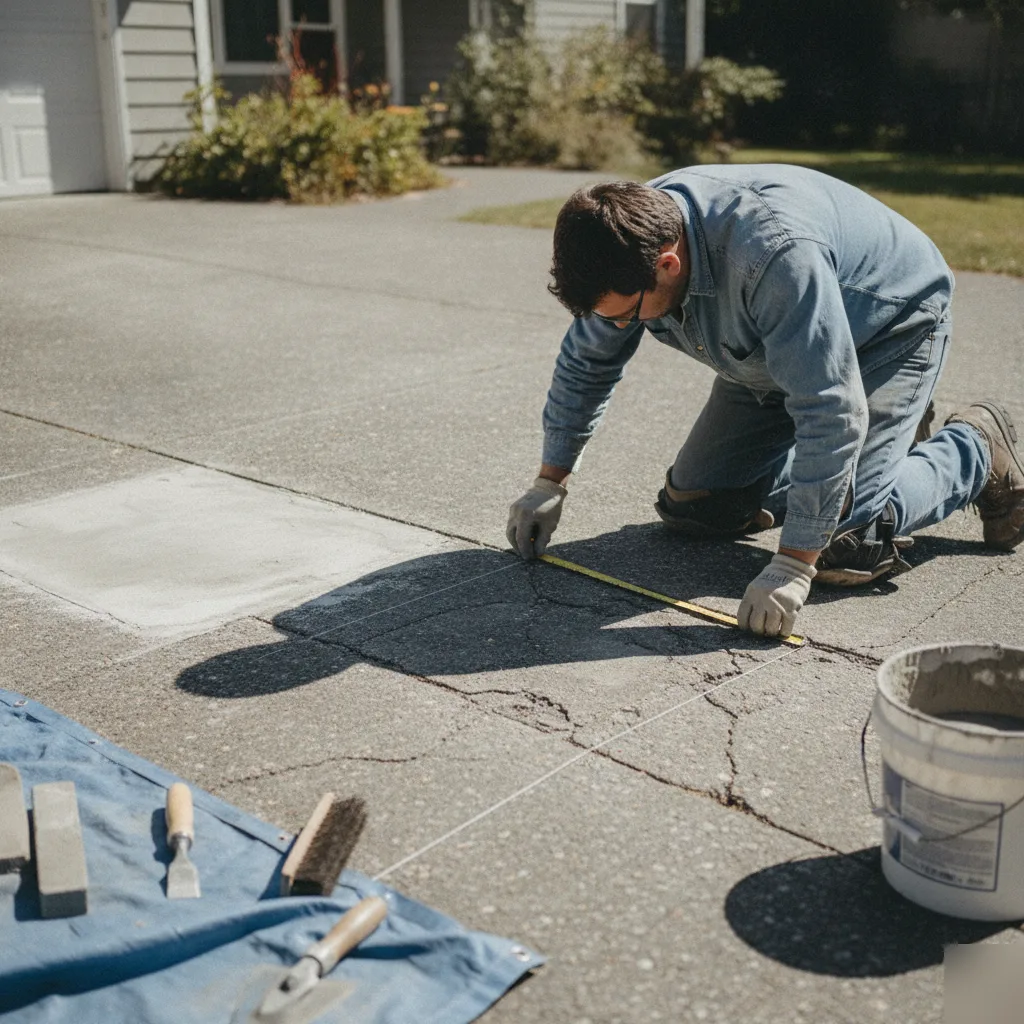
This is the question we get asked on almost every driveway call in Spokane Valley. You've got cracks or a rough spot and you want to know what it's going to take to fix it. The honest answer? It depends on how deep the damage goes, not just what it looks like on top.
Concrete crack repair works when the slab underneath is still solid. Think hairline cracks, a few surface chips, maybe some flaking from years of freeze-thaw. We fill the crack, seal it up, and you're done. Simple, fast, and it stops water from getting in and making things worse.
Resurfacing is the next step up. If your driveway has scaling across a big area, or the surface looks pitted and worn but the base underneath hasn't shifted, resurfacing gives you a fresh top layer without tearing out the whole slab. It's a solid option for driveways that are structurally fine but look rough after a decade of Spokane winters.
Full driveway replacement is a different animal. This is for slabs that are heaving, sinking, or cracked clean through in multiple spots. And here's the thing most homeowners don't realize until it's too late, once the base has failed, no amount of patching fixes it. You're just buying time before the same crack comes back.
- Surface hairline cracks with no movement, usually a repair job
- Wide cracks with edges that don't line up, points to base failure and likely resurfacing or replacement
- Sunken slabs or standing water after rain, almost always a replacement situation
- Pitting and flaking across the whole driveway but flat and stable, good candidate for resurfacing
- Cracks that keep coming back after a patch, sign the base was never right to begin with
We had a job off Sullivan Road a while back where a homeowner had patched the same crack three winters running. Every spring it opened back up. Turned out the base had washed out under the slab years earlier, so no patch was ever going to hold. Once we replaced that section properly, the problem was gone for good.
So how do you know which one you need without guessing? A real inspection matters more than a quick look from the curb. We check the base, we check drainage, we check how the cracks are behaving, then we tell you straight what's going on underneath.
Frequently Asked Questions
How do I know if a driveway crack is serious or just normal wear?
A crack is serious if it's wider than a quarter inch, keeps growing each winter, or has daylight showing through it. Normal shrinkage cracks are thin, straight, and stay the same size year after year. In Spokane Valley, freeze-thaw cycles turn small cracks into bigger ones fast because water gets in, freezes, and pushes the concrete apart. If you're unsure which type you have, a quick look from someone who checks driveways daily can save you a guessing game.
What's the biggest mistake homeowners make with a damaged driveway?
The biggest mistake is treating the crack as the whole problem instead of a symptom. Most driveway damage starts underground, where soil shifts from freeze-thaw cycles, poor compaction, or bad drainage. Patching the surface without checking the base only buys you a few more months before the same crack reappears. Fixing what's happening below the slab is the real solution, and that's the first thing worth checking before choosing any repair option.
How do I decide between repairing, resurfacing, or replacing my driveway?
The right fix depends on how deep the damage goes, not just what you see on top. Small hairline cracks with a solid base usually only need concrete crack repair. Wider scaling or pitting across the surface often calls for resurfacing instead. If the base itself has shifted or sunk, full replacement may be the only lasting fix. Comparing driveway repair options for your specific damage is the best way to avoid paying for the wrong solution.
Can I fix a damaged driveway myself, or should I call a professional?
You can patch small hairline cracks yourself, but sinking slabs, spider cracking, or gaps you can fit a coin into need a professional look. DIY crack fillers only seal the top and don't fix a shifting base underneath. If the ground below your slab has moved from freeze-thaw damage, patching alone won't hold through another Spokane Valley winter. When in doubt, get a second opinion before spending time on a fix that won't last.
Why does Spokane Valley's climate cause so much driveway damage?
Spokane Valley's freeze-thaw cycle is the main reason driveways crack and sink here. The ground freezes hard in January, expands, then thaws by March and settles unevenly. This repeats every winter, pushing and shifting the soil under your slab year after year. Add in de-icing salt and years of heavy use, and it's no surprise driveways here wear out faster than in milder climates. Knowing this helps explain why some fixes hold and others fail within a season.
Does a small crack near my garage door mean bigger problems underneath?
Yes, cracking near a garage door or corner often points to a base problem, not just surface wear. Corners and edges take the most stress from heavy vehicles and uneven soil settling. Spider web cracking in these spots usually means the ground underneath has shifted from freeze-thaw damage. Catching this early with a proper check can mean a simple repair instead of a bigger project down the road.
Ready to Experience the Concrete Revival Difference?
Complete Service Area Coverage
- Spokane and Spokane Valley
- Coeur d'Alene metro area
- Deer Park and Newport
- Liberty Lake and Otis Orchards
- Cheney and Medical Lake
- Post Falls and Rathdrum