
20x20 Stamped Concrete Patio Cost in Spokane Guide
If you've been searching "how much does a 20x20 stamped concrete patio cost in Spokane," you've probably seen a lot of numbers. Most run low. We hear it all the time from Spokane Valley homeowners who get a quote and can't figure out why it doesn't match the $8 per square foot they found online.
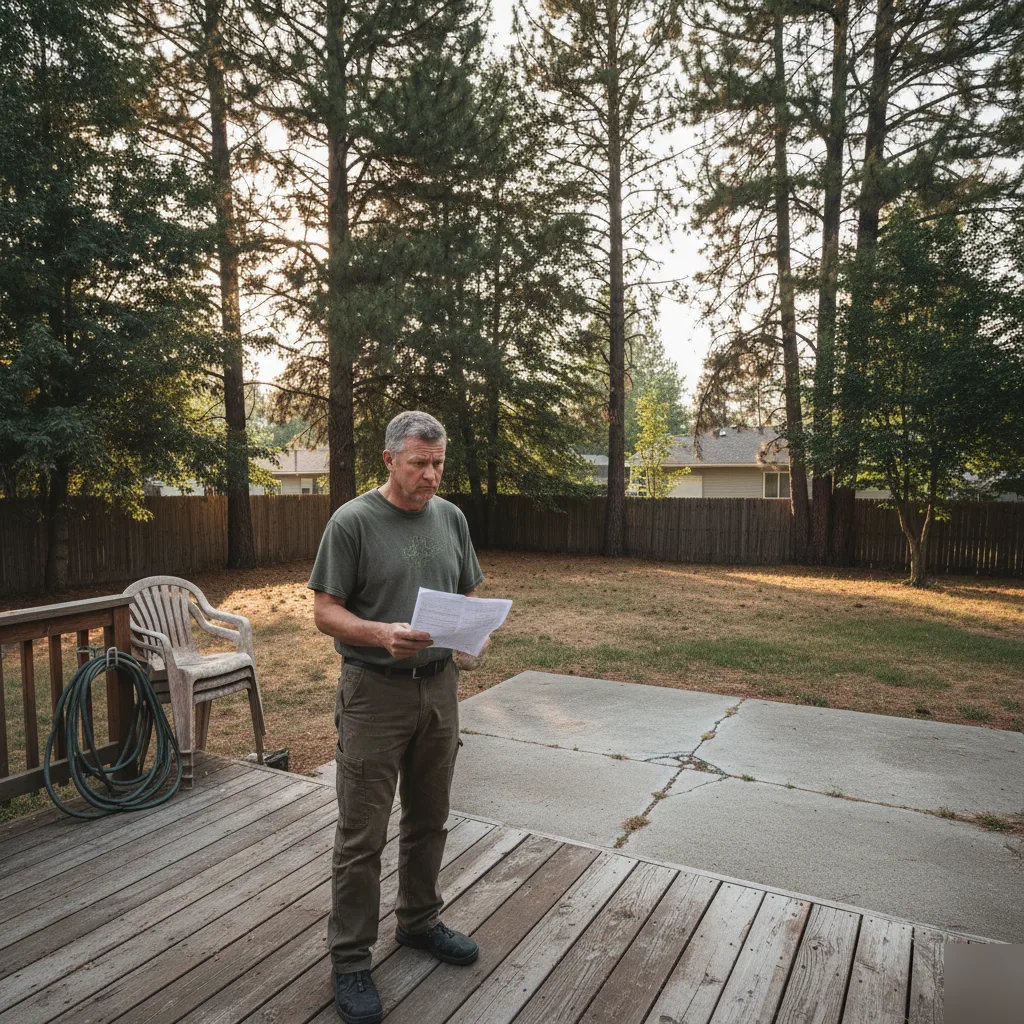
Those online calculators use national averages. They don't know your soil. They skip site prep. They miss the freeze-thaw cycles we deal with every winter here.
Four hundred square feet is a real project. It's not a little walkway or a plain slab pour. That much space means a lot of material, a lot of labor, and finish work that takes time and a steady hand.
Why the Gap Between Online Numbers and Real Quotes
Online cost tools pull data from all over the country. A stamped concrete patio poured in Phoenix has different needs than one poured near the Spokane River. Our ground freezes hard. That means deeper base prep, thicker gravel beds, and sometimes reinforcement warmer places skip (we see that mistake a lot).
Most calculators also leave out common real-world costs:
- Excavation and grading for proper drainage away from your home's foundation
- Subbase compaction to help stop settling and cracking through Spokane Valley winters
- Color hardener and release agent application during the stamping process
- Concrete sealing after the patio cures to protect the surface from moisture damage
Every one of those steps adds labor and materials. Every one of them also protects your investment for years. Skip any of them, you'll see cracks before the second winter hits.
And that's the part people miss.
What Actually Drives the Final Number
The pattern you choose matters a lot. A basic ashlar slate stamp takes less time than a complex European fan or cobblestone layout. More intricate patterns need more careful hand work at the edges and seams. That's real labor from finishers, not something you rush.
Color adds cost too. A single integral color with one release shade is simple. But if you want two-tone effects or borders with contrasting stain, the crew needs more material and more passes. We've done projects in the Greenacres area where a homeowner wanted a plain gray stamped patio, then saw a neighbor's two-tone flagstone pattern and changed their mind mid-planning. The look was sharp. The scope changed fast.
And then there's access. Can a concrete truck back right up to your patio area? Or does the crew need to wheelbarrow material through a side yard and around landscaping? That changes the timeline. A pour that takes one day with good access can stretch longer without it.
So when you see a flat per-square-foot number online, treat it like a starting point. Your actual cost depends on your yard, your design choices, and the prep work your lot needs. According to the Portland Cement Association, proper subbase prep is the biggest factor in long-term concrete performance.
Most people don't realize this until they're comparing quotes. The lowest bid usually means someone's cutting corners on one of those steps we just listed. That's not a savings, it's a repair bill waiting around.
For a detailed breakdown of what goes into pricing a project like this, our stamped concrete patio cost guide for 2026 walks through the numbers in depth. If you want a clearer picture of what your stamped concrete patio in Spokane really needs, our dedicated service page breaks down the process, the prep work, and what to expect before you ever pick up the phone — because a stamped concrete patio in Spokane done right starts with knowing exactly what you're getting into.
Five Factors That Drive the Final Price of a Stamped Concrete Patio
People ask us for a quick number all the time. A stamped concrete patio isn't a shelf item. It's built on your ground, in your climate, with your design choices. The final cost depends on real stuff that shifts from one Spokane Valley property to the next.
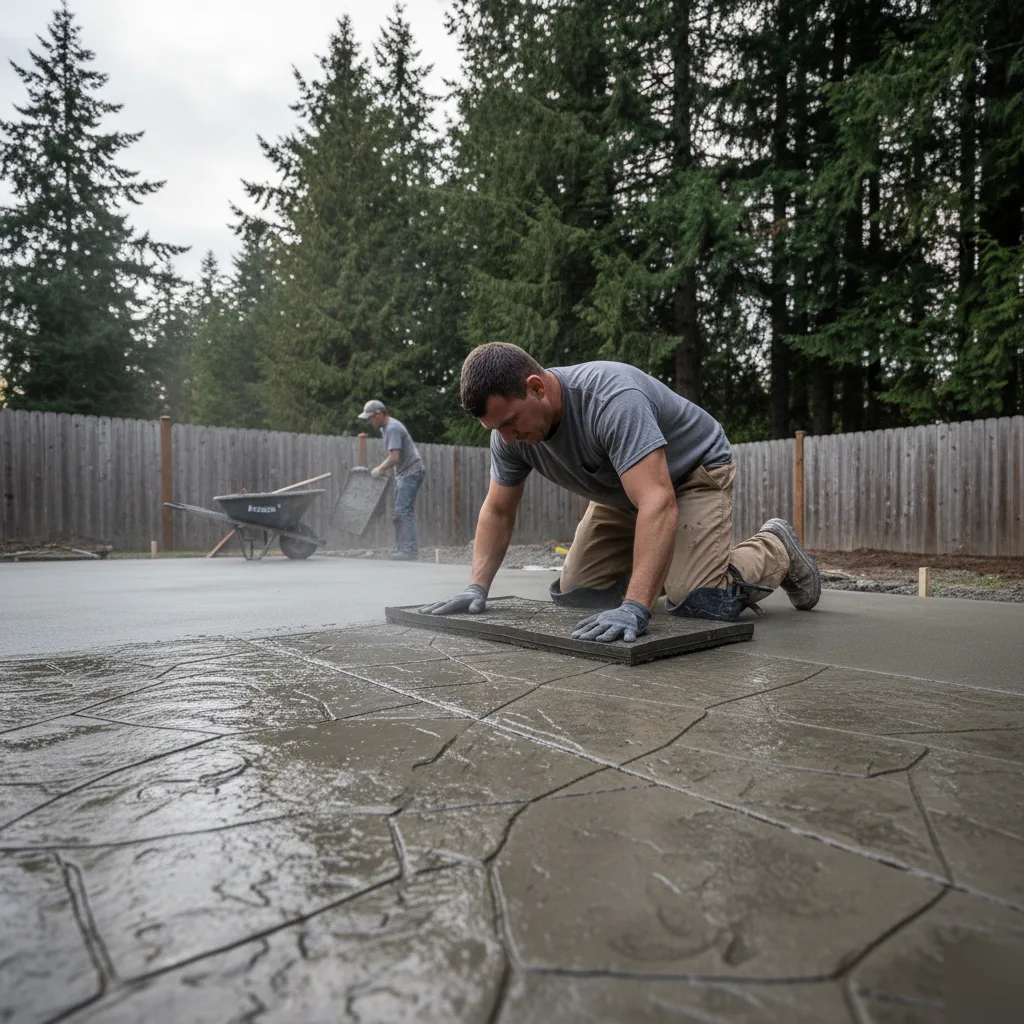
Here are the five factors we see move the needle most.
1. Site Prep and Ground Conditions
This one catches people off guard. If your yard slopes toward the house or has rocky fill underneath, the crew has to grade, excavate, or haul material before any concrete gets poured. A flat lot near Greenacres might need almost no prep. A hillside property closer to Dishman Hills could need serious grading work. The ground calls the shots, and it's the biggest thing most homeowners overlook.
And we see a lot of old fill in Spokane Valley. Some of those mid-century yards were built fast, and the soil tells on them later.
2. Concrete Thickness and Reinforcement
A standard stamped concrete patio is usually four inches thick. Some jobs need more. If you're planning to park heavy patio furniture, a hot tub, or an outdoor kitchen on that 20x20 slab, thicker concrete with steel reinforcement makes sense. Thicker slabs use more material. More material means more labor to place and finish it right.
But don't guess on this part.
3. Pattern Complexity and Color Layers
A simple single-pattern, single-color job takes less time than a multi-pattern design with accent colors and hand-cut borders. We've poured patios where the homeowner wanted a natural stone look with three color layers and a contrasting border band. Nice result. Every added detail means more stamps, more colored concrete, and more finish work on hands and knees.
Think of it like ordering a pizza. Plain cheese is one price. Add toppings and the cost goes up.
4. Access to the Pour Site
Can a concrete truck back right up to your patio area? Or does the crew need to wheelbarrow every load through a narrow side yard and around a fence? We run into tight access all the time in older Spokane Valley neighborhoods. That extra labor adds up fast. If there's a retaining wall, mature trees, or a deck in the way, the crew works harder and longer to get the same amount of concrete placed.
Most people don't realize this until they see the truck parked out front and wonder how concrete gets to the backyard.
5. Time of Year and Scheduling Demand
Spokane Valley has a short prime season for outdoor concrete work. Late spring through early fall is when most homeowners want their patio done. That's also when every concrete crew in the area is booked solid. Scheduling during peak months can affect lead times. Booking during shoulder season, like early April or late October, sometimes gives you more flexibility.
But here's the catch. Concrete needs the right temperature to cure properly. Pour too early in spring when nights still dip below freezing and you risk surface problems. So timing isn't just about convenience. It's about quality.
Every one of these factors stacks on top of the others. A flat, easy-access lot with a simple pattern is a different project than a sloped yard with tight access and a three-color ashlar slate design. Same 400 square feet. Very different scope of work.
If you want to know where your project falls, the best move is to get someone on-site to look at your yard. That's the only way to get a number that means anything.
Stamped Concrete vs. Pavers: Which Costs More for a 20x20 Patio
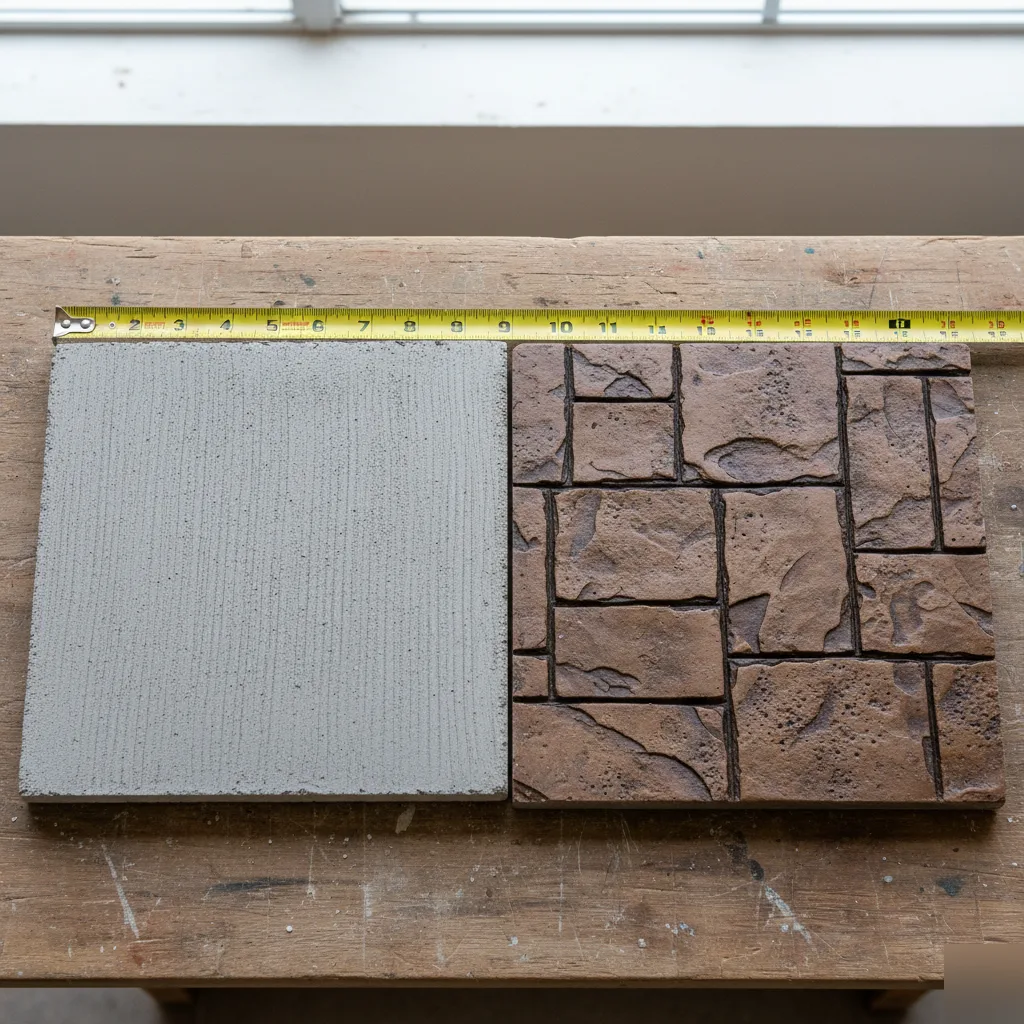
This is one of the most common questions we hear from Spokane Valley homeowners. And the answer surprises most people.
Stamped concrete is one continuous pour. Your crew forms it, pours it, stamps the pattern, and adds color in one process. Pavers are individual units laid one by one on a prepared base. Both look good. The way they're built changes the cost picture fast.
Installation Labor Tells the Story
Pavers take longer to install. Every piece needs to be cut, leveled, and set by hand. For a 20x20 patio, that's 400 square feet of individual placement. Stamped concrete covers that same area in one pour, the pattern gets pressed in while the concrete is still wet, and color gets applied during or right after the pour.
That difference in labor hours adds up quick.
We've seen paver projects take two to three times longer than a stamped concrete job of the same size. More labor hours means a bigger bill. Most people don't realize how much of their total cost is just time on the job site.
Base Prep and Materials
Pavers need a deep gravel base, a layer of sand, edge restraints, and polymeric sand between each joint. Stamped concrete needs a solid subgrade and standard concrete forms. The material list for pavers is longer. It adds cost at every step.
Here's what a typical paver base requires:
- Six to eight inches of compacted gravel
- One inch of leveling sand
- Rigid edge restraints around the full perimeter
- Joint sand that needs reapplication over time
Stamped concrete skips most of that. The pour goes directly onto prepared ground with proper compaction. Fewer materials, fewer steps.
By the way, that's why paver bids can look fine at first glance and still end up higher once the base work gets priced out.
Long-Term Maintenance Costs
So what about after the install? Pavers shift. They settle unevenly, especially through Spokane Valley's freeze-thaw cycles. Weeds push up between joints. Sand washes out. You'll spend time and money on upkeep every year or two.
Stamped concrete needs resealing every few years. That's about it. No weeds. No shifting stones. No ants building colonies in the joints. According to the Portland Cement Association, properly sealed concrete surfaces keep their look for years with little upkeep.
One client near Mirabeau Point had a paver patio for five years before calling us. Half the pavers had sunk, the edges were spreading apart, and weeds had taken over. They replaced the whole thing with stamped concrete. Their only regret was not doing it first.
We hear that a lot.
The Bottom Line on Cost
Pavers almost always cost more than stamped concrete for a 20x20 patio. The gap comes from labor time, base materials, and ongoing maintenance. Stamped concrete gives you the high-end look for less money upfront and less hassle down the road.
Stamped concrete also gives you more pattern choices. You can match natural stone, brick, slate, or wood plank looks. The color is built into the surface, not sitting on top like a paver's factory coating.
If you're weighing these two options for your backyard, our stamped concrete page breaks down patterns, color choices, and what the process looks like from start to finish. Worth a look before you commit either way.

Frequently Asked Questions
Why does my stamped concrete quote look so different from what I found online?
Online calculators use national averages, and those numbers often leave out real costs like excavation, grading, and sealing. Here in Spokane Valley, our ground freezes hard every winter. That means deeper base prep and thicker gravel beds than warmer climates need. Those steps add labor and materials to every project. The number you see online is a starting point, not a final price. Your yard, your soil, and your design choices all push the real number higher than any flat rate tool can predict.
How does Spokane Valley's climate affect a stamped concrete patio?
Spokane Valley's freeze-thaw cycles put real stress on concrete every winter. That's why proper subbase prep and sealing matter more here than in warmer parts of the country. A patio poured without a solid compacted gravel bed can crack before the second winter hits. Sealing the surface after it cures helps block moisture from working into the concrete and causing damage. Skipping either step to save money upfront usually means a repair bill later. Our climate makes doing the job right the first time the smarter choice.
Is a thicker concrete slab worth the extra cost for a backyard patio?
For most backyard patios, a four-inch slab is standard and works well. But if you plan to put a hot tub, an outdoor kitchen, or very heavy furniture on your 20x20 patio, going thicker with steel reinforcement makes sense. Thicker concrete uses more material and takes more labor to place and finish. It also holds up better under heavy loads over time. Don't guess on this part — a concrete professional can look at your plans and tell you what your specific project actually needs.
Does the pattern I choose really change how much a stamped concrete patio costs?
Yes, the pattern is one of the biggest cost drivers on a stamped concrete project. A simple ashlar slate stamp takes less time than a European fan or cobblestone layout. More complex patterns need careful hand work at every edge and seam. Add a second color or a contrasting border band, and the crew needs more materials and more passes. Think of it like ordering a pizza — plain is one price, and every topping adds to the total. For a full breakdown, this stamped concrete patio cost guide for 2026 walks through the details.
Does yard access really affect the cost of pouring a concrete patio?
Yes, access to the pour site changes the timeline and the labor cost on every job. If a concrete truck can back right up to your patio area, the crew works fast. If they have to wheelbarrow loads through a narrow side yard or around a fence, that takes much longer. We run into tight access often in older Spokane Valley neighborhoods. A retaining wall, mature trees, or a deck in the way all slow things down. More labor time means a higher final number, even if the concrete itself stays the same.
What is the biggest mistake homeowners make when planning a stamped concrete patio?
The most common mistake is choosing the lowest bid without asking what it includes. The lowest quote usually means someone skipped site prep, subbase compaction, or sealing. Those aren't optional steps — they protect the slab through Spokane Valley winters. According to the Portland Cement Association, proper subbase prep is the biggest factor in long-term concrete performance. A patio that wasn't built right will crack early and cost more to fix than it would have cost to do it correctly the first time.
Ready to Experience the Concrete Revival Difference?
Complete Service Area Coverage
- Spokane and Spokane Valley
- Coeur d'Alene metro area
- Deer Park and Newport
- Liberty Lake and Otis Orchards
- Cheney and Medical Lake
- Post Falls and Rathdrum