Cheapest Ways to Fix a Driveway | Concrete Revival
You’ve got a driveway problem. We get it. Here at Concrete Revival, with over 20 years leading the industry, we see every kind of concrete issue in Spokane Valley. Not every driveway fix means tearing out the whole slab, by the way. Most driveways just need the right repair for the right problem. It saves you real money when we match the fix to what’s actually wrong.
We’re talking about budget options. Here’s how the most common ones stack up, from least to most expensive.
- Concrete crack repair. Small cracks? That's the cheapest fix. A proper concrete crack repair seals the damage. It stops water from getting underneath. If water gets in and freezes, things get bad fast. Spokane Valley's brutal freeze-thaw cycles turn tiny hairline cracks into big, hungry gaps. That can happen in just one winter, easily. Catching these cracks early really saves money down the road. We see it all the time with homeowners near Greenacres and Mirabeau, they wait too long.
- Patching and spot repair. Maybe you've got a pothole. Or a chunk missing near the edge of your slab. Spot concrete repair targets just that damaged area. You’re not replacing the whole driveway here. We just fix the ugly parts. This works great when the rest of your slab is still solid. It's a smart move for isolated issues, not widespread damage.
- Concrete sealing. This isn't a "repair" in the usual sense. But it stops future damage cold. Think of it like sunscreen for your driveway, a tough shield against the elements. Our proprietary sealing process protects against moisture, de-icing salt, and UV exposure. It’s a low-cost move, one of the smartest you can make. We engineer every pour to survive Spokane's brutal freeze-thaw cycles, and our sealing is a big part of that. In fact, our system has eliminated 95% of winter damage claims over the past five years.
- Driveway resurfacing. This is a sweet spot for many Spokane Valley driveways. If your concrete looks rough but is structurally sound underneath, resurfacing is your friend. We put a fresh, new layer right over your existing concrete. No demolition. No hauling away old material. The surface looks brand new again. You totally skip the cost and headache of a full tear-out and pour. It extends the life of your driveway.
- Concrete finishing or overlay. You want your driveway to look better than it did originally? A decorative concrete overlay or a special finishing job gives you choices. We can add color, texture, even patterns. It costs more than basic resurfacing. But it's still way less than a full tear-out and starting from scratch. We help you choose a finish that lasts, something that laughs at Spokane winters.
So, which option is right for your driveway? It really depends on what's gone wrong.
How to Pick the Right Option
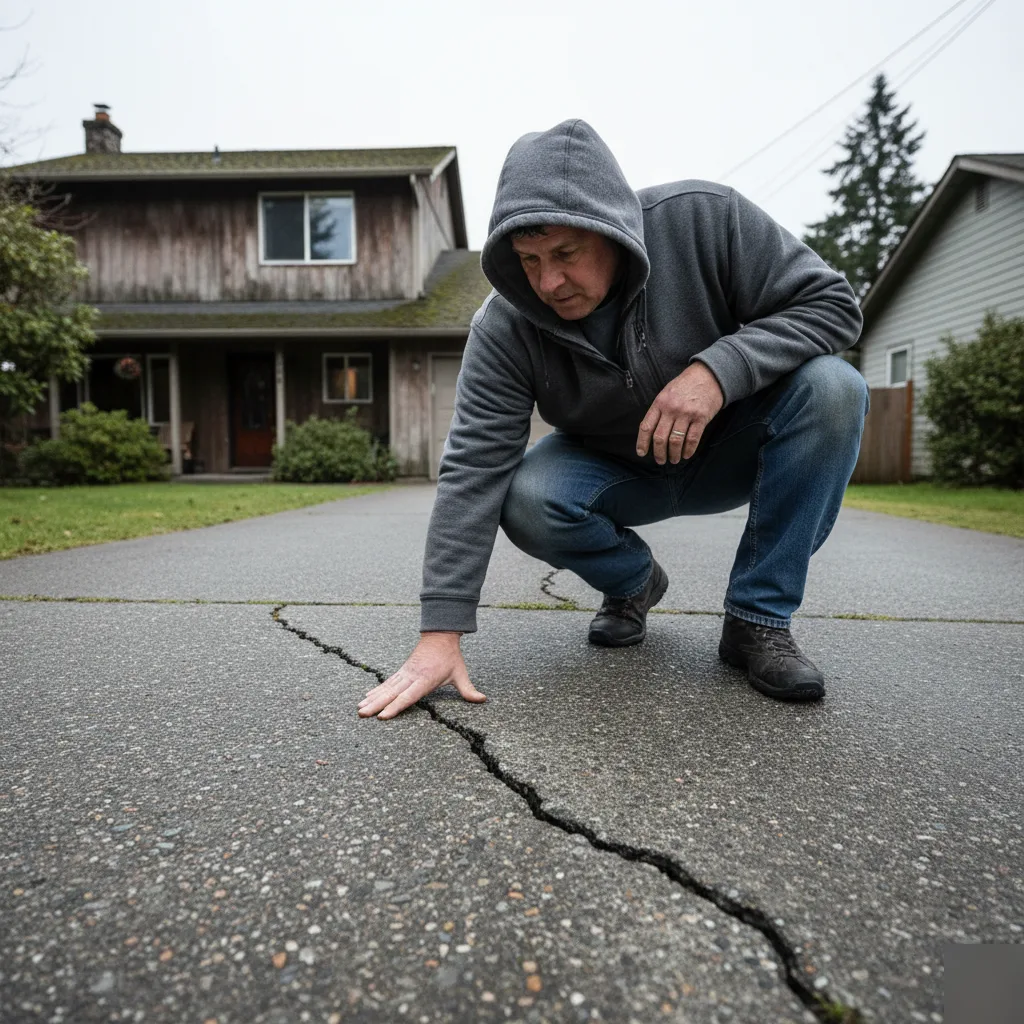
Here’s a quick way we think about it. You see thin cracks. No sinking, no heaving. Concrete crack repair usually handles that. If your driveway shows surface wear, maybe some stains, or mild spalling? Driveway resurfacing is probably your best bet. But if the slab is visibly heaving or broken into big, disconnected pieces, you’re likely past simple budget fixes. That's a different animal entirely.
Most people don't realize this, but the condition underneath your concrete matters just as much as what you see on top. In some parts of Spokane Valley, especially closer to the Spokane River, we sometimes find shifted or eroded soil under older slabs. No amount of surface repair fixes that fundamental problem. The base needs attention first.
We had a homeowner off Sprague Avenue, not too long ago. They wanted us to just resurface a driveway. But one side had sunk a good two inches. Resurfacing would have just been a waste of their hard-earned money. The honest answer was that the base material had washed out. It needed a proper rebuild underneath. A good contractor tells you that upfront, before we even start.
And that’s the real secret to saving money on driveway repair, right there. Match the fix to the problem. Don't overspend on a full replacement when resurfacing works perfectly. But don't underspend on crack filler when the entire slab needs real concrete repair. It’s a balance. We help you find it.
You’re not sure what your driveway actually needs? That’s normal. Most people aren't concrete experts. We are. Take a look at our driveway repair Spokane page to see how we help Spokane Valley homeowners figure out the right fix at the right budget. We want you to get it right the first time.
DIY Driveway Repair vs. Professional Repair, What Actually Lasts
Let's be blunt. Most folks start with a DIY fix. You grab a bucket of concrete patch from the local hardware store, fill in a crack, and call it good. And for really tiny, superficial cracks, that can work for a season. Maybe two.
But here’s what we see all the time in Spokane Valley. That patched spot comes back worse. Every spring, it’s bigger. The freeze-thaw cycles out here are brutal. They chew up quick fixes like candy. Water gets underneath, freezes, expands like crazy, and pops that patch right out. You’re back to square one. Except now the damaged area is bigger than it was before. It’s a frustrating cycle for homeowners.
Where DIY Makes Sense
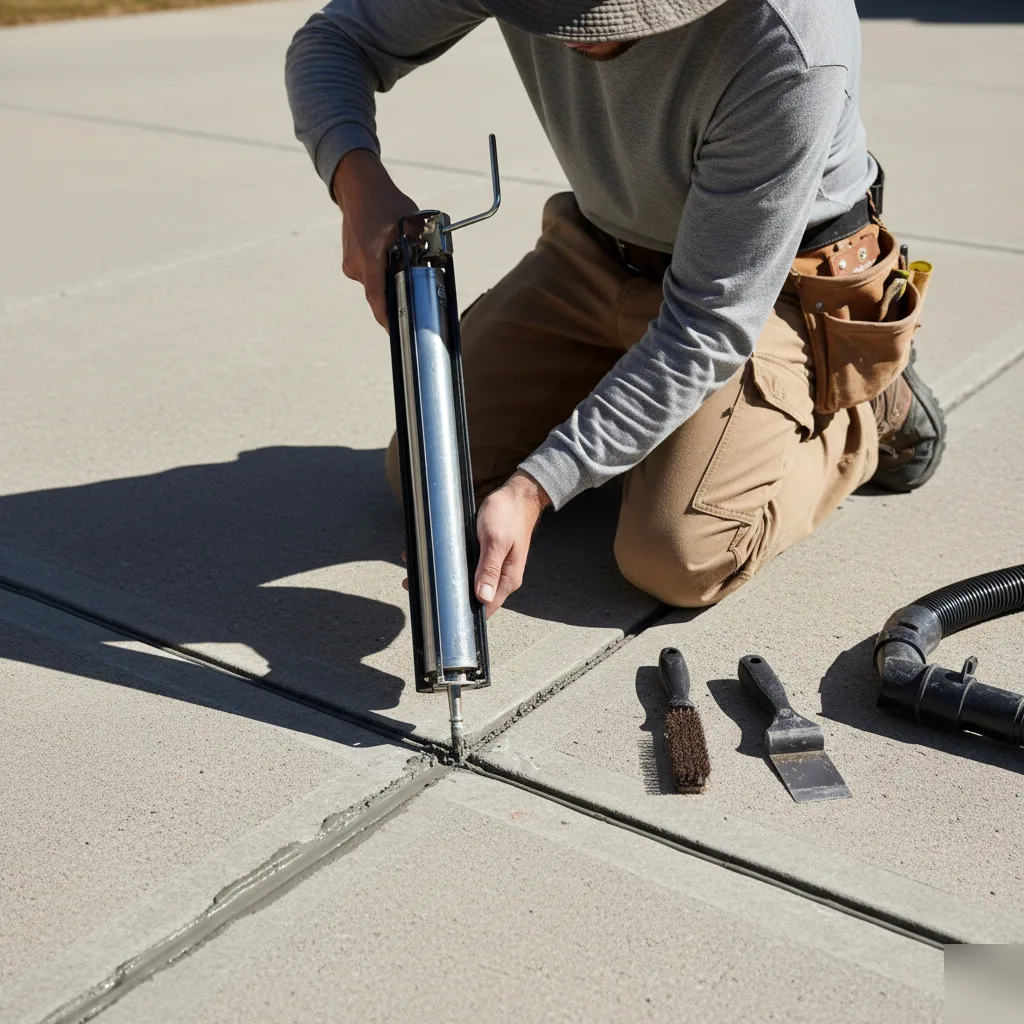
Small cosmetic cracks are fair game. We're talking under a quarter-inch wide. A basic concrete crack repair with a tube of filler can buy you some time. Same goes for minor surface flaking. If the slab underneath is still rock-solid, a thin repair layer might hold up for a while. We call these temporary holds, not real fixes.
DIY driveway repair really works best when:
- Cracks are shallow and haven't spread to connected sections.
- The base underneath the concrete hasn't shifted or settled.
- You're treating one tiny spot, not trying to patch the whole surface.
- You just need to hold things together until a full, proper repair fits your budget.
That last point matters more than most people think. A quick patch isn't a failure, it’s a placeholder. Just know what it is, and what it isn't.
Where Professional Repair Pays Off
Once cracks connect to each other, or sections of your driveway start sinking, you're past the DIY zone. That's when you need the pros. We've pulled up homeowner patches near the Greenacres area and found the base material completely washed out. No amount of surface filler fixes that problem. It’s like putting a band-aid on a broken bone. It won’t hold.
Professional driveway repair addresses what's happening below the surface. That means prepping the base right. It means using the specific concrete mix that handles Spokane Valley's climate. And it means finishing the concrete so water actually runs off, not pools. Most people don't realize this. Not until they've already spent money on three rounds of store-bought patch. We save you that headache and extra cost.
A professional repair also lasts because of the materials we use. We apply specialized bonding agents. We use proper curing methods. A weekend DIY driveway project just can't match that level of preparation. The result? A repair that holds through our cold winters, guaranteed. It won't crumble at the first hard freeze, unlike those quick fixes. We’re Spokane’s only contractor with a winter damage prevention system, a proprietary sealing and reinforcement process that makes all the difference.
The Real Cost Difference
Here’s something that surprises people. DIY supplies for repeated small fixes add up fast. We're talking over just a few years. You buy patch material, then sealer, then maybe some new tools. You spend your weekends doing the work. Then you do it all again next year. And again the year after that. That's money and time out of your pocket, year after year.
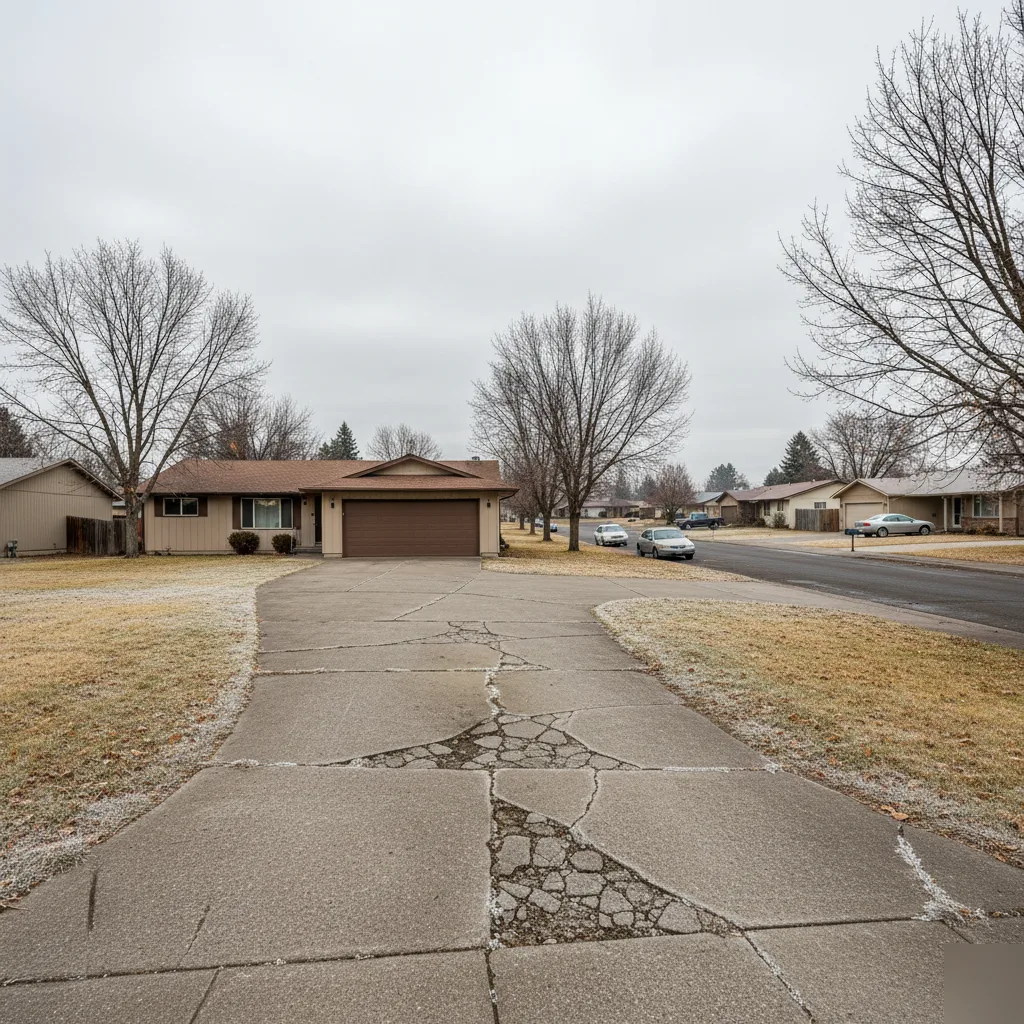
But a single, proper concrete repair? Done right the first time? That often costs less over five years than that cycle of temporary fixes. This isn't a sales pitch. It’s just simple math. Our 10-year guarantee backs that math up. We fix it free if it doesn't hold.
I remember a customer on Sprague Avenue. They’d patched the same three spots every single spring for four years. When we finally did a real driveway repair on those sections, they said they wished they'd just called us after year one. Those repaired sections? Still solid. They look great.
So, which route should you pick? If the damage is truly small and surface-level, DIY is a reasonable first step. But if cracks keep coming back, or the concrete has visibly shifted, professional repair is the cheaper path in the long run. We rebuild to last. If you're not sure where your driveway falls on that spectrum, our driveway repair page can help you figure out the right next move. You deserve a driveway that can handle our Spokane Valley weather.
Why Driveways in Spokane Valley Crack Faster Than in Mild Climates
Your driveway takes a brutal beating here in Spokane Valley. We sit right in USDA Hardiness Zone 6b. Winter lows regularly dip below zero, well below freezing. That single fact changes absolutely everything about how concrete behaves under your tires. It's a completely different ballgame than places with mild climates.
The real enemy, the relentless force that chews through concrete, is the freeze-thaw cycle.
Water seeps into all the tiny pores in your concrete. Then temperatures drop, hard. That water freezes, expanding by about nine percent. Then it thaws. Then it freezes again. Over and over. The National Weather Service reports Spokane Valley averages over 100 days per year where temperatures cross that 32-degree mark. That’s 100-plus rounds of concrete expanding and contracting. All in a single season. Mild climates, like coastal Oregon? They might see a handful of those cycles. Here? We see them almost every other day from November right through March. It's constant stress.
What Happens Below the Surface
Most people think cracks just start at the top. They don't. The ground underneath your driveway is shifting all winter long, too. Frost penetration in our area, according to Washington State Building Codes, can reach 24 to 30 inches deep. That frozen soil pushes upward against your slab. It’s a process called frost heave. When spring finally arrives, the soil settles back down. Unevenly. Your driveway doesn't settle with it in a nice, uniform way. It drops in some spots, staying up in others. This creates voids, it creates stress points. It's a recipe for disaster.
We see this constantly. Go along the Appleway corridor, or check out neighborhoods near Mirabeau Point. Homeowners will notice a small hairline crack in the fall. They ignore it through winter. Then they find a gap wide enough to catch a shoe by April. The freeze-thaw cycle didn't create the fundamental weakness. It just exploited one that was already there, lurking under the surface. Our glacial outwash soils, mixed with basalt bedrock, can shift in unexpected ways too, making good base prep even more.
De-Icing Products Make It Worse
Here’s something most folks don't realize until it's too late. The salt and chemical de-icers you spread on your driveway? They actually speed up surface damage. They work by lowering the freezing point of water. Sounds helpful, right? But that means more liquid water sitting on your concrete, even at colder temperatures. That’s more water able to get into those tiny pores. This leads to more aggressive freeze-thaw action when the temperatures drop further. It's a cruel trick.
- Rock salt pulls moisture into concrete pores. It definitely increases spalling.
- Magnesium chloride is a little gentler. But it still causes surface scaling over time.
- Ammonium-based de-icers can actually chemically attack the concrete itself.
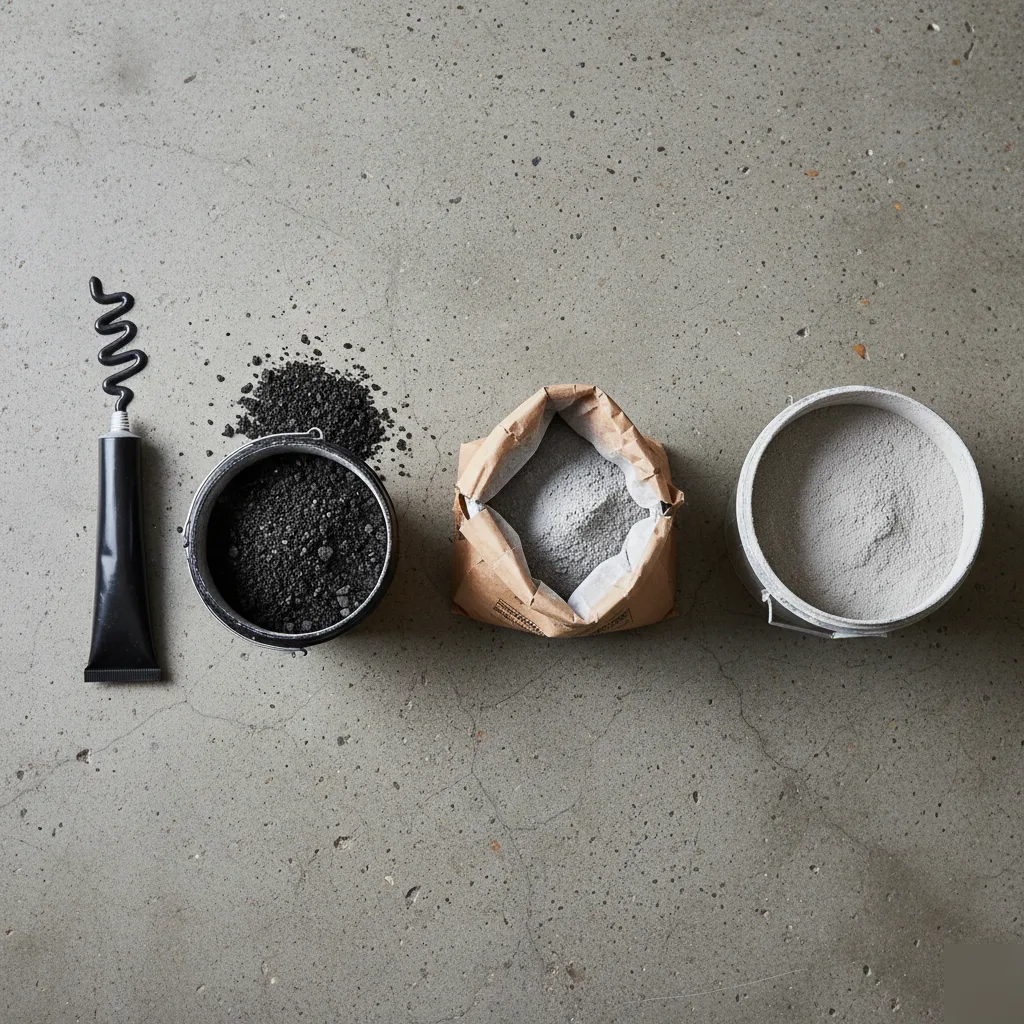
Sand provides traction without the chemical damage. But almost nobody uses it exclusively, year after year. And after a few Spokane Valley winters of heavy de-icer use, your driveway surface starts flaking and pitting. Even if the slab underneath is still strong, the top layer is taking a beating. That’s where our proprietary sealing makes a difference, keeping that water out.
Sun Exposure and Thermal Shock
Summer doesn't give your driveway a break, either. Oh no. Surface temperatures on dark concrete can hit 140 degrees on a hot July afternoon in Spokane Valley. Then the evening rolls in, and temperatures drop 40 or 50 degrees. That rapid swing causes thermal shock. It's not as dramatic as freeze-thaw, but it adds up, year after year. Every season brings new challenges.
So, your driveway is under stress twelve months a year. Winter hammers it with ice and cycles. Summer bakes it and causes sudden cooling. Spring and fall bring rain that fills every tiny crack. Before the next wild temperature swing, water is already lurking. We engineer every pour to survive this. Our concrete doesn't just survive Spokane winters – it laughs at them. We guarantee it for 10 years, or we'll fix it free.
This is exactly why driveway repair matters more here. Much more. A small crack in Phoenix might stay small for a decade. That exact same crack in Spokane Valley? It becomes a real problem in just one or two winters. Catching damage early with concrete crack repair or driveway resurfacing keeps a small fix from turning into a full replacement. If you’ve noticed new cracks forming, or old ones getting wider, our driveway repair page walks you through what to do next. The climate isn't going to change. But how fast you respond to damage can change everything about what that repair ends up costing you.

Frequently Asked Questions
What is the cheapest way to fix a driveway in Spokane Valley?
Sealing small cracks early is the cheapest way to fix a driveway. A basic concrete crack repair costs far less than resurfacing or replacing your slab. Spokane Valley's freeze-thaw cycles turn tiny cracks into big problems fast. Water sneaks in, freezes, and expands. That makes the damage much worse by spring. Catching cracks when they're still small saves you real money.
How does Spokane Valley's climate affect driveway repair choices?
Spokane Valley's freeze-thaw cycles make driveway damage worse than in milder climates. Water gets into cracks, freezes, expands, and breaks concrete apart. This can happen in just one winter. Areas near the Spokane River sometimes have soil that shifts or erodes under older slabs too. That means the base under your concrete matters just as much as the surface. A surface patch won't fix a bad base. You need the right repair matched to what's actually wrong underneath.
Is driveway resurfacing worth it, or should I just replace the whole thing?
Resurfacing is worth it when your concrete is structurally sound underneath. You get a fresh surface without the cost of tearing out and hauling away the old slab. It's one of the smartest budget moves for Spokane Valley driveways that look rough but are still solid below. Full replacement makes sense only when the base has failed or the slab is broken into big, disconnected pieces. Matching the fix to the actual problem is how you save the most money.
Can I just use store-bought patch mix to fix my driveway myself?
You can use store-bought patch mix, but it rarely lasts more than a season or two here. Many homeowners think any patch will hold. That's a common mistake. Spokane Valley winters are hard on quick fixes. Water gets under the patch, freezes, and pops it right out. Now the damaged area is bigger than before. DIY works best on shallow cracks under a quarter-inch wide. Anything deeper or wider needs a professional repair to actually last.
When should I call a professional instead of fixing my driveway myself?
Call a professional when your slab is sinking, heaving, or breaking into large pieces. Those are signs the base underneath has shifted or washed out. No DIY patch fixes that. Homeowners near Greenacres and Mirabeau sometimes wait too long and end up with much bigger repair bills. If one side of your driveway has sunk even an inch or two, resurfacing alone won't solve it. A professional will tell you what's actually wrong before spending your money on the wrong fix.
Does concrete sealing really prevent driveway damage in Spokane Valley?
Yes, concrete sealing is one of the best low-cost moves you can make for your driveway. It acts like a shield against moisture, de-icing salt, and UV exposure. Spokane Valley winters are tough on unsealed concrete. Salt from roads and driveways eats into the surface over time. Sealing slows that damage way down. It won't fix cracks that already exist, but it stops new damage from starting. Think of it as protecting your investment before problems even begin.
Ready to Experience the Concrete Revival Difference?
Complete Service Area Coverage
- Spokane and Spokane Valley
- Coeur d'Alene metro area
- Deer Park and Newport
- Liberty Lake and Otis Orchards
- Cheney and Medical Lake
- Post Falls and Rathdrum