What Is the Best Concrete Resurfacing Option in 2026? A Spokane Valley Homeowner's Guide
Concrete resurfacing works when the slab underneath is solid and only the top layer looks rough. Replacement makes sense when the base has failed, the slab is sinking, or the cracks keep moving. The condition of your slab makes the call, not the look you're hoping for.
Resurfacing vs. Replacement: Which One Fits Your Slab
Here's the truth most people don't want to hear. A concrete resurfacing job is only as good as the slab under it.
We've been working on Spokane Valley concrete for 11 years. And the biggest mistake we see is people resurfacing a slab that's already failing. The new top looks great for one winter. Then the old cracks push right through it, the money's gone.
So how do you know which side your slab falls on?
Resurfacing vs. replacement really comes down to one word. Structure. Concrete resurfacing fixes the surface. It covers spalling, pitting, stains and shallow cracks. It gives worn concrete a clean, fresh face. But it can't lift a slab that's sunk or flatten one that's heaved. Replacement starts over from the ground up. It's the right move when the problem lives below the surface, not on it.
Spokane winters make this question even more important. Our freeze-thaw cycles hit concrete over and over from fall to spring. Water gets into cracks, freezes and expands. A slab with tiny surface damage handles that fine after concrete resurfacing. A slab with a broken base keeps shifting every winter, overlay or not.
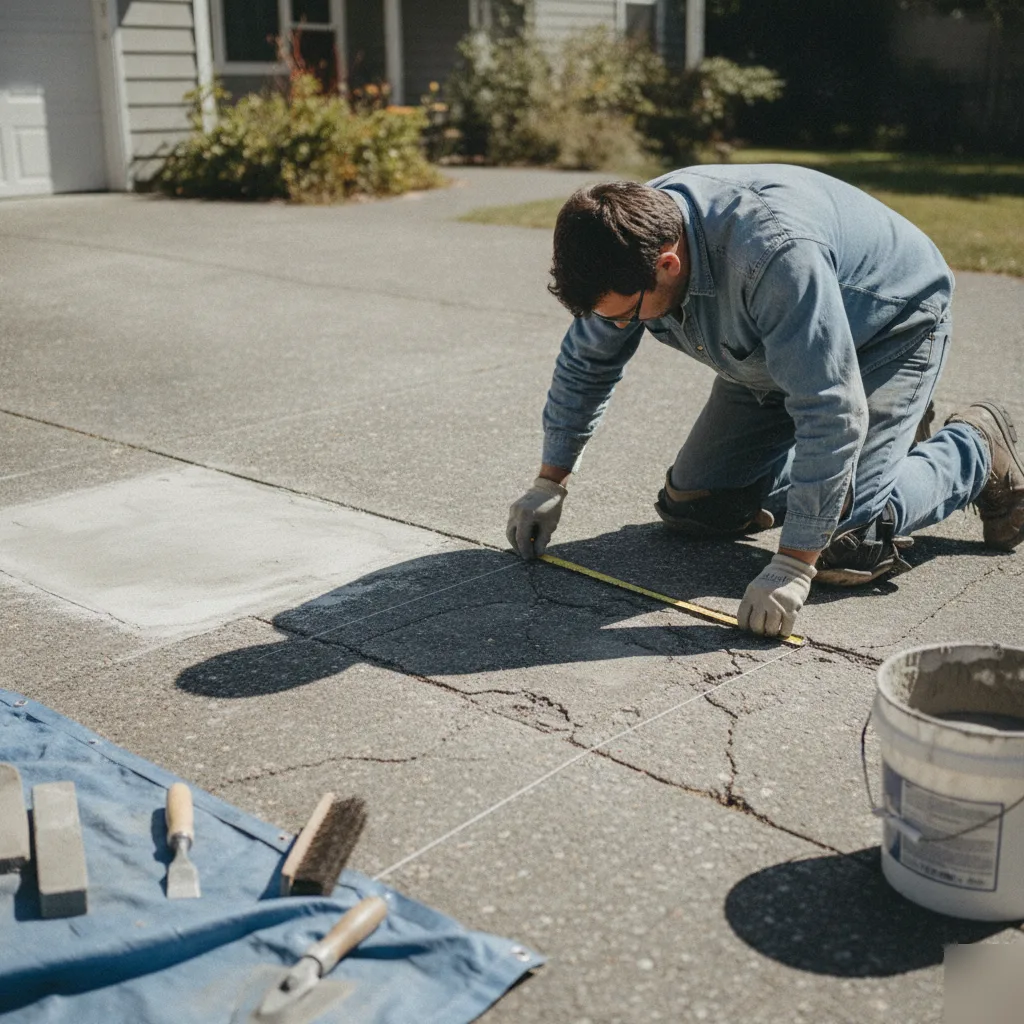
Walk your slab and look for these signs. If most of them match, you're likely a good fit for concrete resurfacing.
- The slab sits level and doesn't rock or tip when you step on the edges
- Cracks are thin and hairline, and they don't get wider each spring
- Most of the damage is on top, like flaking, pitting or worn spots from deicer
- Water runs off instead of sitting in low puddles after rain or snowmelt
- There are no big loose chunks or missing pieces
Now flip it around. Sections that have dropped an inch or more are a red flag. So are cracks you can slide a coin into, or edges that crumble when you kick them. Those point to a base problem. Concrete resurfacing won't solve it.
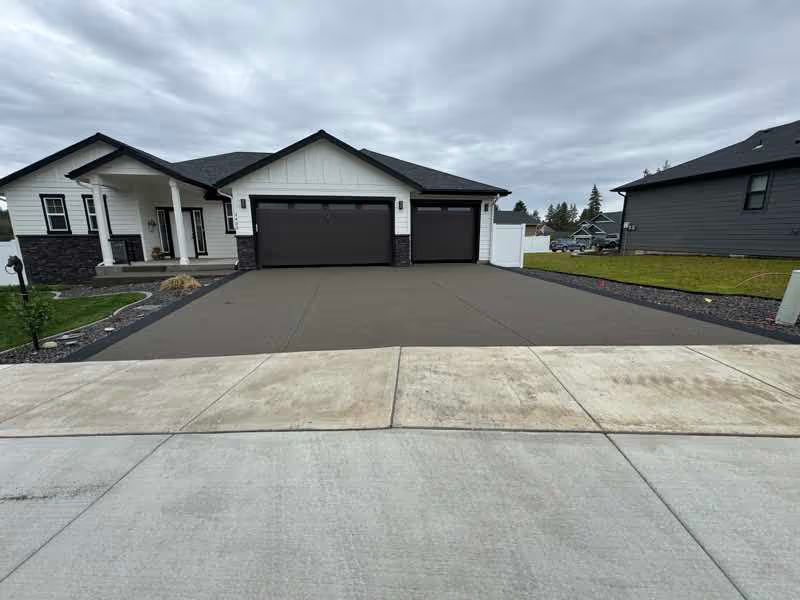
Last spring we looked at a driveway near the Sullivan Road corridor. The surface was flaking bad from years of deicer salt. The top was ugly, the slab itself was flat and tight. That's a perfect candidate for Driveway Resurfacing. A few blocks over, another driveway had a corner that sank two full inches toward the street. Totally different story. No overlay fixes that.
One more thing we tell people. Small cracks don't automatically rule you out. We handle Concrete Crack Repair first, then resurface over a sound base. Done in that order, the new surface has a real shot at lasting through many Spokane winters.
Most homeowners wait too long on this. A slab that's a resurfacing candidate today can turn into a replacement job after two or three hard winters.
How Freeze-Thaw Cycles Change What 'Best' Means
Most resurfacing jobs look great the week they're done. The real test comes in February.
Here in Spokane Valley, winter doesn't just freeze once and stay frozen. It thaws in the afternoon sun, then locks up again overnight. And that back-and-forth happens over and over from late fall into spring. Every one of those swings puts stress on your concrete and anything bonded to it.
Here's what's going on. Concrete is full of tiny pores. Water from snowmelt soaks into them. When that water freezes, it expands by roughly 9 percent, and it pushes outward with real force. Then it thaws, more water seeps in, and the cycle starts again.
So a resurfacing layer has two jobs in our climate. It has to hold tight to the old slab underneath. And it has to keep water from sitting where it can do damage.
That changes the whole question. The best concrete resurfacing option in a mild climate might be the worst one here. A thin, pretty coating that can't handle movement? It'll lift, crack, or flake by the second winter.
We've seen this pattern a hundred times. A homeowner off the Sullivan Road corridor called us after a DIY roll-on coating peeled in sheets. It looked fine in October. By March, half the driveway was bare gray concrete with curled edges, the plow and the deicer finished the rest. The product wasn't the only problem. The prep was. Nobody ground the surface or fixed the cracks first.
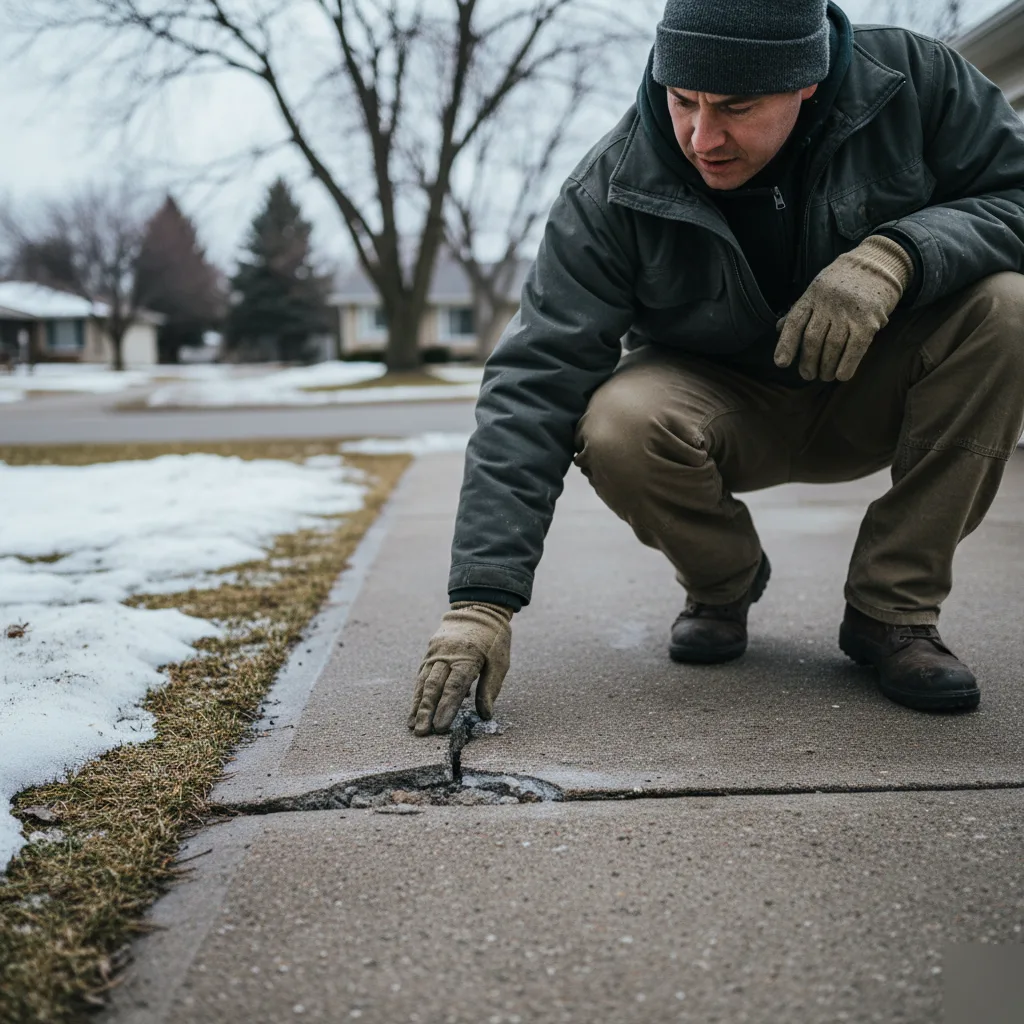
Before you pick a finish, check whether it can handle these Spokane winter realities:
- Strong bond to the base slab, which starts with grinding or profiling the old surface
- Enough flex to move with the slab as temperatures swing
- A good sealer on top so meltwater doesn't soak in
- Resistance to deicing salts and magnesium chloride tracked in from the roads
- Texture that gives your boots some grip on icy mornings
Miss one of these and the clock starts ticking. Miss two and you're probably redoing it.
This is why we lean toward polymer-modified cement overlays for outdoor work. They bond chemically and mechanically to the old concrete. They breathe better than a plastic-type film. And they take stamping, color, or a broom finish without losing strength.
Epoxy floor coating is a different story. It's a great pick inside a garage, where it stays out of the sun and the snowpack. But we don't put it on an open driveway. Moisture coming up from below plus UV from above is a bad combo for it. Same goes for most paint-on products sold for patios - Most homeowners wait too long to deal with the cracks first.
And that's the part people skip. If your slab already has open cracks or spalling, water has a highway straight into the base. Resurfacing over it without concrete crack repair just hides the problem for a season. The cracks come right back through the new surface, usually in the same spots.
So when you ask what's best, ask a better question. What will still be bonded, sealed, and solid after five or six Spokane winters? That answer is almost always a properly prepped overlay with a quality sealer, not the cheapest thing on the shelf.
Types of Resurfacing Options and What Each One Is Good For
Not every resurfacing option fits every slab. Some do great in a garage. Others hold up best on a driveway that takes snow, plows and de-icer all winter.
Here's how the main options break down. We've installed all of these around Spokane Valley over the last 11 years. So this comes from what we've seen hold up and what we've seen fail.
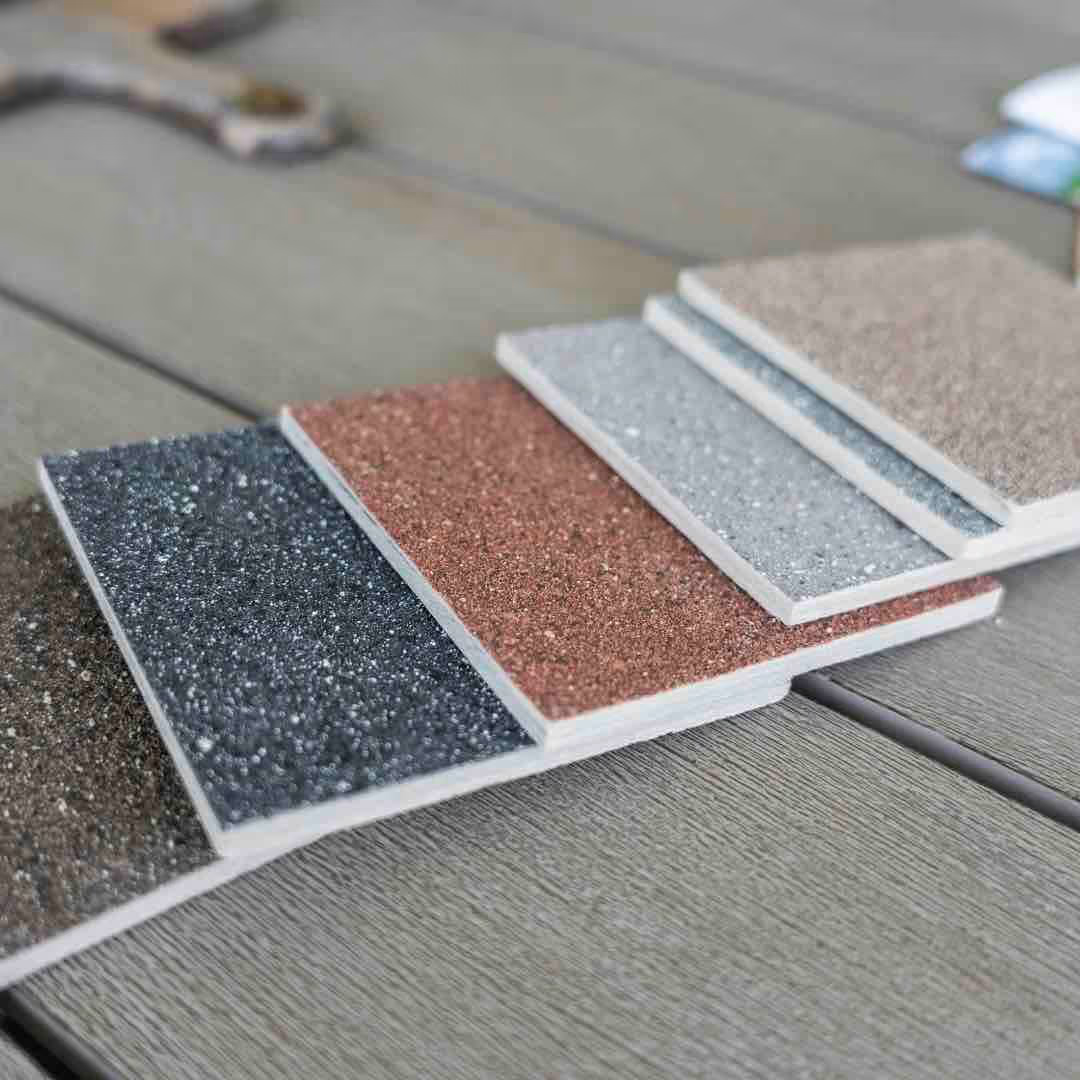
- Thin decorative overlay: A polymer-modified cement layer troweled on thin. It's good for driveways, walkways and patios with surface wear like scaling or old stains. You get a clean look without tearing anything out.
- Stamped overlay: A thicker overlay pressed with texture mats. It can look like stone, slate or brick. It's a strong pick for patios and front entries where curb appeal matters.
- Spray texture finish: Sprayed on and then knocked down with a trowel. The rough surface gives your feet real grip. It works well on steps, pool decks and walkways that get wet or icy.
- Epoxy floor coating: A tough resin coating bonded right to the slab. It's built for garage floors and shop floors. Oil and chemicals wipe right off. But it doesn't belong outside in full sun.
- Stain and seal: Not a true overlay. Color soaks into the existing surface and a sealer locks it in. It's best for slabs in decent shape that just look tired.
So which one is best? It depends on where the slab sits and what it deals with every day.
Driveways are a different animal. Out here a slab freezes and thaws over and over each winter. Water sneaks into tiny pores, freezes and pushes outward. And de-icers speed that damage up. For driveway resurfacing we lean toward a thin overlay with a quality sealer on top. It moves with the slab better than a thick coating does.
Last spring we looked at a driveway near the Sullivan Road corridor. The homeowner had paid someone to roll on a paint-style coating. One winter later it was peeling off in sheets. Moisture got trapped under it. Then it froze and pushed the coating right off the slab.
Wrong product. Wrong spot.
Garages are where epoxy floor coating earns its keep. Your car drags in slush and road grime for months. A bare slab soaks that up. Epoxy doesn't, and cleanup takes a few minutes with a mop.
Patios give you the most room to have fun. A stamped overlay or stained concrete can turn a plain gray slab into something you'd want to sit on. Just make sure it gets sealed before the first hard frost.
One thing most people don't realize: none of these options fix a slab that's heaving or broken into chunks. If the base is moving, the new surface will crack right along with it. We always check for that first and handle concrete crack repair before any resurfacing goes down.
Prep is everything, a great overlay on a dirty slab won't last a season. We grind or clean the surface, fix the cracks and only then lay the new layer. That step gets skipped way too often.
Frequently Asked Questions About Choosing a Concrete Resurfacing Option
Does concrete resurfacer really work in Spokane Valley's climate?
Yes, but only when the slab underneath is solid and the right product is used. Resurfacing fixes surface flaking, pitting and hairline cracks, and it can hold up through freeze-thaw cycles if it bonds well and includes a sealer. It fails when applied over a cracked or sinking base, or when prep steps like grinding and crack repair get skipped. A slab that passes a solid inspection is a great candidate for lasting results.
What is the best thing to resurface concrete with for an outdoor driveway?
Polymer-modified cement overlays tend to work best for outdoor concrete in our area. They bond chemically and mechanically to the old slab, flex with temperature swings, and stand up to deicing salt. Epoxy coatings and thin paint-on products often fail outside because UV light and moisture from below cause lifting. For a driveway near the Sullivan Road corridor or anywhere exposed to snow and sun, a breathable overlay with a good sealer holds up better season after season.
How do I know if my slab needs crack repair before resurfacing?
Check for cracks wide enough to fit a coin or cracks that keep growing each spring. Those signal a moving base, and resurfacing over them just hides the problem for a season. We handle concrete crack repair first, then resurface once the base is sound. This order gives the new surface a real chance to last through several Spokane winters instead of failing by the next one.
Why do freeze-thaw cycles matter more here than in other cities?
Spokane Valley winters thaw and refreeze repeatedly from fall through spring, not just once. Each cycle lets water seep into tiny pores in the concrete, freeze, expand, and push outward with real force. A resurfacing layer needs strong bonding, flexibility, and a sealer to survive that repeated stress. This is why picking the right method matters more here than in a milder climate, and it's covered in detail on our driveway resurfacing guide.
What is the average lifespan difference between resurfacing and full replacement?
Resurfacing typically lasts several years when the slab below is solid and properly sealed against moisture. Replacement resets the clock completely since it rebuilds the slab from the base up. If your resurfaced slab keeps cracking in the same spots each winter, that usually points to a structural issue that only replacement can fix. Walking your slab for sinking spots or wide cracks helps you predict which path fits your situation.
Can a sunken or tipping slab still be resurfaced?
No, a sunken or tipping slab usually needs replacement, not resurfacing. Sections that have dropped an inch or more, or edges that crumble when kicked, point to a failed base below the surface. Resurfacing only treats the top layer, so it cannot lift a slab or stop ongoing movement. If you're unsure which category your driveway falls into, a quick inspection can settle it before you spend on the wrong fix.