
Epoxy Floors After 5 Years: What to Expect
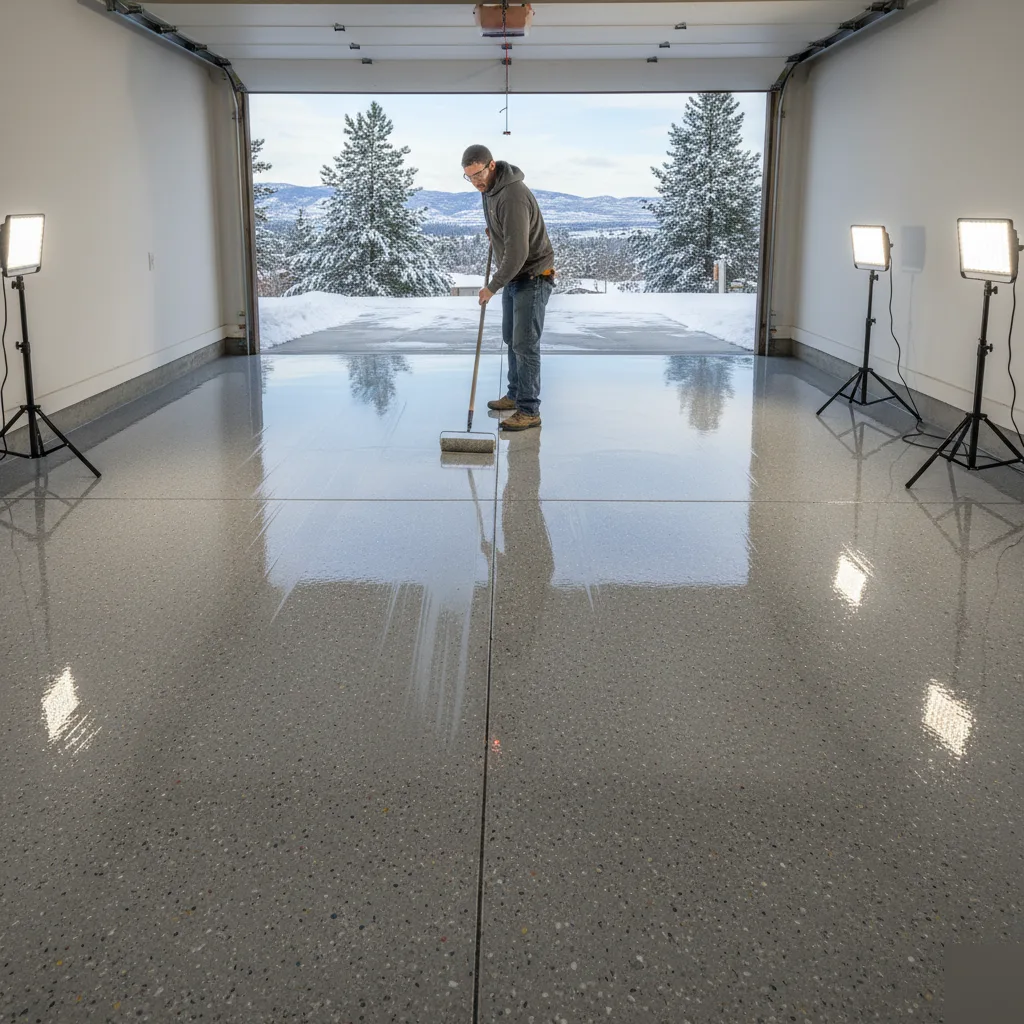
Here’s what surprises most people. A properly installed epoxy floor coating can still look close to day one after five years. The gloss stays. The color holds. The floor still feels smooth under your feet.
We’ve walked into Spokane Valley garages where the epoxy floor coating was put down five years earlier, and the homeowner parked two vehicles on it every day. It still looked sharp under the lights. That’s not luck. That’s prep, good material, and doing the job right the first time.
The Surface Still Has Shine
A good epoxy floor coating keeps most of its shine after five years. You’ll see some light wear in the busy spots. Maybe a little dulling by the entry door where grit gets dragged in. But the floor still looks clean. Still reflects light. Most people would never guess it’s been there that long.
Think about a bare garage floor after one Spokane Valley winter. Salt. Tire marks. Dirty meltwater. Now picture a coated floor that shrugs most of that off for five years straight. Big difference.
Color Stays Consistent
Fading worries people. Fair enough. But epoxy floor coating done right resists yellowing and color shift for years. Garages and basements do even better because they stay out of direct sun.
We see the most color change near south-facing garage doors that sit open all afternoon — and for epoxy floor coating in Spokane, UV exposure from that afternoon sun is the main culprit worth planning around. Even then, it's usually a small warm shift, not some dramatic fade. Most homeowners don't catch it until we point it out during a check-in. And when it comes to epoxy floor coating in Spokane, that kind of minor shift is about as bad as it gets with a properly installed system — which is why most homeowners shrug it off when we show them.
What Wear Actually Looks Like
Let’s be straight about what five years of use does. The floor will show life. That’s normal. It doesn’t mean the epoxy floor coating failed. Here’s what we usually see:
- Fine scratches where heavy stuff gets dragged
- Small marks where hot tires left faint tracks
- Light scuffs by workbench legs or storage areas
- A little less shine in the main walking path
None of that hurts the protection. The coating is still stuck to the concrete below. It’s still keeping out stains, moisture, and chemicals. Most of the wear is just looks, and a lot of it cleans up easier than people expect.
One Spokane Valley homeowner we worked with turned his garage into a woodworking shop. Sawdust everywhere. Tools dropping. Heavy gear rolling around. After five years, his epoxy floor coating had scratches you could feel with a fingernail. No peeling. No chips. No bare concrete showing through.
That’s the difference between a floor that was installed right and one that was rushed.
And here’s the part people miss. The look of your epoxy floor coating at year five starts in the first 48 hours. Prep. Temperature. Cure time. Miss any of that and problems show up early, sometimes by year two. By the way, that’s usually when someone calls us after a weekend DIY job went sideways.
So if you’re asking whether epoxy floor coating lasts or just photographs well, the answer is both. Done right, you’ll still feel good walking into that garage five years later. If you want to see how we handle installations here in Spokane Valley, visit our epoxy floor coating page for the full breakdown.
The Difference Between Normal Wear and Actual Epoxy Floor Failure
Not every mark on your epoxy floor is a problem. We tell Spokane Valley homeowners that all the time. A five-year-old epoxy floor should not look brand new. But there’s a hard line between normal wear and real failure.
Start with normal.
Signs of Normal Wear
Your epoxy floor coating will pick up light scratches over time. Every garage gets them. Every shop gets them. Every utility space gets them. You’ll also see some dulling in the busy paths. Think about the strip between your car door and the house door. That area gets walked on a lot, so it loses a little shine.
- Fine scratches from dragging tools or rolling carts
- Less shine in the most-used walkways
- Small scuffs from tires or heavy boots
- Faint color change near windows with daily sun
These are cosmetic. They do not change how the floor works. Your epoxy floor coating is still protecting the concrete. Still keeping out moisture. Still doing its job.
Signs of Actual Failure
Real failure looks different. It feels different too.
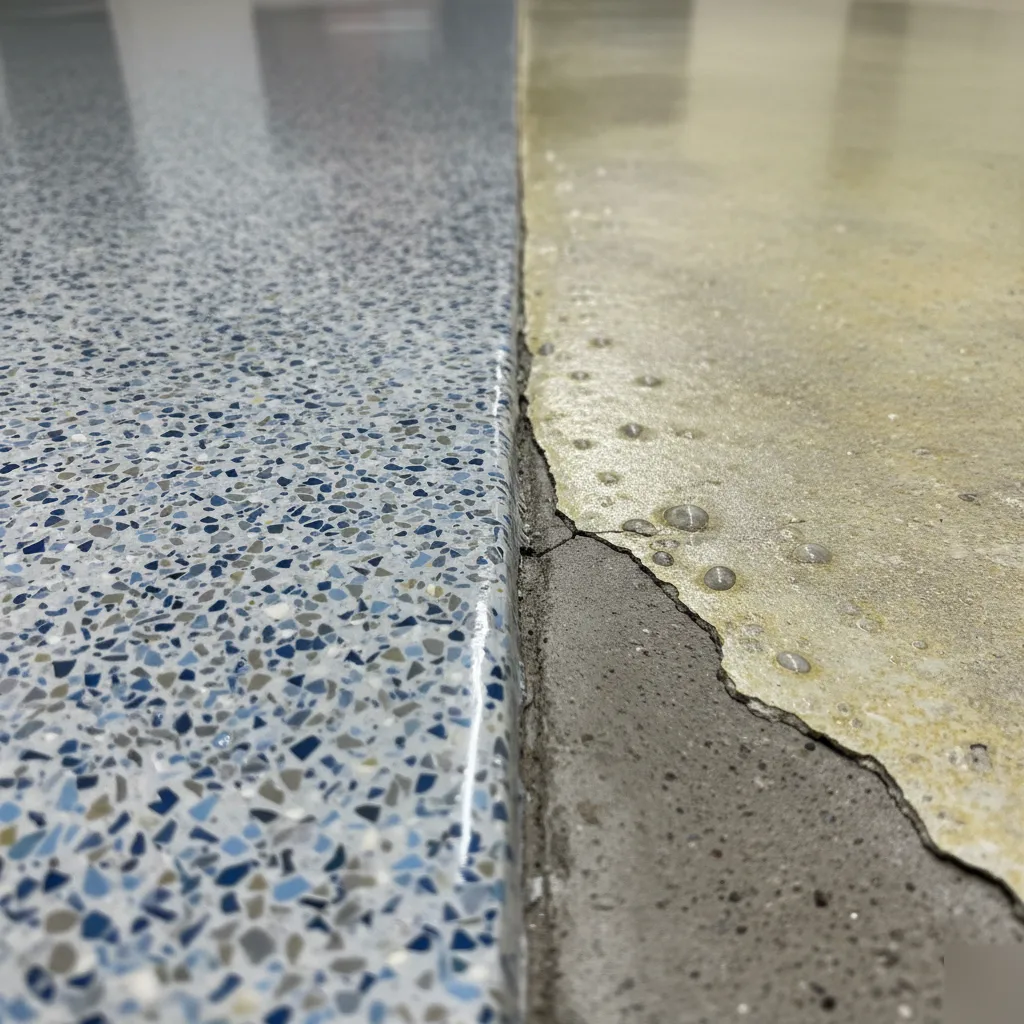
Peeling is the biggest red flag. If edges are lifting or sheets of coating are pulling off the concrete, that’s not wear. That’s bond failure. It usually means the concrete was not prepped right before the epoxy went down. We’ve seen this in Spokane Valley garages where someone coated over dusty or damp concrete during a rushed weekend project.
Bubbling is another one. Tiny blisters or raised spots usually mean moisture got trapped under the coating. Spokane Valley’s freeze-thaw cycles can push moisture vapor up through the slab. A proper moisture test catches that. Skipping it brings bubbles later, sometimes months later, sometimes a year later.
Here’s what actual epoxy floor failure looks like:
- Large sections peeling away from the concrete surface
- Bubbles or blisters that crack when you press them
- Deep flaking where chunks come off, not just scratches
- Yellowing across the whole floor, not just near light
- Soft or tacky spots that never fully cured
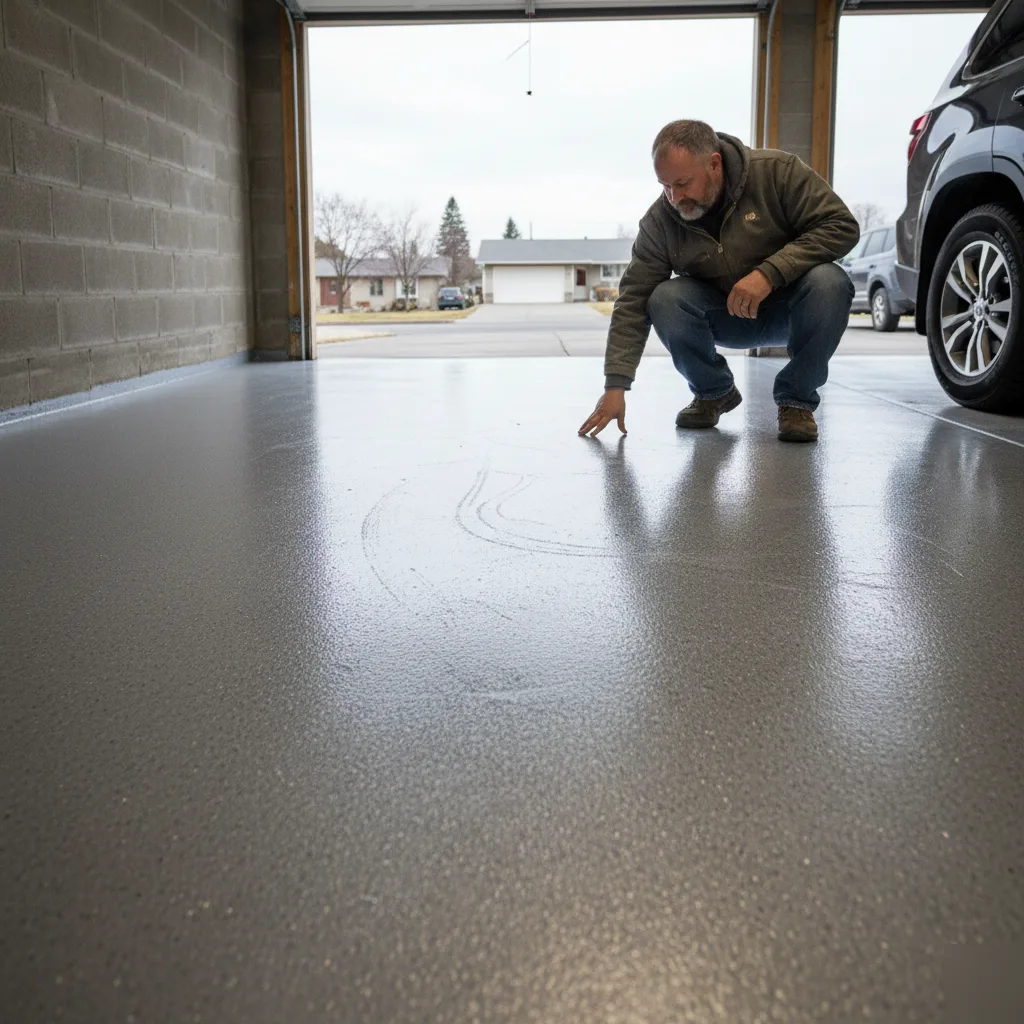
So how do you tell the difference? Run your fingernail across the mark. If it’s only on the surface and the coating stays put, that’s wear. If your nail catches an edge and lifts it, that’s failure.
Most people do not notice this until it gets ugly. They ignore peeling near the garage door, then six months later half the floor is coming up. A quick look once a year can save you from a full redo.
One thing about our area stands out. Spokane Valley swings hard from summer heat to winter cold, and that puts real stress on a floor coating. Concrete expands and contracts with those changes. A properly installed epoxy floor coating moves with the slab. A bad one cracks apart.
The bottom line is simple. Scratches and a little dulling after five years? Normal. Peeling, bubbling, or flaking? Something went wrong during installation. The fix usually means stripping it down and starting over with the right prep.
If you’re seeing more than normal wear on your floor, our epoxy floor coating page walks you through what a proper installation looks like and why prep matters so much.
Why Spokane Valley's Climate Accelerates Epoxy Aging in Specific Ways
Most people think epoxy floor coating damage comes from heavy use. That’s only part of it. In Spokane Valley, the weather works on your floors just as hard as foot traffic and tires do.
The real issue is temperature swings.
Spokane Valley can drop near 20°F in winter and climb above 95°F in summer. That’s a 75-degree range your concrete slab moves through every year. Your epoxy floor coating has to move with it. Over five years, that back-and-forth puts real stress on the bond between the coating and the concrete below. We see this all the time in garages along Sprague Avenue and in older homes near Greenacres, where the slab shifts just enough to expose weak spots.
Freeze-Thaw Cycles Hit Harder Than You'd Expect
Here’s something most homeowners do not realize. Moisture trapped beneath an epoxy floor coating can freeze in winter. Water expands when it freezes, about 9 percent according to the U.S. Geological Survey. That pushes up against the coating from below. One cycle won’t wreck it. But Spokane Valley gets around 100 freeze-thaw cycles a year, and that kind of repeat stress leads to micro-delamination over time.
You might notice small bubbles or a spot that sounds hollow when you tap it. Those signs often show up around year three or four in coatings that were not prepped well before application.
UV Exposure and Summer Heat
Spokane Valley gets about 170 sunny days each year. If your garage door stays open in the afternoon, direct UV light hits the same patches of floor over and over. UV wears down the top layer of an epoxy floor coating. The color fades first. Then the surface can feel chalky or rough.
Garages that face south or west take the hardest hit. And if your epoxy floor coating sits in a shop or workspace with big windows, the wear shows up faster.
But here’s the good news. UV damage is usually a surface problem. The bond underneath often stays fine if the original prep was solid.
Road Salt and Moisture Drag-In
Winter in Spokane Valley means road salt on every major road from Sullivan to Pines. Your vehicles drag that salt right into the garage. Salt is rough on concrete coatings. It can leave white staining or tiny pits after a few seasons.
We’ve pulled up five-year-old coatings in Spokane Valley garages that looked fine everywhere except the 3-foot strip where the front tires sit. That strip gets the salt, the snowmelt, the grit. It ages twice as fast as the rest of the floor.
A few things speed up climate wear on your epoxy floor coating:
- Concrete slabs poured without a vapor barrier trap more moisture below
- Garages without insulation swing harder at floor level
- Floors not diamond-ground before coating lose grip faster during heat and cold changes
- South-facing garage doors pull in more UV and heat during long summer days
So does Spokane Valley’s climate ruin an epoxy floor coating in five years? Not if the install was done right. Good prep, the right thickness, and a moisture test before application all matter. The weather is rough here. No argument. A well-installed epoxy floor coating can still handle it.
If you want to know how your floor is holding up, or what proper installation looks like, take a look at our installation process page for a full walkthrough of what we do for Spokane Valley homes and businesses.

Frequently Asked Questions
What does an epoxy floor actually look like after 5 years of daily use?
A well-installed epoxy floor still looks sharp after 5 years — glossy, clean, and solid. You'll see light scratches in busy spots and some dulling near entry points. But the coating stays bonded to the concrete and keeps doing its job. We've walked into Spokane Valley garages where two vehicles park daily, and the floor still turns heads. Normal wear doesn't mean failure. Done right, your floor will still look good and protect your concrete well into year five and beyond.
Is peeling epoxy a sign of normal wear or something worse?
Peeling is never normal wear — it's a sign of bond failure. Normal wear looks like light scratches or a little less shine in high-traffic paths. Peeling means the epoxy didn't bond properly to the concrete, usually because the surface wasn't prepped right. Run your fingernail across the mark. If the coating lifts, that's failure.
Can I fix worn epoxy myself or should I call a professional?
Light surface scuffs can sometimes be buffed out yourself. But if you're seeing peeling, bubbling, or soft spots, call a professional. Those problems go deeper than the surface. Trying to coat over a failing floor without fixing the root cause — usually bad prep or moisture — just delays the same problem. A lot of the calls we get in Spokane Valley are from homeowners who tried a weekend DIY fix and ended up with a bigger mess two years later. When in doubt, get a professional set of eyes on it first.
Does epoxy flooring hold up to Spokane Valley winters?
Yes, but only if it was installed correctly from the start. Spokane Valley's freeze-thaw cycles push moisture vapor up through concrete slabs. If the installer skipped a moisture test, you'll see bubbles or peeling within a year or two. A properly prepped and cured epoxy floor coating moves with the slab as temperatures swing. Salt, dirty meltwater, and tire tracks from winter driving clean up easily off a coated floor. Bare concrete after a Spokane Valley winter is a much harder story.
Does epoxy floor coating yellow or fade over time?
Quality epoxy floor coating resists yellowing and color shift for years. Garages and basements do the best because they stay out of direct sunlight. The most color change we see in Spokane Valley is near south-facing garage doors that sit open all afternoon. Even then, it's usually a small warm shift — not a dramatic fade. Most homeowners don't notice it until someone points it out. Choosing the right coating type for your space makes a big difference in how color holds up long-term.
What's the biggest mistake people make with epoxy floors that causes early failure?
Skipping proper surface prep is the number one mistake we see. People coat over dusty, damp, or unground concrete and expect it to hold. It won't. The look of your epoxy floor at year five is decided in the first 48 hours of installation. Prep, temperature, and cure time all matter. Miss any one of them and problems show up fast — sometimes by year two. A floor that was rushed during install will peel, bubble, or flake long before it should.
Ready to Experience the Concrete Revival Difference?
Complete Service Area Coverage
- Spokane and Spokane Valley
- Coeur d'Alene metro area
- Deer Park and Newport
- Liberty Lake and Otis Orchards
- Cheney and Medical Lake
- Post Falls and Rathdrum