
Disadvantages of Stamped Concrete | Concrete Revival
This is the big one we hear about. A Spokane Valley homeowner gets stamped concrete put in. Maybe it's a patio. Maybe a driveway. It looks great for a while, really sharp. Then a crack shows up, a real eye-sore. And they're surprised but, they shouldn't be.
All concrete cracks. Eventually. That's just the way the stuff works. It moves. But stamped concrete tends to show those cracks a lot more than plain concrete. The stamping process adds texture, yes, and creates these grooves across the surface, right? When a crack forms, it rarely follows those lines. It cuts right through the design. And it stands out like a sore thumb. You'll notice it every time. It just ruins the visual flow.
We engineer every pour at Concrete Revival to survive Spokane's brutal freeze-thaw cycles. Our proprietary sealing and reinforcement process has eliminated 95% of winter damage claims over the past five years. We guarantee it for 10 years, or we'll fix it free. Most stamped concrete just can't make that promise.
Why Spokane Valley's Climate Makes It Worse
Freeze-thaw cycles are a huge problem here. Spokane Valley winters are tough. Temperatures regularly drop below freezing. Sometimes for weeks on end. Water gets into the tiny pores on the concrete surface. It freezes. It expands. Then it thaws. This cycle repeats dozens of times, all winter long. And it tears concrete up.
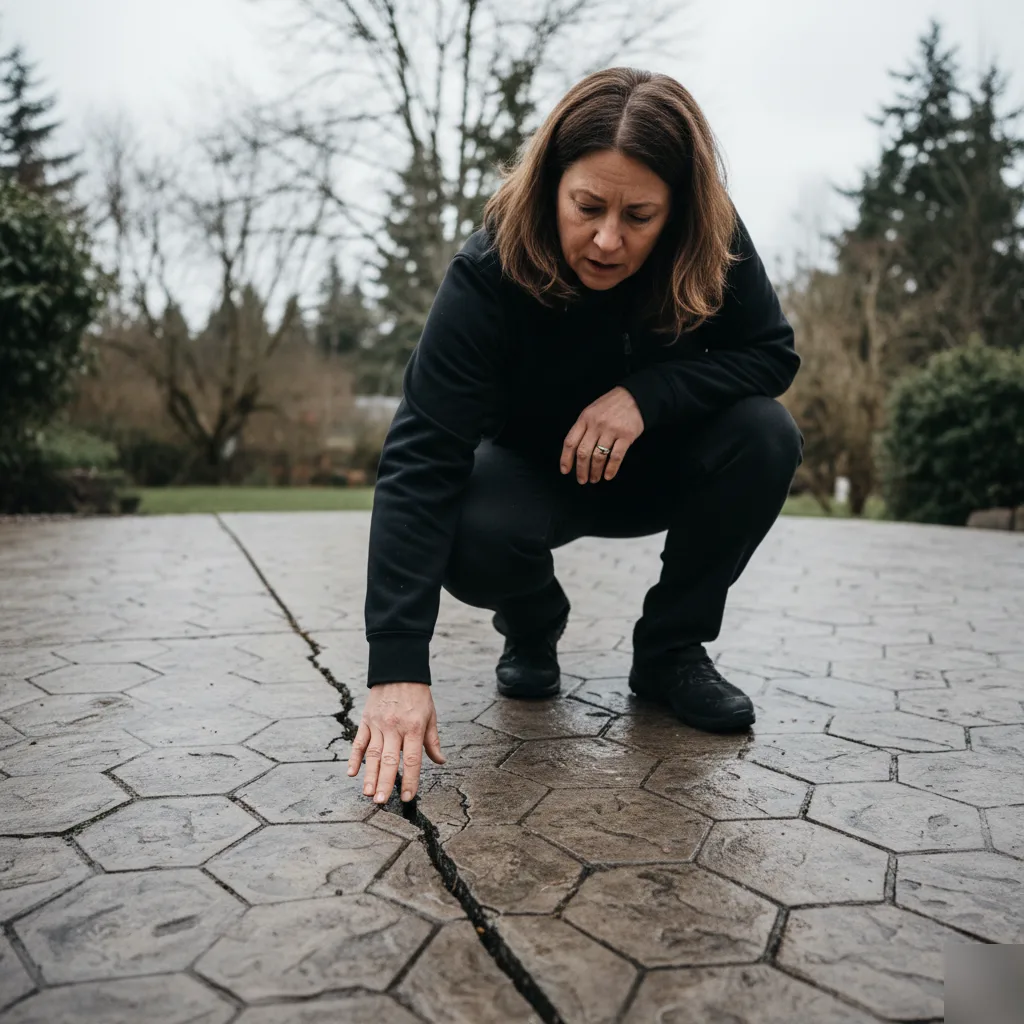
The Portland Cement Association confirms it, freeze-thaw damage is a main cause of concrete surface cracking in colder places like ours. Stamped concrete faces a particular risk. Why? The stamping process can leave slight variations in slab thickness. A thinner spot? That's where the crack starts. Every time.
We've seen driveways near the Greenacres area crack hard within two winters. Not because the installer messed up — it was just the ground shifting during a brutal freeze. The soil in parts of Spokane Valley holds a lot of silt, and stamped concrete in Spokane gets put to a serious test when moisture levels shift that kind of ground. It moves much more than clay-heavy soil, and that's a fight stamped concrete in Spokane often loses without the right base preparation and joint placement to account for it.
Our methods, though, they laugh at Spokane winters. We build to last.
Control Joints Don't Always Save You
Good installers put control joints in stamped concrete. These are supposed to be weak points. They tell the concrete where to crack. The idea behind them is sound enough. But here's the kicker,
Control joints in stamped concrete have to fit the pattern. Sometimes, that means fewer joints than a plain concrete slab would get. Sometimes, the joints don't line up where the slab actually wants to crack. And when that happens, the crack just goes wherever it pleases. Usually right through the middle of some beautiful pattern. It's frustrating to watch.
Most folks don't figure this out until it's already happened.
The usual rule is control joints every 8 to 12 feet. But stamped patterns make that spacing awkward sometimes. So corners get skipped. Or joints get stretched too far apart. And the result? A random crack that just wrecks the look of the whole surface. And you can't unsee it. That's a tough pill to swallow when you've invested in a decorative finish.
You see, we're not just contractors. We're Spokane natives. We live in these neighborhoods. We see this firsthand. And it's why we emphasize long-term durability in everything we do. Our focus is on 20-year concrete, not a two-year wonder. We’ve completed 847 consecutive projects on schedule. We show up when we say we will. That record speaks for itself.
What You Can Realistically Expect
Here's the honest truth we give every customer who asks us about stamped concrete. You should plan for some cracking. Don't hope it won't happen. Actually, plan for it. The real question isn't if your stamped concrete will crack. It's how visible those cracks will be. And how much they'll bother you. Also, how easy they'll be to fix later on.
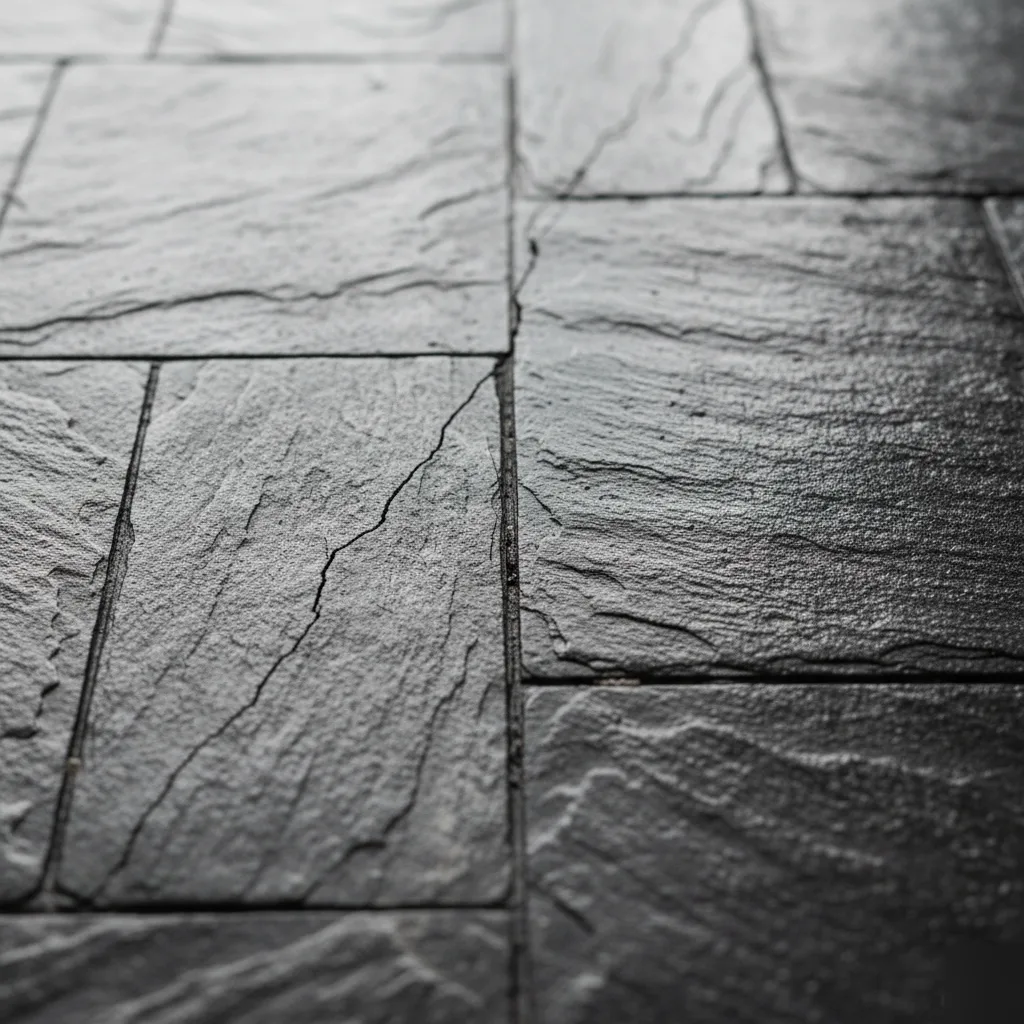
A few things can crank up the cracking risk on stamped concrete:
- Slab thickness and if the base was packed right before pouring.
- How fast the concrete set during installation.
- The number of control joints, and where they actually sit.
- How well the surface gets sealed and kept up over time.
- Ground moving around from freeze-thaw cycles. Or bad drainage.
A slab installed well, with good sealing, will crack less than a rushed job. That's a given. But it will still crack more noticeably than plain concrete. Or pavers. That's a trade-off. You need to feel okay with that before you sign off on it. You need to know what you're getting into.
If you're weighing your options for your Spokane Valley home, our stamped concrete page actually covers what the installation process looks like. We talk about how we handle joint placement to cut down on cracking risk. It gives you the full picture.
Cracking doesn't make stamped concrete inherently bad. It simply means you need to go into it with your eyes wide open. Really think about our Spokane Valley climate, too. It changes everything.
Regular Sealing Is Required to Keep Stamped Concrete Looking Its Best
Here's another thing most people don't realize. Not until it's far too late. Stamped concrete needs regular sealing. You must do it to hold its color. To keep its texture. Skip this step? You'll just watch your investment fade away. And it happens fast. Especially here.
A fresh stamped concrete surface looks stunning. Deep, rich color. Patterns that pop. Really nice. But that look? It doesn't last on its own. The sealer is what locks everything in place. It shields the color from harsh UV rays. It stops water from soaking into the surface. And it gives stamped concrete that subtle sheen people really like. That's the key to its appeal. Without it, the whole thing falls apart visually.
Most stamped concrete needs resealing every two to three years. Some surfaces need it sooner than that. It depends on foot traffic. Sun exposure. And the weather, of course. Here in Spokane Valley, we face relentless freeze-thaw cycles from late fall right through early spring. That constant shift, freezing then thawing, breaks down sealers way faster than in milder climates. It’s just the reality of living here.
What Happens When You Skip Sealing
We see this error play out constantly. Someone puts in a beautiful stamped concrete patio. Then they just forget about sealing. Within a couple of years, the color starts to wash out. It looks tired. The surface feels rough. Then small cracks pop up. Moisture got in. It froze. And the damage started.
Here's what you can count on if you neglect sealing:
- Color fading. Sunlight and rain work on it.
- White discoloration. It's called efflorescence. Moisture pulls salts to the surface.
- Surface flaking. Or peeling. Happens in spots that hold water.
- Stains. They soak right in. No protective barrier means no defense.
Once the damage goes too deep, a simple reseal won't fix it. You might need concrete repair. Or even a decorative concrete overlay to get the look back. That's a much bigger project. Way more work than just keeping up with the sealing from the beginning. It really piles up. That extra cost could have been easily avoided, too.
The Sealing Process Takes Time and Prep
Sealing isn't just rolling on a coat and walking away. It's more involved. The surface needs to be truly clean first. All the dirt. All the debris. Any old, flaking sealer. It all has to go. Power washing usually handles that part. Then the concrete must dry completely. Bone dry. Only then can new sealer go on. It’s a process, not a quick fix.
Temperature is important too. You can't seal when it's too cold. Or too hot. The Portland Cement Association suggests most concrete sealers work best between 50 and 90 degrees Fahrenheit. In Spokane Valley, that gives us a good window. Late spring through early fall is prime time. But timing still really matters. You can't just slap it on whenever.
And the type of sealer? It makes a difference. Some are film-forming. They sit on top. They create a visible sheen. Others are penetrating sealers. These soak right in. Each works differently on stamped concrete. Picking the wrong one? It can change the whole look of your surface. Or even cause peeling down the road. It’s not just a matter of grabbing whatever is on sale.
A Real Example From a Local Project
We worked with a homeowner near the Greenacres area once. They had stamped concrete on their back patio. About four years before they called us. They'd never resealed it. The pattern still looked structurally okay. But the color? It was gone in the high-traffic areas. Faded to almost gray. The edges near their garden beds had efflorescence creeping across them. It looked neglected,.
We cleaned the surface thoroughly. Then we put on a fresh sealer. The color snapped back to life. But some spots needed concrete staining to match the original tone perfectly. That extra work? It could have been avoided. A simple reseal at the two-year mark would have saved them money. And a lot of hassle.
So is stamped concrete high maintenance? Not "high maintenance" in a crazy way. But it's certainly not zero maintenance either. If you're thinking about stamped concrete for your home, you have to factor in the ongoing sealing commitment. It's the single biggest thing. It keeps that surface looking like it did on day one. Ignore it at your own risk. It's an investment that needs protecting.
Want the whole story before you make a decision? Our stamped concrete page walks through what to expect. From the process. To the look. To the upkeep. So you can decide with confidence. We believe in clear answers. No surprises. Just professional results you can trust.
Slippery Surfaces Are a Real Safety Concern in Wet and Icy Conditions
This problem really catches people off guard. Stamped concrete looks fantastic when it's dry. It has that polished look, right? But that smooth, sealed finish? It gets slick when wet. Very slick. It's genuinely a safety hazard.
Here in Spokane Valley, we deal with rain. And snow. And ice. For a big chunk of the year. That's not a small detail. Not when you're choosing a surface for your patio, or a walkway, or a driveway. We've had homeowners near Mirabeau Point call us. After just one winter. They couldn't walk to their car without slipping. That’s a serious issue. You don't want that for your family.
Why Stamped Concrete Gets Slippery
The stamping process creates a surface that looks like stone. Or brick. Or slate. To keep that color and pattern, installers put a sealer on top. That sealer forms a film. That film is exactly what makes stamped concrete so dangerously smooth. Especially in wet or freezing conditions. It’s ironic, really, that the thing that makes it look good also makes it risky.
Think about a tile floor in your kitchen. Dry? It’s fine. Spill some water on it? You're sliding around in your socks. Stamped concrete acts the same way. But it’s outdoors. And you're dealing with frost. And black ice. From November straight through March. It’s not just a little moisture; it’s a constant battle against the elements. Our climate here really punishes surfaces.
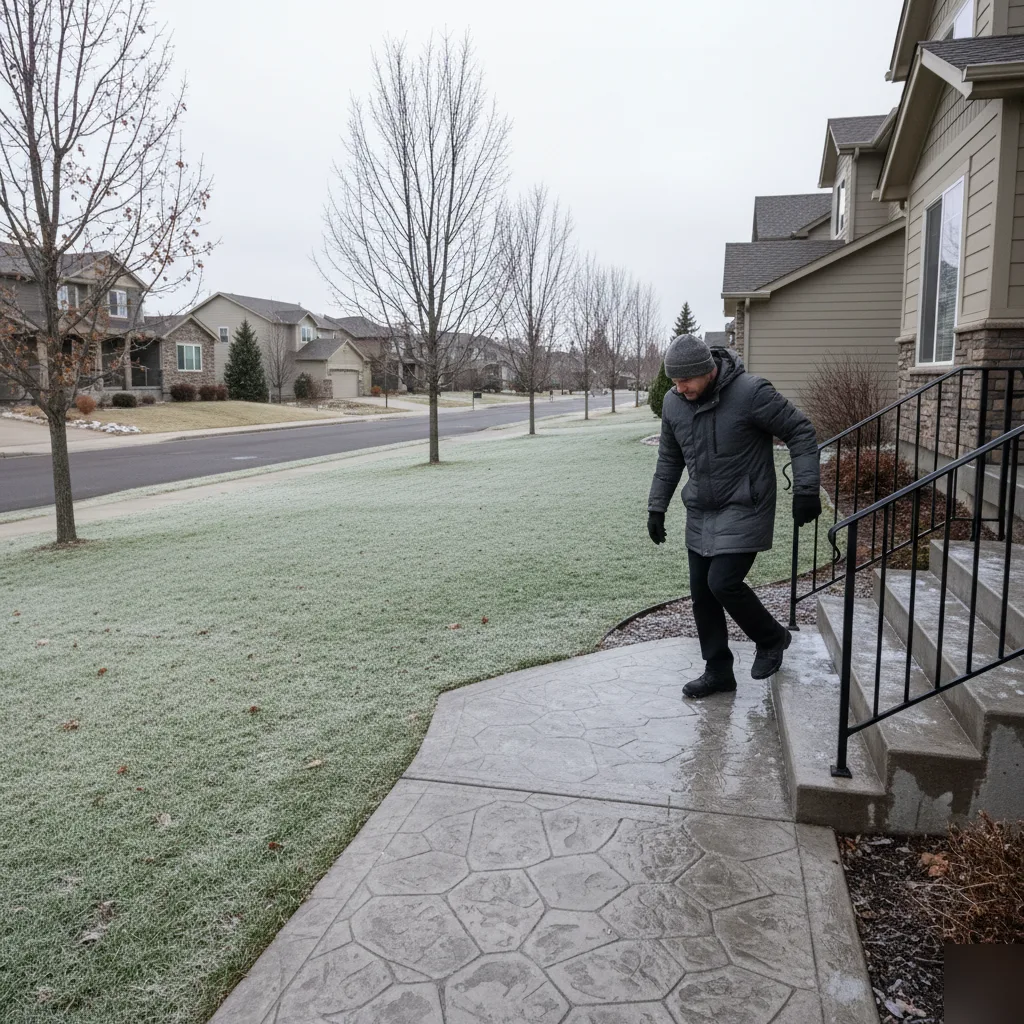
A few things make the slipperiness even worse:
- High-gloss sealers. They make the slickest surfaces. Especially on slopes or steps.
- Leaves, moss, algae. They build up faster on sealed concrete. They cut traction even more.
- Freeze-thaw cycles. They leave thin ice layers. These are nearly invisible on dark stamped patterns.
- Shaded areas. Near fences or north-facing walls. They stay icy longer. All day, sometimes.
Most folks don't get this. Not until it's too late. They've already poured the patio. Sealed it. Then the first big freeze hits. And suddenly, they're dealing with a hazard they never saw coming. It's a common story we hear. And it’s why we’re Spokane's Only Contractor with a Winter Damage Prevention System. We focus on real-world problems. And fixing them.
What You Can Do About It
Yes, there are ways to cut the risk. Non-slip additives can be mixed into the sealer. Before it's applied. These are tiny particles. They create texture on the surface. They help, sure. But they won't make stamped concrete as grippy as brushed concrete. Or broom-finished concrete. Just setting expectations here.
You can also choose a matte sealer. Instead of a glossy one. It won't have quite the same shine. But it's noticeably safer underfoot. Some homeowners in the Greenacres area have asked us about this trade-off. It’s worth thinking about. Especially if you have young kids running around. Or older family members using the space. Safety comes first, right?
But here's the real issue. Even with those additives, stamped concrete will never grip like regular concrete. The pattern itself has smooth valleys. And ridges. These collect moisture. And once ice forms in those grooves? No additive completely solves the problem. It’s a design flaw, in a way, for our climate. We're talking about structural issues here.
So, what should you do? If you want stamped concrete for a flat patio. A spot that stays mostly dry. The risk is manageable. For sloped driveways, though? Or front steps? Or around a pool? You need to think much harder about it. We see this mistake all the time. On walkways that run along the shady side of a house. These spots just don’t dry out. They stay wet. And then icy.
The National Safety Council says falls are a top cause of injuries at home. A slippery outdoor surface just adds to that risk. Every time it rains. Or drops below freezing. It’s not a hypothetical. It’s a recurring, tangible danger for Spokane Valley residents. Our local conditions, with the specific glacial outwash soils, also mean uneven settling can contribute to problematic water pooling, another slipperiness factor.
If you're looking at options for a new outdoor surface in Spokane Valley, it's really smart to talk through the safety angle first. Before you commit. Our stamped concrete page explains what's truly possible. And where stamped concrete actually works best around here. It’s worth a look. Before you make a choice you might regret later.

Frequently Asked Questions
Does stamped concrete crack more than regular concrete?
Yes, stamped concrete tends to show cracks more than plain concrete. All concrete cracks eventually — that's just how it works. But the stamped pattern makes cracks stand out. A crack rarely follows the design lines. It cuts right through them instead. That makes it very noticeable. Plain concrete cracks blend in more easily. With stamped concrete, you see it every single time you walk by.
Do control joints prevent cracking in stamped concrete?
Control joints help, but they don't always work the way you'd hope. They're designed to guide where concrete cracks. The problem is that stamped patterns make proper joint spacing tricky. Sometimes joints get stretched too far apart. Sometimes corners get skipped. When that happens, cracks go wherever they want — usually right through the middle of your pattern. It's one of the most frustrating things to deal with after the job is done.
When should you call a professional instead of handling stamped concrete repairs yourself?
Call a professional any time a crack runs through the stamped pattern or the surface is chipping. DIY patch kits rarely match the color or texture of stamped concrete. A bad patch can look worse than the original crack. Surface-level sealing touch-ups are something most homeowners can handle. But anything involving cracks, joint repairs, or color matching needs a trained eye. Getting it wrong the first time usually costs more to fix later.
How does Spokane Valley's climate affect stamped concrete?
Spokane Valley's freeze-thaw cycles are hard on stamped concrete. Temperatures drop below freezing for weeks. Water soaks into the surface, freezes, expands, then thaws. This repeats all winter long. The Portland Cement Association confirms freeze-thaw damage is a top cause of concrete cracking in cold climates. Spokane Valley soil also holds a lot of silt. That soil shifts when moisture levels change. Stamped concrete often loses that fight.
Is it a mistake to skip sealing stamped concrete?
Yes, skipping the sealer is one of the biggest mistakes you can make with stamped concrete. The sealer protects color and texture from UV rays and water damage. Without it, your surface fades fast. Most stamped concrete needs resealing every two to three years. Some need it sooner depending on traffic and sun exposure.
What is a common misconception about stamped concrete in Spokane Valley?
Many people think stamped concrete is low maintenance once it's installed — that's not true. It actually needs more upkeep than plain concrete. Regular sealing, cleaning, and watching for cracks are all part of owning it. Spokane Valley's harsh winters make that upkeep even more important. The soil near areas like Greenacres shifts during freeze-thaw cycles. That puts extra stress on the slab. Going in without knowing this leads to a lot of disappointment down the road.
Ready to Experience the Concrete Revival Difference?
Complete Service Area Coverage
- Spokane and Spokane Valley
- Coeur d'Alene metro area
- Deer Park and Newport
- Liberty Lake and Otis Orchards
- Cheney and Medical Lake
- Post Falls and Rathdrum