Disadvantages of Epoxy Flooring You Should Know
Let's just talk straight. Epoxy flooring looks sharp when it's put down right. But it's not the silver bullet for every concrete surface, not by a long shot. We've laid epoxy in countless garages, shops, and even basements right here across Spokane Valley. And we keep seeing the same snags pop up.
Here are the downsides that usually blindside folks:
- Slippery when wet. A smooth epoxy floor gets slick. Water, oil, or even melting snow tracked in from outside turns it into a skating rink. In a Spokane Valley garage, especially during our brutal winters – that's a genuine worry. Sure, you can add anti-slip stuff, but the base product is glossy. It's just how it is.
- Long cure times. You can't just pour epoxy floor coating and expect to use it that night. No way. Most systems need a solid 24 to 72 hours for light foot traffic. Your car? Forget it for a full week sometimes. Your garage turns into a no-go zone during that entire period, which can be a real headache for busy families.
- Sensitive to moisture. If your concrete slab has moisture seeping up from underneath, epoxy floor coating can bubble, peel, or completely fail. We see this often in older homes. Places near the Spokane River, or those lower parts of the Valley like Trentwood, tend to struggle with this issue. Ignoring moisture testing before we start? That's just asking for trouble, it's not optional.
- Yellowing from UV exposure. Direct sunlight is tough on some epoxy resins. They start to yellow or fade over time. If your garage door stays open all day during our sunny Spokane summers, you'll see this change within a couple of years. It really dulls the look.
- Hard to repair in sections. When an epoxy floor chips or cracks in one spot, you can't just dab some paint on it. Patching almost always stands out. Most times, a whole new recoat is the only way to make it look clean again. It's a bigger fix than you'd think.
Many folks don't even think about these things until it's too late. It's a shame.
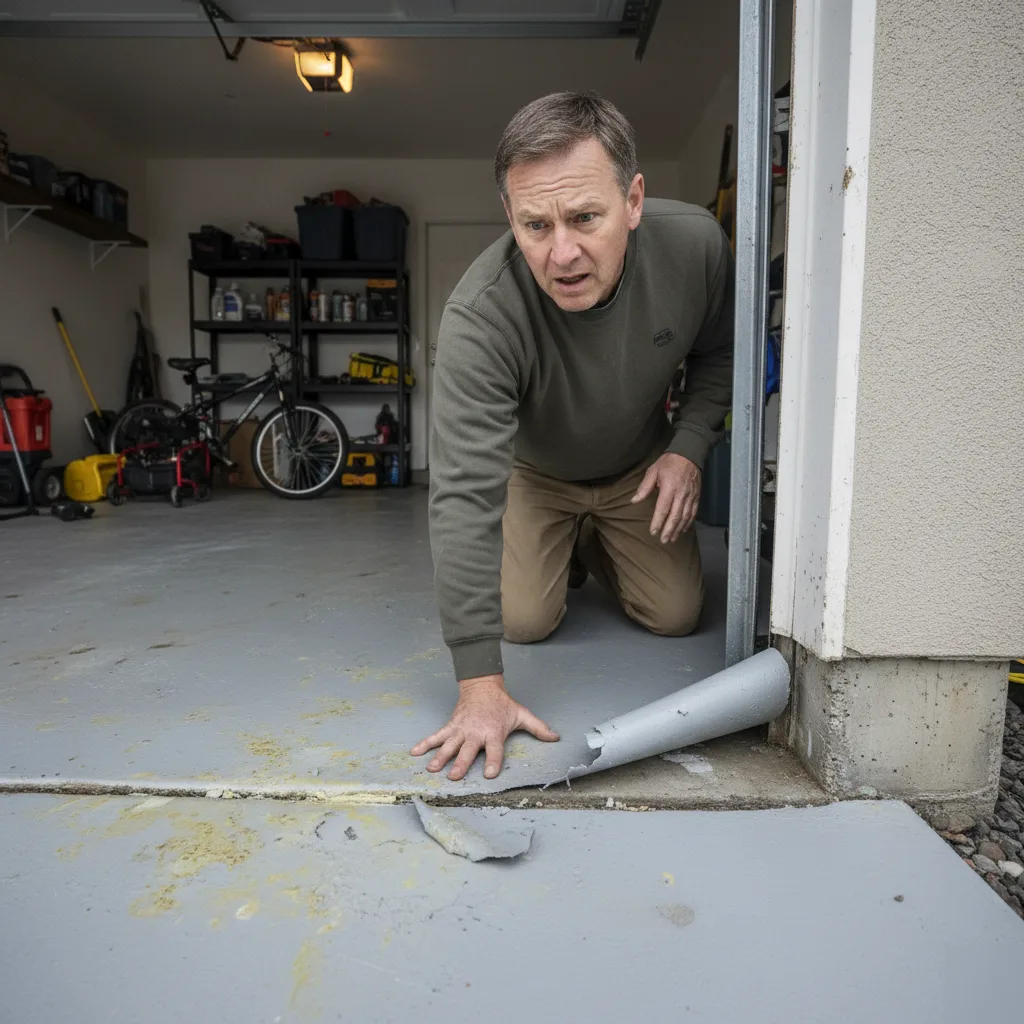
Here's a common story we hear. A homeowner in the Greenacres area buys a DIY epoxy kit. They apply it on a Saturday. By Monday, they're parking on it. Two months later, sections near the garage door start peeling. The concrete wasn't prepped right, nobody checked for moisture, the product cured too fast in cooler weather. That's a perfect storm of problems.
Temperature really matters more than most homeowners realize — and for epoxy floor coating in Spokane WA, those temperature swings are one of the biggest variables we manage on every job. Spokane Valley's weather runs from below freezing in January to over 90 degrees in July. Epoxy floor coating is extremely touchy during application. Too cold, and it won't bond. Too hot, and it sets up unevenly. The window for proper conditions is much narrower than you'd expect — and epoxy floor coating in Spokane WA applied outside that window by a crew cutting corners on timing is one of the most common reasons we get called in to redo someone else's work.
Surface Prep Is the Real Challenge Here
This point really needs its own mention. Epoxy floor coating won't stick to dirty concrete. It hates sealed concrete. Old paint on the slab? Forget about it. The surface absolutely needs grinding or shot blasting first. Skip that step, and nothing else you do matters. The coating simply won't last.
We see this blunder all the time. People think a good cleaning does the trick. It doesn't. Concrete needs to be profiled, meaning we roughen it up so the epoxy has something to really grip into. That kind of prep work demands serious equipment and a crew that knows what they're doing.
And there's another thing people often overlook. Epoxy floor coating is hard. Really hard. That sounds like a good thing until you're standing on it for hours. If your garage doubles as a workshop, your knees and back will ache way more compared to bare concrete or a softer coating. Anti-fatigue mats aren't just a suggestion, they become a necessity.
None of these drawbacks mean epoxy floor coating is a bad choice for everyone. They just mean you need to go into it with your eyes wide open. You'll notice, many issues disappear with a professional job. If you want to see how we tackle most of these common problems, our epoxy flooring services page shows the full process.
Cold Weather Creates Real Risks During Epoxy Installation
Spokane Valley winters are no joke. Temperatures consistently drop below freezing from November through March. That cold poses serious problems for epoxy flooring. Most homeowners don't consider it until it’s too late.
Epoxy is a chemical coating, by the way. It cures through a reaction. That reaction needs heat to work properly. Most epoxy products need the concrete surface and air temperature to stay above 50°F during application. It also needs to hold that warmth for at least 24 hours afterward. Some brands even need it warmer than that, sometimes much warmer.
Here’s what happens if you ignore those temperature requirements:
- The epoxy won't bond right to the concrete. It just sits there.
- Curing slows way down. Or it stops completely.
- The finished surface turns cloudy, uneven, or sticky to the touch.
- Peeling starts within weeks. Not years.
We've seen garages near the Greenacres area where someone tried a DIY epoxy job in late October. The coating looked fine for maybe three weeks. Then big sheets started peeling right off the slab. The concrete underneath wasn't even roughed up enough, probably because the prep tools don't work as well on cold surfaces either.
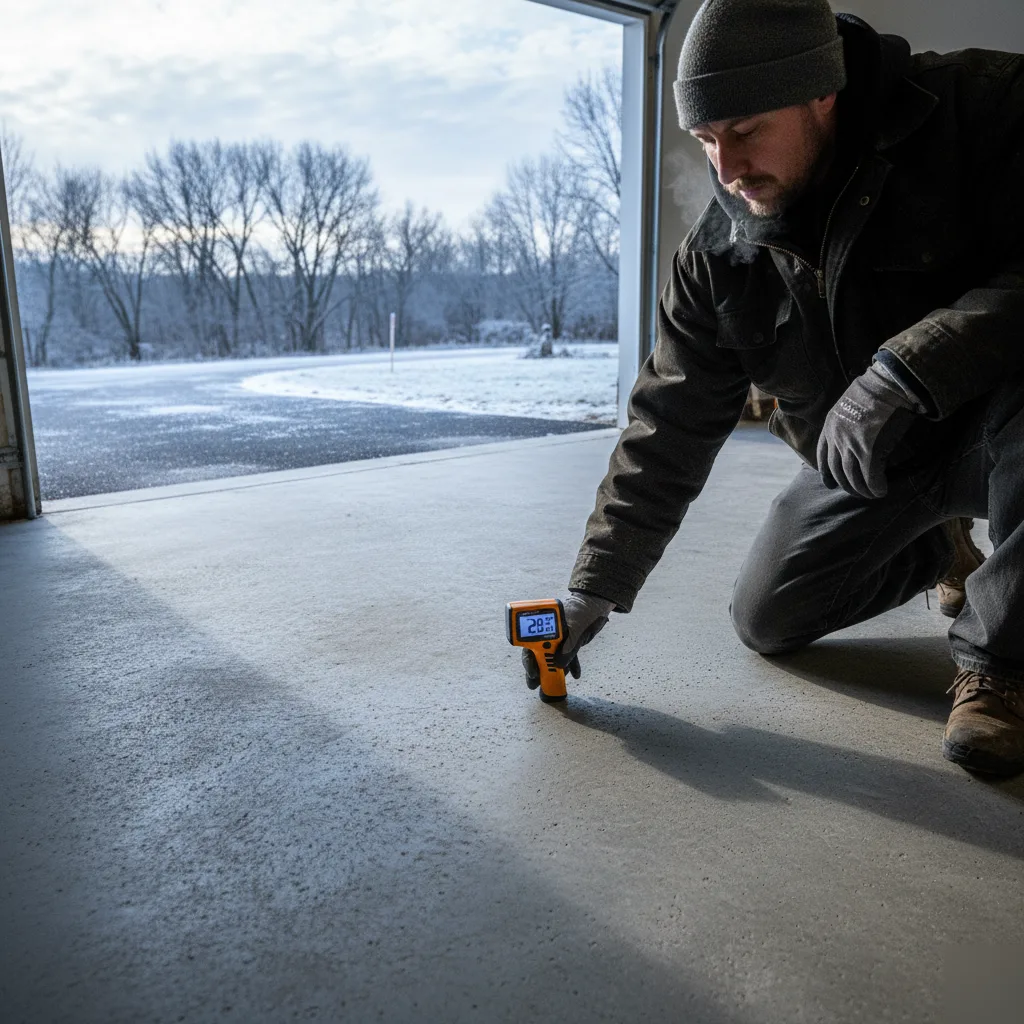
And it's not just the air temperature. Concrete holds cold for a long, long time. Even if we get a sunny afternoon in January, your garage slab could still be 35°F. You can't feel that chill with your hand. A surface thermometer is the only way to know the real story.
Moisture Makes Cold Weather Even Worse
Cold concrete sweats, we see it all the time. When warmer air hits a cold slab, condensation forms on the surface. That thin layer of moisture is usually invisible. But epoxy won't stick to wet concrete. Period. It just won't.
Spokane Valley sits in a zone with dozens of freeze-thaw cycles every winter. The Portland Cement Association has plenty to say on this. These cycles push moisture through concrete slabs from below. So even a heated garage can have a damp floor you never see.
Many folks don't figure this out until it's too late. They've already mixed their epoxy and started rolling it out, only to find it won't properly adhere.
Professional installers test for moisture before every job, no exceptions. A simple calcium chloride test, or a digital moisture meter, tells us exactly what's going on under your slab. Skipping that step in colder months is a recipe for failure.
Timing Your Epoxy Flooring Project Right
So, does cold weather mean you can never get epoxy flooring in Spokane Valley? Not at all. It just means timing is everything. It's.
The best window for garage and basement epoxy work here runs from late April through early October. That gives us consistent temperatures. We need things above 50°F both day and night. Lower humidity also means faster cure times, which is always a plus.
There are ways to work around cold weather if you absolutely need to get it done:
- Heat the space for 48 hours before we apply anything, to warm the concrete slab.
- Keep those heaters running during the entire cure period, keeping the air stable.
- Test the surface temperature right before mixing the epoxy, we need exact numbers.
- Check moisture levels on the concrete on that same day, no guessing.
- Use a product rated specifically for lower temperature application, if available.
But these steps add more time and complexity to the job. That's why we always tell people to plan their epoxy floor coating project for warmer months. Conditions just naturally cooperate then. It makes sense.
If you're thinking about epoxy flooring and want to get the timing just right, our installation overview walks through everything you need to know about the process here in Spokane Valley.
Moisture Beneath Your Concrete Slab Can Cause Epoxy to Fail
This one really surprises people. Your concrete slab looks dry on top. It feels dry to the touch. But underneath, moisture is constantly pushing upward. It moves right through the concrete's pores. And if we apply an epoxy floor coating over that moisture? You're building a house of cards. It leads to peeling, bubbling, and a floor that looks terrible within just a few months.
We call it moisture vapor transmission. Every concrete slab sits on soil. That soil holds water. The water then moves upward as vapor. It passes through the concrete, slowly but surely. In Spokane Valley, we see this problem more often than people realize. Spring snowmelt from the surrounding hills saturates the ground. Homes near the Spokane River or in low-lying areas like the Trentwood neighborhood can have particularly high moisture levels under their slabs. these spots well.
Why Moisture Ruins Epoxy Floor Coating
Epoxy creates a tight seal on the surface. That's a major selling point. But when moisture vapor pushes up from below, it gets trapped between the concrete and the epoxy layer. Pressure builds up. The epoxy then loses its bond. Simple as that.
Here's what we actually see happen in the field:
- Small bubbles start forming under the coating within weeks.
- Edges begin lifting, especially near garage doors or exterior walls.
- White, chalky patches appear where moisture has broken the bond.
- Large sections peel away in sheets. It leaves bare concrete exposed.
We've walked into garages where a homeowner applied an epoxy floor coating over a single weekend. The floor looked great for about six weeks. Then, entire corners started coming up. Just like wallpaper. Almost every single time, nobody bothered to test for moisture first. That's the common thread.
Testing Before You Coat
A simple moisture test can stop this problem entirely. We use two main methods before applying epoxy floor coating:
- Tape a piece of plastic sheeting to the bare concrete. Wait 24 to 48 hours. If condensation forms underneath, you've got a moisture problem.
- Use a calcium chloride test kit. This measures the actual moisture vapor emission rate. The industry standard from ASTM International says epoxy coatings usually need a rate below 3 pounds per 1,000 square feet over 24 hours.
Most DIYers skip this step. We get it, it feels like an extra hassle. But skipping it is probably the single biggest reason epoxy floor coating fails in residential garages all over Spokane Valley. It's a real shame when it happens.
What Makes Spokane Valley Slabs Tricky
Older homes in our area often don't have a proper vapor barrier under the slab. Builders back then didn't always put polyethylene sheeting between the gravel base and the concrete. Without that barrier, moisture moves freely upward. It's just an open path.
Newer construction usually includes a vapor barrier. But even with that, cracks in the slab, or poor drainage around the foundation, can still let moisture through. Our seasonal freeze-thaw cycles here create tiny fractures over time. You can barely see them, but moisture finds them easily. We engineer every pour to survive Spokane's brutal freeze-thaw cycles – guaranteed for 10 years or we'll fix it free. That's why we emphasize it so much, it's a difference-maker.
So, what do you do if your slab has high moisture? We have solutions. Moisture mitigation systems can be applied before the epoxy floor coating. These products seal the concrete from below. They create a stable surface for the coating to bond to. It adds a step to the process, yes, but it's the real difference between a floor that lasts and one that fails in a year. You'll notice our proprietary sealing and reinforcement process has eliminated 95% of winter damage claims over the past 5 years because we deal with this head-on.
If you're considering epoxy flooring for your garage or shop, getting a proper moisture assessment first is non-negotiable. Our full installation guide walks you through what a professional job looks like from start to finish. It includes all the prep work that prevents exactly this kind of problem. We're your neighbor's concrete guy, and we want to get it right for you.

Frequently Asked Questions
Does epoxy flooring get slippery in a Spokane Valley garage?
Yes, smooth epoxy floors get very slippery when wet. Water, oil, or snow tracked in from outside can make it feel like ice underfoot. This is a real concern during Spokane Valley winters. You can add anti-slip additives to the coating mix, but the base product is glossy by nature. If your garage sees a lot of wet foot traffic or vehicle use, talk to a professional about texture options before you commit.
What is the biggest mistake people make when installing epoxy flooring themselves?
Skipping proper surface prep is the number one mistake we see. Many homeowners think a good cleaning is enough before applying epoxy. It is not. Concrete needs to be ground or shot blasted so the coating has something to grip. Without that step, the epoxy will peel no matter how good the product is. We see this exact problem after DIY installs in areas like Greenacres all the time.
Will epoxy flooring yellow or fade in a sunny Spokane Valley garage?
Yes, direct sunlight can cause some epoxy resins to yellow or fade over time. If your garage door stays open during Spokane Valley's sunny summers, you may notice color changes within a couple of years. This is more common with standard epoxy than with UV-stable topcoats. Asking about UV-resistant options before installation can save you from a dull, discolored floor down the road.
How does Spokane Valley's cold weather affect epoxy floor installation?
Cold temperatures can cause epoxy to fail before it ever fully cures. Most epoxy products need the concrete surface to stay above 50°F during and after application. Spokane Valley winters regularly drop well below that from November through March. A cold slab won't bond properly with the coating. The result is cloudy, sticky, or peeling floors within weeks. Even a sunny January afternoon won't warm your concrete slab enough — only a surface thermometer tells the real story.
Can moisture under the concrete slab ruin an epoxy floor?
Yes, moisture seeping up through a concrete slab is one of the top reasons epoxy floors bubble and peel. Spokane Valley areas near the Spokane River or lower-lying spots like Trentwood tend to have more moisture issues in slabs. Epoxy simply will not stick to wet concrete. Moisture testing before any installation is not optional — it is the first thing a qualified installer should check. Skipping that step almost always leads to a failed floor.
How long does epoxy flooring take to cure before you can use your garage?
Most epoxy systems need 24 to 72 hours before light foot traffic is safe. Driving a car on it usually requires a full week. During that entire window, your garage is off-limits. In Spokane Valley's cooler months, curing can take even longer because cold slows the chemical reaction down. Planning your installation during mild weather and clearing your schedule for at least a week gives the coating its best chance to bond and last.
Ready to Experience the Concrete Revival Difference?
Complete Service Area Coverage
- Spokane and Spokane Valley
- Coeur d'Alene metro area
- Deer Park and Newport
- Liberty Lake and Otis Orchards
- Cheney and Medical Lake
- Post Falls and Rathdrum