
Snow Plow Driveway Damage: What Spokane Homeowners Can Do
Every winter in Spokane Valley, snow plows save us hours of backbreaking work. But they also tear up driveways. Most homeowners don't notice the damage until spring, when the snow melts and the cracks are staring back at them from the concrete.
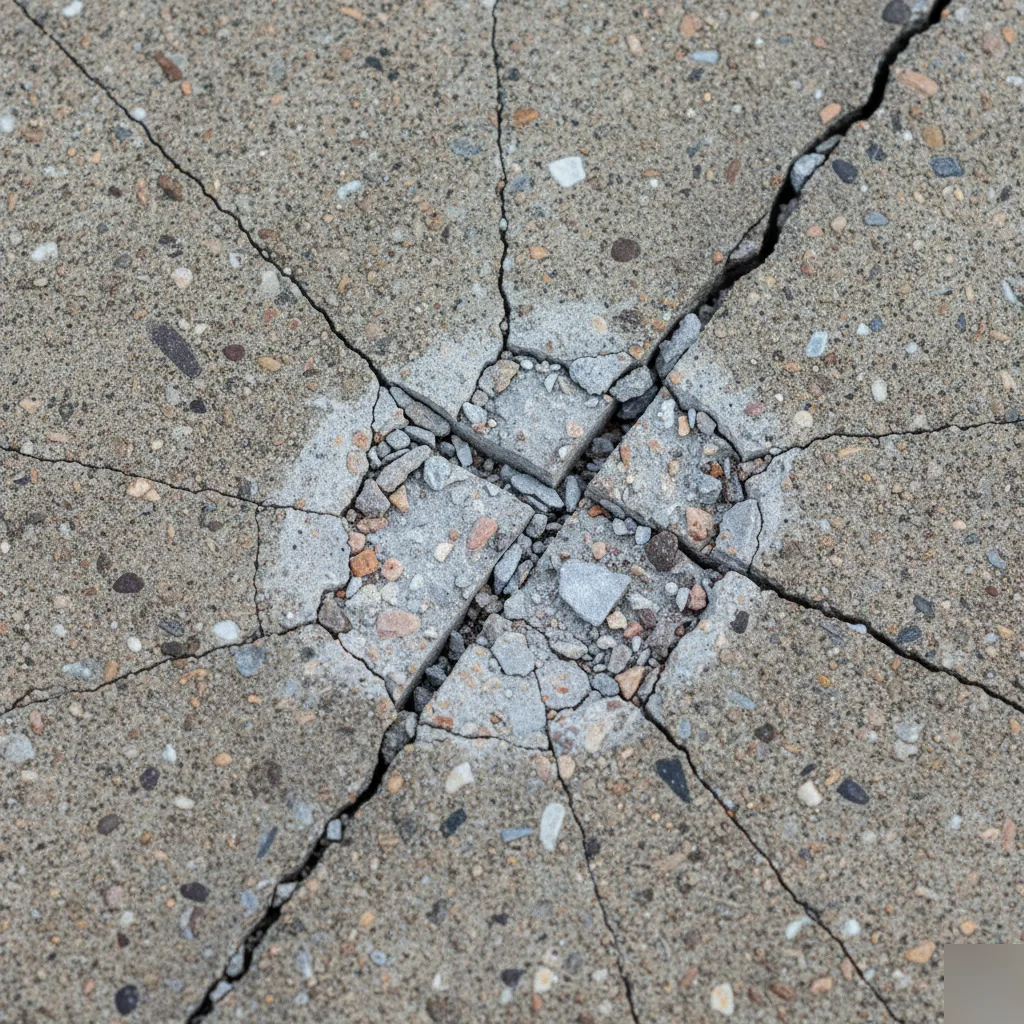
Here's what actually happens. A steel plow blade scrapes across your concrete at speed. It catches edges. It gouges the surface. It chips corners where your driveway meets the sidewalk or garage apron. And if your concrete already had small cracks from freeze-thaw cycles, the plow makes every one of them worse.
We've been doing concrete driveway repair in Spokane for over 20 years. Every spring, the calls start rolling in around late March. Homeowners along the Sullivan Road corridor and throughout Spokane Valley discover chunks missing from their driveway edges. Deep scrapes across the surface. Cracks that weren't there in October.
The Damage You Can See (And What's Hiding Underneath)
Surface gouges are the obvious problem. But the real issue goes deeper. When a plow blade catches a small crack, it pries the concrete apart. Water gets in. Then Spokane's freeze-thaw cycle takes over, the water expands and contracts dozens of times per winter. That tiny crack becomes a big one.
Most people don't catch this until it's too late.
Common types of snow plow damage we see on Spokane Valley driveways include:
- Chipped or broken edges along the driveway perimeter
- Surface scrapes and gouges from the plow blade dragging
- Cracked sections where the blade caught an existing weak spot
- Lifted or shifted concrete slabs near the street
That last one surprises people. A heavy plow truck pushing snow can shift a slab if the base underneath has eroded. We see it a lot on older driveways near Sprague Avenue, where the glacial outwash soil conditions underneath don't do the concrete any favors to begin with.
It's Not Just City Plows
Private plow operators cause damage too. Sometimes more. A city plow driver usually keeps the blade a set height off the ground. But a guy in a pickup truck with an aftermarket plow? He might be running that blade right on the concrete. No margin for error.
So if you hire someone to plow your driveway directly, ask how they set their blade height. That one question can save you from needing concrete crack repair come spring.
Here's a situation we ran into not long ago. A homeowner near Pines Road had a brand new stamped concrete driveway, beautiful work. Their plow operator scraped the decorative surface in three places during the first big storm. By March, those scrapes had turned into flaking patches because moisture got under the surface layer and froze repeatedly. Stamped concrete is already one of the more vulnerable surfaces in our climate, and a plow blade is about the worst thing that can happen to it.
Temperatures in Spokane Valley swing above and below freezing over 100 times per winter, according to data from the National Weather Service office in Spokane. Every swing is a chance for damage to get worse.
The good news? Most snow plow damage is fixable. Driveway resurfacing handles surface scrapes and gouges. Concrete crack repair takes care of splits before they spread. And if edges are chipped or broken, a professional concrete contractor can rebuild them so they hold up through the next winter.
If you've spotted damage on your driveway this spring, don't wait. Check out our driveway repair page to see how we handle these problems before Spokane's next freeze-thaw season makes them permanent.
Spokane Valley's Freeze-Thaw Cycle Turns Small Plow Damage Into Big Repairs
A plow blade catches the edge of your driveway in January. Chips off a quarter-sized piece of concrete. No big deal, right? Give it one Spokane Valley winter and that tiny chip becomes a crack running two feet across your slab.
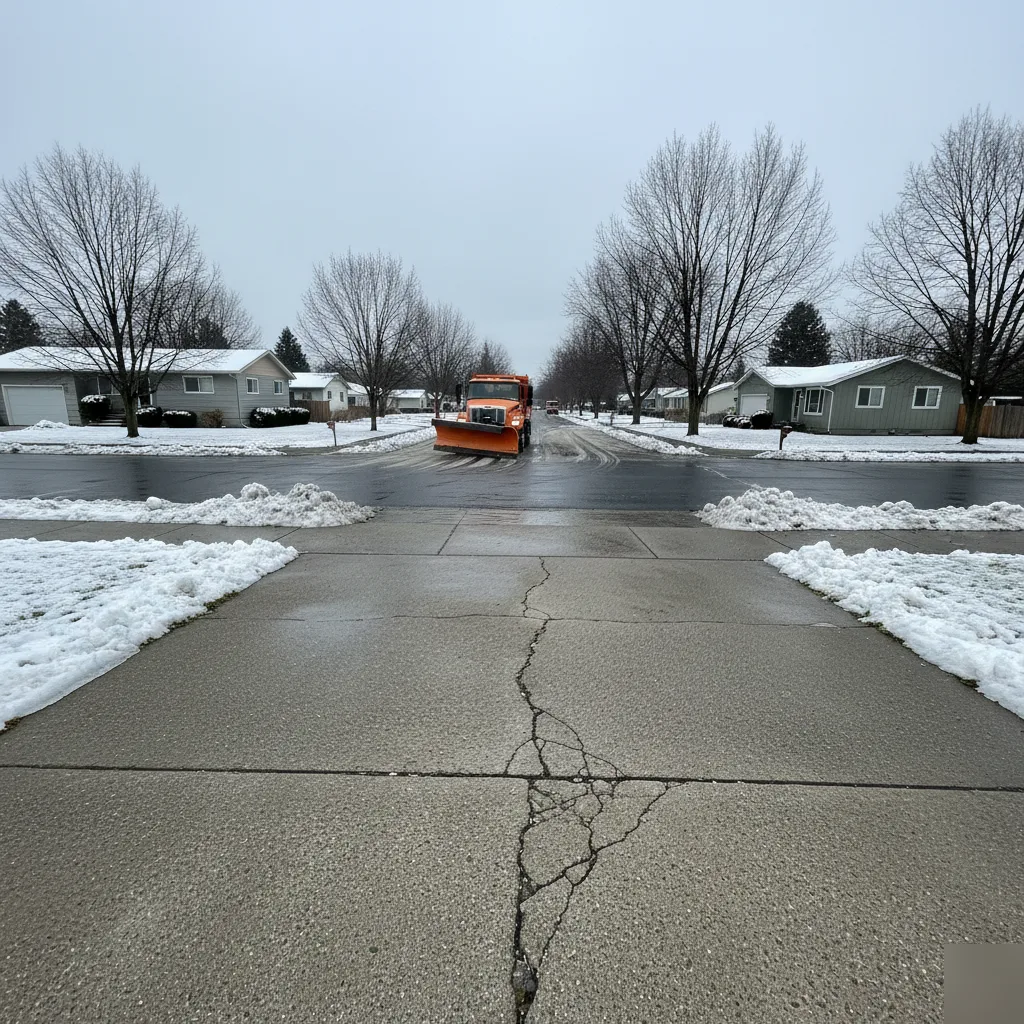
Here's what happens. Water gets into that small gouge. The temperature drops below freezing overnight. That water expands by about nine percent as it turns to ice, according to the Portland Cement Association. The ice pushes the crack open a little wider. Then the afternoon sun warms things up, the ice melts, and water seeps even deeper into the concrete. That night it freezes again. And again. And again.
Spokane Valley averages around 45 inches of snow per year. We also see temperature swings that bounce above and below 32 degrees dozens of times each winter. Every swing is one more freeze-thaw cycle working on your damaged concrete. Most people don't realize this until spring arrives and they see the full picture.
Why Plow Damage Accelerates So Here
We've been doing concrete driveway repair in Spokane Valley for over 20 years. The pattern is always the same. A homeowner near the Sullivan Road corridor calls us in March or April, surprised that a small scrape from a plow blade turned into a crumbling slab edge. But the math is simple:
- One plow scrape creates an entry point for moisture
- Each freeze-thaw cycle expands the damage a little more
- De-icing salt from plows breaks down the concrete surface even faster
- Spring runoff floods those cracks with even more water before the ground fully thaws
Salt is a big one. Plow trucks spread magnesium chloride and rock salt across roads and driveways. That salt doesn't just melt ice, it eats into concrete. The damaged spot from the plow blade absorbs salt-laden water like a sponge. By the time warm weather hits, you're not looking at a scrape anymore. You're looking at spalling, flaking, and deep cracks that need real concrete crack repair.
The Cost of Waiting
We've watched homeowners put off a simple fix in February and end up needing full driveway resurfacing by May. That small chip the plow left? It turned into a network of cracks across half the slab. Freeze-thaw doesn't take breaks. It works every cold night from November through March.
So what can you actually do about it? Get plow damage looked at early. Even a patch or seal in the fall can stop water from getting in. That one step cuts off the freeze-thaw cycle before it starts doing real harm. If you're already seeing cracks spreading from an old plow scrape, professional driveway repair services can stop the damage before your whole slab needs replacing.
The worst thing you can do is nothing.
Spokane Valley's climate is hard on concrete. Every winter tests your driveway. But a driveway that's been hit by a plow and left unrepaired? That's a driveway fighting two battles at once. And concrete loses that fight every time. If you've noticed damage from this past winter, get it assessed now, before the next freeze-thaw season makes it worse.
Who Is Responsible for Snow Plow Driveway Damage Depends on Who Was Driving
This is the question we hear most often after a rough Spokane Valley winter. Someone's driveway gets chewed up by a plow blade, and they want to know who's paying for the concrete driveway repair. The answer depends entirely on who was behind the wheel.
There are really only three scenarios.
- A city or county plow hit your driveway apron from the street. If a municipal plow damaged the concrete where your driveway meets the road, you'll need to file a claim with the responsible government agency. In Spokane Valley, that's usually the City of Spokane Valley Public Works department. You have a limited window to file, they require documentation and photos, and the process can take months. Government agencies don't always accept liability, but if the damage clearly came from a city-operated blade scraping onto your property, you've got a case worth pursuing.
- A private plow contractor damaged your driveway. If you hired someone to plow your driveway or parking area and their blade gouged the surface, that contractor is responsible. Period. A professional concrete contractor in Spokane will tell you the same thing. The plow operator's insurance should cover the repair. Get their insurance info. Take photos immediately. And don't let anyone tell you that surface scraping is "normal wear and tear" from plowing.
- You plowed it yourself. This one's on you. We see this a lot along the Sullivan Road corridor and in neighborhoods near Greenacres. Homeowners mount a blade on their truck or ATV, set it too low, and peel up chunks of concrete they didn't even know were loose. Freeze-thaw cycles had already weakened the slab, the plow just finished the job.
Here's what most people don't realize until it's too late. The damage you see after a plow scrape is almost never just cosmetic. That blade rips off the top layer of your concrete and exposes the aggregate underneath. Once that surface seal is broken, water gets in. Then Spokane's freeze-thaw cycles go to work, expanding and cracking the slab from within. What looked like a scratch in January becomes a real problem by April.
Document Everything Before Spring
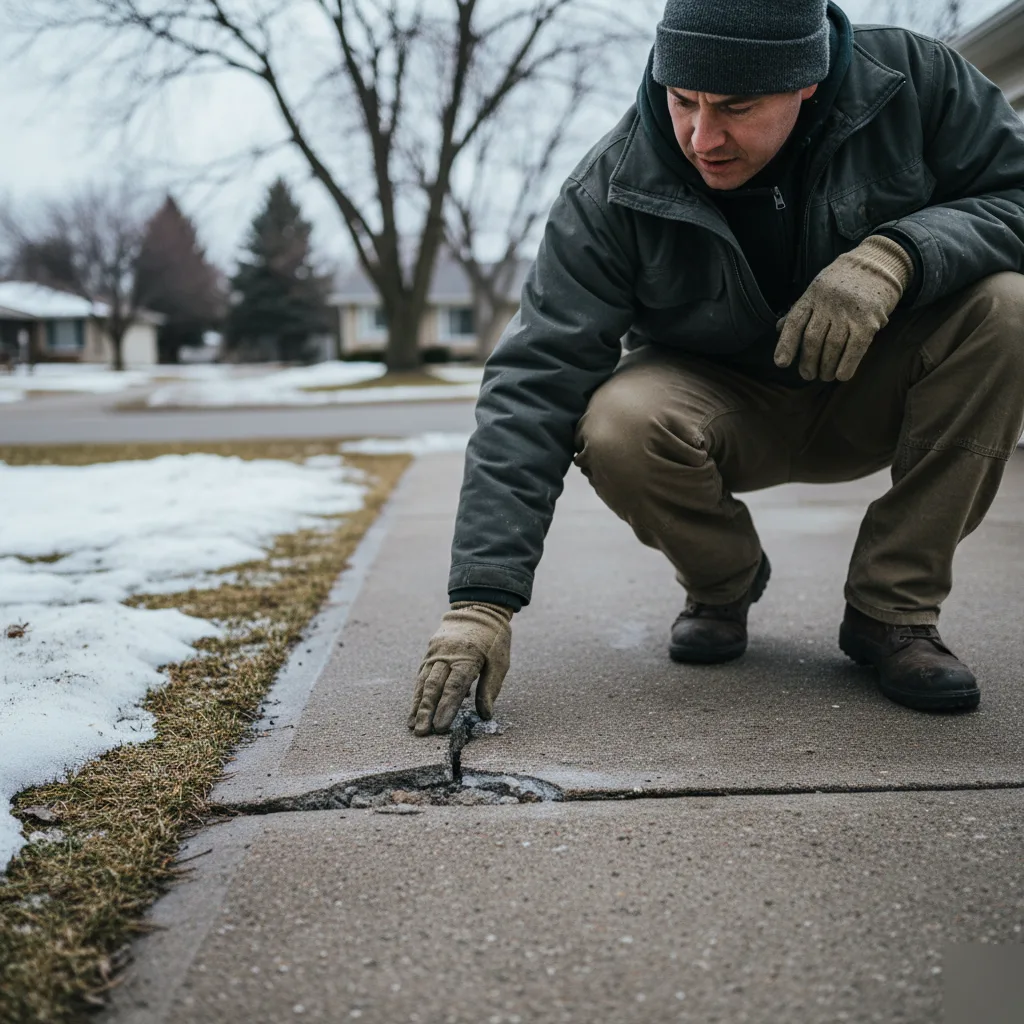
No matter who caused the damage, your first move is the same. Grab your phone. Take clear photos of every gouge, scrape, and crack while it's still fresh. Measure the affected area if you can. Write down the date and the name of whoever was plowing. If it was a hired contractor, get a copy of their insurance certificate.
We've been doing driveway repair in Spokane for over 20 years. The homeowners who document damage right away are the ones who get results. The ones who wait until spring to look at it? They lose leverage because the freeze-thaw damage blurs the line between plow damage and natural deterioration.
But here's the thing that really matters. Regardless of who pays for it, the concrete still needs to be fixed before next winter. Exposed, scraped concrete won't survive another season of Spokane Valley temperatures swinging from 35 degrees to negative 5 in a single week. If you're looking at plow damage on your driveway right now, our driveway repair and restoration page walks you through exactly what the fix looks like.
One situation we run into a lot near Pines Road and Sprague Avenue: a landlord hires a plow service, the operator drags the blade across a stamped concrete driveway, and nobody wants to claim it. The tenant calls us, the landlord blames the plow guy, the plow guy says it was already cracked. Meanwhile the slab keeps falling apart. Don't let that be your situation. Get documentation early, get a professional driveway repair assessment, and get the responsible party on record before the evidence melts away with the snow.
Frequently Asked Questions
How do I know if my Spokane Valley driveway has snow plow damage or just normal winter wear?
Snow plow damage usually looks different from regular wear. Look for straight scrape marks running across the surface — those come from a blade dragging. Chipped edges along the driveway border are another giveaway. Normal freeze-thaw cracking tends to follow random patterns across the slab. Plow damage often appears near the street end of your driveway, where the blade makes first contact. If you see gouges, missing chunks at the edges, or cracks that line up with a blade path, a plow likely caused it.
What's a common mistake Spokane Valley homeowners make after noticing plow damage?
The most common mistake is waiting until the damage looks "bad enough" to fix. A small chip or surface scrape seems minor in January. But every freeze-thaw cycle between January and March makes it worse. By spring, that chip can become a crack running across half the slab. Early repair is almost always simpler and less involved than waiting. If you spot damage after a storm, don't assume it will stay small. Spokane Valley winters will work on it every night until warm weather arrives.
What types of concrete driveways are most vulnerable to plow damage in Spokane Valley?
Stamped concrete and older slabs take the most damage. Stamped concrete has a decorative surface layer that a plow blade can scrape away in one pass. Once moisture gets under that surface layer and freezes, flaking starts fast. Older driveways — especially those near areas like Sprague Avenue where glacial outwash soil can erode the base — are also at higher risk. A weakened base means slabs can shift when a heavy plow truck pushes snow across them. If your driveway is older or decorative, it deserves a close inspection every spring.
Why does Spokane Valley's climate make plow damage worse than in other places?
Spokane Valley temperatures swing above and below freezing over 100 times per winter, according to the National Weather Service office in Spokane. Every swing is one more freeze-thaw cycle working on any crack or gouge a plow left behind. Water gets in, freezes, expands by about nine percent, and pries the damage open wider. Then it melts and goes deeper. With around 45 inches of average annual snowfall, that cycle repeats constantly. Small plow scrapes that might stay small in milder climates turn into serious slab damage here.
Can a private plow operator cause more driveway damage than a city plow truck?
Yes — private operators often cause more damage. City plow drivers typically keep the blade set at a standard height above the pavement. A private operator running an aftermarket plow on a pickup truck may run the blade directly on the concrete surface. That leaves no margin for error on uneven spots or existing cracks. If you hire someone to plow your driveway, ask how they set their blade height before the first storm. That one question can prevent surface gouges and chipped edges that need repair come spring.
When should I call a professional instead of trying to patch plow damage myself?
Call a professional when the damage goes beyond a hairline crack or surface scuff. Chipped edges, cracked slab sections, lifted or shifted concrete, and spalling (flaking surface layers) all need proper concrete repair to hold up through another Spokane Valley winter. DIY patching products can seal small surface cracks temporarily, but they often fail when freeze-thaw cycles start again. For anything deeper than a surface scratch, or any crack wider than a quarter inch, professional concrete crack repair gives you a fix that actually lasts. Our driveway repair page covers the full range of damage we handle each spring.
Ready to Experience the Concrete Revival Difference?
Complete Service Area Coverage
- Spokane and Spokane Valley
- Coeur d'Alene metro area
- Deer Park and Newport
- Liberty Lake and Otis Orchards
- Cheney and Medical Lake
- Post Falls and Rathdrum