Is Resurfacing a Driveway Worth It? Pros and Cons Explained for Spokane Valley Homes
Driveway resurfacing bonds a thin new layer of polymer-modified cement over your existing concrete to fix surface damage like spalling, stains, and small cracks. It works when the slab underneath is still solid. It won't fix a driveway that's sinking, heaving, or broken through, and the prep work decides whether it lasts through Spokane winters.
What Driveway Resurfacing Involves
Your driveway looks rough. Flaking spots, faded patches, a web of hairline cracks. But the slab still feels solid when you walk it. That's the exact spot where driveway resurfacing makes sense.
Driveway resurfacing means bonding a thin new layer to your old concrete. Most crews use a polymer-modified cement overlay. It grabs onto the slab you already have. You get a fresh surface without tearing anything out.
Think of it as a new skin, not a new skeleton.
Most homeowners miss that part. Driveway resurfacing fixes what you see on top. It doesn't fix a slab that's sunk, lifted, or cracked clean through. If the base is shot, an overlay just hides the problem for a season or two.
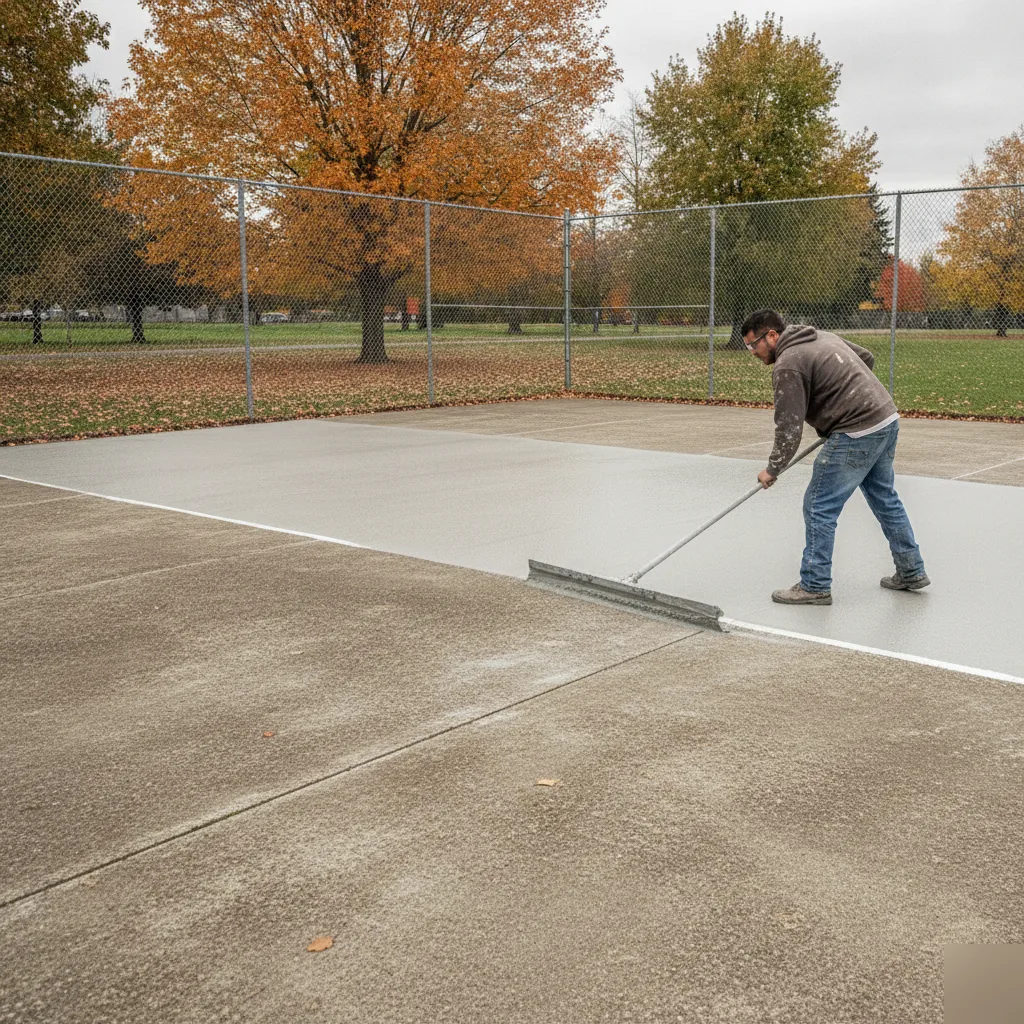
Here's how a typical driveway resurfacing job goes for our crew in Spokane Valley. The steps barely change from house to house, but the prep is where the real work happens.
- Inspect the slab. We check for movement, deep cracks, and drainage trouble before anything else.
- Repair the damage. Cracks get patched and pitted spots get filled so the overlay sits on a flat base.
- Pressure wash and prep. Oil, old sealer, and loose concrete have to go or the overlay won't bond.
- Prime the surface. A bonding primer helps the new layer grip the old concrete.
- Apply the overlay. We spread and trowel it, then add a broom finish so tires and boots get traction.
- Keep the control joints. We honor the existing joints so the slab can still move with the seasons.
- Let it cure. You'll get a short window before walking on it and a longer one before parking.
Skip step three and you're asking for trouble. We've torn out failed overlays from other jobs where nobody stripped the old sealer. The new layer peeled off in sheets after one winter.
And Spokane winters test every bond. Water slips into tiny gaps and freezes overnight. Then it thaws by noon. That cycle repeats over and over from late fall into spring. Deicers tracked in from Sullivan Road or I-90 chew on weak surfaces too. So a good overlay paired with concrete sealing holds up far better than bare concrete.
Last fall we checked out a driveway off Pines Road. The owner wanted driveway resurfacing for spalling near the garage. But one panel had dropped close to an inch. Resurfacing over that would've been a waste of his money. So we did concrete repair on that panel first, then resurfaced the rest. Two winters later it still looks clean.
So how do you know which camp your driveway falls in? Look for surface damage on a slab that sits level and doesn't rock. That's a good candidate. Big gaps, uneven panels, or water pooling against the house point to deeper issues. Those need repair before anyone talks overlay.
We've seen this pattern a hundred times. People want the quick cosmetic fix, but the slab needs something more first.
The Real Factor That Decides If Resurfacing Will Work: Your Driveway's Base
Here's the truth most people don't hear until it's too late. Driveway resurfacing is only as good as what's under it.
A resurfacing layer is thin. It bonds to your old concrete and gives it a fresh, tough top. But it can't hold anything up on its own. If the slab under it is shifting, the new surface shifts too. And it cracks right along the same lines.
We've seen this crack pattern a hundred times.
Someone hires a cheap crew to resurface over a driveway that's already sinking. It looks great for one summer. Then a Spokane Valley winter hits, and the old cracks punch right back through the new top. Now the homeowner has paid twice and still has a bad driveway.
So what's going on down there? Your concrete sits on a layer of packed gravel and soil. That base carries the weight of your car every single day. A lot of the Valley sits on gravelly ground that drains pretty well. That's good news. But not every lot is the same, and some older subdivisions had sloppy compaction when the homes went in.
Water is the real enemy. It sneaks under the slab through cracks and open joints. Then our freeze-thaw cycles go to work. Water freezes and swells. It thaws and leaves a gap. Do that dozens of times a winter and the base starts to wash out and settle. Slow at first. Then fast.
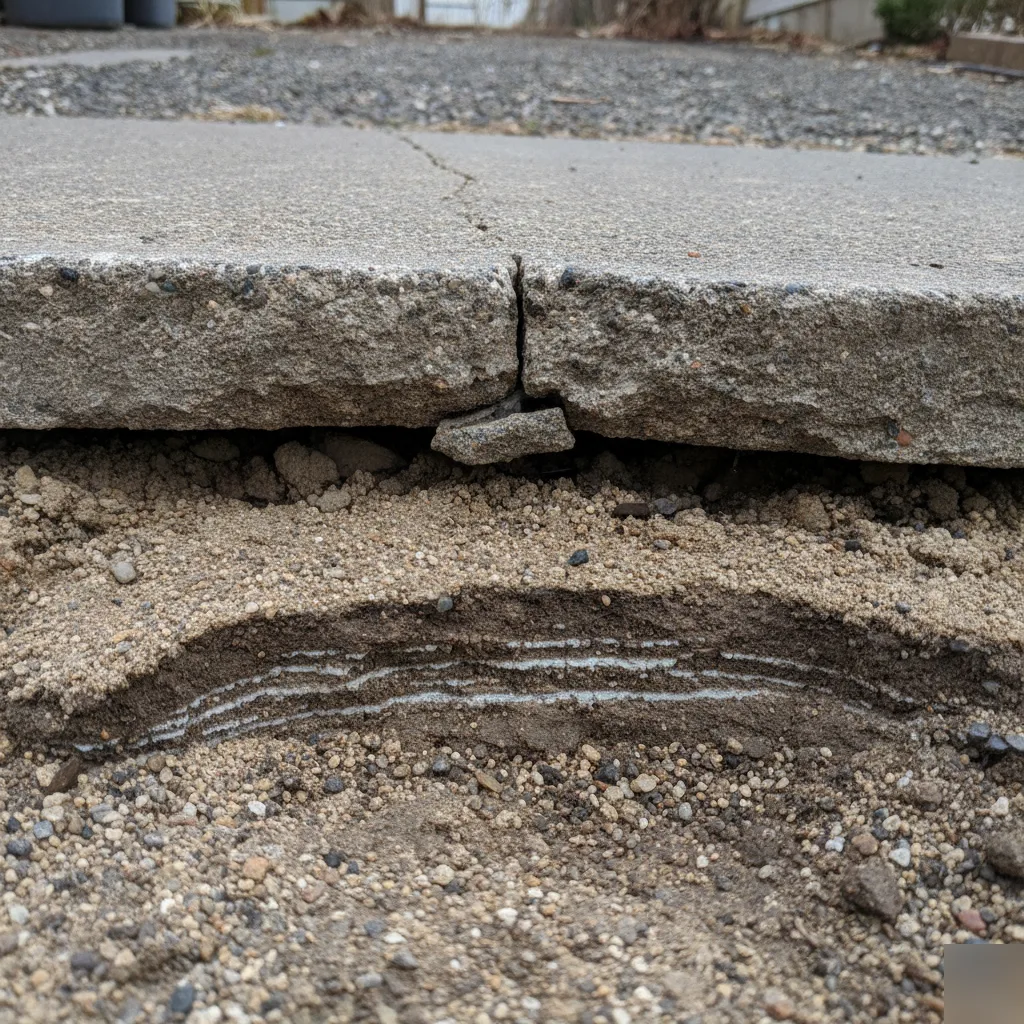
You can do a quick check yourself before you call anyone. Walk your driveway on a dry day and look for these warning signs.
- Slabs that rock or thump when you step on the edge
- One section sitting lower than the one next to it, like a trip ledge
- Cracks wide enough to slide a coin into
- Water that pools in the same low spot after rain or snowmelt
- Edges crumbling away near the lawn or the street
One or two hairline cracks? That's normal and usually fine for driveway resurfacing. Sinking, rocking, or big height changes point to a base problem. That needs fixing first.
Last spring we checked a driveway off the Sullivan Road corridor. The homeowner wanted a decorative overlay across the whole thing. Most of it was solid. But the slab by the garage had dropped almost an inch, and water was running right under it. We told them straight. Resurfacing over that section would've failed by the next thaw. So we repaired that one area and dealt with the drainage. Then we resurfaced the full driveway. It's been through a full winter since and still looks sharp.
That's the call a good contractor should make for you. Not every driveway is a resurfacing candidate. And anyone who says yes without checking the base isn't doing you any favors.
In 11 years of pouring and fixing concrete around Spokane Valley, we've learned to look down before we look at the surface. A solid base means driveway resurfacing can give you years of good use. A failing base means you need driveway repairs first, or a full replacement.
Quick rule: if your driveway is flat, stable, and only shows surface wear or small cracks, resurfacing is usually worth it. If it's sinking or heaving, fix the base first.
Signs Your Driveway Might Be a Good Candidate for Resurfacing
Not every tired driveway needs to be torn out. Plenty of them just need a new top layer. The trick is knowing which one you've got.
Driveway resurfacing works on a slab that's still solid underneath. Think of it like a new coat of paint on a sound wall. If the bones are good, the surface can be fixed.
Here's what we look for when we walk a driveway in Spokane Valley. If most of these sound familiar, you're likely a good fit.
- Light scaling or flaking on the surface after a few rough winters
- Spalled spots where small chunks of the top layer popped off
- Hairline cracks thinner than a credit card
- Faded, stained, or blotchy concrete that just looks old
- A slab that still sits flat and level, with no sinking or heaving
That last one matters most. A level slab with ugly skin is the sweet spot for driveway resurfacing.
Scaling is the big one around here. Spokane winters bring a lot of freeze-thaw swings. Water soaks into the top of the slab, freezes, and pushes the surface apart. Add road salt dripping off your tires all winter. Pretty soon the top layer starts to crumble.
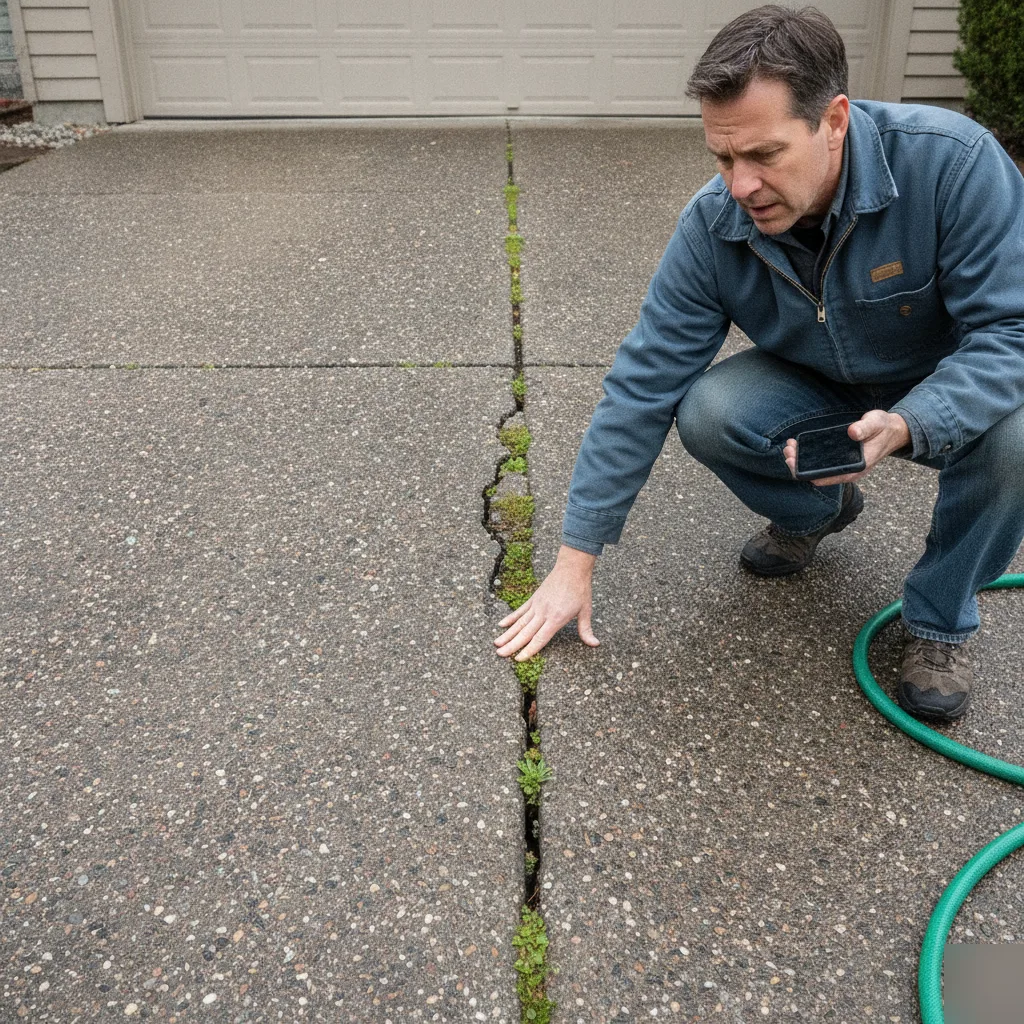
But here's what most homeowners miss. Scaling looks awful, but it's usually only skin deep.
Ugly doesn't always mean broken.
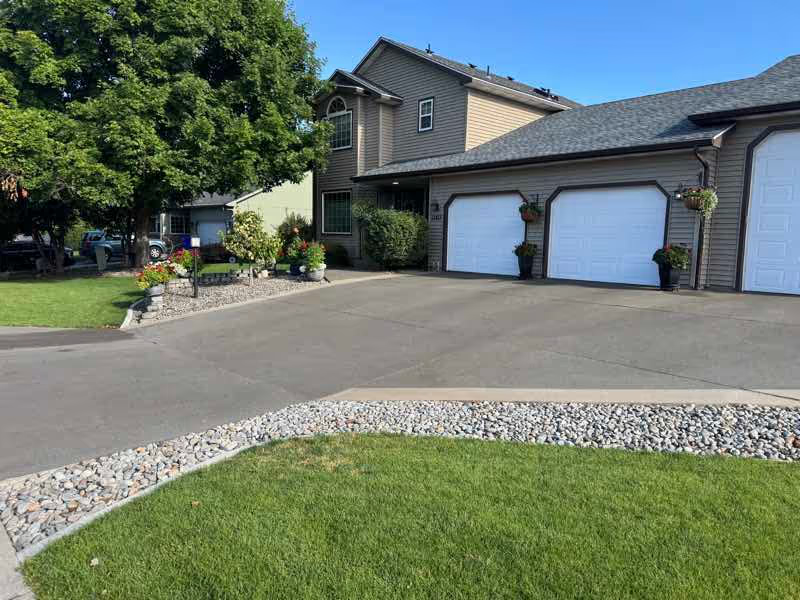
We checked a driveway off Pines Road last spring. The owner was sure it needed full replacement. The whole surface was pitted and gray. And underneath? The slab was solid and level, and it drained the right way. We resurfaced it, and the owners couldn't believe it was the same concrete.
Quick field test: Dump a bucket of water on your driveway. Watch where it goes. If it pools in low spots or runs toward your garage, the slab may have shifted. Driveway resurfacing won't fix that.
Cracks take a closer look. Small hairline cracks are no big deal. We handle those with concrete crack repair first, then resurface right over the top. Wide cracks are a different story. If you can slide a coin into one, something moved below the surface. And if one side sits higher than the other, the base is the real problem. We've seen folks resurface over a heaved slab to save a few bucks, and it cracked right back the next winter.
Age plays a part too. Most driveways we resurface are somewhere in the middle of their life. Not brand new. Not falling apart either. Just worn down by years of snow, salt, and Spokane Valley summers that bake the surface.
So how do you know for sure? It's tough to tell from the porch. After 11 years of fixing driveways around Spokane Valley, we can usually tell in about ten minutes. We check the cracks and the drainage. We look at the edges. Then we tell you straight if driveway resurfacing makes sense or if you'd be wasting your money.
Frequently Asked Questions About Whether Driveway Resurfacing Is Worth It
Is it better to resurface or replace an asphalt driveway?
It depends on your slab's condition, not just its age. Resurfacing works when the base is solid and damage is only on the surface, like fading or small cracks. Replacement makes more sense if the slab is sinking, heaving, or broken through. A contractor should check your base before recommending either option. Our guide on how to tell if your driveway's base is solid walks you through the warning signs yourself.
Why is sealing a driveway sometimes considered pointless?
Sealing is only pointless when it's used to hide a bigger problem underneath. A sealer sits on top and can mask cracks for a while, but it won't stop a shifting or sinking slab. Paired with proper resurfacing and repair, sealing extends the life of a sound driveway. The key is fixing base issues first, then sealing to protect the surface from Spokane Valley's freeze-thaw cycles.
Can I resurface my driveway myself?
You can, but DIY resurfacing often fails faster than professional work. The biggest risk is skipping prep steps like stripping old sealer or priming the surface, which causes the new layer to peel after one winter. Spokane Valley's freeze-thaw cycles test every bond hard. If you're unsure whether your slab even qualifies for resurfacing, it's worth getting a professional opinion before you spend a weekend on it.
How do I know if my driveway just needs resurfacing or has a deeper problem?
Check for rocking slabs, uneven sections, wide cracks, or water that pools in the same spot. These signs point to a base problem that resurfacing won't fix. Hairline cracks on a level, solid slab are usually fine for resurfacing. Walking your driveway on a dry day is the easiest first check before deciding what kind of work it needs.
Why does Spokane Valley's climate matter for driveway resurfacing?
Spokane Valley gets repeated freeze-thaw cycles from late fall through spring, and that cycle is hard on concrete. Water slips into tiny gaps, freezes overnight, then thaws by noon, over and over. Deicers tracked in from roads like Sullivan Road or I-90 add more stress to weak surfaces. A properly prepped overlay holds up far better through this cycle than a rushed job or bare, unsealed concrete.
What's a common mistake homeowners make with driveway resurfacing?
The biggest mistake is resurfacing over a driveway that's already sinking or shifting. It can look great for a season, then old cracks punch right back through once winter hits. This means paying for the work twice. A contractor who checks the base first, not just the surface, will tell you whether resurfacing or repair comes first.