
Is epoxy garage floor coating worth the investment for Spokane homes?
Most folks think epoxy garage floor coating is just fancy paint. It's not. Not even close. Epoxy is a chemical system, a two-part deal that bonds right into the pores of your concrete slab. Once it hardens, it becomes part of the floor. That connection is what keeps a coating from peeling in one Spokane Valley winter. It's what makes it last years.
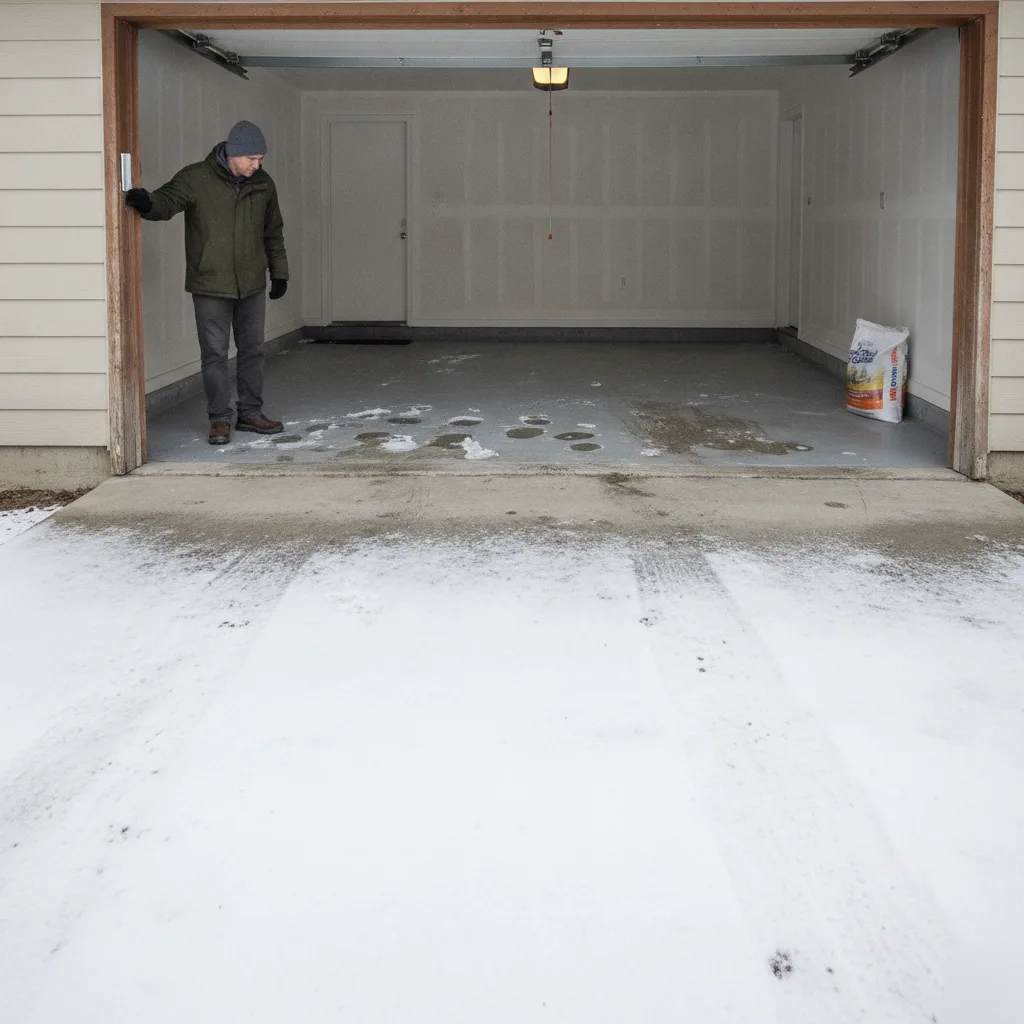
Here's the real process. We grind your concrete down. Diamond grinders open up that pore structure. We see this step skipped all the time, and that's why coatings fail. The grinding makes a rough surface. This lets the epoxy soak in and lock on tight. Without it, you're gluing a sticker to a dusty table. It won't hold.
The surface gets prepped. Then, the epoxy resin and hardener mix. This kicks off a chemical reaction, crosslinking, they call it. The mix hardens into a tough polymer layer. It's bonded to your concrete right down to the molecules. This stuff is strong. A properly applied epoxy floor coating can handle over 10,000 PSI of compressive force (that's according to the Concrete Network, by the way). That's serious protection. Especially for a garage slab that handles car tires, dropped tools, and road salt every single day.
What the Coating Protects Against
Spokane Valley garages face a rough mix. Moisture, chemicals, wild temperature swings. Epoxy garage floor coating makes a barrier against all of it. Here's what it blocks:
- Road salt and deicing chemicals that tires track in all winter.
- Oil, transmission fluid, and gasoline spills. These stain and wear out bare concrete.
- Moisture getting in, leading to spalling when freeze-thaw cycles hit.
- Dust and fine particles. Bare concrete slabs shed them nonstop.
That last one catches people off guard. Bare concrete sheds dust. A fine powder settles over time. It coats everything in your garage, your tools, your car, those storage boxes. Epoxy seals the surface. It stops that dusting cold.
How It Changes the Concrete's Performance
Just think about your garage floor. From November to March. Snow melts off your car. Water pools on the slab. Overnight, temperatures drop below freezing. That water expands inside the concrete's pores. Over time, the surface pits and flakes. We've driven into garages along the Sullivan Road corridor. Some slabs look like they've been chewed up. This damage nearly always comes from unprotected concrete, hammered by years of freeze-thaw cycles.
Epoxy garage floor coating fills those pores. It makes a waterproof barrier. Water can't get in. So it can't freeze and expand. The concrete stays put. And cleaning becomes easy. The coating is nonporous. A squeegee and some soap handle most messes in minutes. Understanding controlling moisture in your home is key to protecting any concrete surface long-term.
But here's a point many miss. Epoxy isn't just a shell sitting on top. It makes the surface layer stronger. The cured polymer is tougher than the concrete below it. Your slab gets stronger where it matters most. Right at the surface, where all the wear and tear happens.
We've been doing epoxy garage floor installation in Spokane for over 11 years now. The floors we coated a decade ago? They still look solid. That tells you what this coating does when it's put down right. Want to see how epoxy floor coating fits into your garage plans? Head over to our epoxy floor coating page for the full rundown.
Spokane Valley's Climate Makes Concrete Protection More Important Than Most Homeowners Realize
Your garage floor really takes a beating every winter. Most folks don't think about it until cracks show up. Or maybe the surface starts flaking apart. But here in Spokane Valley, the damage starts long before you ever see it.
Spokane's freeze-thaw cycle is brutal on bare concrete. Temperatures swing wildly. Below zero one day, above freezing the next. This happens dozens of times each winter. Water seeps into tiny pores. It freezes, expands, then thaws again. That cycle repeats, over and over. From November all the way through March. The Portland Cement Association states freeze-thaw damage causes most concrete surface failures in cold spots. Spokane Valley sits right in that risk zone.
Picture your garage floor on a typical January night. Snow and ice melt off your tires. Road salt and de-icing chemicals sit in puddles on the slab. All that moisture soaks in. Then the temperature drops hard. Everything freezes solid inside the concrete. One winter won't wreck your floor. But give it five winters? Ten? That's when the real problems show up.
What Freeze-Thaw Damage Actually Looks Like
We've handled concrete crack repair and garage floor concrete work for 11 years in this area. The damage always follows a pattern. You can spot it if you know what you're looking for:
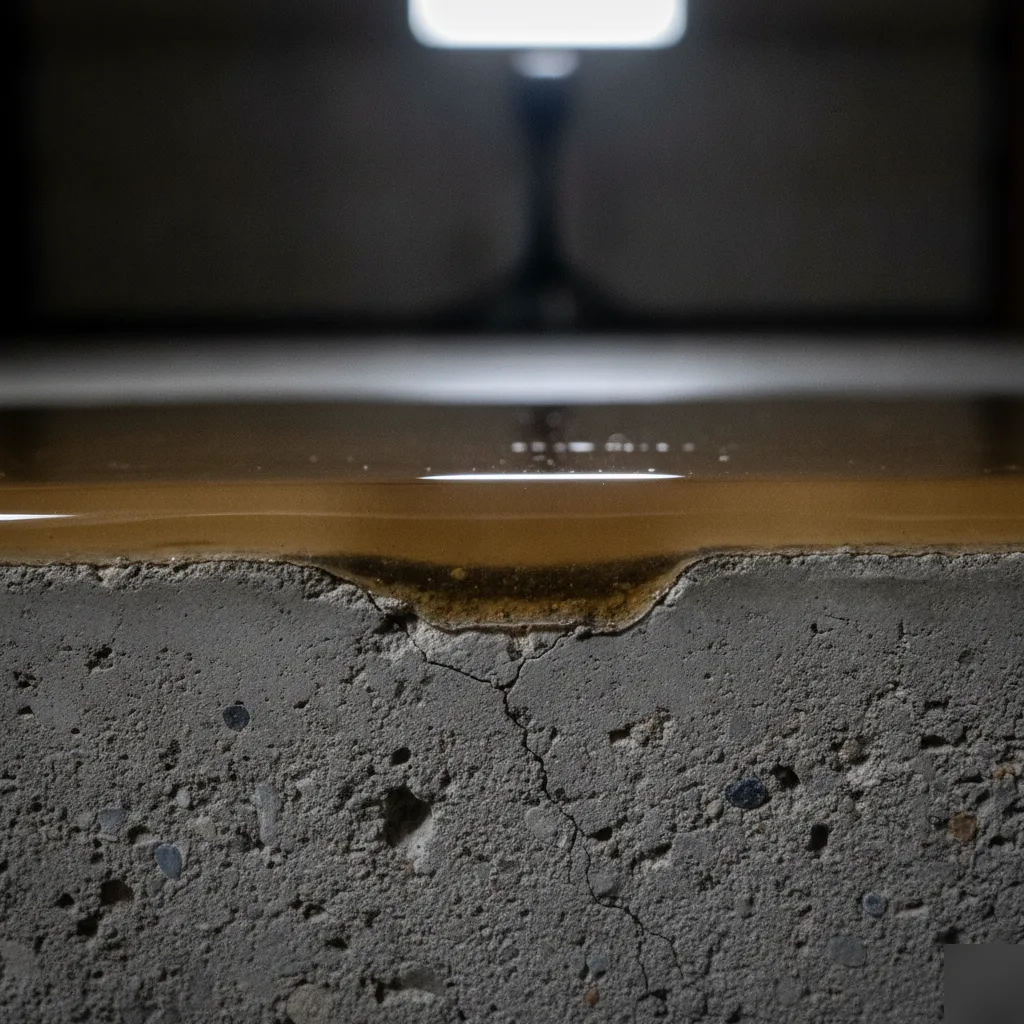
- Surface spalling. The top layer flakes off in rough patches.
- Hairline cracks. They just get wider each spring.
- Pitting from road salt. It eats right into unprotected concrete.
- Dusting. The surface turns powdery, feels weak under your feet.
Every single one of these issues starts with moisture getting into the slab. Epoxy floor coating makes a sealed barrier. It keeps water, salt, and chemicals on the surface. Not inside the concrete. That's why we do it.
It's Not Just Winter
Summer matters too. Spokane Valley regularly cooks above 90°F in July and August. Your garage turns into an oven. Then a cold front rolls through. Temps drop 30 degrees overnight. That thermal shock really stresses bare concrete all year. Not just in winter.
We see this error constantly. Someone pours a new garage slab. Or they get some concrete finishing done. They never protect the surface. Three years later, they call us for concrete repair. The floor looks a decade old. A sealed epoxy floor coating applied right after curing could have stopped most of that wear., this is the part most people overthink.
Homes along the Sullivan Road corridor, all through Spokane Valley, deal with these same conditions. Heavy vehicle traffic in the garage. Lawn equipment dragging dirt across the floor. Snowmelt pooling near the door. It all speeds up wear on uncoated concrete.
So, is epoxy garage floor coating worth the investment for Spokane homes? When you just consider the climate, the answer is clear. You're not simply making your floor look better. You're guarding it from the exact conditions that destroy concrete in our part of the country. Want to know more about how epoxy floor coating works and if it's right for your garage? Our epoxy floor coating service page has the full breakdown.
Bare concrete in Spokane Valley? It's on borrowed time.
Why DIY Epoxy Kits Fail More Often in the Inland Northwest
Those big-box store epoxy kits look promising. Spend a weekend. Roll on a coating. Suddenly, you have a shiny garage floor. That's the sales pitch. But here in Spokane Valley, we've stripped and redone more failed DIY epoxy jobs over the past 11 years than I can count. These kits just aren't built for what our climate throws at them.
The core issue is temperature swing. Spokane Valley sees summer highs above 95°F. Winter lows are well below zero. That's a brutal range to deal with. The National Weather Service reports our region gets over 100 freeze-thaw cycles each winter season. Every single cycle pushes moisture in and out of your concrete slab. And DIY epoxy kits? They use thin, water-based formulas. These can't handle that kind of stress.
Where the Breakdown Starts
Most DIY kits fail at the bond. The epoxy just never truly grabs the concrete. Here's why that happens so often around here:
- Moisture trapped in the slab. Our cold winters force ground moisture up through garage floors. DIY kits don't check for this. So the coating goes down on a wet surface and peels in months.
- No real surface prep. The little acid etch packets in store kits barely scratch anything. Professional epoxy floor coating needs diamond grinding. This opens the concrete's pores. Without it, the bond is weak from day one.
- Thin thickness. Most retail kits put down 2-3 mils of coating. That's thinner than a credit card. Road salt, ice melt, and gravel tracked in from Spokane Valley streets chew right through that.
- Wrong cure conditions. Epoxy needs a specific temperature window to cure right. Our spring and fall temperatures swing 30-plus degrees between morning and afternoon. A garage with no climate control? That's how you get a soft, tacky finish that never fully hardens.
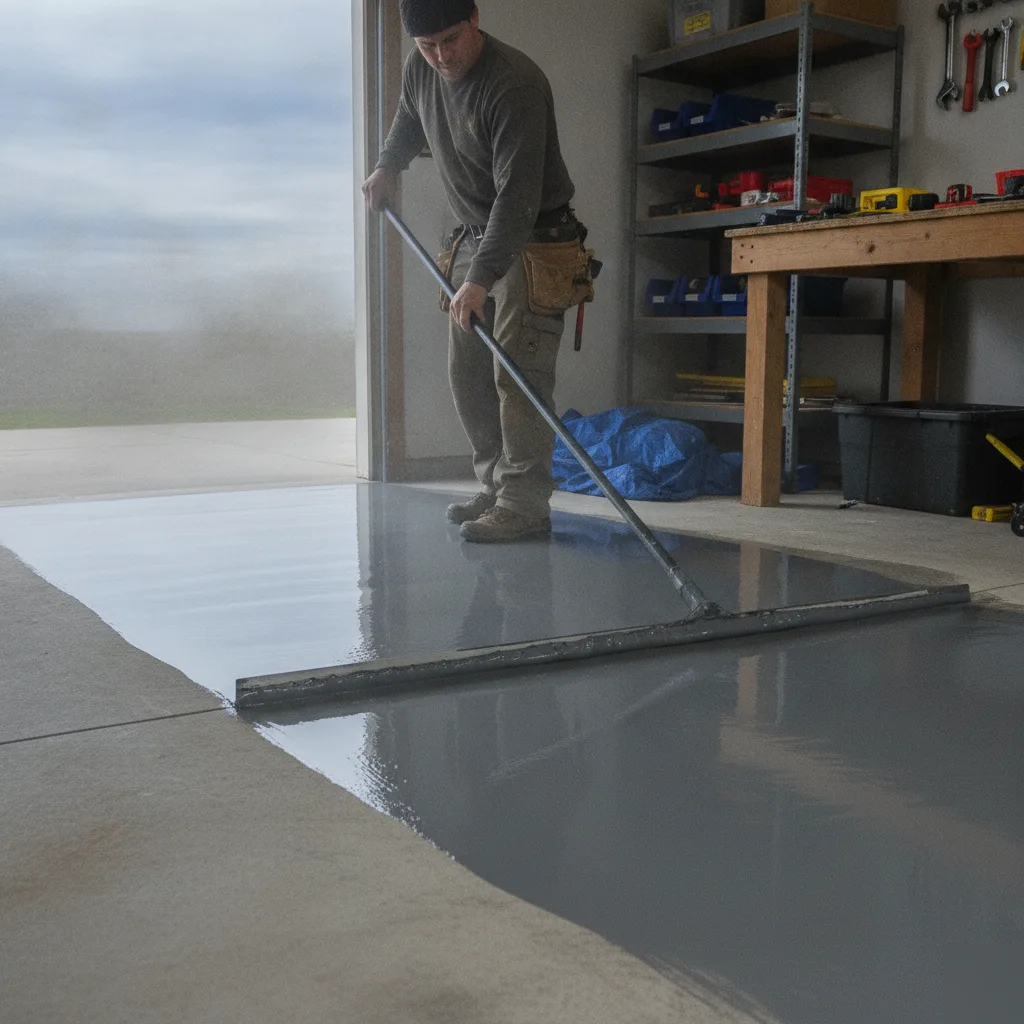
We see this error all the time. A homeowner near the Sullivan Road corridor spent a full weekend prepping and coating their two-car garage. By February, sheets of epoxy were lifting off the floor. It looked like old wallpaper. The slab underneath was damp, and the kit's acid etch hadn't done enough. No real bond was ever made.
What Professional Application Changes
A professional concrete contractor handles the steps DIY kits skip entirely. Diamond grinding takes off the top layer. It creates a profile the epoxy can lock into. We test for moisture. This catches problems before any coating goes down. And our materials are different. Professional-grade epoxy floor coating runs 10-20 mils thick, sometimes more with a polyaspartic topcoat.
That thickness really matters when you park a truck in there. One that just drove through road sand and ice melt. It matters when your garage floor hits 15°F in January. And 100°F in July.
But the real difference is accountability. A kit gives you a can and some instructions. A local concrete contractor gives you a floor. One that's built to survive Spokane's brutal freeze-thaw cycles year after year.
Think your current garage floor might need more than a fix? Our epoxy floor coating page breaks down what goes into a professional install. And how to get a free estimate.
Skipping the prep work doesn't save money. It just delays the real job.
Frequently Asked Questions
Does epoxy garage floor coating actually hold up through Spokane Valley winters?
Yes, epoxy garage floor coating holds up well through Spokane Valley winters when it's applied correctly. The key is surface prep. Diamond grinding opens the concrete's pores so the epoxy bonds at a molecular level. That bond is what keeps it from peeling when temperatures swing from below zero to above freezing in the same week. A properly bonded epoxy coating creates a waterproof barrier. Water can't soak in. So freeze-thaw cycles can't pit or flake your slab the way they do with bare concrete.
How does Spokane Valley's climate affect how soon you should coat a new garage slab?
In Spokane Valley, you should coat a new slab as soon as it fully cures, typically around 28 days after the pour. Our summers push above 90°F, and winters drop well below freezing. That thermal stress starts working on bare concrete right away. Every season you wait is a season the surface absorbs road salt, moisture, and UV exposure. We've seen slabs that looked years older than they were simply because they sat unprotected through even one full Spokane winter.
Will epoxy coating stop my garage floor from dusting?
Yes, epoxy coating stops concrete dusting completely. Bare concrete sheds a fine powder over time. That dust settles on your tools, your car, and everything you store in the garage. It's one of the most overlooked problems with unprotected slabs. Epoxy seals the surface so the concrete can't shed particles anymore. Once the coating cures, your floor becomes nonporous. A mop or squeegee handles cleanup fast. If you want to understand the full scope of what epoxy does for your garage, our epoxy floor coating page covers the complete process.
What's the biggest mistake homeowners make with garage floor coatings?
Skipping surface prep is the number one mistake. Many people assume epoxy is just a thick paint you roll on. It's not. Without diamond grinding first, the coating has nothing solid to grab onto. It bonds to surface dust instead of the concrete itself. That's why you see peeling floors after one season. The grinding step feels like extra work. But it's what separates a coating that lasts a decade from one that fails before the next winter hits.
Is epoxy floor coating the same as concrete sealer?
No, epoxy floor coating and concrete sealer are very different products. A sealer sits on top of the surface and offers light protection. Epoxy is a two-part chemical system that bonds directly into the concrete's pores. Once cured, it becomes part of the slab. It can handle over 10,000 PSI of compressive force, according to the Concrete Network. A sealer can't do that. For a Spokane Valley garage that takes on car tires, road salt, and hard temperature swings, epoxy is the stronger choice by a wide margin.
Can you coat a garage floor that already has cracks or surface damage?
It depends on how deep the damage goes. Minor hairline cracks and light surface spalling can often be repaired before coating. We fill cracks and grind the surface flat first. Deeper structural cracks are a different story. Those need concrete repair work before any coating goes down. The coating itself won't fix a structural problem. But for the surface-level damage that freeze-thaw cycles cause here in Spokane Valley, prep and repair before coating is a normal part of the job.
Ready to Experience the Concrete Revival Difference?
Complete Service Area Coverage
- Spokane and Spokane Valley
- Coeur d'Alene metro area
- Deer Park and Newport
- Liberty Lake and Otis Orchards
- Cheney and Medical Lake
- Post Falls and Rathdrum