
How to Fix a Deteriorating Driveway | Concrete Revival
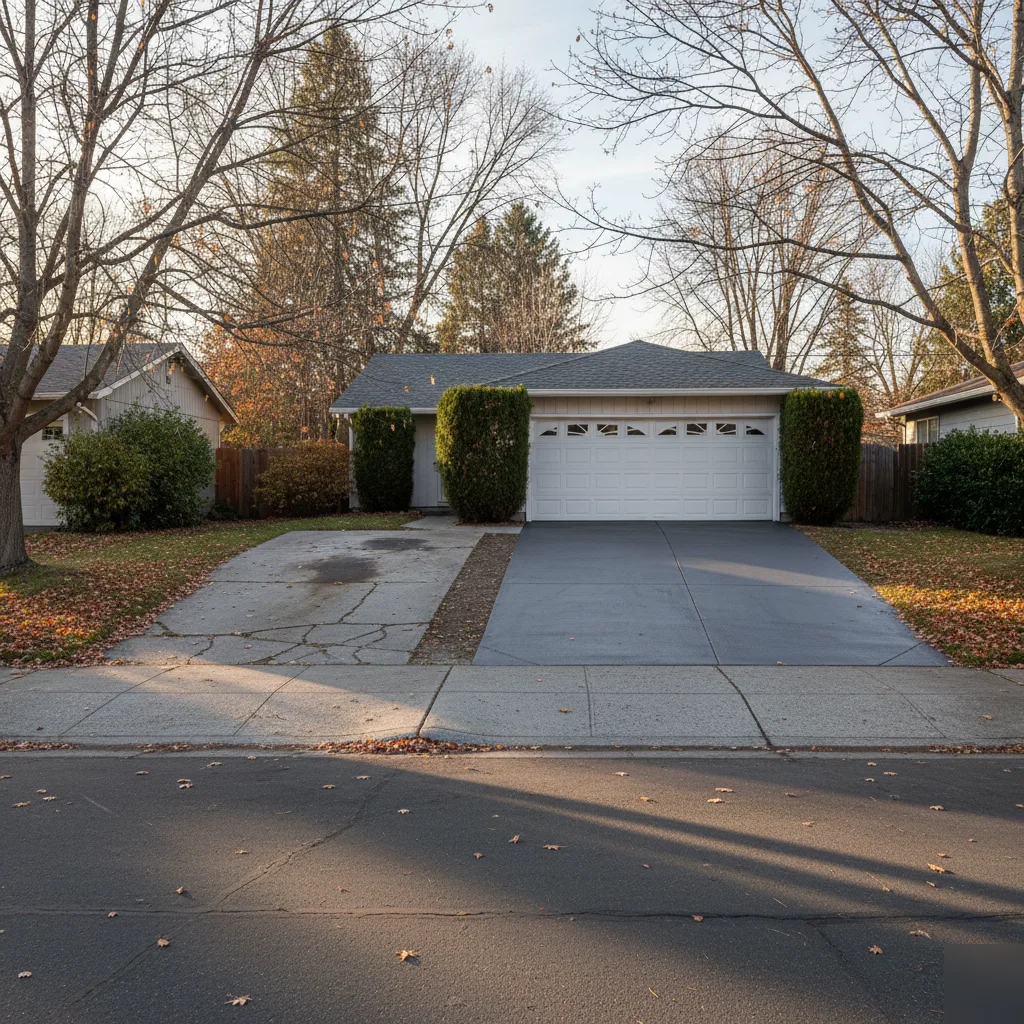
Folks often jump right in. They spot a crack, grab some caulk. It's like slapping a patch on a tire without finding the leak first. Your driveway fix won't stick if you don't know what's really happening underneath all that concrete. Go over your whole driveway. Take your time. Grab your phone, snap pictures of every rough spot. These shots help a lot when we figure out the right repair for each area later.
What to Look For
Damage isn't all alike. A tiny crack and a dropped slab are different jobs. Here's what to scout for during your walkthrough:
- Surface cracks under a quarter inch. These look bad, but mainly let water in. That water starts real trouble, quick.
- Cracks wider than a quarter inch. Usually means the base below moved or settled.
- Spalling or flaking. That's the top concrete layer peeling. Our Spokane Valley winters do this with freeze-thaw cycles, sadly.
- Sunken spots or uneven areas. Big sign of soil trouble below the concrete.
- Crumbling edges. Cars, mowers, water all beat up the edges. They always show wear first.
Each problem tells a story.
Why the Cause Matters More Than the Crack
We see this play out a lot. Someone in Greenacres patches a crack. Three times in two years. It just keeps coming back. The real issue? A downspout. It dumped water right onto the slab, washing out the gravel base underneath. The crack was just a hint, a symptom. Before you fix anything, ask some questions. Where does the rain go? Are tree roots too close to the slab? Did this damage pop up after last winter, or has it been getting worse for years and years? Spokane Valley weather just kills concrete. Our winters push water into tiny pores. It freezes there. It expands, then breaks the surface apart from inside. This happens every winter, which is why we engineer every pour to survive Spokane's brutal freeze-thaw cycles. That's our promise. Timing matters a lot, by the way. You get the best results fixing cracks and doing driveway repair late spring to early fall. Temperatures must stay above 50 degrees consistently, otherwise nothing sets right.
Sort Your Damage Into Categories
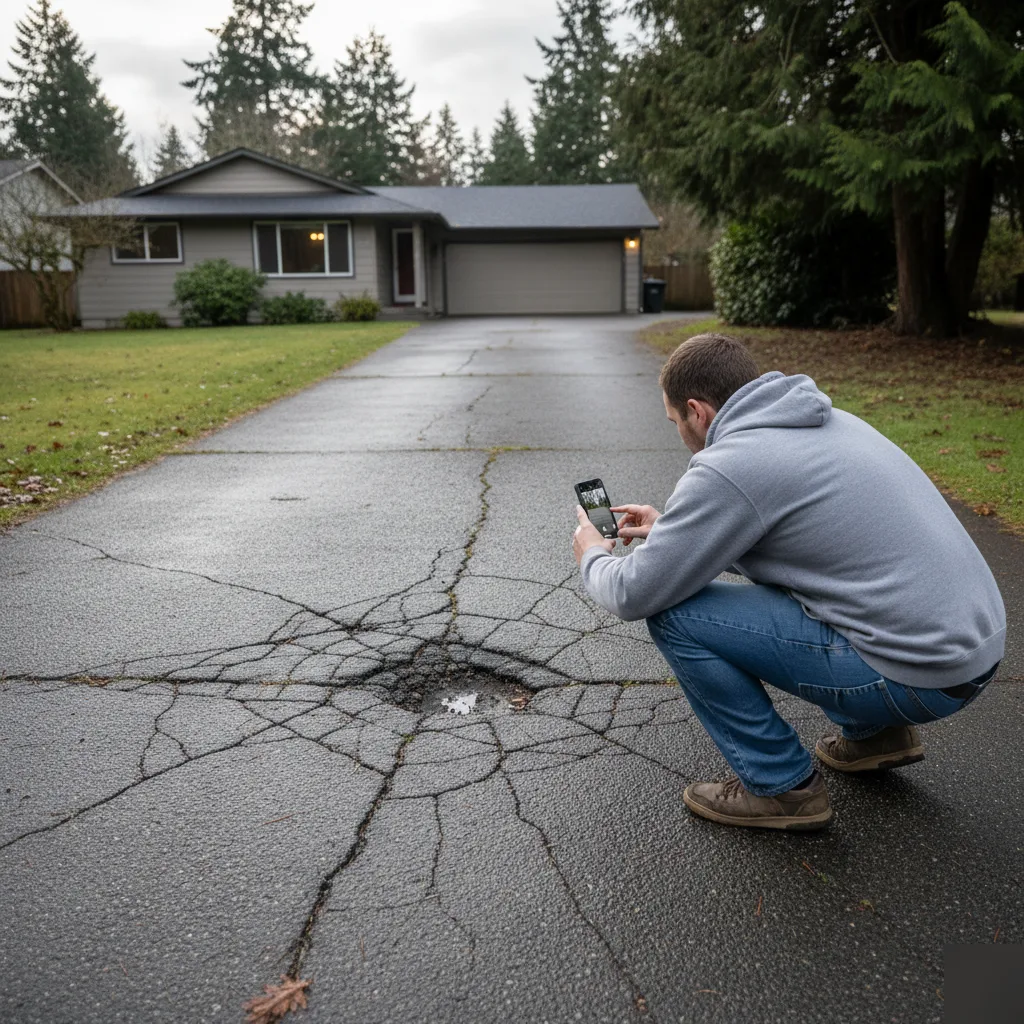
After that walk, group your problems. Small surface cracks? One bucket. Structural issues, sinking, big breaks? That's another. Fading or light spalling, just cosmetic wear, gets its own spot. This sorting saves you. Small cracks just need some concrete crack repair product and a caulk gun. But a slab that's sunk half an inch? That's real Spokane driveway repair work — something much bigger than a tube of filler can handle. And if the surface is crumbling over a large area, driveway resurfacing might be smarter than patching twenty little spots one by one. We've seen it often on Sprague Avenue. Homeowners think they have a small fix. Our walkthrough shows the whole slab is shot underneath. That's exactly the kind of Spokane driveway repair assessment that saves you from spending money on the wrong solution. Better to know that early. Don't find out halfway through a repair. Jot down your findings — a simple list works. Mark the location, damage type, and how big the affected area is. This is your repair plan, and if you call us, it tells us everything we need to help you quickly.
Step-by-Step: How to Fix Cracks and Potholes in Your Driveway
Lots of folks just stare at a cracked driveway for months before doing anything. We see this all over Spokane Valley. A small crack pops up near the garage. You forget it all summer. Then winter freeze-thaw cycles hit. By spring, it's a real mess. Here's how to fix it right.
- Clean out the damage. Use a wire brush or pressure washer. Get all loose concrete, dirt, junk out of every crack and pothole. Nothing sticks to dirt. Skip this? Your patch will fail fast, you'll be doing it again next month.
- Widen narrow cracks. Cracks under a quarter inch need opening. Use a chisel and hammer. Make it wider at the bottom than the top. It's an "inverted V." Filler locks in there better. Making it bigger feels wrong, but do it.
- Apply a bonding agent. Brush a concrete bonding liquid into the clean spot. This gives new material a grip. Old and new concrete don't stick well on their own. This stuff helps, it forms a lasting connection.
- Fill cracks with the right material. Cracks under half an inch? Concrete crack repair caulk works fine. Wider or deeper? Use vinyl-concrete patching compound. Pack it in good. Overfill a bit, then smooth it out.
- Patch potholes in layers. Deep ones need two-inch layers. Tamp each layer down firm. Add the next. Rushing this is the biggest mistake we see homeowners make. A thick pour won't cure right. It will crumble fast.
- Smooth and level the surface. Use a flat trowel. Feather the patch edges into the old concrete. No raised lip, just smooth. Basic finishing. It changes how long your fix lasts, trust us.
- Let it cure fully. Keep the patched spot damp for 24-48 hours. Cover it if dry outside. And don't drive on it for a week minimum. Patience pays, it really does.
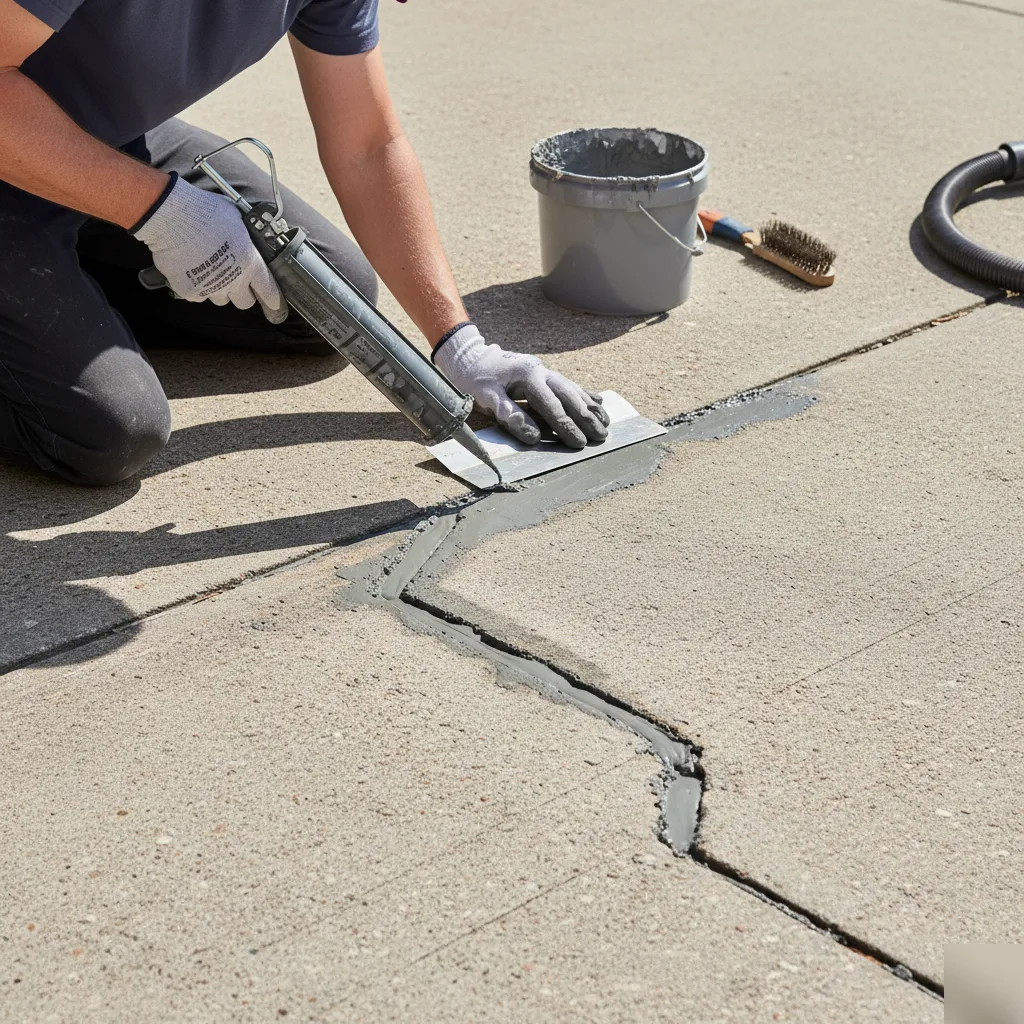
Sounds easy, right? Here's the catch. The steps aren't hard. The tough part is knowing a simple crack from a serious problem. A hairline surface crack from minor settling? That's one thing. But a crack that spans your whole driveway, shifts when you step on it? That's a structural problem. It means the base failed. No surface patch will hold that for long, no matter what you try.
When DIY Isn't Enough
We had a homeowner near Greenacres. They patched the same pothole three times in one year. Looked good for weeks, then broke apart again. The real issue was bad drainage under the slab. Water just pooled there, eating away the base. We fixed the base, did a real concrete repair, and it held. That's our kind of lasting fix. Before grabbing patch mix, look hard. Are cracks getting bigger? Is the slab dropping on one side? Does water always pool in that spot every time it rains? Minor surface cracks? Those steps help. But if the damage keeps returning, or it's a big area, you need more. Professional driveway repair. Maybe even resurfacing. You want a fix that truly lasts, right? Sometimes, calling for help is the smart play.
Repair vs. Resurface vs. Replace: How to Know Which One You Need
This is the big question we hear most often. A Ponderosa homeowner calls us. Points at their driveway. "Fix it or rip it out?" they ask. Three things decide. How bad is the damage? How old is the concrete? And what's happening underneath? Let's keep it simple.
When Concrete Crack Repair Is Enough
Small surface cracks, under a quarter inch wide, are usually cosmetic. They haven't hit the base yet. Concrete crack repair fills those gaps. It seals out moisture, stops them from spreading. Slab less than 15 years old? Still mostly level? This is likely enough. We see driveways near Sullivan Road all the time. Just need a few cracks sealed before winter. Easy fix. Big difference. Here are the signs that repair will do the job:
- Cracks are narrow, not a spiderweb.
- Slab hasn't dropped or moved at the edges.
- No big chunks of surface missing.
- Water pools in just one or two small spots.
But if you patch the same cracks every year, the real problem isn't fixed, you're just putting a band-aid on something more serious.
When Driveway Resurfacing Makes Sense
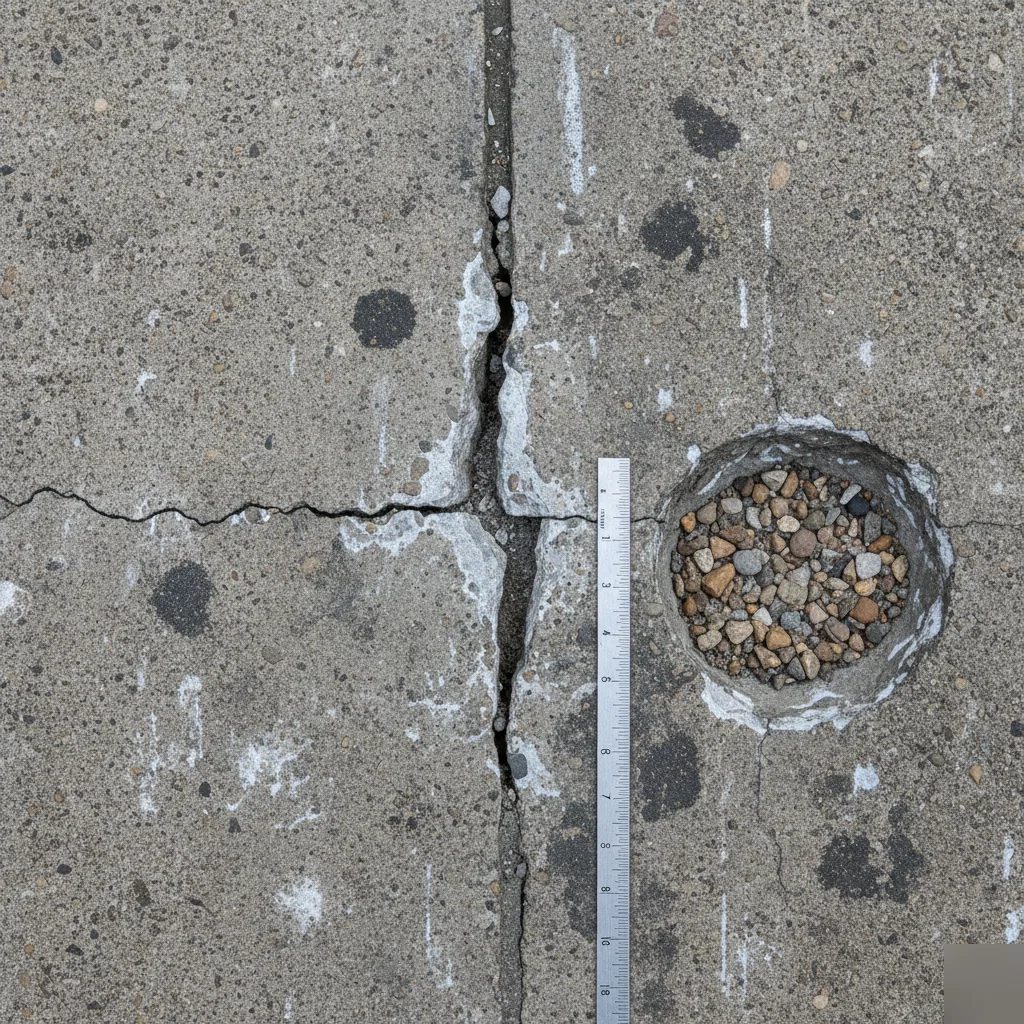
Driveway resurfacing puts a new layer over your old slab. It's like new skin on good bones. The base below must be solid. If it is, resurfacing hides widespread wear. Minor pitting, shallow cracks disappear. All at once, you get a fresh surface. Most folks miss this. Resurfacing only works if the foundation is sound. A slab that's heaving or sinking won't hold a new top layer. We always check the base first, no exceptions. Your driveway has cosmetic damage, but sits flat? Drains well? Resurfacing gives you a fresh surface. No need for a full tear-out, which saves real money. Spokane Valley's freeze-thaw cycle eats concrete tops fast. The base often holds up fine underneath, though.
When Full Replacement Is the Only Option
Sometimes, it's just past saving. And that's okay to know. Don't waste money on bandages. Full replacement means ripping out the old slab. All the way to the dirt. Then pouring fresh concrete, from scratch. You're looking at replacement when:
- Cracks go deep, connect everywhere.
- Big sections dropped over an inch.
- Driveway is 25+ years old, fixed repeatedly.
- Tree roots pushed through the base.
- Water pools everywhere after rain.

Frequently Asked Questions
How do Spokane Valley winters make driveway damage worse?
Spokane Valley's freeze-thaw cycles are one of the biggest reasons driveways fall apart faster here. Water gets into tiny cracks and pores in the concrete. Then it freezes, expands, and breaks the surface from the inside out. This happens over and over every winter. By spring, small cracks become big ones. That's why timing your repairs for late spring through early fall — when temps stay above 50 degrees — gives you the best results.
How do I know if my driveway crack is a surface problem or a structural one?
A surface crack stays still when you step on it and is usually under a quarter inch wide. A structural crack shifts or moves underfoot, spans a large area, or keeps coming back after patching. Structural cracks mean the base below the slab has moved or failed. No surface patch will hold that long-term. If your crack keeps returning or the slab is sinking on one side, it's time to look at our driveway repair guide for next steps.
Does it matter what time of year I repair my driveway in Spokane Valley?
Yes, timing your repair really matters here in Spokane Valley. Concrete patch materials need temperatures above 50 degrees to cure correctly. Late spring through early fall is your best window. If you repair cracks when it's too cold, the material won't set right and will break apart fast. Avoid patching right before winter. Our freeze-thaw cycles will go to work on a fresh, uncured patch almost immediately.
What is the biggest mistake homeowners make when fixing a cracked driveway?
The biggest mistake is skipping the cleaning step before applying any patch material. Nothing sticks to dirt, loose concrete, or debris. If you don't clean the crack out first with a wire brush or pressure washer, your patch will fail fast. You'll be doing the same repair again in a month. Take the extra time to clean it out completely. It's the step that decides whether your fix lasts or falls apart.
When should I call a professional instead of fixing my driveway myself?
Call a professional when the damage keeps coming back, the slab is sinking, or cracks span a large area of your driveway. Small surface cracks under a quarter inch are fine for DIY repair. But if water is pooling under the slab, the base has failed, or you've patched the same spot more than once, that's a sign of a deeper problem. Surface patches won't fix a failed base. You need someone to look at what's happening underneath.
Is driveway resurfacing better than patching multiple cracks?
Resurfacing is often the smarter choice when crumbling or spalling covers a large area of your driveway. Patching twenty small spots one by one costs more time and often looks uneven. If the surface is worn down across most of the slab but the base underneath is still solid, resurfacing gives you a clean, lasting result. If you're not sure which option fits your situation, a full damage walkthrough — like the one covered in this repair guide — will help you decide.
Ready to Experience the Concrete Revival Difference?
Complete Service Area Coverage
- Spokane and Spokane Valley
- Coeur d'Alene metro area
- Deer Park and Newport
- Liberty Lake and Otis Orchards
- Cheney and Medical Lake
- Post Falls and Rathdrum