How Much Does It Cost to Resurface a 2-Car Driveway? A Spokane Valley Homeowner's Guide
The cost of driveway resurfacing on a 2-car driveway depends mostly on how much repair the slab needs before the overlay goes down. Square footage, finish choice, sealing, and site access matter too. In Spokane Valley, freeze-thaw damage is usually the biggest wild card.
What Determines the Cost of Driveway Resurfacing
Two driveways can look the same size from the street and still cost very different amounts to resurface. Why? Because the overlay is only part of the job. The real cost lives in what's happening underneath it.
We've done driveway resurfacing in Spokane Valley for 11 years. The first thing we do on any estimate isn't measuring. We walk the slab, look for cracks, tap for hollow spots, and check where the water goes when it rains. That walk tells us more about the final cost than a tape measure ever will.
Here's what moves the number on a 2-car driveway:
- Slab condition. Surface scaling and hairline cracks are simple fixes, but wide cracks or sunken sections need concrete crack repair first.
- Total square footage, including the apron, any side parking pad, and the walkway that ties into the driveway.
- Prep work like pressure washing, grinding off old sealer, and removing oil stains so the overlay can bond.
- The finish you pick. A plain broom finish takes less labor than a stamped, colored, or stained decorative concrete overlay.
- Sealing and waterproofing at the end, which protects the new surface from Spokane winters.
Condition is the big one. A driveway with light scaling is a fast job. A driveway with heaved slabs and spiderweb cracking is a different story, it needs real repair before any resurfacing material touches it.
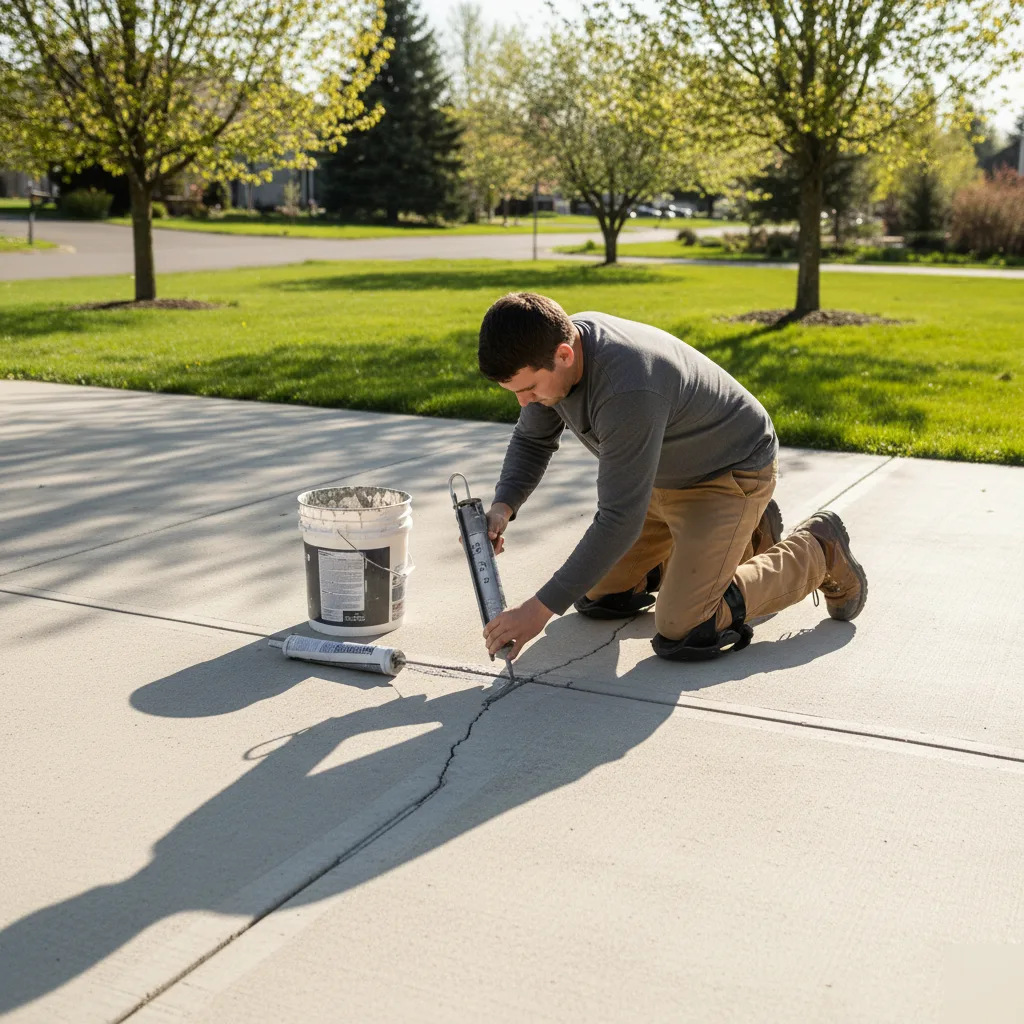
And Spokane's climate makes this worse every year. Water soaks into the concrete during a thaw. Then it freezes overnight and expands. Do that dozens of times a winter and the top layer starts popping off in flakes. Add road salt and deicer tracked in from Sprague or the Sullivan Road corridor, and the damage speeds up.
Most homeowners wait too long.
We see it all the time. Someone calls us in spring about some light flaking near the garage door. They put it off until fall. By then, another round of freeze-thaw has opened up the cracks, water has gotten under the slab, and now the prep work has doubled. Same driveway. Much bigger job.
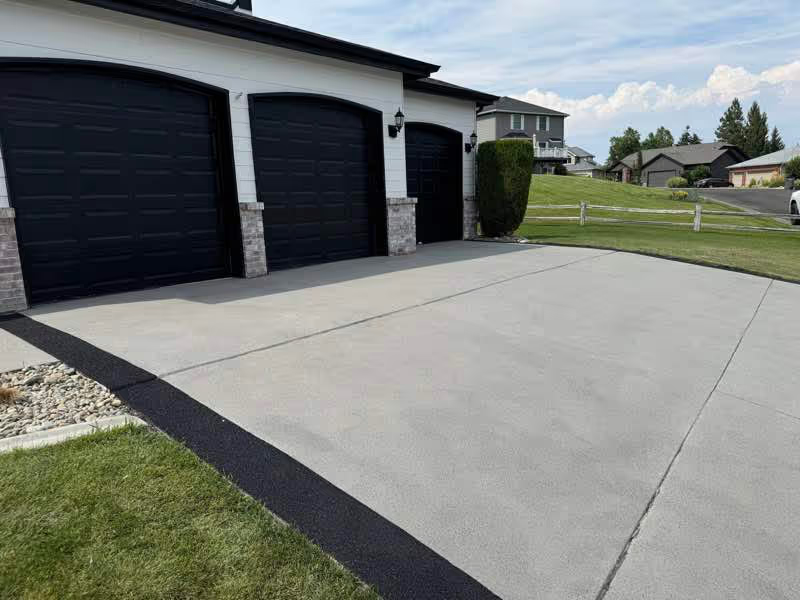
Finish choice is the next lever. A clean gray overlay is the most straightforward option. But if you want stamped concrete, colored concrete, or a stained look that matches your house, expect more labor and more material. It's worth it for a lot of people, a resurfaced driveway with a decorative finish can change how the whole front of the house looks.
Access and slope matter too. A flat driveway with easy truck access is simpler to work on. A steep driveway in the hills near the South Valley, or one with tight edges along landscaping, takes more time to prep and finish. Drainage problems also have to be fixed, or the new surface will fail the same way the old one did - So when quotes look far apart, ask what each contractor plans to do about the cracks and the prep. That's usually where the difference hides. A cheap driveway resurfacing quote that skips repair work won't make it through two Spokane winters.
Resurfacing vs. Replacement: Which One Does Your Driveway Need
Not every tired driveway needs to be torn out. But not every one can be saved with a new top layer, either. It all comes down to what's going on under the surface.
Driveway resurfacing puts a thin new layer over your old concrete. It fixes the skin, it doesn't fix the bones. So the slab underneath has to be solid. If the base is sinking or shifting, a new surface just rides along with the damage. It'll crack right where the old slab cracks.
We've been working on Spokane Valley driveways for 11 years. We've seen this crack pattern a hundred times. Most slabs fall pretty clearly into one camp or the other.
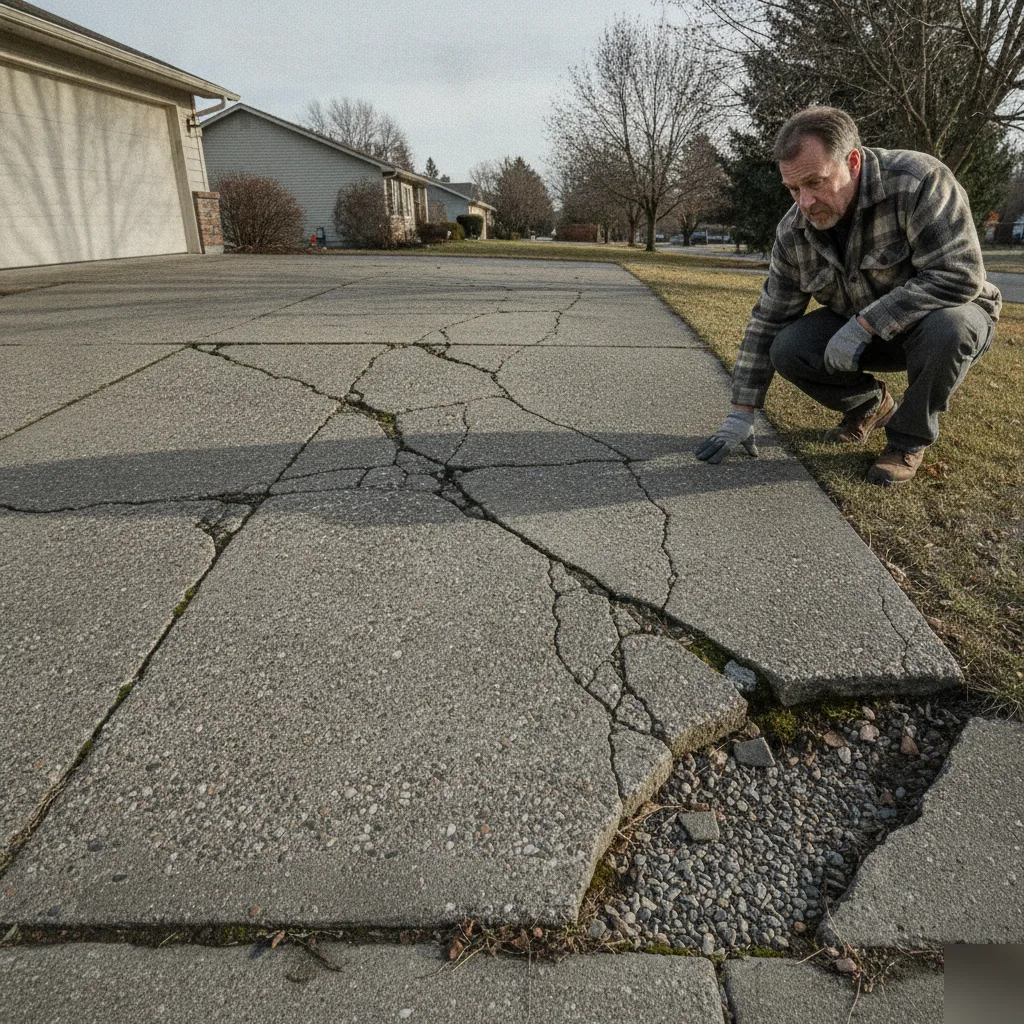
Here's what tells us a driveway is a strong fit for driveway resurfacing. These are surface problems. The slab is tired, not broken.
- Flaking or scaling on top from years of freeze-thaw cycles
- Hairline cracks that haven't widened or shifted over time
- Stains, fading, or a worn look on concrete that still sits level
- Light pitting where road salt and de-icer got to it
- A slab that drains right and doesn't rock when you step on the corners
Replacement is a different story. These red flags mean the trouble goes deeper than the top half inch.
- Cracks wider than a quarter inch, or edges that don't line up anymore
- Sections that have sunk, heaved, or tilted toward the house
- Big chunks breaking off near the garage apron or the street
- Water pooling in the same low spots after every rain
- Tree roots pushing the slab up from below
Spokane winters make this call even more important. Water sneaks into cracks and freezes overnight. Then it expands. Do that dozens of times a winter and a small crack turns into a big one. Most homeowners wait too long on this stuff, and by spring the list of problems keeps growing - Anyway, you can get a decent read on your own slab before you ever call anyone. Try this quick check on a dry day.
- Walk the whole driveway slowly and look for uneven edges or lips you could trip on.
- Slide a coin into your widest crack. If it drops in easily, that crack is a concern.
- Stand on each corner and shift your weight. Any rocking means the base has moved.
- Check the low spots after the next rain or snowmelt. Standing water points to a drainage or settling issue.
- Look at where the driveway meets the garage. That joint tells you a lot about settling.
If your driveway passes most of these, driveway resurfacing is likely on the table. If it fails two or more, slow down. Why pay to cover a problem that's still growing?
We had a homeowner off the Sullivan Road corridor call us last fall. Her driveway looked rough. Flaking everywhere, rust stains, and a few hairline cracks. She figured it was done. But the slab was level and solid underneath. Driveway resurfacing gave her a clean new surface without tearing anything out.
And we've had the opposite, too. A guy wanted his heaved slab resurfaced before selling. We told him straight that it wouldn't last a winter. Honest answers save everyone a headache.
You don't have to guess on this one.
Why Winter Weather Changes the Resurfacing Timeline
Your driveway looks rough in November. You want it fixed now. But a Spokane Valley winter doesn't care about your schedule.
Driveway resurfacing needs warm, dry days to work. The overlay has to bond to your old slab and cure the right way. Most overlay products need air and surface temps around 50 degrees and climbing. Cold slows the cure, and wet concrete won't bond at all.
So what happens if someone pushes it into late fall?
We've seen it more times than we'd like. A homeowner off Sullivan Road hired a guy who resurfaced in late October. It looked great for about three weeks. Then the first hard freeze hit. By March, the top layer was peeling off in sheets, the whole driveway had to be ground down and redone. That's paying twice for one driveway.
Freeze-thaw is the real enemy here. Water seeps into tiny cracks and pores. At night it freezes and expands. During the day it melts and sinks deeper. Spokane Valley can swing through that cycle dozens of times in one winter. Each round pries the damage a little wider.
And that's why waiting has a cost too. A driveway with light surface wear in fall can look a lot worse by spring. Small cracks turn into spalling. Spalling turns into loose chunks. The more damage there is, the more prep work your driveway resurfacing job needs.
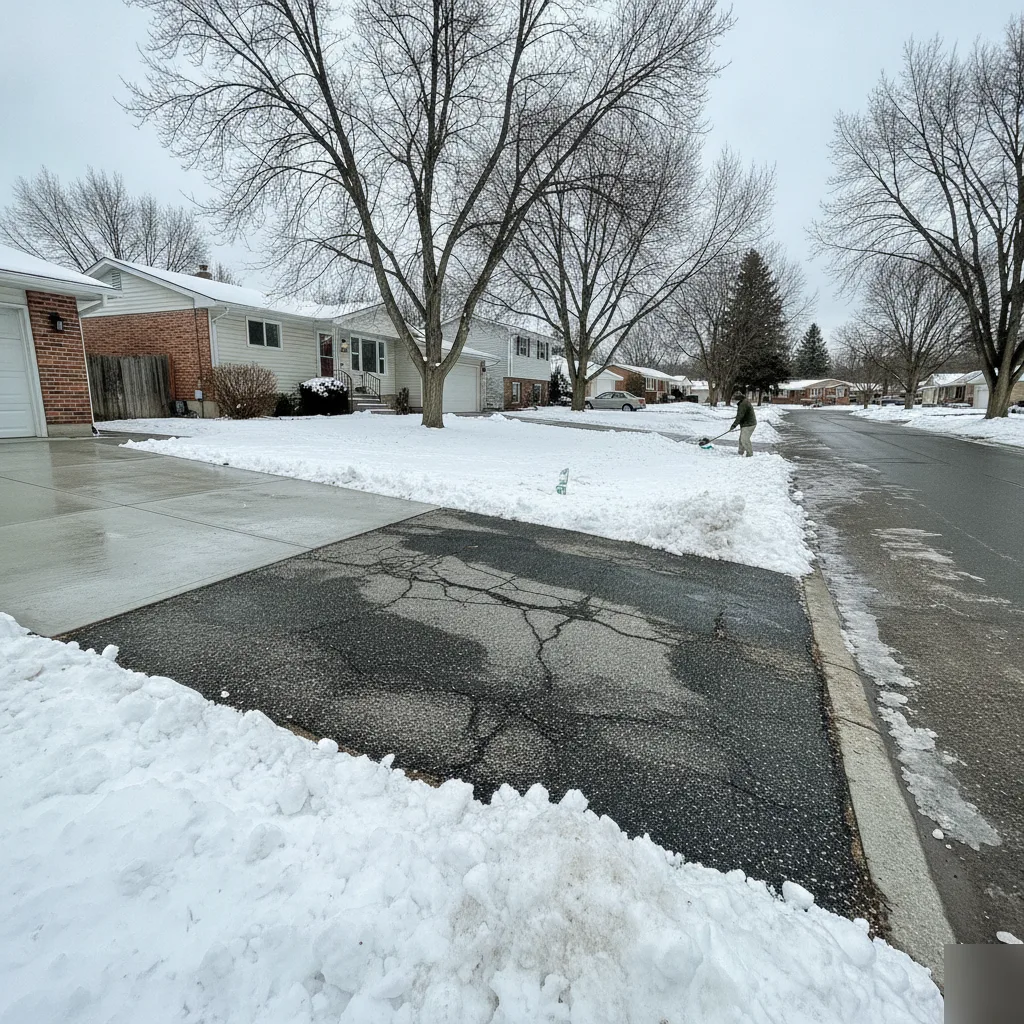
Here's how we tell homeowners to plan around the weather:
- Spot the damage in fall and get it looked at before the first freeze.
- Seal open cracks with concrete crack repair to keep water out over winter.
- Keep de-icing salt off the slab. Sand works better for traction and won't eat the surface.
- Book your driveway resurfacing for late spring or early summer. Good dates fill up fast.
- Plan for a dry stretch of a few days so the overlay can cure without rain.
That simple plan saves a lot of headaches. Cheap crack sealing in fall can keep a resurfacing job small in spring. Skip it, and you might be looking at full driveway repair instead.
Most homeowners wait too long. They notice the damage in April and call in June. By then, our calendar is packed and the slab has taken one more beating from winter, plow blades, and studded tires - Our best window in Spokane Valley usually runs from May into September. Some years it stretches a bit longer. Some years a wet spring cuts it short. We watch the forecast closely and won't pour an overlay if a cold snap or rain is on the way. Not worth the risk.
Field tip from our crew: Walk your driveway after the first good rain in fall. Look for dark spots that stay wet longer than the rest. That's where water is soaking in, and that's where winter will hit hardest.
In 11 years of working Spokane Valley driveways, one thing hasn't changed. The jobs that last are the ones done at the right time of year. Timing isn't a small detail with driveway resurfacing, it's half the job.
Frequently Asked Questions About Resurfacing a 2-Car Driveway
How do I know if my driveway can be resurfaced instead of replaced?
You can check this yourself before calling anyone. Slide a coin into your widest crack. If it drops in easily, or if you see sunken sections, tilting, or standing water after rain, the base has likely failed. Light flaking, hairline cracks, and stains on a level slab usually mean resurfacing will work fine. If your driveway fails two or more of these checks, replacement is probably the better route.
Why does freeze-thaw weather cause so much driveway damage in Spokane Valley?
Freeze-thaw cycles push water into tiny cracks in your concrete, where it freezes overnight and expands. This happens dozens of times each winter in Spokane Valley, so small cracks grow fast. Road salt and deicer tracked in from areas like the Sullivan Road corridor speed this up even more. That's why a driveway that looked fine in fall can show real damage by spring.
Is it a mistake to wait on small cracks or flaking?
Yes, waiting almost always makes the job bigger and more involved. A homeowner might notice light flaking near the garage in spring and put it off until fall. By then, another freeze-thaw cycle has widened the cracks and let water get under the slab. What started as a simple surface fix turns into real prep work. Catching problems early keeps the job smaller.
What's the difference between crack filling and full driveway resurfacing?
Crack filling only treats one crack at a time and doesn't address the surface as a whole. Resurfacing puts a new layer over the entire slab, fixing scaling, staining, and worn spots across the driveway at once. Filling works as a short-term patch for a single problem spot. Resurfacing makes sense when the whole surface is tired, not just one crack.
Does the finish I choose affect how long a resurfaced driveway lasts in Spokane Valley?
The finish itself doesn't change durability much, but proper sealing after resurfacing does. Sealing protects the new surface from Spokane winters and the water that seeps into concrete during freeze-thaw cycles. A plain broom finish or a decorative stamped finish both need this sealing step. Skipping it is one of the most common reasons a resurfaced driveway fails early.
How can I tell if a resurfacing quote is skipping important prep work?
Ask the contractor exactly what they plan to do about existing cracks before the overlay goes down. A low quote that skips grinding, crack repair, or proper cleaning often won't survive two Spokane winters. Good prep work is where most of the real cost and value sits. If you want a clearer breakdown of what affects pricing on a 2-car driveway, the full driveway resurfacing cost guide walks through each factor in detail.