
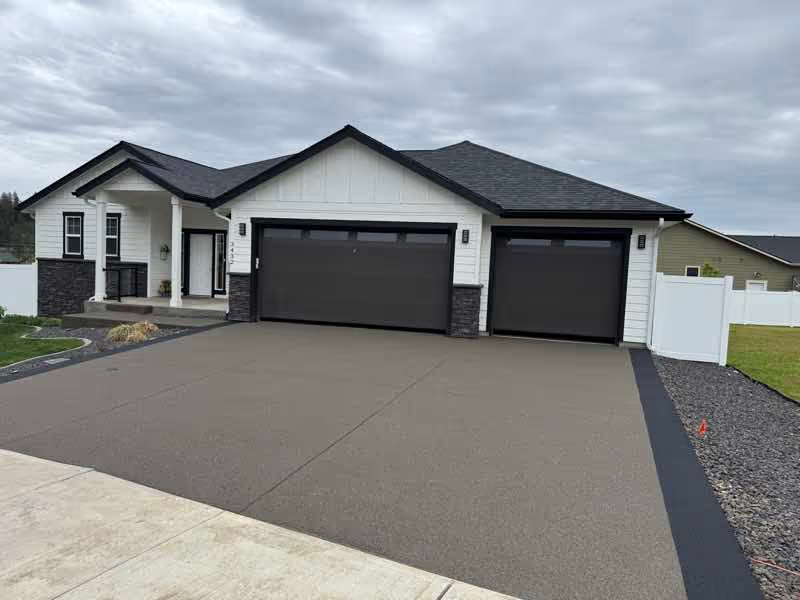
How Much Does It Cost to Pour a 2,000 Sq Ft Driveway in Spokane Valley (2026)?
Square footage is only the starting point for a 2,000 sq ft driveway. Tear-out, base prep, slab thickness, site access, finish choice, and timing all change the final number. In Spokane Valley, base prep matters most because freeze-thaw cycles punish any shortcut underneath the slab.
What Drives the Cost of a 2,000 Sq Ft Driveway
Two driveways can both measure 2,000 square feet and still get very different quotes. Size is just the start. The real cost lives in the details most homeowners never see.
We've walked hundreds of driveways across Spokane Valley in our 11 years. The same handful of factors show up every single time. Here's what moves the needle.
- Tear-out of the old surface. Breaking up and hauling off cracked concrete or asphalt takes crew time and dump fees.
- Base prep and grading. A solid compacted gravel base is what keeps your slab from heaving in January.
- Slab thickness and reinforcement. An RV or a heavy work truck usually calls for a thicker pour with rebar.
- Slope, drainage, and access. A steep grade or a tight side yard slows the whole job down.
- The finish you pick. Broom finish is the simplest, stamped concrete and colored concrete take more labor and material.
- Permits. Work that touches the curb or sidewalk approach often needs a right-of-way permit from the City of Spokane Valley.
Some of these you control. Others come with your lot.
So why does the stuff underneath matter so much? Spokane winters. Water gets into the ground, freezes, and expands. Then it thaws and does it again. Dozens of times a season. A thin or poorly packed base can't handle that. The ground shifts and your slab cracks right along with it.
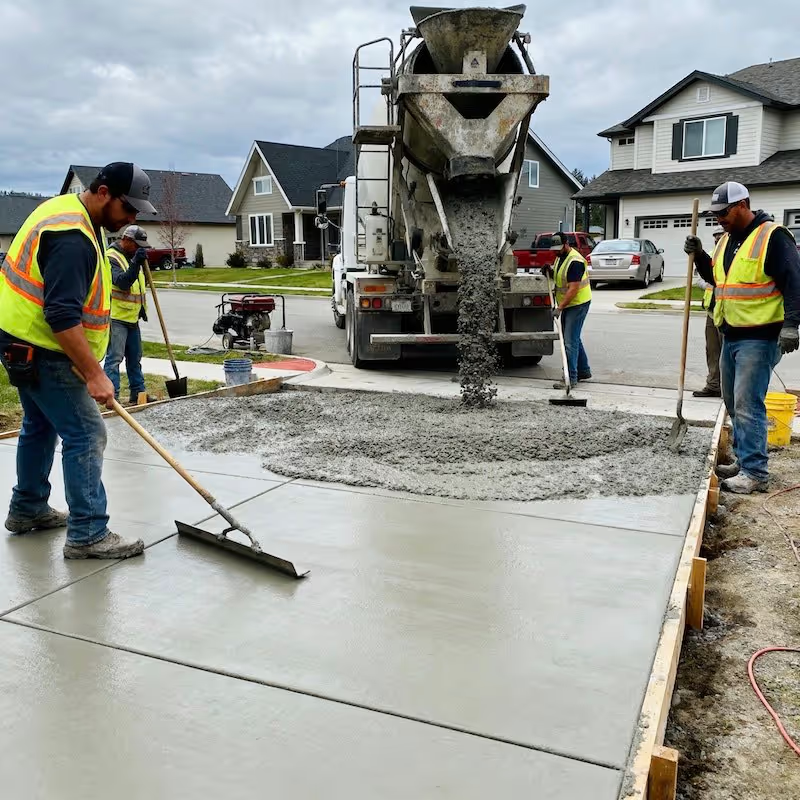
We got a call last spring from a homeowner near the Sullivan Road corridor. Their driveway was only three years old. It already had a crack running corner to corner, plus a sunken section by the garage. The original crew poured right over loose fill with barely any gravel. Cheap up front, expensive two winters later. We've seen this crack pattern a hundred times.
That's why a good quote spends real time on base prep. If one bid looks way lower than the rest, ask what's going under the concrete. Most homeowners don't think to ask. And that's usually where the savings come from.
Finish choice is the other big swing. A plain broom finish gets the job done and holds traction on icy mornings. But stamped concrete or colored concrete can make the driveway look like part of the house. It takes extra steps, extra tools, and a crew that knows decorative work. Worth it for a lot of people. Not for everyone.
Timing plays a part too. Concrete can't go down on frozen ground, and cold pours need blankets and extra care. Late fall jobs in Spokane Valley often take more labor to protect the slab while it cures. Book in spring or early summer if you can, the weather does half the work for you.
And if your existing slab is still structurally sound? You might not need a full new pour at all. Driveway resurfacing or targeted driveway repairs can sometimes stretch its life for years. Tree roots and drainage problems are a whole other story - Either way, the only way to know is to look at the slab in person.
Why Site Prep and Base Condition Matter More Than Material Choice
Most people shopping for a new driveway ask about concrete vs. asphalt first. That's the wrong first question. The surface only gets a few inches of the job. The ground under it decides whether your driveway lasts decades or cracks by its third winter.
We've been pouring and fixing driveways around Spokane Valley for 11 years. And we've seen this pattern a hundred times. A homeowner picks a nice finish and skips real base work. The slab looks great for a year. Then the cracks show up.
Here's why. Spokane winters freeze and thaw the ground over and over. Water gets into a weak base, it freezes and pushes up. When it thaws, the soil settles back unevenly. Your slab rides that up-and-down motion all winter long. No surface material can win that fight alone.
So what does a bad base look like before the pour? Some of the warning signs are easy to spot. Others only show up once the old surface comes out.
- Low spots where water sits after rain or snowmelt
- Soft, spongy ground that gives under a boot heel
- Old organic material like roots, sod, or buried wood
- Silty or clay pockets mixed in with the gravel
- Slopes that send runoff toward the garage instead of away
A lot of Spokane Valley sits on gravelly soil that drains pretty well. That helps. But plenty of lots have fill dirt, old landscaping, or clay layers mixed in. Older homes off the Sullivan Road corridor sometimes surprise us. You don't know what's down there until you dig.
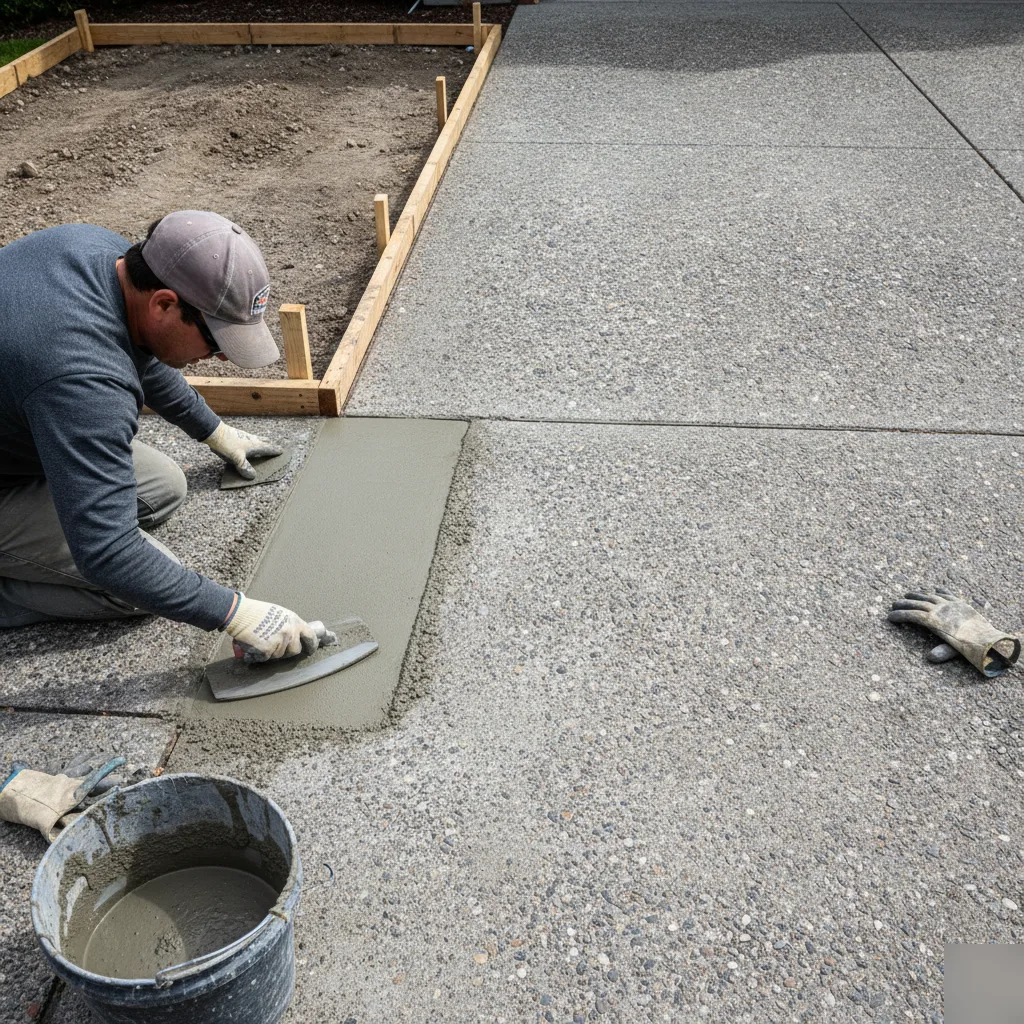
On a 2,000 sq ft driveway, site prep is a big share of the work. Here's the order a solid crew should follow.
- Tear out the old surface and haul it off.
- Dig out soft soil, roots, and organic material.
- Grade the area so water drains away from the house.
- Bring in crushed rock base and spread it in even layers.
- Compact each layer with a plate compactor or roller.
- Check the grade again before any forms go up.
Skip a step and you'll pay for it later. Usually in the spring.
One job sticks with us. A family near the Valley called us about a driveway that was barely four years old. Big slabs had sunk near the garage, cracks ran right through the middle. We pulled a section and found topsoil under thin gravel. Nobody had dug it out. The concrete wasn't the problem, the base was.
That's why two quotes for the same driveway can look so different. One crew plans to dig, haul, and compact. The other plans to scrape and pour. The cheaper bid often leaves out the ground work entirely. Ask every contractor exactly what they'll do under the slab - Not sure if your current base can be saved? Sometimes it can.
If your slab is mostly solid with surface wear, driveway resurfacing or crack repair might do the job. If it's sinking, heaving, or breaking in big chunks, the base is talking to you. Listen to it. Most homeowners wait too long, and the repair turns into a full tear-out.
How Driveway Size and Shape Change the Math
Here's what trips up most homeowners. They think 2,000 square feet is 2,000 square feet. It isn't.
Square footage tells you how much ground the slab covers. It doesn't tell you how hard that ground is to pour. Two driveways can share the exact same footprint and need very different amounts of labor. We've quoted plenty of jobs where the size matched and the work didn't come close.
Picture two homes in Spokane Valley. One has a straight 20-by-100-foot driveway running from the street to the garage. Flat ground. Four clean sides. The other sits on a lot near Greenacres with a curved drive, a flared apron, and a turnaround pad by the side yard. Both come out to 2,000 square feet. But the second one needs curved forms, extra hand finishing, and more cuts. It takes longer, and the crew earns every minute of it.
So what changes the math? These shape features add the most work:
- Curves and radius edges, since they need bendable forms set by hand
- Flared aprons where the drive meets the street
- Turnarounds, parking pads, or side spurs that tie into the main slab
- Odd angles that leave tight corners for finishing
- Steps or walkways poured right alongside the driveway
Every one of these adds edge length. More edge means more forming, more finishing, and more joints to plan.
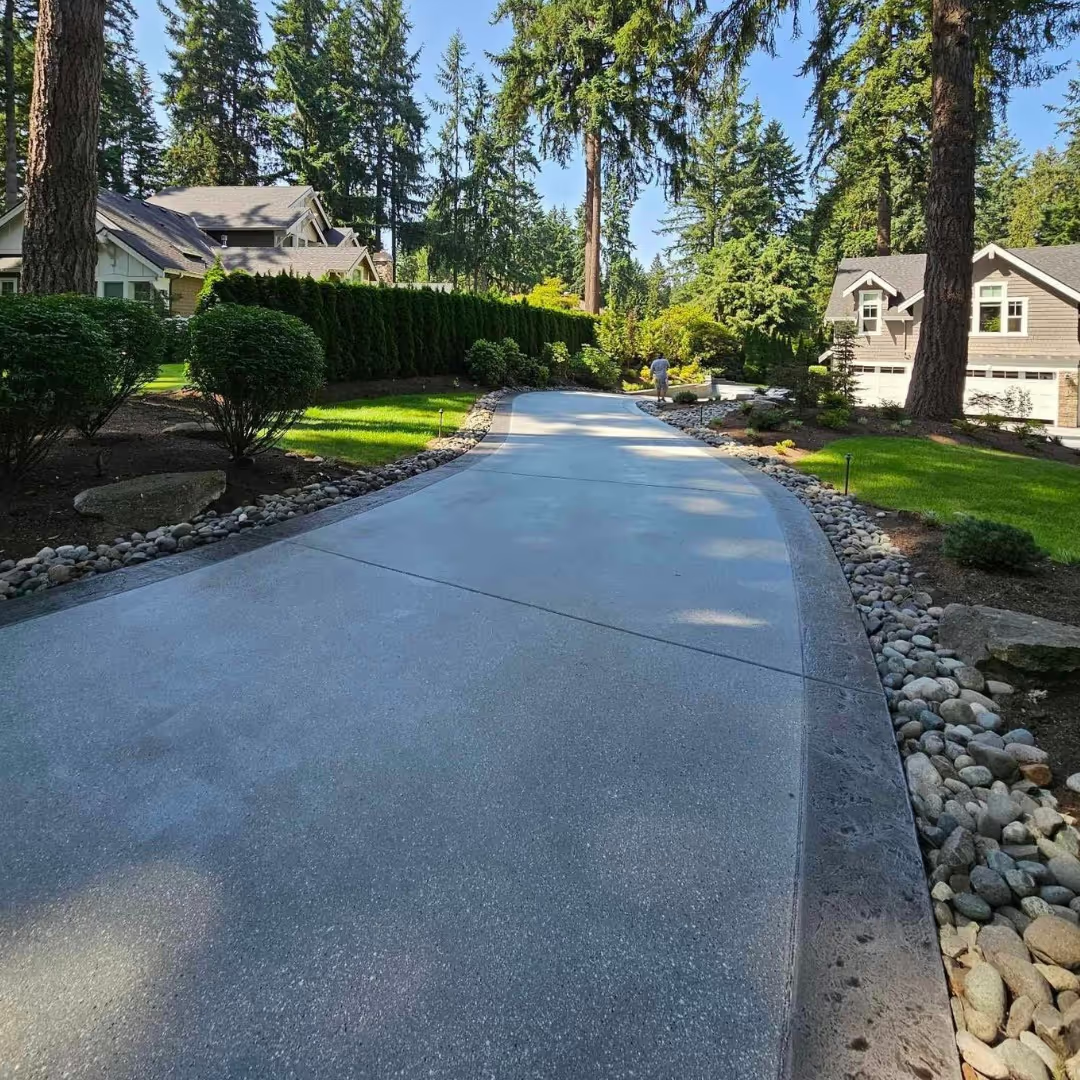
Joints matter a lot here. Spokane winters swing above and below freezing over and over, and concrete moves with every swing. Control joints give that movement a place to crack on purpose. A long rectangle gets evenly spaced joints. A curved or irregular slab needs extra joints placed with care, or random cracks will show up by the second winter. We've seen this crack pattern a hundred times on drives where someone skipped that step.
Thickness is the other hidden number. Square feet measure area. Concrete gets ordered by volume. A thicker slab for heavy trucks or an RV uses more concrete across the same footprint. That's why your contractor will ask what you park on it.
Slope plays in too. Lots up toward the foothills often need grading, extra base work, or careful drainage planning before anyone pours. Water that runs toward your garage in March freezes in your driveway by night, and then the slab heaves. And tight access is its own headache. If the truck can't reach the pour spot, the crew may need to wheelbarrow or pump the concrete - Want a quote that matches your driveway? Measure it right before you call. Here's how we'd do it:
- Break the driveway into simple shapes like rectangles and triangles.
- Measure the length and width of each shape in feet.
- Multiply length by width for each piece, then add them up.
- Note every curve, flare, and turnaround on a rough sketch.
- Write down any slope, drainage problems, or tight access points.
- Snap a few photos from the street and from the garage.
That sketch saves you time. It also helps a professional concrete contractor spot problems before they turn into change orders.
Simple shapes pour faster. Complex shapes take skill.
Neither one is wrong. You just need to know which one you've got before you compare quotes. In 11 years of residential concrete work around Spokane Valley, the biggest quote surprises we see come from shape, not size.
Frequently Asked Questions About the Cost of a 2,000 Sq Ft Driveway
Why does base prep matter more than the concrete itself?
Base prep matters more because the ground underneath decides whether your slab survives Spokane winters. Freeze-thaw cycles push and pull at weak soil, and a thin or loose base can't handle that movement. The concrete on top just follows whatever the ground does. A well-compacted gravel base keeps your driveway flat and crack-free for years. The slab is only as good as what's holding it up.
How do I know if my driveway needs a full repour instead of a repair?
You likely need a full repour if cracks run corner to corner or sections have sunk near the garage. Surface wear and minor hairline cracks often respond well to resurfacing or patching instead. The real test is what's happening underneath the slab, not just what you see on top. A crew that inspects the base can tell you which option fits. That's the kind of walk-through worth getting before you decide anything.
Why do driveways near the Sullivan Road corridor seem to crack sooner?
Driveways near the Sullivan Road corridor sometimes crack early because older lots in that area often hide fill dirt, old landscaping debris, or clay pockets under the surface. These hidden layers don't compact or drain the same way gravelly native soil does. Once winter freeze-thaw cycles hit, that uneven base shifts and the slab cracks along with it. Digging deeper during prep usually catches these surprises before they become a problem.
What are the warning signs of a bad base before a new driveway goes in?
Warning signs include low spots where water pools, soft or spongy ground, and old roots or buried wood mixed into the soil. Clay or silty pockets and slopes that drain toward the house instead of away are also red flags. These issues often hide under the old surface until tear-out begins. Catching them early means a crew can grade and compact properly, instead of pouring over a problem that resurfaces later.
Is it ever okay to skip a permit for driveway work in Spokane Valley?
No, you shouldn't skip a permit if your project touches the curb, sidewalk approach, or right-of-way. The City of Spokane Valley requires a right-of-way permit for that kind of work, and skipping it can lead to delays or costly fixes later. Driveway work that stays entirely on your own property usually doesn't need one. A local crew familiar with the city's rules can tell you quickly which category your project falls into.
When should I call a professional instead of waiting out a small crack?
You should call a professional once a crack grows, shifts, or lets water seep underneath the slab. Small surface cracks can sometimes wait, but anything tied to sinking or uneven ground usually gets worse each winter. Waiting lets freeze-thaw cycles turn a small issue into a full repour. A free estimate on a 2,000 sq ft driveway can tell you whether repair or replacement makes more sense for your situation.