Cost to Epoxy a 20x20 Floor in 2026 | Concrete Revival
A 20x20 floor measures 400 square feet. This is the typical size for a two-car garage in most Spokane Valley homes. It's also the size people ask about most often.
So, let's get into what actually changes the price for epoxy floor coating on a space this big.
The final amount you pay depends on a few specific things. Not vague ideas. Real stuff that directly affects your estimate.
What Moves the Number Up or Down
Here's what matters when we figure out epoxy floor coating costs for a 400-square-foot garage:
- Concrete condition. Cracks, pitting, oil stains, old paint, all these need prep work. Nothing goes down before we clean it up. A garage floor that's seen 15 years of daily parking needs more labor than a fresh, clean slab.
- Coating system type. A basic, single-coat epoxy floor coating is the starting point. But multi-layer systems? Those have base coats, color flakes, and tough topcoats. They take more material and more time.
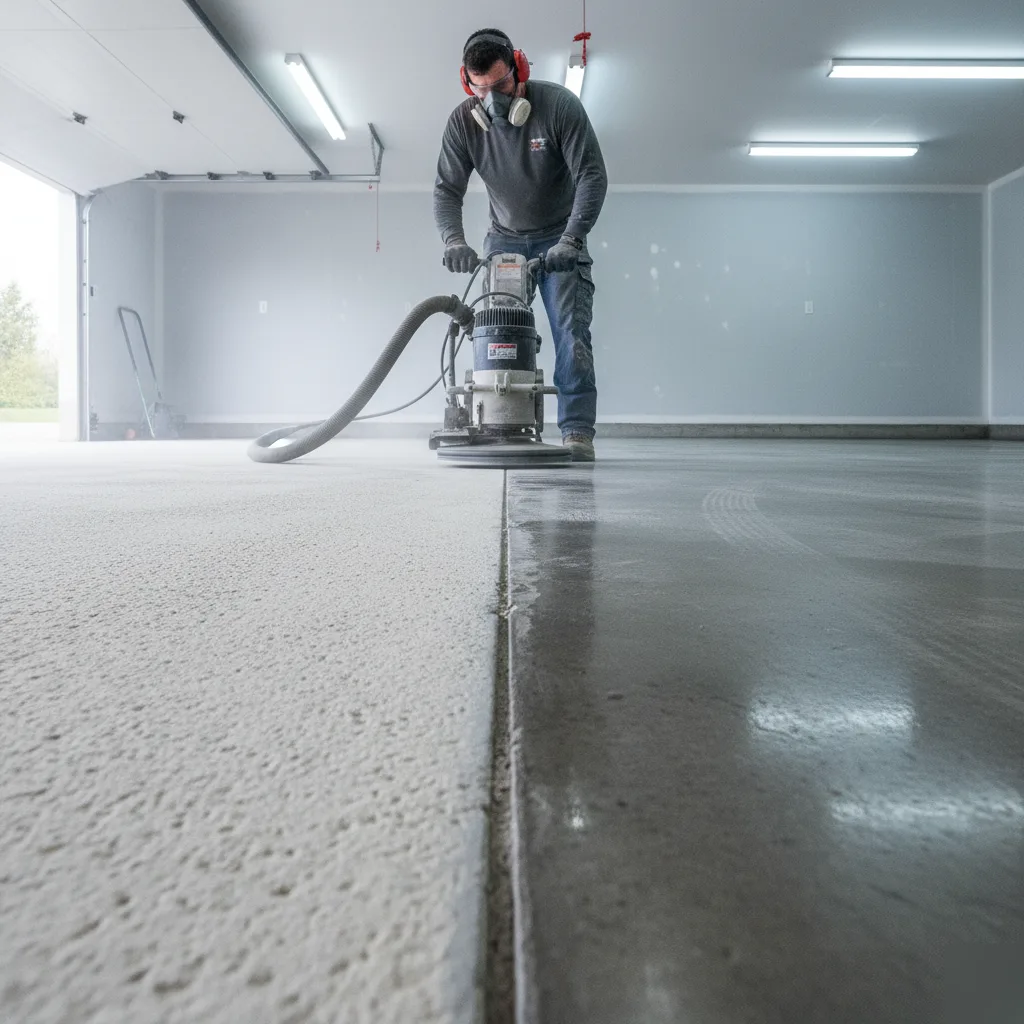
- Surface prep method. Diamond grinding is the gold standard. It opens the concrete up. This helps the epoxy grab hold properly. Acid etching is cheaper, but it just doesn't hold up the same way, especially with Spokane Valley's weather.
- Number of coats. Two coats versus three coats changes everything. It means more material, more labor hours.
We see homeowners shocked by prep costs often. The epoxy itself usually isn't the expensive bit, it's getting the floor ready. A slab with real deep cracks might need concrete crack repair first. We can't coat over that.
That adds to the total, of course. But skipping it means peeling and failure inside a year — and proper epoxy floor installation in Spokane doesn't cut corners on prep just to save a few hours on the job. Our concrete doesn't just survive Spokane winters, it laughs at them. We guarantee our work for 10 years, or we'll fix it free. That's why prep is so important — it's the foundation of every epoxy floor installation in Spokane we stand behind, and it's what drives our Winter Damage Prevention System to a 95% reduction in winter damage claims over the last five years.
DIY Kits vs. Professional Epoxy Floor Coating
You'll find epoxy kits at big box stores for a lot less than professional work. They always look like a steal.
But most folks don't realize what they're actually giving up.
Professional-grade epoxy floor coating uses materials with higher solids. That makes for a thicker, harder finish. Store-bought kits are thinner, you see right through them eventually. They wear down faster in busy spots.
And here in Spokane Valley, where garage floors face road salt, ice melt, and wild temperature swings, from below zero to 90-plus degrees, that difference really matters. We engineer every pour to survive Spokane's brutal freeze-thaw cycles.
The Concrete Network says professional epoxy systems last two to three times longer than DIY options. That's a big difference, you'll notice it every day.
We see this play out regularly. A homeowner in the Greenacres area used a DIY kit two summers ago. By the next spring, the coating was peeling bad. Near the garage door, where moisture likes to sneak in. They called us to strip it and redo it. That second job cost more than just getting it right the first time would have. It always does.
Why 2026 Costs Look Different
Material costs for resins and hardeners changed over the last few years. Supply chain issues and raw material shifts pushed some products higher. Labor costs in the Spokane Valley area also went up. Demand for garage floor concrete work and epoxy floor coating stays strong, what with new builds and remodels.
But here's the thing. The cost per square foot for epoxy floor coating still beats most other flooring. You factor in how long it lasts. Tile cracks. Vinyl peels. Paint wears off in months. A properly applied epoxy floor coating on a 20x20 garage holds up for years. Almost no upkeep.
So, the real question isn't just today's price. It's what you'll spend over the next ten years. You choose the wrong option now, you'll pay for it later.
For a deeper look at what goes into epoxy floor pricing, this detailed epoxy flooring cost breakdown covers the key factors that affect your total investment. If you want to know what your specific floor needs, our epoxy floor coating page explains our full process. It also shows you how to start.
What Is, and Is Not, Included in an Epoxy Floor Quote
Most people assume an epoxy floor coating quote covers absolutely everything. It doesn't. And that difference, between what you expect and what's actually in there, that's where all the frustration comes from.
We hear about it constantly from Spokane Valley homeowners. They got a quote elsewhere, said yes, then found out halfway through that prep work cost extra. It's no way to do business.
So, let's lay it out clearly.
What's Typically Included
A good epoxy floor coating quote for a 20x20 space should cover the main work. That includes the actual coating materials, the crew's labor, and basic surface prep. Things like grinding or light shot blasting. Most quotes also include a topcoat or sealer. This protects the finish. You should see a clear line item for each of these.
Here's what a good quote usually covers from us:
- Surface grinding or mechanical prep to open the concrete pores.
- One or two coats of epoxy base material.
- A tough, protective topcoat layer.
- Basic cleanup when the job is done.
If your quote doesn't list these separately, ask questions. A vague lump sum is always a red flag.
What's Often Left Out
This is the part that often catches people by surprise. Concrete repair is almost never in a standard epoxy floor coating quote. Got cracks, spalling, or pitting on your garage slab? That's an extra charge. In Spokane Valley, older homes near the Millwood area or along Sprague Avenue often have decades-old slabs. So concrete crack repair before coating is pretty common.
Moisture testing is another one. Epoxy won't stick if the concrete is pushing moisture up from below. Some installers test for free. Others charge. But if nobody tests at all, that's a problem just waiting to blow up.
Other things usually outside a standard quote:
- Moving heavy stuff or clearing out the floor space.
- Fixing uneven or sunken parts of the slab.
- Fancy flake blends or custom color choices.
- Extra coats beyond the standard system.
A homeowner calls us about coating their 400-square-foot garage. The quote looks simple enough. But when we actually inspect the floor, we find three deep cracks. And a low spot near the door where water gathers every spring, just like it does in so many Spokane Valley homes. That prep work adds time and material. It's not us trying to pad the bill, it's us doing the job right. So the coating actually lasts, like we promise.
How to Read a Quote Without Getting Surprised
Ask one simple question before you sign anything. "What would make this number go up?" An honest installer will tell you exactly what could change the scope. They'll mention things like moisture issues or hidden damage under old paint. We always do.
And never skip the on-site visit. Any quote given over the phone, or just from a photo, is a guess. Concrete has its secrets. You can't see moisture problems or hairline cracks in a picture. We always walk the floor first. What's underneath matters more than what's on top.
If you're trying to figure out what your specific floor needs, our epoxy floor coating page explains the full process we use here in Spokane Valley.
One more thing. The quote should tell you how many days the job takes. And when you can use the floor again. Cure time is big. A rushed job peels. A properly timed job bonds deep into the concrete. And it stays there. That's our standard.
Bottom line: a quote is only as honest as the details inside it. Read every line, ask about what's missing. Then you can decide.
Surface Preparation Drives More of the Price Than Most Homeowners Expect
Here's what catches people off guard every single time. The epoxy itself isn't the expensive part of an epoxy floor coating project. It's everything that happens before the epoxy even goes down. That really shapes the final bill.
Surface prep is everything. Period.
A 20x20 garage floor in Spokane Valley might look fine. You might think it's ready to go. But concrete hides problems. Hairline cracks, oil stains from years of parking, moisture trapped below the slab, old paint or sealer that never came off. Every single one of those issues needs handling. Before any coating can bond correctly. Skip this step, and the epoxy peels. We see this mistake all the time. With DIY jobs that fail inside a year, especially after a tough Spokane winter.
What Goes Into Proper Prep
Most homeowners imagine a quick power wash, then rolling on epoxy. The real process looks nothing like that. Here's what professional surface preparation usually involves for a 20x20 floor:
- We inspect the slab for cracks, spalling, and moisture issues.
- We grind or diamond-shot-blast the entire surface. This makes a rough profile the epoxy can grip onto.
- Then we fill any cracks and divots with a concrete crack repair compound.
- Next, we remove oil stains, old coatings, or anything else that blocks adhesion.
- We test moisture levels in the concrete. We use a calcium chloride kit or relative humidity probe. This is a must for our Winter Damage Prevention System.
- Finally, we clean all dust and debris. The primer coat has to go down on bare, clean concrete.
That grinding step alone? It takes specialized equipment. Diamond grinders or shot blasters aren't cheap to rent. They're loud, by the way. And they create a ton of dust. A professional crew handles containment and cleanup as part of the job. You don't want concrete dust coating everything in your garage. Or drifting into your house, especially in older homes around Millwood where seals might not be perfect.
Why Spokane Valley Slabs Need Extra Attention
Our freeze-thaw cycles do real damage to concrete. Over time. A garage floor poured ten or fifteen years ago, say, near the Greenacres area or closer to Millwood, has been through hundreds of temperature swings. Water seeps into tiny pores. It freezes. It expands. And it creates micro-fractures you can't always see. Our climate is no joke, everyone in Spokane knows that.
But those micro-fractures are there. Waiting.
And if a crew skips moisture testing, or doesn't grind deep enough to get past that surface damage, that coating won't last. We've pulled up plenty of failed coatings. From floors where the previous installer just acid-etched and called it good. Acid etching just doesn't open the pores enough for our climate. The Concrete Network agrees, mechanical grinding is the way to go for long-term coating adhesion. Especially on residential garage floors like yours.
The Hidden Cost Factor
So, why does prep drive so much of the cost? Time and labor. On a 20x20 floor that's in rough shape, prep work can take longer than the actual epoxy application. A floor with deep cracks, heavy staining, or an old coating needing full removal? That might mean an extra half-day of work. A newer slab in good condition goes much faster. It's pretty straightforward.
Think of it like painting a wall. Painting is fast if the wall is smooth and clean. But if you've got peeling layers, holes, and water damage? Most of your time goes into fixing the wall. Before paint ever touches it., this is the part most people overlook.
Most folks don't realize this. Not until they get their first quote. Then they wonder why two estimates look so different. The answer is almost always in how much prep each company plans to do. One crew might cut corners, the other does it right. That gap shows up in how long the floor actually holds up.
If you're curious about what your specific slab needs, our epoxy floor coating page explains the full process we use on Spokane Valley garage floors. Every project starts with an honest look at what's underneath. We're Spokane natives, we live in these neighborhoods. the concrete here.

Frequently Asked Questions
Does Spokane Valley's weather affect how much it costs to epoxy a 20x20 garage floor?
Yes, Spokane Valley's climate directly affects your epoxy floor coating cost. Our freeze-thaw cycles, road salt, and ice melt are hard on concrete. Floors here often need more prep work than garages in milder climates. Older slabs in areas like Millwood or along Sprague Avenue may have more cracking and spalling. That means more repair work before any coating goes down. More prep equals more labor time and cost.
Should I use a DIY epoxy kit or hire a professional for a 400-square-foot garage floor?
For a 20x20 garage floor in Spokane Valley, hiring a professional gives you a much longer-lasting result. Store-bought kits use thinner materials that wear down fast. Professional-grade epoxy systems last two to three times longer, according to The Concrete Network. DIY kits also struggle with our local temperature swings, from below zero to 90-plus degrees. One homeowner in the Greenacres area redid their floor after just one winter. That second job cost more than doing it right the first time.
Why do epoxy floor coating costs look different in 2026 compared to a few years ago?
Material costs for resins and hardeners went up over the last few years due to supply chain shifts. Labor costs in the Spokane Valley area also increased. Demand for garage floor coating stayed strong with new builds and remodels. Even so, epoxy floor coating still costs less over time than tile, vinyl, or paint when you factor in how long it lasts with almost no upkeep needed.
What is the most common mistake homeowners make when budgeting for epoxy floor coating?
The biggest mistake is budgeting only for the epoxy material and forgetting about prep work. Most people focus on the coating itself. But surface grinding, crack repair, and moisture testing are where real costs hide. A vague quote with one lump sum is a warning sign. Ask for line items. If a quote doesn't list prep work separately, ask why. That's how surprises happen halfway through a job.
What should a proper epoxy floor coating quote include for a 20x20 space?
A good quote should list surface grinding, epoxy base coats, a protective topcoat, and basic cleanup as separate line items. Concrete crack repair and moisture testing are often not included. Always ask about those upfront. Our epoxy floor coating page walks you through the full process so you know exactly what to expect before anyone shows up at your door.
Does concrete condition really change the price that much for a 20x20 epoxy job?
Yes, concrete condition is one of the biggest price factors for a 400-square-foot floor. A garage slab with 15 years of daily parking, oil stains, or deep cracks needs a lot more prep than a clean slab. Cracks must be repaired before any coating goes down. Skipping that step leads to peeling within a year. More prep work means more labor hours, and that moves your total cost up.
Ready to Experience the Concrete Revival Difference?
Complete Service Area Coverage
- Spokane and Spokane Valley
- Coeur d'Alene metro area
- Deer Park and Newport
- Liberty Lake and Otis Orchards
- Cheney and Medical Lake
- Post Falls and Rathdrum