How Long Does Driveway Resurfacing Last in Spokane Valley?
How long driveway resurfacing lasts depends mostly on the slab underneath and how well the surface gets prepped. Spokane Valley's freeze-thaw winters, drainage, sealing, and the de-icers you use decide the rest. Get those right and a resurfaced driveway can hold up for years.
What Determines How Long Resurfacing Lasts
Two driveways on the same street can get the same driveway resurfacing job. One still looks sharp years later. The other starts flaking after a couple of winters. Why the gap? It almost never comes down to luck.
We've done driveway resurfacing in Spokane Valley for 11 years. The pattern is always the same. A handful of factors decide how long it lasts. And most of them are set before we mix a single batch of overlay.
Here's what really matters, roughly in order of importance:
- The slab underneath. Resurfacing bonds to old concrete, it can't fix a base that's sinking or heaving.
- Surface prep. The old concrete has to be cleaned, repaired and profiled so the new layer can grip.
- Freeze-thaw exposure, which hits Spokane Valley driveways hard from November through March.
- Whether it gets sealed, and how often you reseal it after that.
- Drainage. Water that sits on the surface soaks in and freezes.
- Heavy loads like RVs, work trucks or trailers parked in the same spot.
None of these work alone. A perfect overlay on a bad base still fails. So does a great base with sloppy prep.
The base matters most. Period.
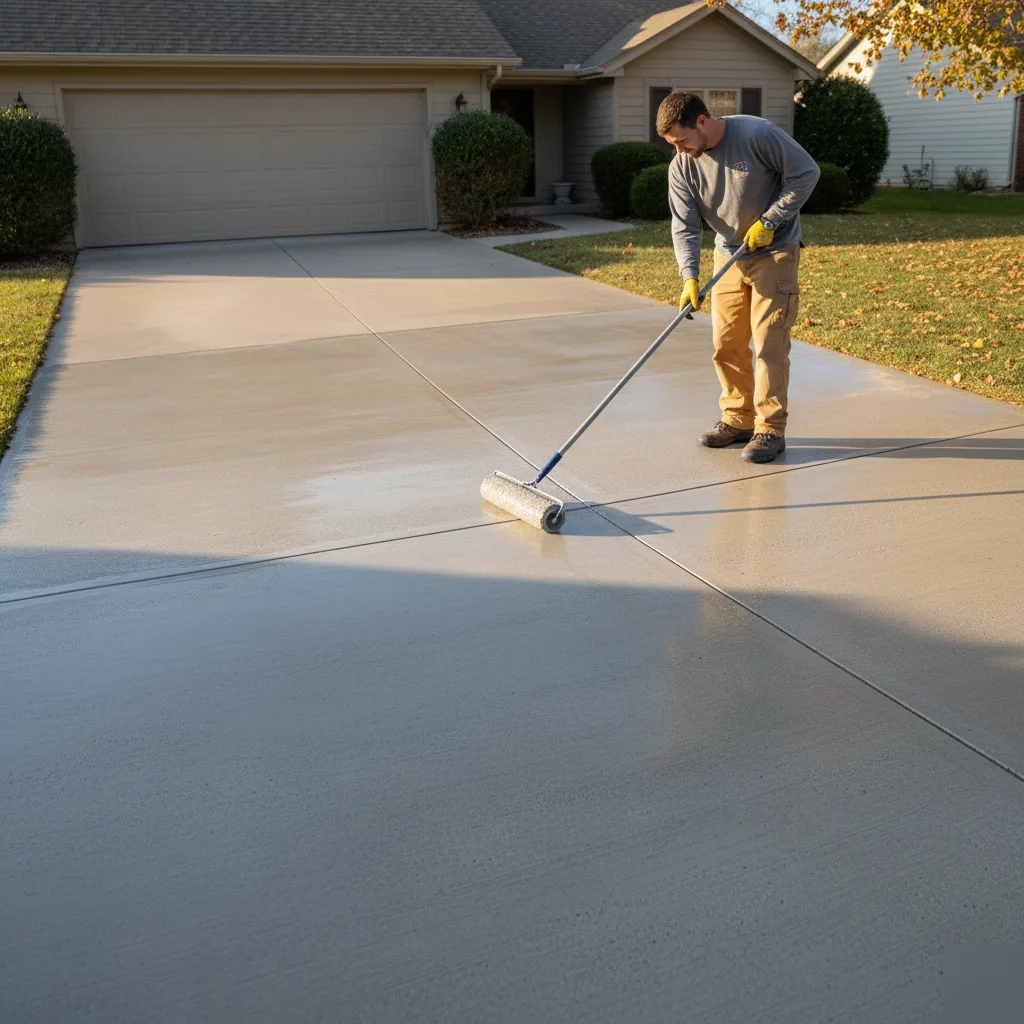
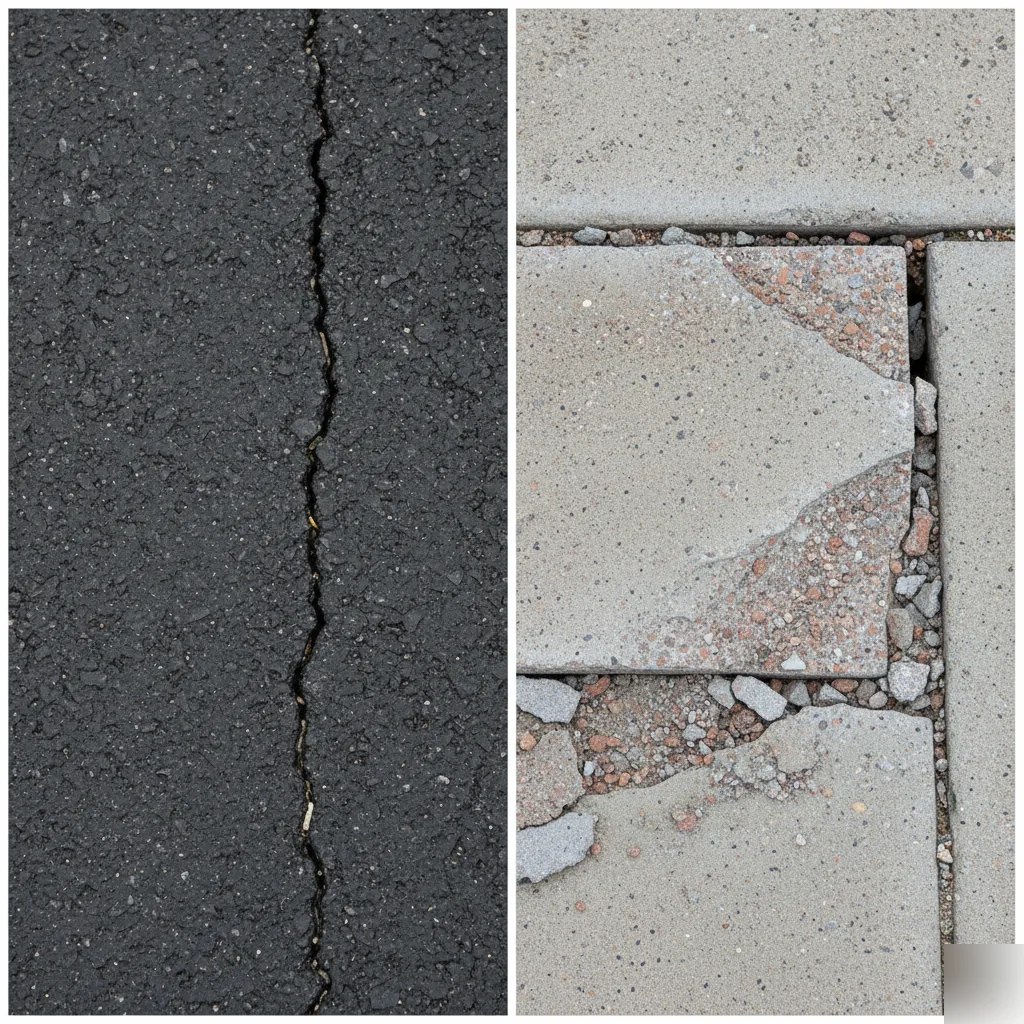
Last spring we looked at a driveway near the Sullivan Road corridor. Someone had resurfaced it about two years earlier. The overlay itself was fine. But the slab under it had deep structural cracks that kept shifting. So the new layer cracked right along the old lines. We've seen this crack pattern a hundred times.
Prep is where cheap jobs cut corners.
A good crew grinds or etches the surface first. We fill cracks and patch spalled spots before any overlay goes down. Skip that step and the new layer can peel off in sheets. We've scraped up plenty of those.
Then there's the weather. Spokane Valley winters swing above and below freezing over and over. Water creeps into tiny pores. It freezes, expands, and pushes the surface apart. Then it thaws and does it all again the next night. That cycle is the number one enemy of any concrete surface around here.
Sealing is your defense. A quality sealer keeps water and salt out of the surface. Most driveways need a fresh coat every few years. Wait too long and the damage starts from the top down.
But what you do in January counts too. Rock salt eats at concrete surfaces fast. Sand gives you traction without the damage. Most homeowners don't realize this until the top layer starts to pit.
Drainage is the sneaky one. Check where water goes after a heavy rain or snowmelt. If it pools near the garage or along an edge, that's a weak spot waiting to happen. Downspouts dumping onto the slab are a common culprit. And grading that tips toward the house - Point is, driveway resurfacing lasts as long as the conditions let it. Fix the base, prep it right, seal it, and keep water moving off. Do that and you'll get your money's worth out of it.
Typical Lifespan Ranges by Material
Here's the short answer most people want. A well-done driveway resurfacing job usually lasts somewhere between 8 and 15 years. But that range is wide for a reason. The material you pick sets the ceiling, and how you care for it decides how close you get.
Not all overlays are built the same. Some go down thick and tough. Others are thin skins meant to look good more than take a beating. So before you choose, it helps to know what each one can handle on a Spokane Valley driveway.
These are general industry ranges. They're what you can expect with good prep and regular sealing:
- Polymer-modified cement overlay: about 8 to 15 years. This is the workhorse of driveway resurfacing and handles car traffic well.
- Stamped or decorative concrete overlays: often 10 to 15 years or more. They're thicker, and the texture hides small wear spots.
- Spray-down or knockdown textured finishes: roughly 8 to 12 years. Great grip in winter, though the high points wear first.
- Microtopping: closer to 5 to 10 years on a driveway. It's thin, so tire turns and snow shovels wear it faster.
- Sealer on top of any overlay: plan on resealing every 2 to 3 years. Skip it and every number above drops.
Notice the pattern? Thicker usually means longer. A stamped overlay has more body to it, so it shrugs off what would scuff a microtopping in one season.
Now for the Spokane part. Our winters are hard on everything. Water soaks into tiny pores, freezes overnight, then thaws by noon. That cycle repeats dozens of times between November and March. Each round pushes a little harder on the bond between your old slab and the new surface.
And then there's deicer. We've seen driveways off Sullivan Road that looked great in October, then lost their sheen by spring. The culprit wasn't the overlay itself. It was a bag of rock salt dumped on bare concrete every morning, no sealer in sight.
Salt and an unsealed overlay don't mix.
Here's a scenario we run into a lot. A homeowner calls us about a decorative concrete overlay that's eight years old. The middle of the driveway still looks sharp. The edges near the garage are flaking. Every time, it's the same story. Snowmelt drips off the car, puddles at the apron, and freezes. That one strip ages twice as fast as the rest.
So where does your driveway land in these ranges? It mostly comes down to three things. How sound the old slab was before driveway resurfacing. How thick the new layer went down. And whether anyone kept up with the sealer.
Most homeowners wait too long on that last one. Sealer is cheap insurance compared to redoing the whole surface. We tell every customer the same thing after 11 years of doing this in Spokane Valley. Mark your calendar for a reseal and do it, because the overlay can't protect itself.
One more thing worth knowing. Driveway resurfacing can't fix a slab that's heaving or badly cracked underneath. An overlay over a moving base won't hit 8 years, let alone 15. That's when concrete crack repair or bigger driveway repairs need to happen first, and if the base is shot - Well, that's a different conversation. The point is simple. Pick the right material for your driveway's traffic, start with a solid slab, and seal it on schedule. Do that and you'll be at the top of the range instead of the bottom.
How Spokane Valley Winters Affect Resurfacing Longevity
Most people don't want to hear this. Winter is the biggest threat to your driveway resurfacing in Spokane Valley. Not traffic. Not age. It's the freeze-thaw cycle.
Here's how it works. On a mild afternoon, water soaks into tiny pores and hairline cracks. Then the sun drops and the temperature falls below freezing. That water turns to ice and expands. It pushes outward from inside the surface. By morning it thaws, more water seeps in, and the whole thing starts over. One cycle won't do much, a full winter of them adds up fast.
We see the results on driveways from Greenacres to the Sullivan Road corridor every spring.
Ever wonder why two driveways on the same street age so differently? Usually it comes down to winter habits. A few of them seem harmless. They're not.
- Rock salt and harsh deicers that pull extra water into the surface
- Metal shovel edges or plow blades scraping off the top layer
- Roof snowmelt dripping onto the same spot all winter long
- Plowed snow piles left along the edge for weeks
- Skipping the fall seal because the driveway still looks fine
Each one adds stress. Stack two or three together and you'll see flaking or peeling much sooner than you should.
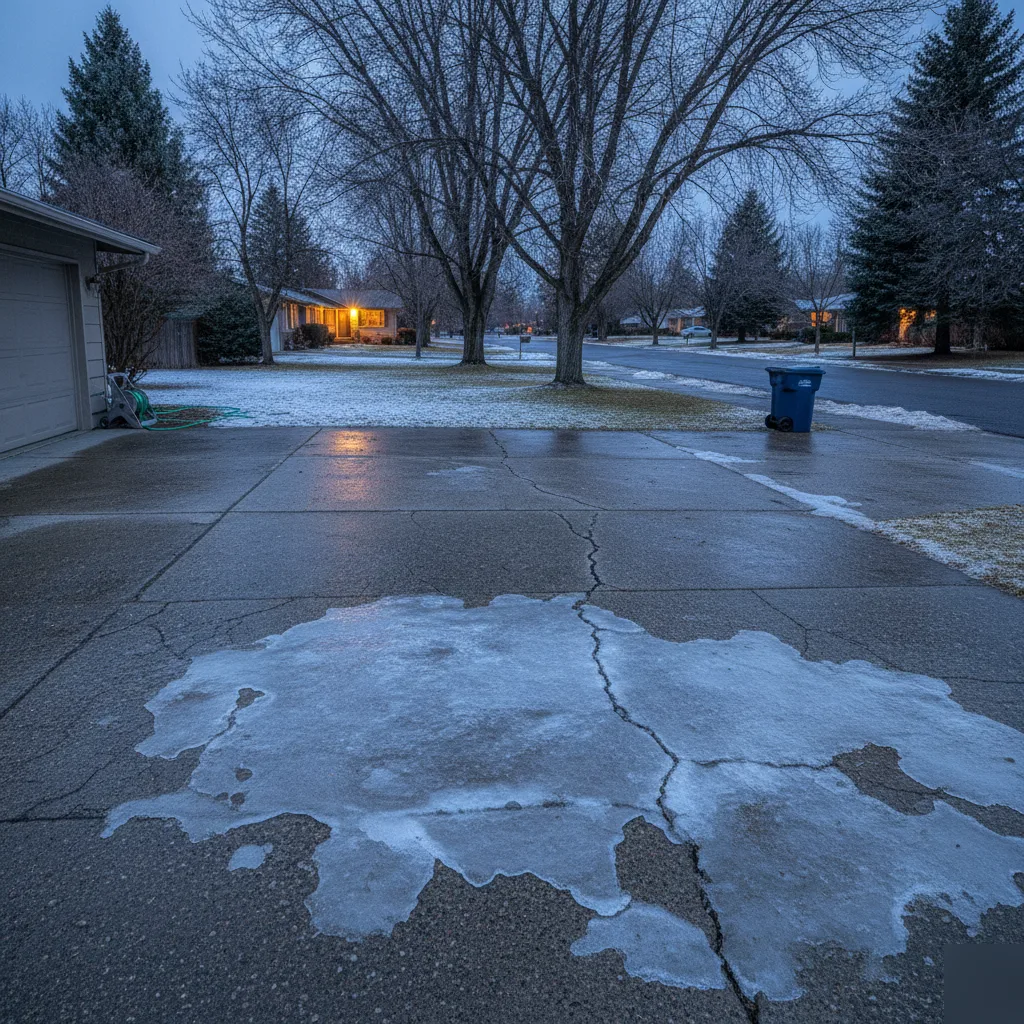
Last spring we got a call from a homeowner near Liberty Lake. Their driveway resurfacing was only a few years old. But the area by the garage door was flaking badly. Turned out the downspout dumped water right onto that spot. It froze into a sheet of ice every night, so they salted it every morning. The rest of the driveway looked great. Just that one patch took a beating.
Winter also exposes bad prep. If cracks in the old slab weren't repaired first, freeze-thaw pushes them right through the new layer. We've seen this crack pattern a hundred times. The overlay gets blamed. And the real problem started underneath.
So what protects your driveway resurfacing through a Spokane Valley winter? Here's what we tell every customer after an install.
- Seal the surface before the first hard freeze. Early fall is the sweet spot.
- Fix hairline cracks right away so water can't get under the overlay.
- Use sand or a concrete-safe deicer instead of rock salt.
- Switch to a plastic shovel or one with a rubber edge.
- Point downspouts away from the driveway.
- Clear snow early so it can't melt and refreeze on top.
None of this takes much time. But it can add years to your driveway resurfacing. Most homeowners wait until they see damage, and by then the water has already done its work.
Plow berms at the end of the driveway are their own headache - Point is, a good install handles Spokane winters just fine. A little care each fall keeps it that way.
Frequently Asked Questions About How Long Driveway Resurfacing Lasts
How do I know if my driveway needs resurfacing instead of a simple seal coat?
You need resurfacing when you see cracks, pitting, or flaking that go deeper than the surface layer. A seal coat only protects a sound surface, it can't fix structural damage. If the slab underneath is solid but worn on top, resurfacing restores it without a full replacement. Tap or inspect problem spots closely. If the damage feels shallow and spread out, resurfacing is likely your best fix. A closer look at your driveway resurfacing options can help you decide.
Why do some driveways in Spokane Valley wear out faster than others nearby?
Drainage and salt use are usually the reason, not bad luck. A driveway that pools water near the garage or gets hit with rock salt all winter will age faster than one that drains well and gets sand instead. We've seen this exact split on driveways just blocks apart near the Sullivan Road corridor. The overlay was identical. The care after installation wasn't.
Can freeze-thaw weather really shorten how long resurfacing lasts?
Yes, freeze-thaw cycles are the biggest threat to resurfaced driveways in our area. Water seeps into tiny pores, freezes overnight, then thaws by afternoon. This repeats dozens of times each winter between November and March. Each cycle pushes a little harder on the bond between the old slab and new surface. Sealing regularly is your best defense against this wear pattern.
What's a common mistake homeowners make that shortens resurfacing lifespan?
The biggest mistake is skipping or delaying resealing after the first year or two. Homeowners often think the overlay itself will hold up on its own. But sealer blocks water and salt from reaching the surface. Wait too long between coats and damage starts creeping in from the top down. Most people don't notice until pitting or flaking already shows.
When should I call a professional instead of just patching problem spots myself?
Call a professional once you notice cracking along old slab lines, flaking in sheets, or edges near the garage wearing faster than the rest. These signs usually point to a base or prep issue, not a surface fix. Patching over a failing base just delays the problem. A proper inspection catches whether resurfacing will solve it or if deeper repair comes first.
Does the type of overlay affect how long my driveway lasts in Spokane Valley winters?
Yes, thicker overlays generally hold up longer against our winters. Polymer-modified cement and stamped concrete overlays have more body, so they resist freeze-thaw stress better than thin microtoppings. Spray-down textured finishes grip well in snow but wear faster at high points. Picking the right overlay for your driveway's use and traffic makes a real difference in lifespan.