How Long Does a Resurfaced Driveway Last? Expected Lifespan by Material in Spokane Valley
Resurfaced Driveways Last Longer Than Most Spokane Valley Homeowners Expect
If you've been wondering how long does a resurfaced driveway last, the answer might surprise you. Most homeowners assume resurfacing is a temporary fix. Something that buys you a year or two before the real work starts. But that's not how it works. Affordable driveway resurfacing done right isn't just a budget-friendly option — it's a long-term investment that can hold up for 8 to 15 years depending on the material. Sometimes even longer.
We see this misconception all the time.
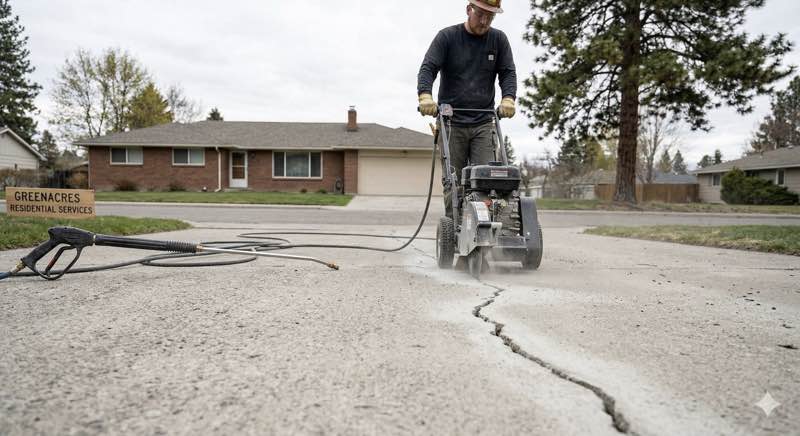
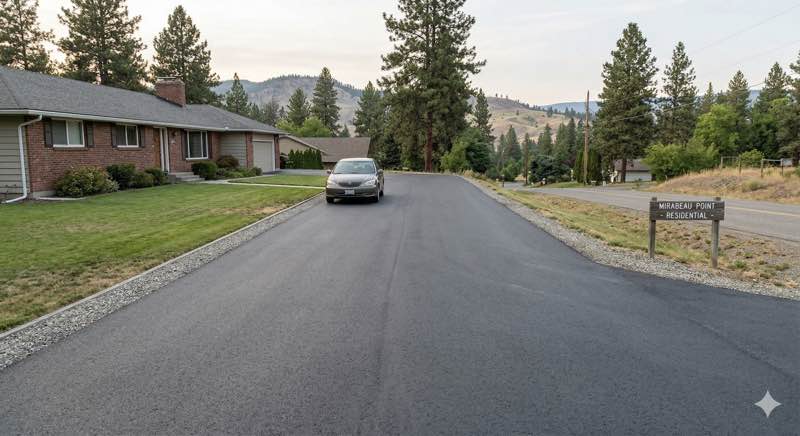
Someone in the Greenacres area or over near Mirabeau Point calls us thinking their driveway needs a full replacement. They're bracing for the worst. But once we take a look, the existing base is solid. The cracks are surface-level. The foundation hasn't shifted. That's a textbook case for resurfacing, and the results can genuinely last a decade or more with basic upkeep.
So why do resurfaced driveways perform better than people think? It comes down to what's underneath. Resurfacing isn't slapping a thin coat over a broken surface. It's adding a new wear layer on top of a structurally sound base. Think of it like refinishing hardwood floors instead of ripping them out. The bones are good. You're just giving them a fresh surface to handle daily use.
The lifespan you'll get depends heavily on the material. Here's a general breakdown based on what we've seen across hundreds of Spokane Valley driveways:
- overlay: Typically lasts 8 to 12 years. is flexible, which helps it handle freeze-thaw cycles well. That matters here where winter temperatures can swing dramatically in a single week.
- Concrete resurfacing: Expect 10 to 15 years or more. Concrete overlays bond tightly to the existing slab and resist heavy loads. They do need sealing every few years to prevent moisture damage.
- Stamped or decorative concrete overlay: Similar lifespan to standard concrete resurfacing, around 10 to 15 years, but the decorative finish itself may show wear sooner in high-traffic spots.
- Paver overlay systems: Can last 15 to 25 years because individual pavers distribute weight and allow for easy spot repairs.
According to the Portland Cement Association, a well-maintained concrete surface can exceed its expected service life by 50 percent or more when proper curing and sealing practices are followed. That tracks with what we've observed locally.
But here's the thing most people don't realize until it's too late. The material only tells part of the story. Preparation is everything.
A resurfacing job that skips proper cleaning, crack repair, or bonding agents will fail early. Guaranteed. We've pulled up overlays that were barely two years old because the contractor poured new material directly over loose debris and unsealed cracks. The new layer had nothing solid to grip. It peeled away like a sticker.
Scenario. A homeowner near Sullivan Road has an driveway with spider-web cracking across the surface. The base underneath is still compact and drains well. A good contractor will clean out every crack, fill them with a flexible sealant, apply a bonding agent, and then lay the new overlay at the correct thickness. That driveway will handle Spokane Valley winters for the next decade without major issues.
Now picture the same driveway with a rushed job. No crack filling. No bonding layer. Thin overlay. That surface will crack again within 18 months. Same driveway, completely different outcome based on how the work gets done.
Climate plays a real role here too. Spokane Valley sits in a zone where summer heat can reach the 90s and winter lows drop well below freezing. That constant expansion and contraction stresses any driveway surface. Resurfacing materials need to be chosen with this in mind. 's flexibility makes it forgiving in freeze-thaw conditions. Concrete is harder and more durable overall, but it needs proper joint spacing and sealing to prevent frost heaving from causing cracks.
And drainage matters more than most people give it credit for. Standing water is the enemy of every resurfaced driveway. If water pools on the surface and seeps into micro-cracks, it freezes, expands, and breaks the overlay apart from the inside. Proper grading during the resurfacing process prevents this entirely.
If your driveway's base is still in good shape, resurfacing is one of the smartest moves you can make. It restores the look, extends the functional life, and avoids the disruption of a full tear-out. Want to know if your driveway qualifies? Our driveway resurfacing page walks you through what we look for during an assessment.
The bottom line is simple. Don't assume your driveway is past saving. Most of the driveways we evaluate in Spokane Valley have years of life left in them with the right resurfacing approach.
Resurfacing Lifespan Depends on Spokane Valley's Seasonal Conditions
A properly resurfaced driveway typically lasts 8 to 15 years. But that range isn't random. Where you live has everything to do with where your driveway falls on that scale. And Spokane Valley's climate pushes harder than most people expect.
Here's what's really going on under the surface.
Spokane Valley experiences dramatic temperature swings throughout the year. Summer highs regularly push past 90°F. Winter lows can drop well below 20°F. That constant expansion and contraction cycle is tough on. The material softens in heat and becomes brittle in cold. Over a single year, your driveway goes through this stress cycle dozens of times.
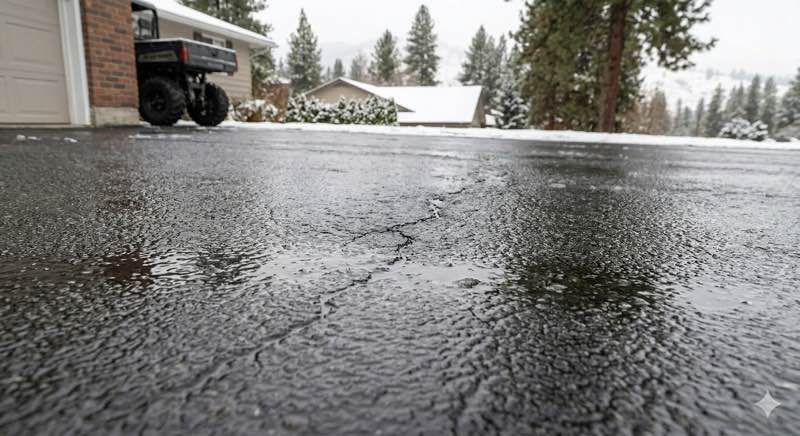
The freeze-thaw cycle is the real enemy. Water seeps into tiny cracks during rain or snowmelt. Then it freezes overnight. Frozen water expands by about 9 percent, according to the U.S. Geological Survey. That expansion forces cracks wider. The next day, it thaws and settles deeper. Repeat this hundreds of times between November and March, and even a solid resurfacing job starts showing wear.
We see this play out every spring. Homeowners near the Spokane River or in lower-elevation areas of the Valley often notice new cracking after their first winter with a resurfaced driveway. That doesn't mean the work was bad. It means water sat in spots it shouldn't have.
Drainage matters more than most people realize.
If your driveway slopes toward your garage or pools water anywhere along its surface, the resurfacing layer takes a beating. Proper grading during the resurfacing process helps water move off the surface quickly. Without it, standing water accelerates every type of damage. Cracks form faster. The bond between the new layer and old base weakens. You lose years off the lifespan just from poor water management.
Snow removal habits also play a big role in Spokane Valley. Metal-edged plows and sharp shovels can gouge a resurfaced layer. Chemical deicers containing ammonium sulfate or ammonium nitrate can break down binders over time. So the way you handle winter directly affects how long your investment holds up. Rubber-edged plow blades and sand-based traction alternatives are much gentler on fresh surfaces.
UV exposure is the other factor people overlook. Spokane Valley gets roughly 170 sunny days per year. That's a lot of direct sunlight hitting your driveway. Ultraviolet rays oxidize the oils in, making it dry, gray, and brittle. Think of it like sunburn for your driveway. A sealcoat application every 2 to 3 years acts like sunscreen, blocking UV damage and keeping the surface flexible.
Here's a scenario we run into often. A homeowner in the Greenacres area gets their driveway resurfaced in late summer. The work looks great. They skip sealcoating the first year because everything seems fine. By year three, the surface is already fading and small hairline cracks appear. By year five, those cracks have connected into a web pattern. They're frustrated because they expected 12 to 15 years. But without that protective sealcoat layer, Spokane Valley's sun and freeze-thaw cycles cut the lifespan nearly in half.
The thickness of the resurfacing layer matters too. Most residential overlays range from 1.5 to 2 inches thick. In a mild climate, 1.5 inches works fine. But with our temperature extremes, that extra half inch provides meaningful protection against cracking and wear. It's not a huge difference during installation, but it shows up years later.
Base condition is another critical factor. Resurfacing goes over your existing driveway. If the base underneath has soft spots, root damage, or poor compaction, the new layer can't fix those problems. It just hides them temporarily. We always tell homeowners to address base issues before resurfacing. Otherwise, you're building on a weak foundation, and Spokane Valley's seasonal conditions will expose that weakness fast.
So what does all this mean for your driveway? If you combine quality resurfacing work with proper drainage, regular sealcoating, and smart winter maintenance, you're looking at the upper end of that 8 to 15 year range. Skip those steps, and you'll likely be closer to the bottom.
If you're thinking about driveway resurfacing and want to understand what your specific driveway needs, that's the best place to start. Every driveway in Spokane Valley has its own set of conditions, and knowing yours helps you plan for real longevity instead of guessing.
Frequently Asked Questions About Driveway Resurfacing
How long does a resurfaced driveway actually last in Spokane Valley?
A resurfaced driveway in Spokane Valley typically lasts 8 to 15 years, sometimes longer. The exact lifespan depends on the material used and how well the job was done. Asphalt overlays usually last 8 to 12 years. Concrete resurfacing can go 10 to 15 years or more. Spokane Valley's freeze-thaw cycles do add stress, but a properly prepped surface handles that well.
How does Spokane Valley's climate affect how long a resurfaced driveway lasts?
Spokane Valley's climate is hard on driveways. Summer temps push past 90°F and winter lows drop well below 20°F. That constant expansion and contraction wears on any surface. The freeze-thaw cycle is the biggest threat. Water gets into tiny cracks, freezes, expands by about 9 percent, and forces those cracks wider. Homeowners near the Spokane River or in low-lying areas see this damage every spring. Choosing the right material and sealing regularly helps your resurfaced driveway hold up through those swings.
Which resurfacing material lasts the longest?
Paver overlay systems last the longest — often 15 to 25 years. They spread weight across individual pieces and allow easy spot repairs. Concrete resurfacing comes in second at 10 to 15 years or more. Asphalt overlays typically last 8 to 12 years but handle freeze-thaw cycles better due to their flexibility. The best material for you depends on your driveway's current condition, how much traffic it gets, and what Spokane Valley weather will throw at it each season.
Is resurfacing just a temporary fix that won't last?
That's one of the most common misconceptions we hear. Resurfacing is not a patch job. It adds a full new wear layer on top of a solid base. Done right, it can last a decade or more. The key word is 'done right.' Proper crack filling, bonding agents, and correct overlay thickness all matter. A rushed job with no prep work will fail fast. A quality resurfacing job is a real, long-term solution — not a bandage.
When should I call a professional instead of trying to resurface my driveway myself?
Call a professional if your driveway has widespread cracking, drainage problems, or a base that feels soft or uneven. DIY resurfacing kits work for very small surface repairs. But anything beyond a minor crack needs proper prep — cleaning, crack filling, bonding agents, and correct overlay thickness. Getting any of those steps wrong shortens the lifespan dramatically. If you're seeing spider-web cracking across a large area, like many driveways near Sullivan Road, a pro assessment is the smart first step.
Does sealing a resurfaced driveway actually make it last longer?
Yes, sealing makes a real difference. Concrete overlays need sealing every few years to block moisture from seeping in. According to the Portland Cement Association, a well-maintained concrete surface can exceed its expected service life by 50 percent or more. Sealing prevents water from reaching micro-cracks before they become big ones. In Spokane Valley, where wet winters and hard freezes are normal, skipping the sealer shortens your driveway's life faster than almost anything else you could do wrong.
Ready to Experience the Concrete Revival Difference?
Complete Service Area Coverage
- Spokane and Spokane Valley
- Coeur d'Alene metro area
- Deer Park and Newport
- Liberty Lake and Otis Orchards
- Cheney and Medical Lake
- Post Falls and Rathdrum