

Can epoxy be applied to garage floors during Spokane winters?
Most folks miss this step. They just grab tools. Then they wonder why their garage epoxy peels in half a year. Preparing your Spokane garage floor for epoxy coating isn't about grinding yet. It's about seeing what you're up against. We're concrete problem-solvers here, and every job begins with a hard look. You need to know your floor. Each garage slab has its own story. Some got sealed years back. Others carry deep oil stains. Many show cracks from Spokane Valley's brutal freeze-thaw cycles pushing moisture right through. You can't plan until you see the real picture.
What You're Looking For
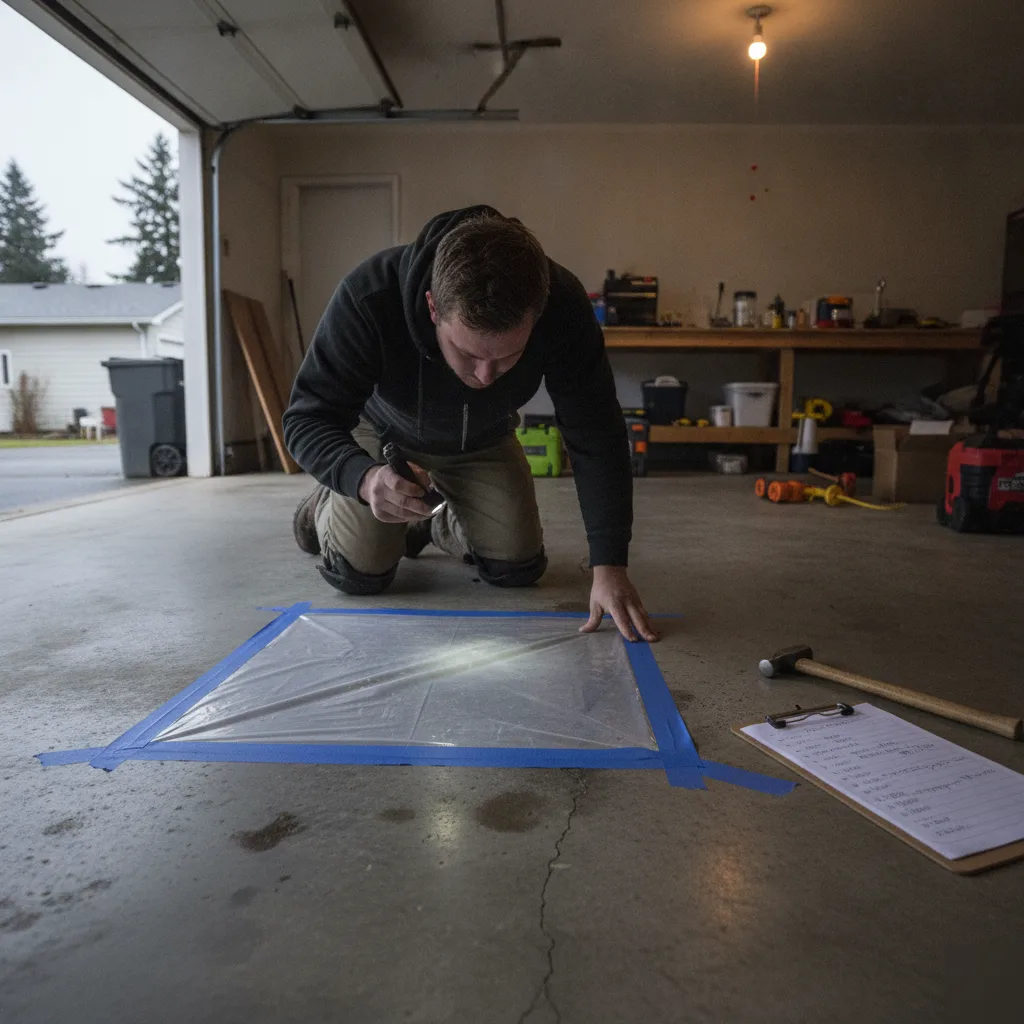
Get on your knees. Look hard. This matters:
- Cracks and spalling. Hairline cracks invite moisture. Bigger ones need proper concrete crack repair before we touch any coating.
- Old coatings or sealers. Water still beads up? Something's on there. Epoxy won't stick to a sealed surface, plain and simple.
- Oil and chemical stains. Years of parking cars means deep petroleum. Those spots will always fight the epoxy.
- Moisture. Wet spots, white mineral deposits, or a damp smell all mean water is moving up through that concrete.
We see this mistake a lot. Just last month, a homeowner near the Sullivan Road corridor had bubbles appear on their DIY epoxy floor coating after only a few weeks. Their garage slab had no vapor barrier. Moisture was wicking up. Surface prep alone won't fix constant moisture. You have to handle the water first. It's a common issue.
The Simple Moisture Test
Tape a 2-foot plastic square to the concrete. Flat. Leave it for 24 hours. See condensation underneath? You've got moisture. The Portland Cement Association points out that moisture vapor is a top reason coatings fail. This quick test saves big headaches. Here's the real deal for Spokane Valley garages. Our brutal winters drop temps below freezing. Then spring thaw brings water. Many older homes here, think the mid-century builds in the Valley, have slabs without modern moisture barriers. That doesn't kill your epoxy floor coating plans. It just means you need a plan for what you find. You need to know. After 11 years as a concrete contractor Spokane, I tell people this: the assessment makes or breaks a job. Spend 30 minutes looking at your floor. Poke soft spots. Pour water around. Watch how it soaks in. Check where the slab hits the wall for water signs. It's that important. Cracks wider than a quarter inch? Or active moisture? Those need professional help. Before any epoxy prep starts, that's a line we don't cross without checking. Our epoxy floor coating service always starts with a full assessment. Skipping it means peeling floors. We rebuild to last, not to peel. Solid slab? Dry? No old sealers? You're ready to roll. That assessment just confirmed it, and that's the goal. Know your floor., this is the part most people overthink, or don't think about at all.
Crack Repair and Surface Damage Must Be Fixed Before Epoxy Goes Down
Here's what 11 years of concrete work in Spokane Valley teaches you. Epoxy doesn't hide problems. It makes them obvious. Every crack, every spall, every pitted spot you ignore will show through your new floor. Within weeks. Sometimes days. Spokane's freeze-thaw cycles brutalize garage floors. Rain in the fall fills small cracks. Winter comes. Water freezes. It expands. Those hairline cracks become big damage. Come spring, you see spalling, flaking, chunks gone near the edges. We see this every year, all over the Sullivan Road corridor and the rest of Spokane Valley.
What Counts as Surface Damage
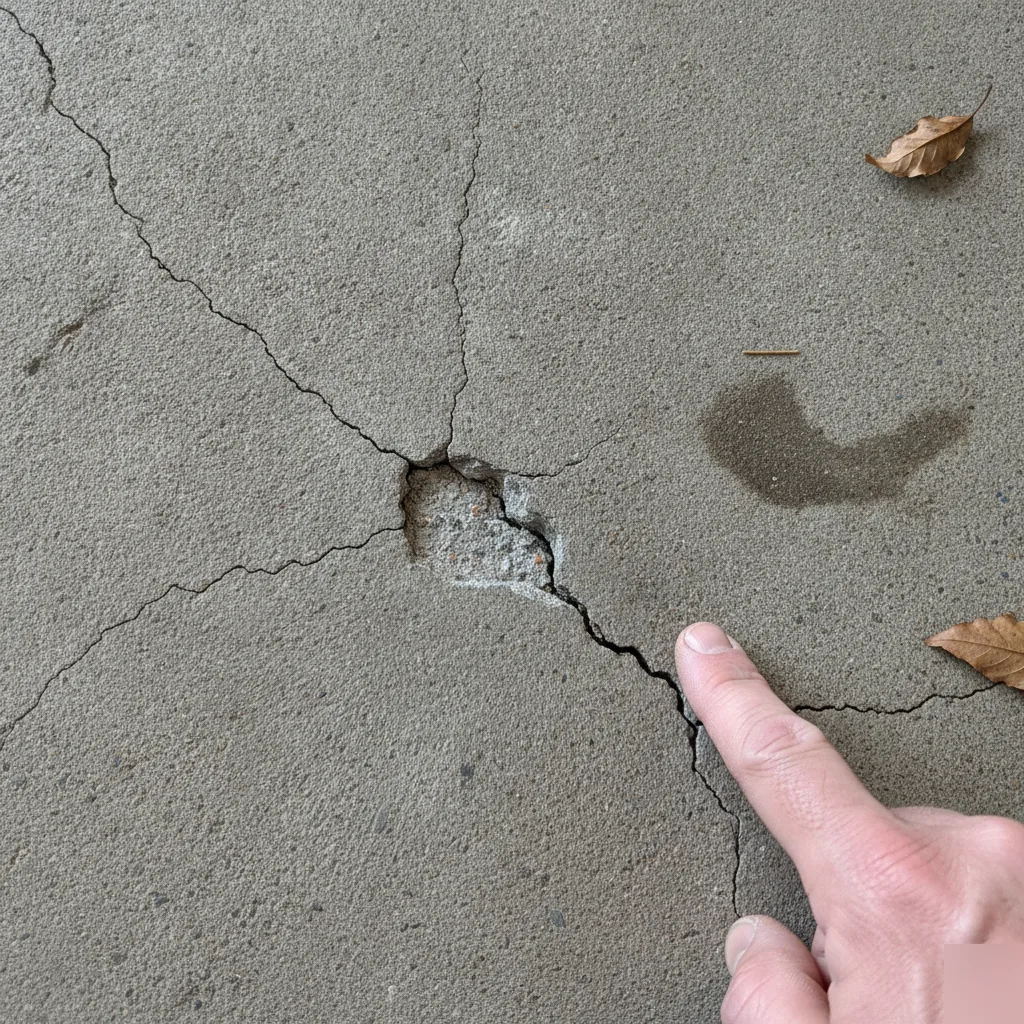
Not every mark needs the same fix. You need to know what you're dealing with. Before any epoxy garage floor installation starts. Check for these things:
- Hairline cracks. These are thin surface cracks, under 1/8 inch. They don't go deep.
- Structural cracks. These are wider. Press on them, they move. Settling or frost heave often cause this.
- Spalling and flaking. The top concrete layer has popped off. Rough, pitted spots are left.
- Joint damage. Crumbling concrete. Chipped spots along control or expansion joints.
- Old patch failures. Former repairs came loose or just crumbled.
Each type needs its own fix. Skip one, and it costs you later. Big time.
How to Handle Concrete Crack Repair the Right Way
For hairline cracks, a good concrete crack repair filler does the trick. Clean it out with a wire brush. Blow out the dust. Fill it with an epoxy-based filler. Let it cure. Then grind it flush. Simple. Bigger cracks need real work. We've seen plenty of Spokane Valley homeowners try hardware store caulk on quarter-inch cracks. That doesn't last. A lasting repair means chasing the crack with a grinder. This creates a clean channel. Fill it with a flexible polyurea or epoxy filler. Let it set for at least 24 hours. Then you can move on. Spalled areas are different. You can't just fill a shallow divot. Epoxy won't bond. All loose material must come off. Then you rebuild the spot. Use a concrete patching compound made for thin applications, it's a lesson we learned early on. Folks often miss this. The patch material matters a lot, as much as the epoxy itself. Old patches that failed? They all come out. Grinding over a bad patch just hides the problem. Underneath your new coating. You want durable, lasting repairs. Follow concrete surface repair best practices
means selecting the right patching material for each type of damage and allowing full cure time before moving to the next step. What happens if you skip this step? We've seen it often. The epoxy peels right along the crack. Often within one Spokane winter. Moisture pushes up. It creates bubbles. The whole floor ends up looking worse than it did. By the way, this is the kind of stuff we specialize in after surviving so many brutal winters ourselves. Serious structural cracking? Widespread spalling from years of Spokane winters? Your floor might need professional concrete repair first. Before any coating. That's not us pushing for work. That's just how concrete is engineered. A solid epoxy floor coating needs a solid slab below it. If you're unsure if your floor needs professional concrete crack repair, check our epoxy floor coating page. Reach out for a free estimate. A solid epoxy floor coating depends on the slab underneath. If your floor needs professional concrete crack repair first, check our epoxy floor coating page. Give us a call for a free estimate. Build it once, build it right.
Moisture Testing Is the Step Most DIYers Skip, and Regret
Moisture in concrete is tricky. You can't see it. Usually, you can't feel it. But it's there. And it will ruin an epoxy floor coating quicker than anything. We've pulled up plenty of failed epoxy in Spokane Valley garages. It peeled off in sheets. Big, ugly sheets, too. The concrete looked okay. But moisture pushed up from below. It broke the bond. Every time, the homeowner hadn't done a moisture test.
Why Spokane Valley Garages Are Especially at Risk
Spokane's freeze-thaw cycles are a problem. Snow melts. Water soaks into the ground. Then the ground freezes. This cycle pushes moisture through concrete slabs all winter and spring. Garages along the Sullivan Road corridor, and places like Greenacres, sit on water-retaining soil. Your slab looks dry on top. But moisture is coming up from below. Always. The Portland Cement Association confirms it: concrete is naturally porous. Water vapor moves through it. All the time. This isn't a defect, by the way. It's just concrete doing its job.
Two Simple Tests You Can Do
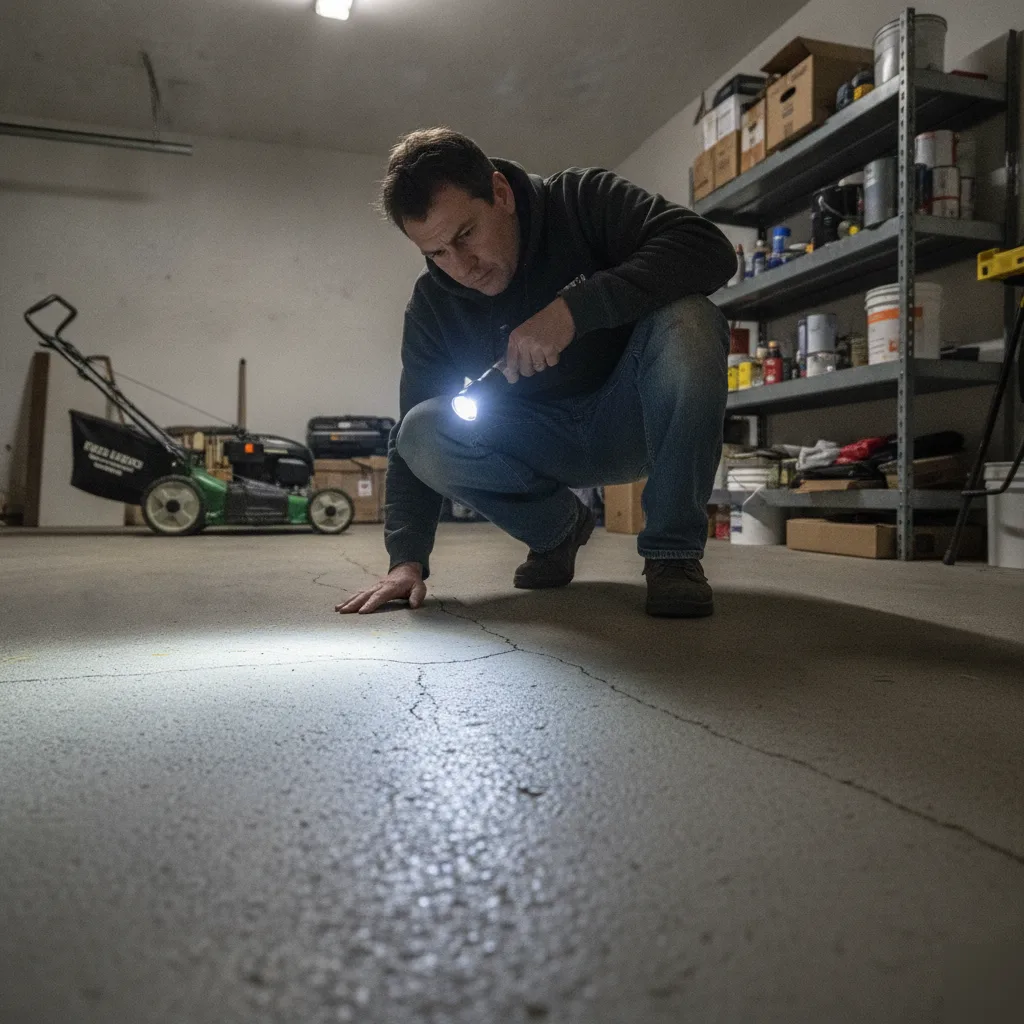
Before you even think about epoxy floor coating, do one of these tests:
- Plastic sheet test. Tape a 2-foot plastic square flat onto your garage floor. Use duct tape on all four sides. Seal it tight. Wait 24 hours. Pull it off. See condensation underneath? Or dark, damp concrete? You have a moisture problem. Simple.
- Calcium chloride test. This one is more exact. You put a small dish of calcium chloride under a sealed dome on the floor. After 72 hours, you weigh it. More weight means the concrete is releasing moisture vapor. Kits are easy to get at most hardware stores.
- Relative humidity probe. Professionals use this. A probe goes into a drilled hole. It reads humidity inside the concrete. ASTM International recommends this for the most accurate numbers.
That plastic sheet test takes five minutes. No excuse to skip it.
Frequently Asked Questions
Why does Spokane Valley's climate make garage floor prep harder than in other regions?
Spokane Valley's freeze-thaw cycles are brutal on concrete slabs. Water seeps into small cracks in fall. Then winter freezes it. Ice expands and breaks the concrete apart. By spring, you see spalling and bigger cracks. Many older homes here — especially mid-century builds in the Valley — also lack modern moisture barriers under the slab. That means moisture wicks up from below. You have to test for both surface damage and moisture before any epoxy goes down.
What is the most common mistake homeowners make when prepping a garage floor for epoxy?
Skipping the surface assessment is the biggest mistake. Most people go straight to grinding or coating without checking for old sealers, oil stains, cracks, or moisture. Epoxy will not stick to a sealed surface. It will bubble over moisture. It will peel along ignored cracks — often within one Spokane Valley winter. Spending 30 minutes on a real assessment before you touch any tools saves you from redoing the whole floor later.
When should I call a professional instead of prepping my garage floor myself?
Call a professional when you find active moisture, structural cracks wider than a quarter inch, or widespread spalling. These issues go beyond simple filler work. Active moisture needs a drainage or vapor barrier solution first. Structural cracks may mean the slab is settling or shifting. Grinding over these problems just hides them. Our epoxy floor coating service always starts with a full assessment so nothing gets missed before the coating goes down.
How do I know if my garage floor has moisture problems before applying epoxy?
The plastic sheet test is your best tool. Tape a 2-foot square of plastic flat to the concrete. Leave it for 24 hours. If you see condensation underneath, moisture is moving up through the slab. Also look for white mineral deposits, damp smells, or wet spots near the walls. The Portland Cement Association identifies moisture vapor as a top reason coatings fail. Fix moisture issues before any surface prep or epoxy application begins.
Can I use regular hardware store caulk to fill cracks before epoxy coating?
No — regular caulk will not hold up under epoxy. It stays flexible and soft, so the epoxy layer above it can crack or separate. For hairline cracks, use an epoxy-based filler. For wider cracks over 1/8 inch, chase the crack with a grinder first to create a clean channel. Then fill it with a polyurea or epoxy filler and let it cure fully. Using the wrong material is one of the most common reasons DIY epoxy floors fail early.
Does old concrete sealer on my Spokane Valley garage floor affect epoxy adhesion?
Yes — old sealer is one of the biggest adhesion killers. If water still beads up on your floor, a sealer is there. Epoxy cannot bond to a sealed surface, no matter how well you grind. You need to test the whole floor, not just one spot. Sealers applied years ago can be uneven. Some areas may be bare concrete while others still have a full coat. Every sealed section must be fully removed before any epoxy prep continues.
Ready to Experience the Concrete Revival Difference?
Complete Service Area Coverage
- Spokane and Spokane Valley
- Coeur d'Alene metro area
- Deer Park and Newport
- Liberty Lake and Otis Orchards
- Cheney and Medical Lake
- Post Falls and Rathdrum