Driveway Sealing & Repair East Spokane Valley
Saltese Uplands sits at the far eastern edge of Spokane Valley, where the subdivisions thin out and the conservation area begins. The homes out here have longer driveways than anything you'll find closer to Sullivan Road. More surface area means more concrete taking a beating every winter, more expansion joints shifting on hilly terrain, more cracks to watch.
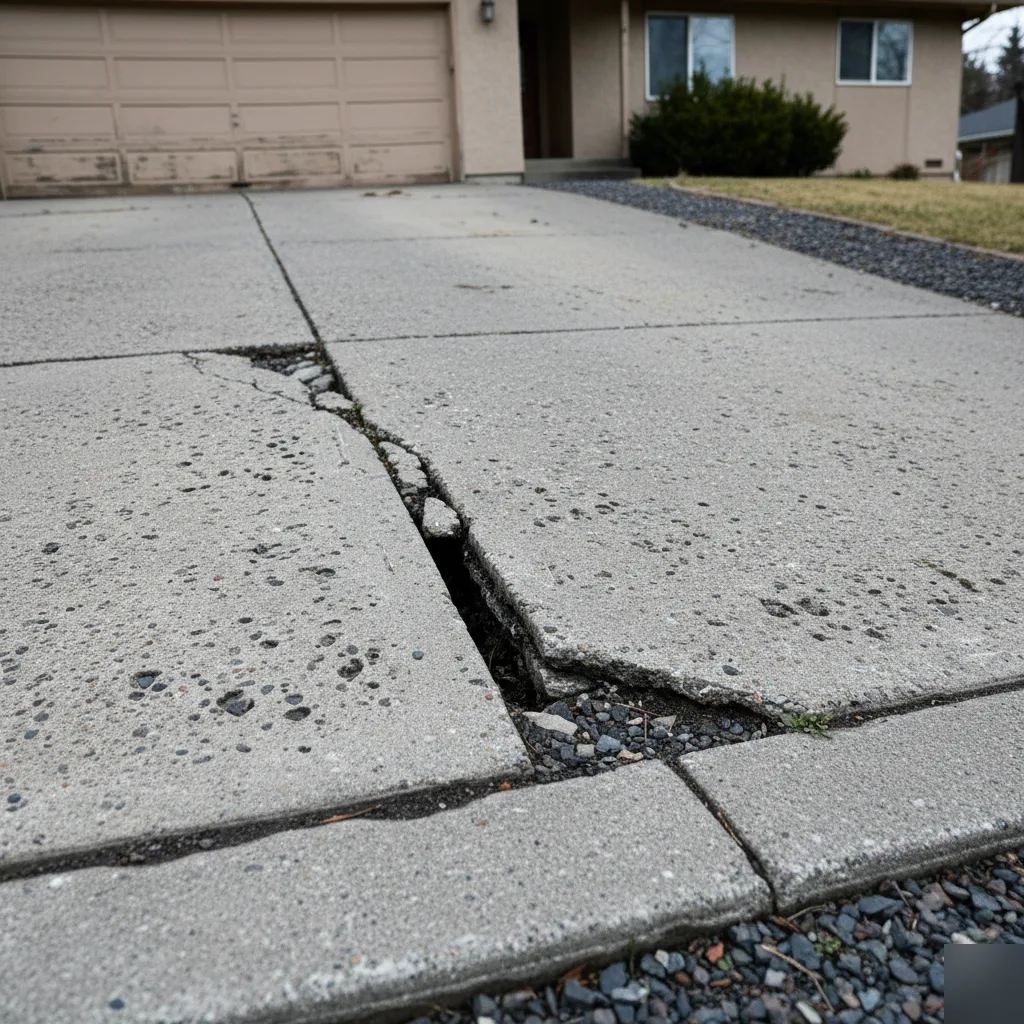
We handle driveway sealing and repair in East Spokane Valley year-round. Properties out this way keep us busy. They tend to sit on slightly elevated ground where water doesn't drain the way you'd expect. It pools in low spots along the driveway, freezes overnight, and pries open hairline cracks by spring. We see it constantly.
Here's what makes driveways near the Saltese Uplands different from the rest of the Valley:
- Longer pours with more expansion joints that shift over time on the hilly terrain
- Gravel shoulders along driveway edges that erode and undermine concrete slabs
- Exposure to wind off the open conservation land, drying out sealant faster than sheltered neighborhoods
- Wildlife traffic from the uplands crossing driveways, cracking edges where concrete meets soft ground
Most single-family homes near Saltese Uplands were built during Spokane Valley's eastward push. Newer construction doesn't mean the concrete holds up better. It just means the first round of freeze-thaw damage is showing up right on schedule.
A typical call from this area goes like this. A homeowner notices a crack running across the apron where the driveway meets the garage slab. They ignore it through summer. By January, water's gotten underneath, frozen, and now the crack is a quarter-inch wide with a lip you can trip on. That's a concrete crack repair job we do weekly out here. Catching it early with proper sealing would've kept the repair small.
Driveway sealing isn't glamorous work. But a good seal on a driveway this far east buys you years before the surface starts spalling. We use products built for this climate, not box-store sealers that break down after one hard winter.
The homes along Henry Road and out toward Barker Road see some of the worst driveway damage in East Spokane Valley. Those streets carry heavier traffic than the quiet cul-de-sacs deeper in the neighborhood. Vibration from trucks heading toward the Liberty Lake corridor doesn't help.
Driveway repair out here isn't just about cracks. We see settled slabs, chipped edges where snowplows clip the concrete, and surface scaling from years of de-icer use. Each problem has a fix. Concrete resurfacing works for surface damage. Concrete crack repair handles the structural issues. Sealing protects whatever work gets done so it lasts through the next ten winters. Build it once, build it right.
We're out in this part of East Spokane Valley every week during the busy season. The neighborhood's grown a lot, the driveways are aging together, and the repair calls keep coming in clusters. That's just how concrete works in Spokane Valley. Everything poured in the same era fails in the same era.
If your driveway near Saltese Uplands has cracks wider than a pencil, surface flaking, or uneven slabs, don't wait for another freeze cycle to make it worse.
How Our Team Reaches the Saltese Uplands Area
Our shop is at 16823 E Sprague Ave, so getting out to the eastern edge of the valley is a straight shot. We're on these roads constantly. Every turn is by memory.
Here's how we get to you:
- Head east on E Sprague Ave from our shop past the Sullivan Road corridor.
- Continue on Sprague past Barker Road, where the commercial strips thin out and the lots get bigger.
- Turn south toward the Saltese Uplands area near where Sprague meets the eastern edge of Spokane Valley.
- From there we cut through the residential streets to reach your driveway directly.
The whole drive runs about 12 minutes on a clear morning. During afternoon traffic near Sullivan, add five minutes. That's it.
We've done driveway sealing and repair in East Spokane Valley enough times to know the small stuff. Like the fact that some streets near the Saltese Uplands sit lower than the surrounding terrain, so water pools on driveways after spring melt. Or that the newer homes out this direction tend to have wider double-car driveways with expansion joints that crack first. We notice these things because we're here regularly, not once in a while.
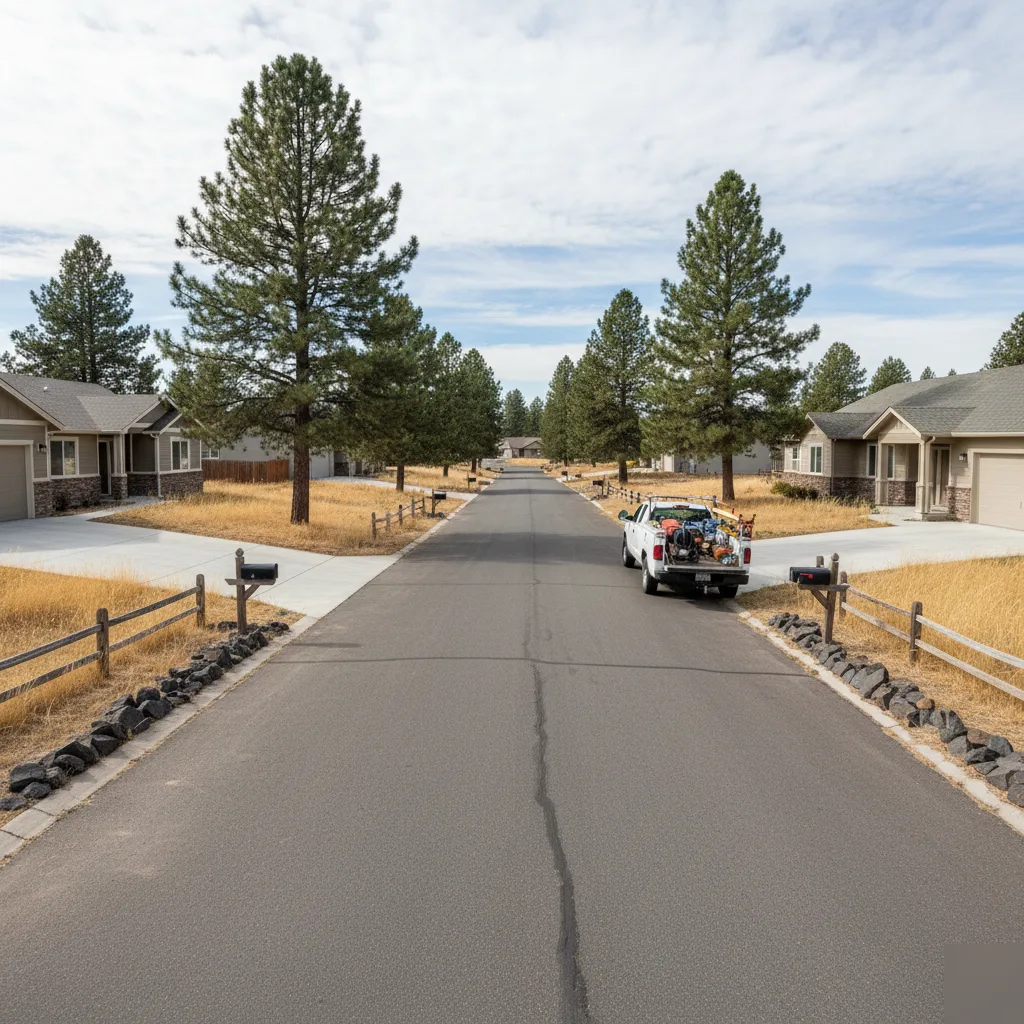
Because we're so close, scheduling is simple. No half-day buffer for drive time. If your concrete needs attention before the next freeze hits, we can usually get eyes on it within a day or two. That matters in Spokane Valley's climate, a crack that looks small in September becomes a real problem by January when ice pushes it apart.
The eastern stretch of Spokane Valley has its own character. Lots are bigger out here. Driveways are longer. Some properties along the roads heading toward Saltese Lake have gravel transitions that meet concrete slabs at odd angles. Those seams take a beating every winter.
But the proximity works both ways. If you'd rather swing by our location on Sprague to talk about your project in person, you're only a few minutes heading west. Sprague Ave connects everything out here.
Twenty years of working in Spokane Valley means we don't rely on GPS to find your house. Where Barker turns residential. The developments east of Progress Road. Which streets flood in March. That kind of local knowledge doesn't show up on a map, but it shows up in how we approach your driveway repair. We plan around the conditions your specific slab deals with every season.
If you're out near the Saltese Uplands and want a free estimate on concrete crack repair or driveway resurfacing, give us a call. We're close, your neighborhood, and we can get to you.
What East Spokane Valley's Older Concrete Slabs Reveal Over Time
Saltese Uplands driveways tell a story if you know how to read them. We've been working concrete in this part of Spokane Valley for over 20 years, and the slabs out here talk loud.
Most homes on this side of the valley sit on larger lots compared to neighborhoods closer to the Sullivan Road corridor. That extra space means longer driveways. Longer driveways mean more surface exposed to Spokane Valley's brutal freeze-thaw cycles. And more surface means more places for problems to start.
Here's what we see on a typical call out near Saltese Uplands:
- Hairline cracks that spread into full spiderweb patterns after two or three winters
- Surface spalling along edges where snowmelt pools and refreezes nightly
- Joint separation where original control cuts were spaced too far apart for the slab length
- Faded, chalky surfaces where the original seal wore off years ago and nobody reapplied
- Settling near garage aprons caused by poorly compacted fill under newer construction
That last one shows up constantly in East Spokane Valley. A lot of the development out this way happened in phases. Some homes went up on ground that wasn't given enough time to settle before the pour. You can spot it from the street, a dip right where the driveway meets the garage slab.
Freeze-thaw is the real villain here. Spokane Valley can swing 50 degrees in a single day during late February. Water seeps into a tiny crack during an afternoon thaw. That night it freezes, expands, and pushes the crack wider. Repeat that cycle dozens of times between November and March. By spring, a crack you could've sealed with a tube of filler now needs concrete crack repair and possibly resurfacing. We've watched this play out on the same streets for two decades.
We see this pattern every year on streets branching off Barker Road heading toward the uplands. Homeowners notice the damage in April. The damage started in October.
The soil composition matters too. East Spokane Valley sits on a mix of glacial till and sandy loam. It drains better than the clay-heavy ground on Spokane's north side, but it still shifts. Slabs poured without proper base prep move with the ground. That movement cracks concrete. Period.
One thing we run into a lot on these eastern properties is homeowners who sealed their driveway once when the house was new, then never touched it again. Concrete sealing isn't a one-and-done job. A good seal lasts a few years in this climate. After that, moisture gets back in and the cycle starts over. Driveway sealing and repair in East Spokane Valley isn't optional maintenance, it's how you keep a slab from becoming a full replacement project.
And here's what most people don't realize. A slab that looks fine from ten feet away can be failing underneath. We'll kneel down on a driveway near the uplands and press a screwdriver into what looks like solid concrete. It crumbles. The surface held its shape but lost its density. That's delamination, the top layer separating from the base. Driveway resurfacing catches it before the whole thing caves.
Older slabs in this part of Spokane Valley weren't poured with modern air-entrained mixes. They're denser but more brittle. They don't flex with ground movement the way newer pours do. So they crack cleaner and deeper. Those deep cracks let water reach the subgrade, the base erodes, and now you've got a slab floating on nothing.
But catching it early changes everything. That's the whole point.
Frequently Asked Questions
Do you actually come out to the Saltese Uplands area, or is it too far east?
We're out near Saltese Uplands every week during busy season — it's not a special trip for us. Our shop sits on E Sprague Ave, so heading east toward the Saltese Uplands area is a straight shot we drive constantly. On a clear morning it runs about 12 minutes. We can usually get eyes on your driveway within a day or two when timing matters before a freeze.
Is there a better time of year to schedule driveway sealing for homes out near Saltese Uplands?
Schedule sealing before September if you can — once freeze cycles start in Spokane Valley, sealant can't cure properly. Homes near Saltese Uplands sit on slightly elevated ground with longer driveways and more expansion joints, so getting sealed before fall protects the most surface area. A crack that looks small in September becomes a quarter-inch problem by January when ice gets underneath and pushes it apart.
Why do driveways near the Saltese Uplands seem to crack faster than other parts of Spokane Valley?
The elevated, hilly terrain near Saltese Uplands causes water to pool in unexpected low spots along driveways instead of draining cleanly. That pooled water freezes overnight and pries open hairline cracks by spring. Add wind off the open conservation land drying out sealant faster, plus gravel shoulders that erode and undermine concrete edges, and you get damage that builds up quicker than in sheltered neighborhoods closer to Sullivan Road.
Ready to Experience the Concrete Revival Difference?
Complete Service Area Coverage
- Spokane and Spokane Valley
- Coeur d'Alene metro area
- Deer Park and Newport
- Liberty Lake and Otis Orchards
- Cheney and Medical Lake
- Post Falls and Rathdrum