Driveway Resurfacing vs. Replacement: Which Option Is Better for Your Home in Spokane Valley
Understanding the Difference Between Driveway Resurfacing and Replacement
Your driveway's cracking. Maybe it's got some low spots where water pools after a Spokane Valley rainstorm. So now you're wondering: do I fix what's there, or start over? That's the core question behind driveway resurfacing vs. replacement, and the answer depends on what's happening beneath the surface.
Let's break it down simply.
Resurfacing means adding a fresh layer on top of your existing driveway. Think of it like putting a new coat of paint on a wall that's still solid. The base stays. A new layer of or concrete goes over it, usually one to two inches thick. Your driveway looks brand new, and the structural foundation underneath keeps doing its job.
Replacement is a full tear-out. The old driveway gets removed completely. Crews dig down to the sub-base, compact the soil, lay new gravel, and pour or pave from scratch. It's a bigger project with more disruption to your property. But sometimes it's the only real fix.
We see homeowners mix these up all the time. Someone calls thinking they need a full replacement when resurfacing would handle the problem perfectly. Or the opposite happens. They want a quick resurface, but the base has failed and no top layer will hold.
Here's a quick way to think about it. If your driveway has surface cracks, minor spalling, or just looks worn out, concrete driveway resurfacing is likely the right move. The foundation is still intact. You're dealing with cosmetic and surface-level wear. Most driveways in the Greenacres and Dishman areas that were poured in the early 2000s fall into this category. They've aged, but the bones are good.
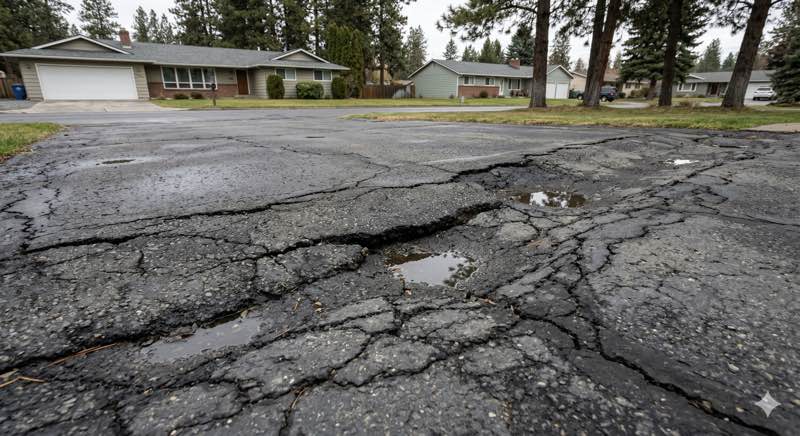
But what if you've got deep cracks that go all the way through? Sections that have sunk or heaved? Large areas where the surface has broken into chunks? That usually means the sub-base has shifted or eroded. And no amount of resurfacing will fix a bad foundation. You'd just be covering up a problem that keeps getting worse.
One thing most people don't realize until it's too late: Spokane Valley's freeze-thaw cycles put serious stress on driveways every winter. Water seeps into small cracks, freezes, expands, and pushes those cracks wider. According to the Portland Cement Association, repeated freeze-thaw exposure is one of the leading causes of concrete surface deterioration in northern climates. That's exactly what we deal with here.
So the real question isn't which option is "better." It's which option matches the actual condition of your driveway right now.
Scenario. A homeowner near Sullivan Road notices their driveway has a web of hairline cracks and some fading. No heaving. No soft spots. That's a textbook resurfacing candidate. But their neighbor two doors down has a concrete driveway with a four-inch drop where one slab has sunk. Tree roots pushed the sub-base out of alignment years ago. Resurfacing that driveway would be a waste. It needs replacement.
The distinction matters because choosing wrong costs you time and money. A resurface over a failing base won't last. And tearing out a driveway that only needed a new top layer means unnecessary work.
Not sure which situation fits yours? That's completely normal. The condition of the sub-base isn't always obvious from the surface. A professional assessment takes the guesswork out of it. If you're trying to figure out your next step, our driveway services page walks you through what we look at during an evaluation and how we help Spokane Valley homeowners make the right call.
Signs Your Spokane Valley Driveway Needs Resurfacing Instead of Full Replacement
Not every cracked driveway needs to be torn out. That's the biggest misconception we run into. Homeowners see surface damage and assume the worst. But in many cases, what you're looking at is a resurfacing job, not a full replacement.
So how do you tell the difference?
Start by looking at the overall structure. If your driveway's base is still solid and level, resurfacing is almost always the better path. The base is the compacted gravel and soil underneath your concrete or. It's doing the heavy lifting. When that foundation stays intact, a fresh surface layer bonds right to it and gives you years of reliable use.
Here are the kinds of damage that typically point toward resurfacing:
- Hairline cracks or spider-web cracking across the surface
- Minor pitting and rough texture from freeze-thaw cycles
- Fading, discoloration, or worn-out sealant
- Small shallow spalling where the top layer flakes off
Spokane Valley winters are tough on driveways. Temperatures swing from below freezing to above 40 degrees sometimes in the same week. That cycle forces moisture into tiny surface cracks. The water freezes, expands, and chips away at the top layer over time. We see this pattern constantly in neighborhoods like Greenacres and along the Sprague Avenue corridor. The surface looks rough, but the foundation underneath hasn't budged.
That's a textbook resurfacing candidate.
Now compare that to a driveway with deep structural cracks wider than a quarter inch. Or one where entire sections have sunk or heaved unevenly. Those problems mean the base has failed. Resurfacing over a broken foundation is like painting over water damage on a wall. It looks fine for a month, then the same problems come right back.
Here's a quick field test most people don't know about. Walk your driveway slowly and pay attention to drainage. Does water pool in specific spots? Small, consistent puddles suggest low areas where the base has settled. If the pooling is minor and limited to one area, resurfacing with a slight grade correction can fix it. But if you've got standing water across multiple sections, the base likely needs to be rebuilt.
Age matters too, but not the way most people think. A 15-year-old driveway with cosmetic wear is a great resurfacing candidate. A 10-year-old driveway with deep heaving and root damage might need full replacement. It's about condition, not the calendar.
One scenario we see often in Spokane Valley: a homeowner had their driveway installed on a well-prepared base, but they skipped regular sealing over the years. The surface deteriorated while the structure stayed strong. A new layer of or a concrete overlay restores the look and function without the cost and disruption of ripping everything out.
And here's something worth remembering. Resurfacing is far less invasive. Your landscaping stays in place. Your garage access comes back faster. The project timeline is shorter by days, sometimes a full week.
If you're noticing surface-level wear on your driveway but everything still feels solid underfoot, you're probably in great shape for resurfacing. Our driveway services page walks you through the full process and helps you figure out the right fit for your situation.
The bottom line: don't let cosmetic damage trick you into a bigger project than you actually need. Get a proper assessment of your base first. That one step saves homeowners thousands of dollars and weeks of hassle.
When Full Driveway Replacement Is the Smarter Long-Term Choice
Sometimes a fresh coat won't fix what's broken underneath. That's the honest truth we share with homeowners every week.
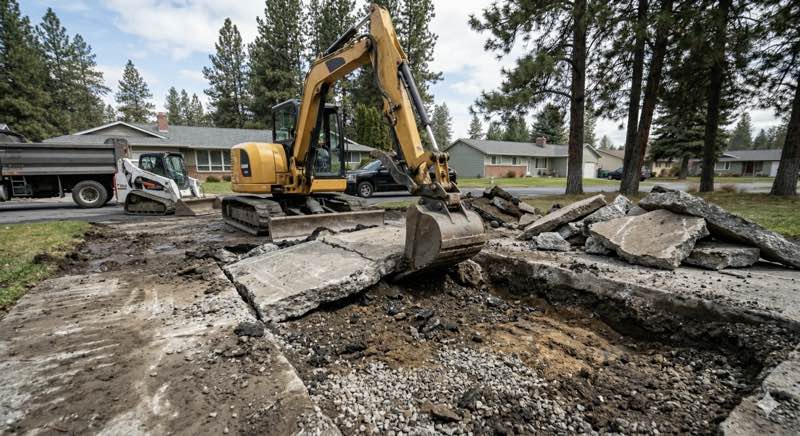
Full driveway replacement means removing the existing surface down to the base, repairing or rebuilding the foundation layers, and pouring a completely new slab or surface. It's more involved than resurfacing. But there are situations where it's the only option that actually makes sense.
So how do you know when you've crossed that line?
Start by looking at the damage. If your driveway has deep cracks wider than half an inch, large sections that have sunk or heaved, or a base that's visibly crumbling, resurfacing won't hold. A new layer on top of a failing foundation is like painting over rotten wood. It looks fine for a few months. Then the same problems come right back through.
We see this mistake all the time in older neighborhoods around Spokane Valley, especially near the Dishman area and parts of East Sprague. Homes built decades ago often have driveways sitting on compacted soil that's shifted over the years. Freeze-thaw cycles here are relentless. The Spokane Valley area regularly sees winter temperatures drop well below freezing, and that repeated expansion and contraction breaks apart concrete and from the inside out. According to the Portland Cement Association, concrete exposed to repeated freeze-thaw cycles without proper air entrainment can lose structural integrity much faster than in milder climates.
Age matters too. A concrete driveway that's 25 to 30 years old has likely reached the end of its useful life. driveways typically max out around 15 to 20 years. If yours is in that range and showing widespread damage, replacement gives you a clean slate with modern materials and proper drainage built in from the start.
Here's something most people don't realize until it's too late. A badly damaged driveway can affect your home's drainage. Sunken areas pool water near your foundation. Cracked sections let moisture seep into the ground right next to your house. Over time, that leads to basement moisture issues and even foundation concerns. Replacement lets your contractor correct the grading and slope so water flows away from your home the way it should.
Think about a homeowner on a quiet street near Greenacres. Their concrete driveway had been patched three times in five years. Each repair lasted one winter before new cracks appeared. The real problem was a failed sub-base that no amount of surface work could fix. Once they committed to a full replacement with a properly prepared gravel base, the new driveway performed beautifully through its first Spokane Valley winter without a single issue.
Replacement also makes sense if you're changing the layout. Want to widen your driveway? Add a turnaround area? Switch from to concrete? These changes require starting from scratch.
And if you're planning to sell your home in the next few years, a brand-new driveway adds real curb appeal. Buyers notice. A crumbling driveway signals deferred maintenance, and that can cost you during negotiations.
The bottom line is straightforward. If the damage goes deeper than the surface, so should the fix. Replacement costs more upfront, but it solves the root problem instead of covering it up. You get a driveway built for Spokane Valley's climate with a foundation designed to last.
Not sure which category your driveway falls into? Our driveway resurfacing page walks you through what we look for during an assessment and how we help you pick the right path forward.
Frequently Asked Questions About Driveway Resurfacing
How do I know if my Spokane Valley driveway needs resurfacing or full replacement?
Look at the cracks and check for any sinking or heaving. If you see hairline cracks, surface pitting, or fading, resurfacing is likely the right call. But if slabs have sunk, cracks go all the way through, or sections have broken apart, the base has probably failed. That means replacement. Spokane Valley's freeze-thaw winters speed up both types of damage, so catching it early matters. Our driveway services page walks through exactly what to look for.
Is it a mistake to resurface a driveway that really needs replacement?
Yes, and it happens more than you'd think. Resurfacing over a failed base is one of the most common mistakes homeowners make. The new layer looks great for a few weeks, then the same cracks and low spots come right back. You end up paying twice. If your driveway has deep structural cracks, sunken sections, or soft spots underneath, replacement is the only fix that will actually hold.
Can a driveway near Greenacres or along Sprague Avenue be resurfaced even if it's 15 years old?
Age alone doesn't decide it. A 15-year-old driveway with surface wear but a solid base is still a strong resurfacing candidate. Many driveways in the Greenacres and Sprague Avenue areas that were poured in the early 2000s fall into this category. The surface looks rough from years of freeze-thaw wear, but the foundation is still intact. What matters most is the condition of the base, not the number of years on the driveway.
Does Spokane Valley's climate affect how long a resurfaced driveway lasts?
Yes, it does. Spokane Valley gets hard freeze-thaw cycles every winter. Water gets into small cracks, freezes, expands, and makes those cracks bigger. According to the Portland Cement Association, repeated freeze-thaw exposure is a leading cause of concrete surface wear in northern climates. A properly bonded resurface layer holds up well here. But if the base has already shifted from years of this cycle, no top layer will stay put for long.
When should I call a professional instead of trying to fix my driveway myself?
Call a professional when you're not sure what's causing the damage. Surface cracks and minor spalling look simple, but the real issue might be underneath. A failed sub-base, tree root damage, or poor drainage won't show up until you dig in. Getting a professional assessment saves you from guessing wrong. If you pick the wrong fix, you waste money on a solution that won't last.
What's the easiest way to test if my driveway base is still good?
Walk your driveway slowly after it rains and watch where water pools. Small puddles in one spot can often be corrected during resurfacing with a slight grade fix. But standing water across several sections usually means the base has settled in multiple places. That points toward replacement. You can also press on any cracked areas with your foot. If the surface flexes or feels soft, the base underneath has likely broken down.
Ready to Experience the Concrete Revival Difference?
Complete Service Area Coverage
- Spokane and Spokane Valley
- Coeur d'Alene metro area
- Deer Park and Newport
- Liberty Lake and Otis Orchards
- Cheney and Medical Lake
- Post Falls and Rathdrum