Driveway Resurfacing Cost in 2026: What to Expect in Spokane Valley
Driveway resurfacing cost depends mostly on what's under the surface, not the new top coat. Slab condition, crack repair, prep work, and your finish choice drive the number. In Spokane Valley, freeze-thaw damage is usually the biggest wild card.
What Really Drives Driveway Resurfacing Cost
Most folks think driveway resurfacing cost comes down to square footage. Size matters, sure. But it's rarely the thing that swings a quote the most.
The real driver is the slab you already have. A new overlay is only as good as the concrete it bonds to. So before we ever talk finish, we look hard at what's going on underneath.
Here's what moves the number on a driveway resurfacing job:
- Slab condition. Spalling, flaking, and surface pitting all need cleanup before anything new goes down.
- Cracks and settling. Hairline cracks are a quick fix, but sunken or heaved sections may need repair first.
- Surface prep. Grinding, pressure washing, and removing old sealer or oil stains take real time.
- Finish choice. A plain gray overlay is simpler than stamped, colored, or decorative patterns.
- Access and layout. Long, sloped, or curved driveways take more labor than a flat rectangle.
Notice how most of that list is prep. That's not an accident.
Spokane Valley winters are hard on concrete. Water soaks into tiny pores, freezes overnight, and expands. Then it thaws the next afternoon and does it all over again. We get dozens of those cycles some winters. Add road salt and deicer tracked in off Sullivan Road or Pines, and the top layer starts to scale and pop loose.
That surface damage has to come off. If it doesn't, your new overlay sits on weak, crumbly concrete and peels within a season or two. We've seen this failure a hundred times on driveways someone else rushed.
So why do two quotes for the same driveway look so different? Usually one contractor priced real prep and the other didn't.
Here's a job that sticks with us. A homeowner near the Valley called after getting a cheap quote somewhere else. Their driveway had flaking along the garage apron and a wide crack running toward the street. The other bid skipped crack repair entirely, it just planned to coat right over it. That crack would've reflected through the new surface by spring. We repaired it, ground the apron, then resurfaced. More work up front. Far fewer headaches later.
Finish choice is the other big lever, and it's the fun one. A basic broom-finish overlay gives you a clean, grippy surface for icy mornings. Stamped or colored concrete looks great but takes more steps and more skilled hands. Neither one is wrong. It just depends on what you want your driveway to look like for the next decade.
And don't forget sealing. A good concrete sealer helps keep water and deicer out of the new surface. In this climate, we treat it as part of doing the job right, not an upsell.
One more thing most homeowners don't realize until it's too late. Waiting makes driveway resurfacing cost more, not less. Every winter you put it off, freeze-thaw opens cracks wider and loosens more surface. A driveway that only needed resurfacing this year might need full repair work in two or three.
After 11 years of fixing Spokane driveways, we can usually spot the cost drivers in about ten minutes on site.
Why the Base Matters More Than the Surface
Here's what most homeowners don't want to hear. A new surface can't fix a bad base.
Your driveway sits on a layer of packed gravel and soil. That's the base. Driveway resurfacing adds a thin layer that bonds to your old concrete. It looks brand new. But it's only as solid as what's under it.
If the slab moves, the overlay moves with it.
Spokane Valley winters are hard on a base. Water sneaks under the slab through cracks and open edges. It freezes, it expands, it pushes the concrete up. Then it thaws and everything drops back down. That cycle repeats over and over from fall into spring. Over time it washes out fines and leaves empty pockets under the slab. Hollow spots. Your concrete is now bridging air.
We've seen this play out a hundred times. A homeowner off the Sullivan Road corridor had a sunken corner by the garage. Someone else resurfaced right over it. It looked great for about one season, the cracks came right back through the new finish. The overlay didn't fail. The base did.
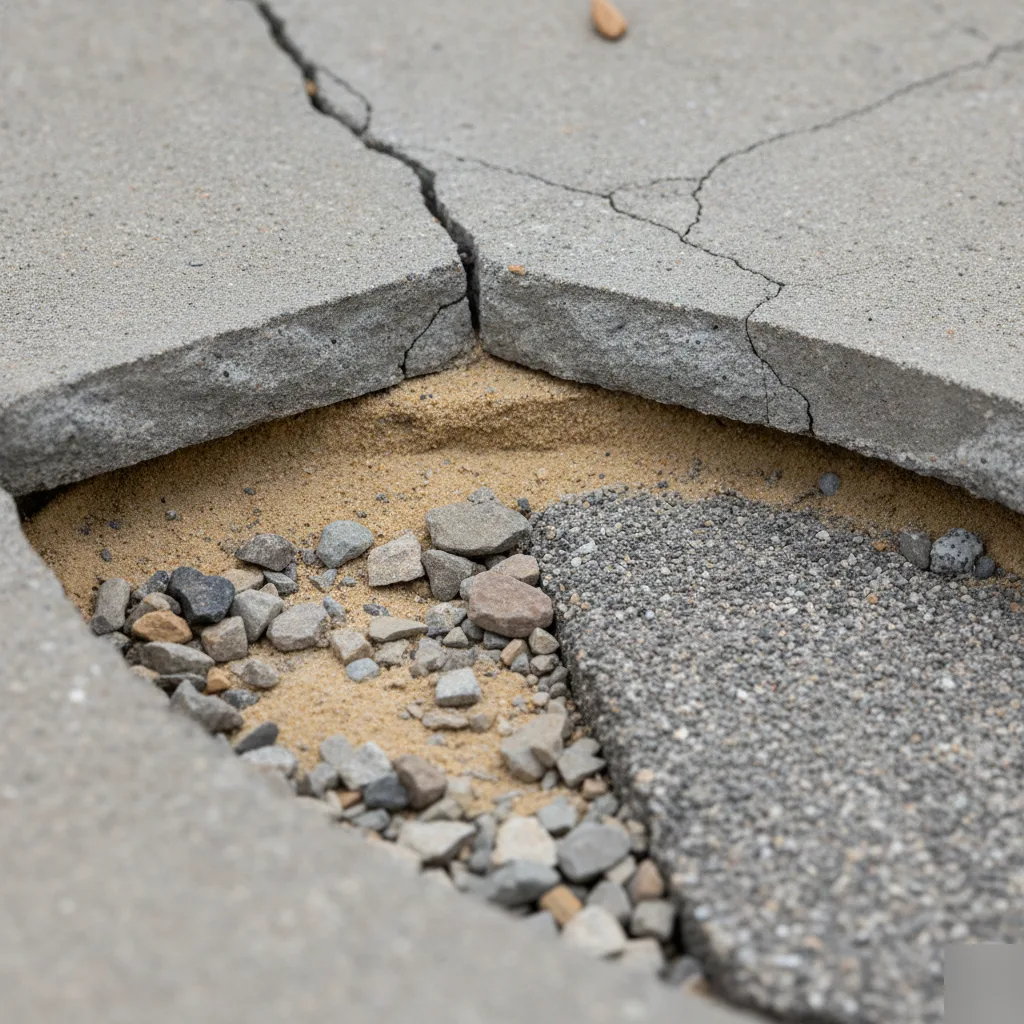
So how do you know if your base is the real problem? Walk your driveway and look for these signs.
- Slabs that sit at different heights and catch your toe or your snow shovel
- Cracks wide enough to slide a coin into
- Low spots where water pools after rain or snowmelt
- Sections that rock under your car or sound hollow when you tap them
- Crumbling edges near the lawn, a downspout, or a sprinkler head
One or two hairline cracks? Usually fine. A driveway full of the signs above is a different story.
This is where base condition hits your cost. A stable base makes driveway resurfacing the smart, budget-friendly path. You keep the old slab and just renew the top. But a failing base adds work. Some sections may need concrete repair before any overlay goes down. And if the damage runs deep, a full tear-out might make more sense than resurfacing at all.
Most homeowners wait too long. Every winter of water under the slab makes the fix bigger.
When we come out, we don't start by talking finishes. We start at the ground. We tap the slab and listen for hollow spots. We check where your downspouts dump water. We look at how the driveway drains toward the street or the yard. We could talk about compaction all day - But the short version is simple. We tell you straight if your slab is a good candidate for driveway resurfacing. If it's not, we'll say so before you spend a dime on an overlay that won't last. After 11 years of Spokane winters, we'd rather lose a job than watch a finish crack in one season.
Fix the base first. The surface will thank you.
Resurfacing vs. Replacing: Which Fits Your Driveway
We get this question on almost every estimate. Can I just resurface it, or does the whole thing have to go?
The answer lives under the surface. Driveway resurfacing bonds a fresh layer to your old slab. It fixes how the concrete looks and seals up surface wear. But it can't fix a slab that's broken, sinking, or heaving. Resurfacing handles the skin, replacing handles the bones.
A new top layer is only as good as the concrete under it.
So how do you tell which one you've got? Start with the signs. These usually point to a driveway that's a good fit for resurfacing:
- Flaking or scaling on top, often from winter de-icers
- Hairline cracks that haven't grown in a season or two
- Faded, stained, or tired-looking concrete
- A solid slab that still sheds water away from your house
Now the other side. These signs usually mean replacement, or at least replacing the bad sections:
- Cracks wide enough to slide a coin into
- Panels that have sunk or lifted and left a trip edge
- Water pooling against your garage or foundation
- Crumbling edges where the base has washed out
Spokane Valley winters make this call matter more. Our temps swing above and below freezing over and over. Water gets into a crack, freezes, and pushes the slab apart. A slab that moves every winter will crack any overlay you put on it. Every single time.
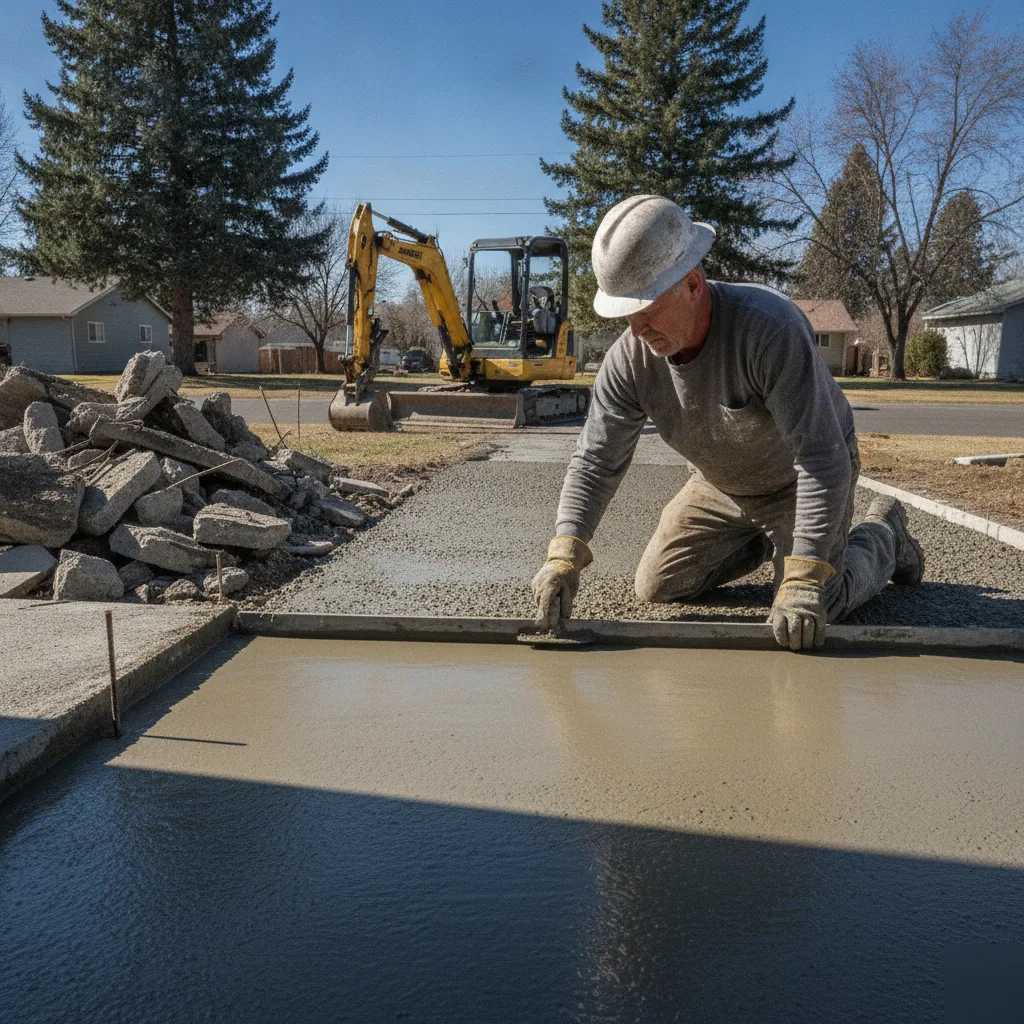
Here's a real one. A homeowner near the Sullivan Road corridor called us wanting a resurface. The top looked rough but fixable. Then we checked the two panels by the garage. Both had dropped and tipped water toward the house. A resurface there would've cracked by January. We replaced those panels first and then resurfaced the rest so it all matched.
Why does this matter for your budget? Driveway resurfacing usually costs less than a full tear-out. No demo. No hauling. No new base. But paying to resurface a failing slab is money down the drain. Most homeowners wait too long and lose the cheaper option.
You can do a rough check yourself before you call anyone. It takes about ten minutes. Here's what we look for first on every visit:
- Walk the driveway after a good rain and see where water sits.
- Look for height differences where slabs meet.
- Try the coin test on your biggest cracks.
- Check the edges for crumbling or hollow spots.
- Note if cracks have grown since last winter.
If everything passes, driveway resurfacing is likely on the table. If two or more fail, plan for at least some replacement. We could talk about base prep and soil all day - But the short version is simple. A pro should look at it in person. We've been doing concrete in Spokane Valley for 11 years, and we'll tell you straight if resurfacing will hold up or not.
Frequently Asked Questions About Driveway Resurfacing Cost
Is resurfacing a driveway worth it?
Yes, resurfacing is worth it when your slab base is still solid. It renews the top layer without the cost of a full tear-out. But if your base has hollow spots or wide cracks, resurfacing just hides a bigger problem for a short time. Our Driveway Resurfacing Cost in 2026 guide walks through how to tell which situation you're in before you spend money on a new surface.
What is the best time of year to resurface a driveway?
Late spring through early fall works best in Spokane Valley. Concrete needs stable, mild temperatures to cure and bond properly. Resurfacing too close to freeze-thaw season risks cracking before the overlay fully sets. Waiting until after winter also gives us a clear look at any new damage from ice and road salt. Planning ahead helps your new surface hold up through many more winters.
How do I know if my driveway needs resurfacing or full replacement?
Walk your driveway and check for uneven slabs, wide cracks, pooling water, or hollow sounding sections. These signs often point to a failing base, not just a worn surface. If the base is stable, resurfacing is usually enough. If the damage runs deep, replacement may be the smarter long-term choice. A quick on-site check can usually tell the difference within minutes.
Why does Spokane Valley weather cause so much driveway damage?
Freeze-thaw cycles are the main cause of driveway damage here. Water seeps into small cracks, freezes overnight, and expands. It thaws the next day and repeats, sometimes dozens of times each winter. Road salt and deicer tracked in from streets like Sullivan Road or Pines add to the wear. This cycle is why local driveways scale and crack faster than in milder climates.
Is it a mistake to resurface over cracks instead of repairing them first?
Yes, this is one of the most common mistakes we see. Coating over a crack without repairing it first almost always lets the crack reflect back through the new surface within a season. Proper prep means grinding, cleaning, and fixing cracks before any overlay goes down. Skipping this step is usually why two quotes for the same job look very different in price and durability.
Can I resurface my driveway myself to save money?
You can handle small sealing jobs yourself, but full resurfacing is best left to a professional. Proper bonding requires grinding, pressure washing, and reading the slab condition correctly. Mistakes here lead to peeling or cracking within a year. A trained eye can usually spot hidden base problems in about ten minutes, which is hard to catch without experience.