
Driveway Repair vs. Replacement: What Saves More?
Most people miss the early signs. Then the cracks spread. The slab drops a little. And one day the driveway looks older than the house.
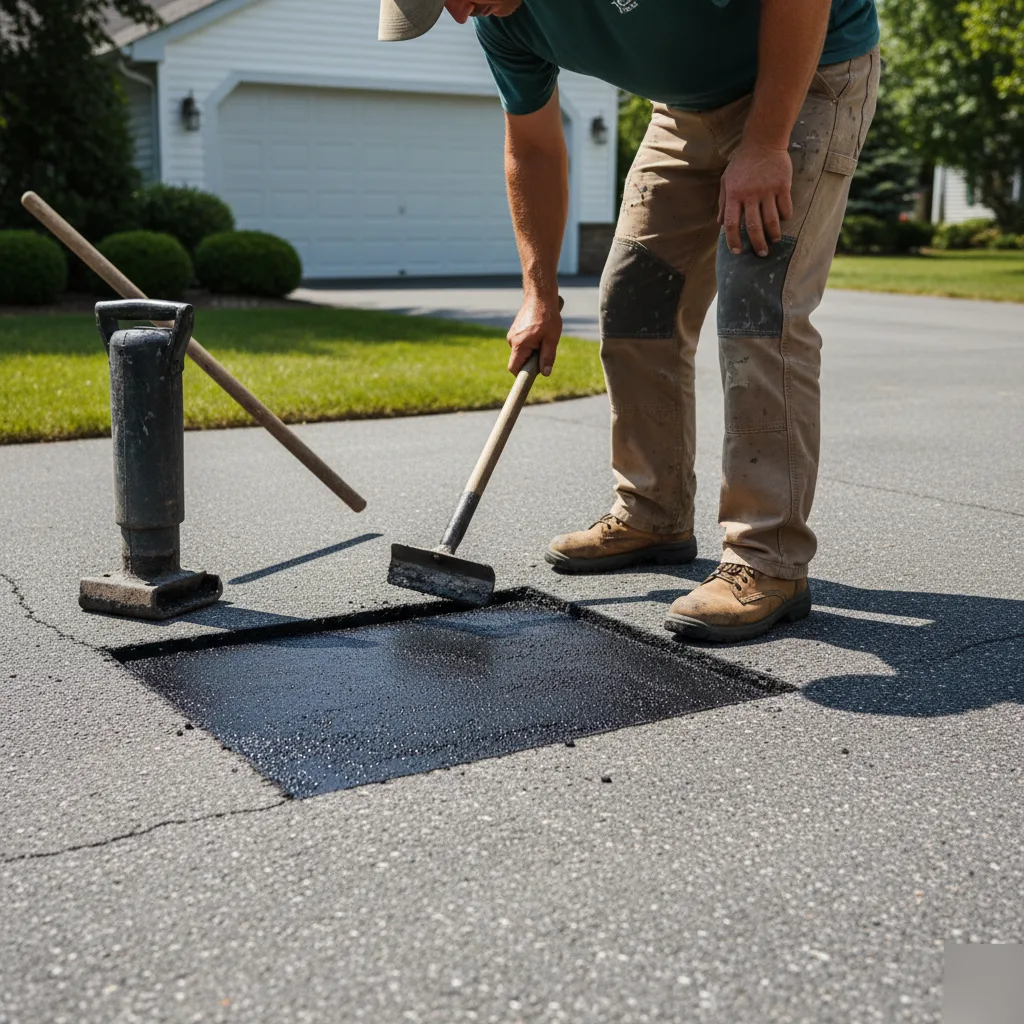
Your driveway usually tells you what it needs. You just have to read it.
Signs That Driveway Repair Will Do the Job
If you’re seeing hairline cracks or a few small trouble spots, driveway repair is probably the right move. Here’s what we usually see on driveways that still have good bones and just need concrete crack repair or driveway resurfacing:
- Surface cracks less than a quarter-inch wide
- Minor spalling or flaking on the top layer only
- Small areas where water pools but the slab underneath is still solid
- Cosmetic discoloration or staining that hasn't damaged the structure
We run into this a lot in Spokane Valley neighborhoods near the Centennial Trail. A lot of those driveways are 10 to 15 years old, and they’re just worn out on the surface from freeze-thaw cycles. A solid repair can buy you years.
Signs That Full Replacement Is the Smarter Choice
But sometimes repair is just a patch on a bigger problem. If the base has failed, surface work won’t save it.
Here’s what usually points us toward full replacement:
- Cracks wider than half an inch running across the full slab.
- Large sections that have sunk or heaved unevenly.
- The concrete is crumbling apart when you touch it, not just on the surface.
- Multiple previous repairs that keep failing.
- Drainage problems caused by the slab shifting over time.
A homeowner near Sullivan Road called us about a crack they had patched twice already. Each spring it came back wider. When we checked the base, the soil underneath had washed out. Patching that crack again would have been throwing money away, the whole slab needed to come out.
We see that kind of thing a lot.
The Quick Test You Can Do Right Now
Walk your driveway slowly. Look close. Press on any lifted edges with your foot. Pour a little water on it and watch where it goes. Does it run off the sides? Or sit in low spots and puddle?
Puddles mean the slab has moved. Crumbling edges mean the concrete itself is breaking down. And if you can fit a nickel into a crack sideways, that crack is too wide for simple repair alone.
Spokane Valley’s soil makes this worse. We get hard freeze and thaw cycles from November through March. The Portland Cement Association says freeze-thaw cycles are one of the biggest causes of concrete damage in northern climates. That lines up with what we see out here every spring.
So which is it for your driveway? If you’re seeing one or two of the smaller signs, driveway repair is probably enough. If you checked off three or more of the bigger warning signs, replacement starts making more sense on cost alone.
Not sure where yours lands? Our driveway repair page walks through what the process looks like either way, and you can always reach out for a straight answer.
What Makes Driveway Repair Cost-Effective, And When It Becomes a False Economy
Most folks assume driveway repair is always the cheaper route. It usually is. A few cracks here, some minor settling there, concrete crack repair handles it fast. You spend less. You get more life out of the slab. Done.
But here’s what we see all the time in Spokane Valley: homeowners patch the same spots year after year, and by year five they’ve spent more than a full replacement would have cost upfront.
That’s the trap.
When Repair Is the Right Call
Driveway repair makes sense when the damage stays near the surface or sits in one area. Think hairline cracks, small spalled patches, or one section that settled a little. The base is still solid. Drainage still works. The rest of the concrete looks fine.
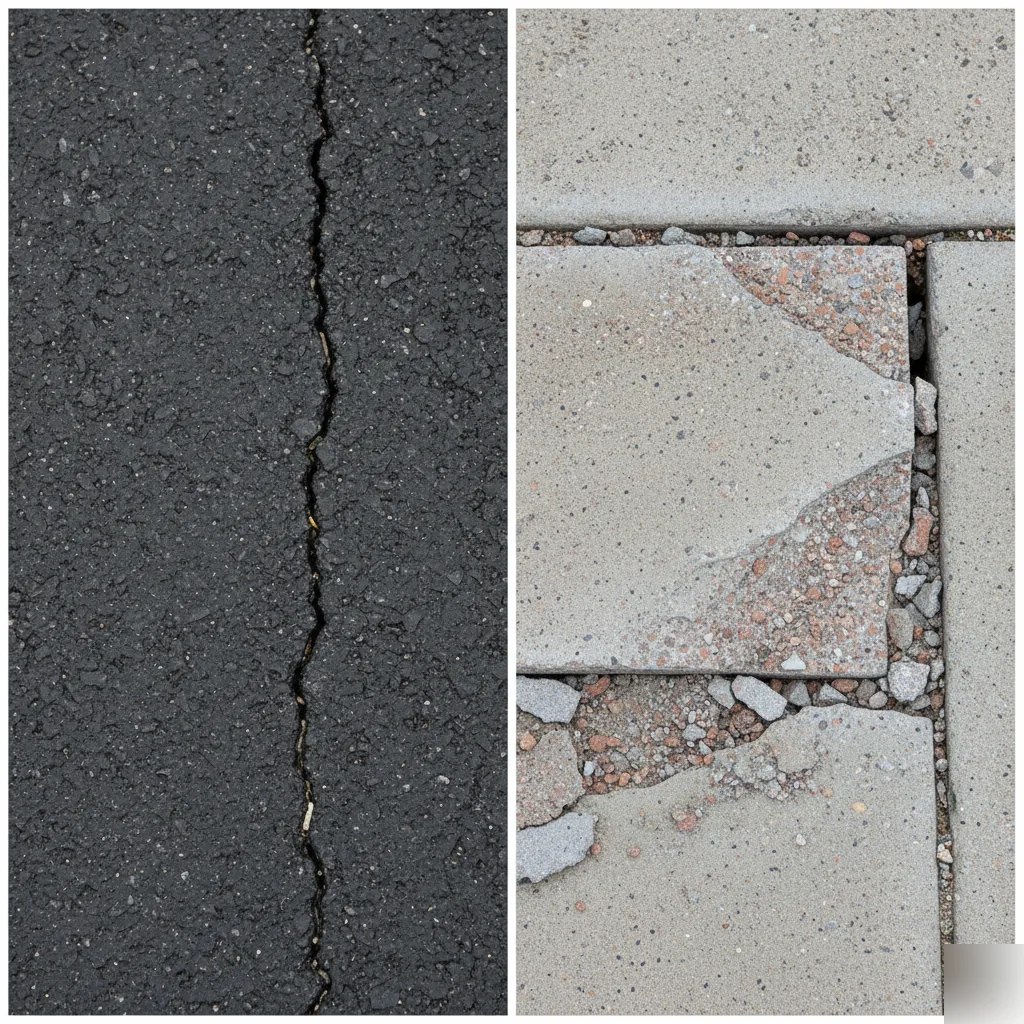
Here are the situations where repair saves real money:
- Surface cracks that haven't spread to the edges or connected to each other
- Minor cosmetic wear from Spokane Valley's freeze-thaw cycles
- A single slab section that shifted but the rest stayed level
- Concrete that's under 15 years old with no deep structural issues
In those cases, driveway repair or driveway resurfacing can add years to your concrete. The American Concrete Institute says well-timed surface repairs can stretch a slab’s useful life by a decade or more. Catching it early matters.
When Repair Starts Costing You More
There’s a tipping point. We’ve walked driveways near the Greenacres area where owners patched cracks three or four times before they called us. Each repair held for a season, maybe two. Then new cracks showed up right beside the old ones.
Why does that happen? Because the real problem was underneath. A failing subbase. Poor drainage. Tree roots pushing from below. No amount of surface-level concrete crack repair fixes a broken foundation.
Watch for these red flags that repair won’t hold:
- Cracks wider than a quarter inch that keep growing each spring
- Multiple sections have heaved or sunk at different levels
- Water pools in the middle of your driveway after rain
- The same area needs fixing every 12 to 18 months
- You can see the rebar or wire mesh through the surface
If two or more of those fit your driveway, repair is probably just buying time. You’re spending money to delay the fix.
The Math Nobody Talks About
You spend a decent amount on driveway repair this year. Next year, a different section fails and you repair that too. Year three, the first patch cracks again. By year four, you’ve paid close to what replacement would have cost, and you still have an old driveway with patches all over it.
We call that the repair spiral. It happens more than people think.
Flip it around. One trouble spot. Solid concrete everywhere else. That’s a clear repair job. You fix it once, seal the surface, and move on for years.
The key is honest assessment. Not every crack means you need a new driveway. Not every repair is worth doing. If you’re unsure where yours falls, our driveway repair page walks through what we look for during an evaluation.
Getting it right the first time saves the most money in 2026 and beyond.
Why Spokane Valley's Climate Makes the Repair vs. Replace Decision Different
Freeze-thaw cycles are the biggest reason concrete fails here. Spokane Valley gets an average of 135 days per year where temperatures drop below freezing, according to the Western Regional Climate Center. That number matters more than most homeowners think.
Here’s what happens. Water slips into tiny pores and cracks in your driveway. It freezes overnight. Ice expands by about nine percent. Then it thaws the next afternoon. This repeats over and over all winter, sometimes more than once in the same week during late February and early March.
That push and pull breaks concrete from the inside out.
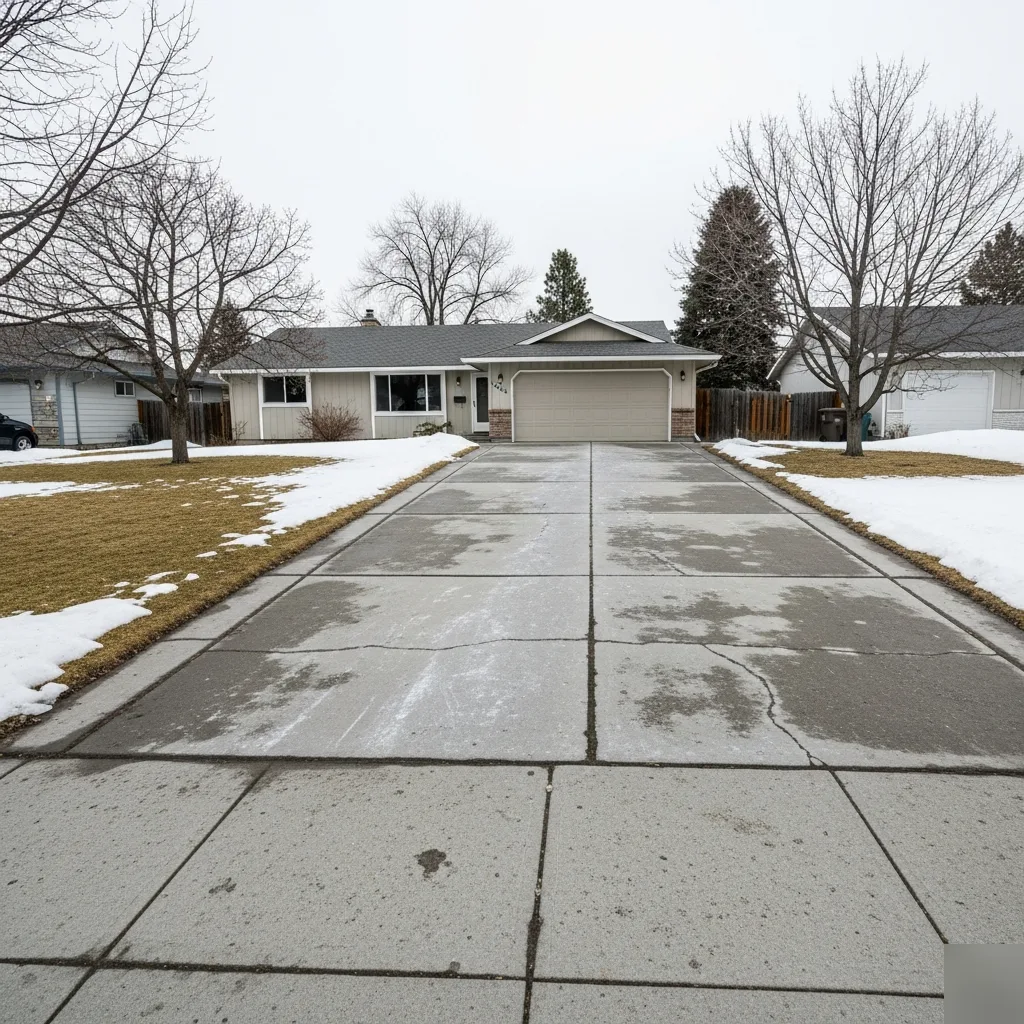
A small crack in October can turn into a real mess by April. We see that every spring. Homeowners who noticed a hairline crack before Thanksgiving call us in March with chunks missing from the driveway surface. The damage doesn’t creep here. It moves fast once winter gets rolling.
How Local Soil Conditions Add to the Problem
The Spokane Valley sits on a mix of glacial outwash soils. Sandy and gravelly layers drain well in some spots. Pockets of silt and clay show up too, especially closer to the Spokane River corridor near Mirabeau Point and along the edges of the valley floor near Dishman.
Clay-heavy soil expands when wet and shrinks when dry. So your driveway slab isn’t just fighting ice from above. It’s dealing with ground movement from below. That leads to uneven settling. You see it as cracks, sunken sections, or lifted edges where one slab leans into another.
If your driveway has settled unevenly, driveway repair might still work. Only if the base underneath hasn’t shifted too far. And you can’t tell that just by looking at the top.
Summer Heat Plays a Role Too
People forget about summer. Spokane Valley regularly hits 90 to 100 degrees in July and August. Concrete expands in the heat. If your control joints are too far apart or weren’t cut right during the original pour, thermal expansion creates new stress cracks.
We’ve worked on driveways near Sullivan Road and along Sprague Avenue where the original contractor skipped control joints completely. Those driveways cracked in the same patterns within two to three years. Sometimes driveway repair can handle those cracks. Sometimes the slab is already too far gone.
The temperature swing here is rough. Winter lows to summer highs can span more than 130 degrees over the year. Concrete feels that.
What This Means for Your Decision
Climate doesn’t just cause damage. It decides which fix lasts. A driveway repair that holds up fine in a mild place might fail in one winter here. That’s not a knock on repair. It’s just Spokane Valley doing Spokane Valley things.
Here are the climate-related signs that push a driveway toward replacement instead of repair:
- Multiple cracks that have widened over consecutive winters
- Sections where the surface is flaking or spalling across large areas
- Visible settling where one part of the driveway sits lower than the rest
- Water pooling in spots that used to drain properly
But if you’ve got isolated cracks that haven’t spread much, or surface wear that’s mostly cosmetic, driveway repair still makes sense. Concrete crack repair combined with driveway resurfacing can add years to a slab that’s still sound underneath.
The key is catching problems early. One winter of neglect in Spokane Valley does more damage than three years of wear in a milder climate. Most people don’t realize this until it’s too late, and a repair job turns into full replacement because they waited one season too long.

Frequently Asked Questions
How do I know if my driveway needs repair or full replacement?
Your driveway needs repair if cracks are small, shallow, and not spreading fast. Look for cracks under a quarter-inch wide, minor surface flaking, or one low spot. Those are surface problems. Replacement makes more sense when cracks are wide, sections have sunk, or the same spots keep failing after repairs. If you've patched the same crack twice and it came back, the base is likely the real problem.
Is it a mistake to keep patching the same driveway crack every year?
Yes, patching the same crack every year is usually a sign you're fixing the symptom, not the cause. If a crack keeps coming back, something underneath is failing — poor drainage, washed-out soil, or a weak subbase. We've seen homeowners near the Greenacres area spend more on repeated repairs than a full replacement would have cost. One honest assessment early saves a lot of money over time.
How long does a driveway repair last in Spokane Valley?
A good driveway repair can last 8 to 10 years when the base is solid and the damage is caught early. The American Concrete Institute says well-timed surface repairs can stretch a slab's life by a decade or more. In Spokane Valley, sealing the surface after repair helps protect it from freeze-thaw damage. Repairs done on a failing base won't last nearly as long — sometimes just one or two seasons before new cracks appear.
Does Spokane Valley's weather make driveway damage worse?
Yes, Spokane Valley's freeze-thaw cycles are hard on concrete driveways. From November through March, water gets into small cracks, freezes, and pushes them wider. The Portland Cement Association says freeze-thaw damage is one of the top causes of concrete failure in northern climates. That matches what we see here every spring. Catching cracks early — before winter hits — gives repair the best chance of holding long-term.
Can I repair my driveway myself, or should I call a professional?
Small hairline cracks can be filled with store-bought products, but it's easy to miss what's causing them. If the crack is wider than a quarter inch, if sections have shifted, or if water pools in the middle, call a professional. Those signs point to base problems that surface products won't fix. A pro can check the subbase and tell you honestly whether repair will hold or if replacement is the smarter move.
What is the repair spiral, and how do I avoid it?
The repair spiral is when you fix one spot, then another fails, then the first one cracks again — and after a few years you've spent close to replacement cost with nothing to show for it. We see this a lot with older driveways in Spokane Valley. The way to avoid it is simple: get an honest look at the whole driveway before spending money on any one spot. If two or more sections are failing, replacement usually costs less in the long run.
Ready to Experience the Concrete Revival Difference?
Complete Service Area Coverage
- Spokane and Spokane Valley
- Coeur d'Alene metro area
- Deer Park and Newport
- Liberty Lake and Otis Orchards
- Cheney and Medical Lake
- Post Falls and Rathdrum