
Driveway Repair Near Terrace View Park | Concrete Revival
Most homes around Terrace View Park went up in the early 1960s. That's sixty-plus years of Spokane Valley winters working on the same original concrete. Freeze-thaw cycles don't care how well a slab was poured, they find every weakness, every hairline crack, every shallow control joint, and they go to work. By the time a driveway near Terrace View Park starts showing real damage, the problem underneath is usually worse than what you can see from the street.
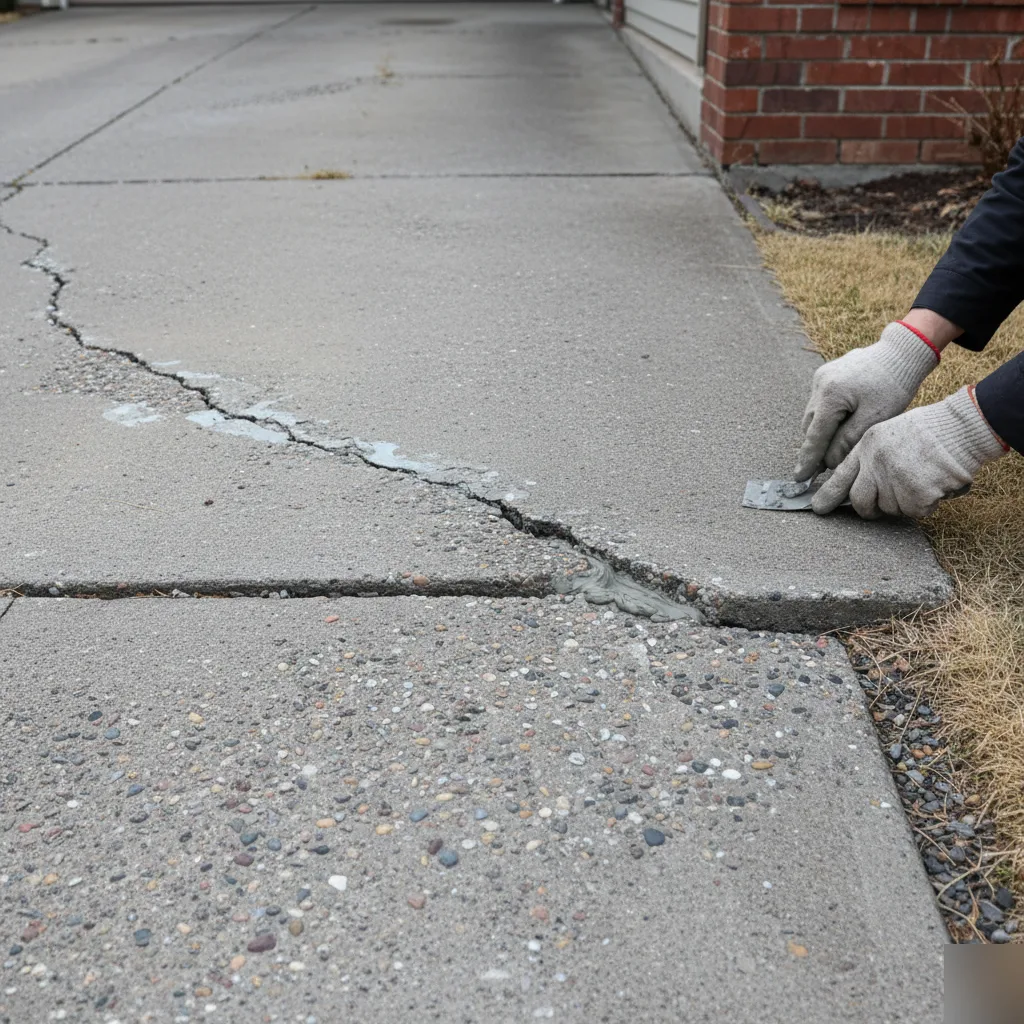
We're out in the Terrace View Park area regularly. The lots along the streets south of the park tend to run longer than you'd expect, 40 to 50 feet of driveway from curb to garage is common here. More surface means more exposure. Water pools near the garage apron, freezes overnight, expands inside cracks that looked minor in October. Come March, you've got a split running halfway down the slab. That's how most concrete driveway repair calls start in this part of Spokane Valley.
Here's what we see most often near Terrace View Park:
- Surface spalling on original 1960s-era slabs where the top layer flakes off in sheets after decades of salt and ice
- Settlement cracks near the street where old subgrade compaction has shifted under the weight of modern vehicles
- Tree root heave from the mature pines and maples lining the residential streets bordering the park
- Joint failures where original control joints were cut too shallow or spaced too far apart for Spokane Valley's temperature swings
This neighborhood is almost entirely owner-occupied. People here take care of their properties, you can see it in the yards and the fences. But a cracked driveway pulls down the whole look of a place. It's the first thing anyone notices pulling up to your house.
One job we did near the park involved a homeowner who'd been patching the same two cracks every spring for five years. Bag mix from the hardware store, troweled in by hand. Never held through winter. The real problem was a root from a big silver maple pushing up the center of the slab. We cut out the damaged section, addressed the subgrade, and poured new concrete tied into the existing driveway. No more annual patch routine.
Spokane Valley's freeze-thaw cycle is brutal on concrete. Temps drop below freezing over a hundred nights a year. Water gets into every crack and pore, expands roughly 9%, and grinds the slab apart from the inside. Driveway repair done right means fixing what's underneath too, not just filling the crack on top.
The homes near Terrace View Park also sit at a slight grade. That slope changes how water drains across your driveway after snowmelt or a heavy spring rain. If your slab has settled unevenly, water finds the low spots and sits there. Standing water is the single biggest threat to concrete in this climate.
And if you've been watching cracks widen on your driveway off one of the side streets near Terrace View Park, don't wait for another winter to make it worse. Concrete crack repair now saves you a full replacement later. We offer free estimates and can usually get out to the Terrace View Park area within a few days of your call.
How Our Team Reaches the Terrace View Park Area
Our shop sits on East Sprague Ave near the 16800 block in Spokane Valley. Getting to the Terrace View Park neighborhood is a straight shot we make regularly.
- Head east on Sprague Ave from our shop toward Sullivan Road.
- Turn south on Sullivan and follow it past the Interstate 90 interchange.
- Continue south on Sullivan until you reach East 8th Avenue, then head east.
- Follow the residential streets south toward the park area, where the lots open up and the homes sit back from the road on wider parcels.
Most days it's about a 10-to-12-minute drive. During morning commute hours near the Sullivan Road corridor, add a few minutes. We're close enough that we don't burn half the day just getting to the job site, and that matters when you're doing concrete crack repair and need to stay on schedule with cure times and weather windows.
The streets south of 8th Avenue have a different feel than the busier commercial strips up along Sprague. Quiet, residential, mostly single-family homes built in the early 1960s. The driveways reflect that era. Original pours from that period are hitting 60-plus years old now, and Spokane Valley's freeze-thaw cycles haven't been kind to them.
One thing we notice every time we drive into the Terrace View Park area, homeowners here take pride in their properties. The yards are kept up. Fences are maintained. But the driveways tell a different story sometimes. Concrete that old develops deep cracks, surface spalling, and settlement issues that don't fix themselves. We see it every time we're out this direction.
Because this neighborhood sits slightly elevated compared to the valley floor, snowmelt runs downhill toward garages and foundations. A cracked or sunken driveway in the Terrace View Park area doesn't just look rough, it channels water where you don't want it. That's a problem we fix with driveway repair and driveway resurfacing before it turns into something worse.
The homeowners here tend to be long-term residents. People who bought into an established neighborhood and want to protect what they've built. A concrete driveway repair job in this part of Spokane Valley isn't about curb appeal alone. It's about keeping a 1960s-era home functional for another few decades.
So when you call for a free estimate, we're not coming from across the state. We're coming from a few miles up the road. We load the truck at our Sprague Ave shop and we're at your place before the coffee gets cold. That proximity means we can check conditions after a pour, come back for follow-up work without a scheduling headache, and respond when spring thaw reveals new damage around Terrace View Park.
It's a neighborhood we genuinely like working in. Quiet streets, cooperative homeowners, and driveways that keep us busy every season.
What 1960s Driveways in This Neighborhood Actually Need
Most homes around Terrace View Park went up in the early 1960s. That means the original concrete is over sixty years old. Some of it's still there, cracked and settled but hanging on. Some of it got replaced in the '80s or '90s with thinner pours that didn't hold up much better.
Here's what we see on driveways in this specific part of Spokane Valley:
- Longitudinal cracks running the full length of the slab, often following old control joint lines that were cut too shallow decades ago
- Settlement near the garage apron where the original subgrade compaction wasn't done to modern standards
- Surface spalling from years of freeze-thaw cycles eating away at concrete that was finished too wet
- Tree root heave from the mature pines and maples that line these lots
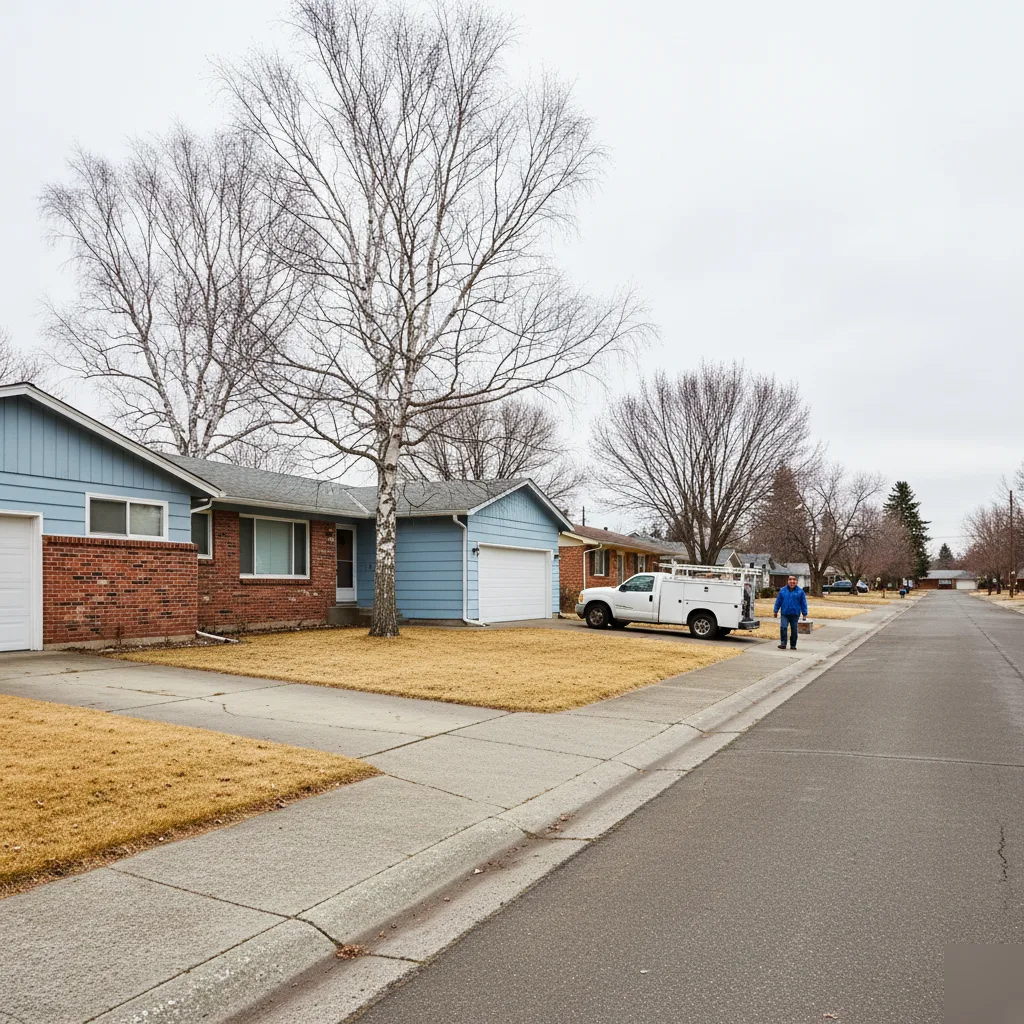
Nearly every property in this tract is a single-family detached house. That means almost every lot has its own driveway, its own garage approach, its own set of problems. We're out here regularly doing concrete crack repair on slabs that have shifted a half-inch or more at the joints.
The freeze-thaw issue is the big one. Spokane Valley gets cold enough to freeze hard, then warm enough to thaw, then freezes again, sometimes three or four cycles in a single week during January. Water gets into a hairline crack, expands, breaks the concrete apart from the inside. By spring you've got a chunk missing. The 1960s-era concrete around Terrace View Park didn't have the air entrainment specs we use now, so it's especially vulnerable to this kind of damage.
Homeowners in this neighborhood tend to stay put. The owner-occupancy rate here runs above 91%. People invest in their properties because they're not flipping them, they're living in them. That changes the conversation about driveway repair. You're not patching something to sell the house next year. You want it done right so you don't think about it for another fifteen or twenty years. Build it once, build it right, that's the only approach that makes sense on a 60-year-old slab in Eastern Washington.
A surface patch on a 1960s slab with subgrade issues is a waste of money. We look at what's underneath. If the base has eroded or compacted unevenly, we address that before we pour. If the cracks are structural, concrete crack repair needs to go deeper than cosmetic filler. Sometimes driveway resurfacing makes sense when the base is still solid but the top two inches are shot from decades of salt and weather.
But not every driveway near Terrace View Park needs a full tearout. That's the honest truth. Some of these older pours were done well, they just need targeted repair at the joints and a good seal to stop moisture from getting back in. We've worked on driveways along the streets south of the park where the original '60s concrete just needed crack repair and sealing to buy another decade of solid use.
The lots in this neighborhood are generous. Most driveways run 40 to 50 feet from the street to the garage. That's a lot of concrete surface taking abuse every winter, and a driveway repair plan that accounts for Spokane's climate and the age of these specific slabs is the only thing that holds up long-term.
Frequently Asked Questions
Why do so many driveways near Terrace View Park crack in the same spots every year?
Most homes near Terrace View Park were built in the early 1960s, so the original concrete slabs are over 60 years old. Spokane Valley's freeze-thaw cycles hit those aging slabs hard every winter. Water gets into shallow control joints and hairline cracks, freezes, and expands. You end up with the same crack reopening each spring because the underlying cause was never fixed.
Can I just patch the cracks on my Terrace View Park driveway myself each spring?
Bag mix from the hardware store rarely survives a Spokane Valley winter on a 60-year-old slab. If the crack keeps coming back, something underneath is causing it — shifted subgrade, a tree root, or a failed control joint. Patching the surface without fixing the cause just means you're back out there next April. A proper repair addresses what's underneath so the fix actually holds.
My Terrace View Park driveway slopes toward the garage — is that making the damage worse?
Yes, that grade is a real problem for homeowners in this area. The slight elevation south of the park means snowmelt and spring rain run downhill toward your garage apron. If your slab has settled unevenly, water pools in the low spots and sits there. Standing water is the biggest threat to concrete in this climate, and it speeds up cracking and spalling faster than almost anything else.
Ready to Experience the Concrete Revival Difference?
Complete Service Area Coverage
- Spokane and Spokane Valley
- Coeur d'Alene metro area
- Deer Park and Newport
- Liberty Lake and Otis Orchards
- Cheney and Medical Lake
- Post Falls and Rathdrum