
Driveway Repair Near St. Mary's in Spokane Valley
Spokane Valley winters don't care how nice your yard looks. Over 80% of the homes in this area are owner-occupied single-family houses, and it shows. The yards are kept up, the fences are painted, the landscaping along Pines Road looks sharp. But a driveway is different. It just sits there and takes the punishment until it can't anymore.
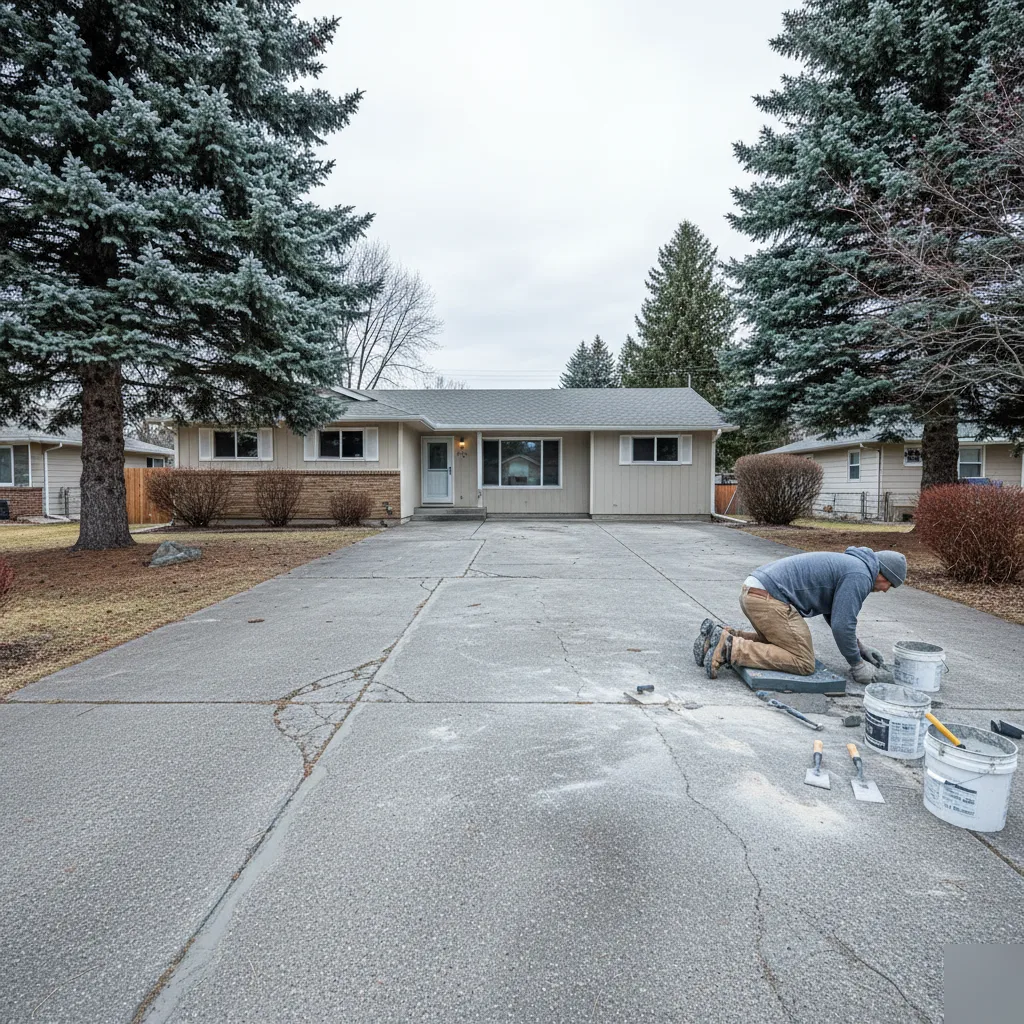
Most of these homes went up in the mid-1980s. That puts the original concrete at nearly 40 years old. Forty winters. Forty rounds of freeze-thaw cycles, ice melt, snowplow scraping along the apron, and summer heat baking the surface down to nothing. We do a lot of driveway repair in this part of Spokane Valley, and the same damage shows up every time: spalling along the edges, cracks running from the garage pad toward the sidewalk, settled sections where the soil shifted under the slab years back.
The calls we get from this neighborhood follow a pattern. A homeowner spots a crack that wasn't there last spring. Or the surface started flaking after a hard January. They want to know if they need a full tear-out. Usually they don't. Concrete crack repair handles most of what we find on driveways that were poured well but have taken decades of abuse from Spokane Valley's temperature swings.
Here's what we run into most on driveways in this area:
- Hairline cracks that spread into networks after repeated freeze-thaw cycles
- Surface spalling from old salt damage on mid-80s pours
- Sunken sections near the garage where backfill settled over time
- Worn-out control joints that stopped doing their job years ago
A cracked driveway isn't just ugly. It gets worse every winter. Water gets into those cracks, freezes, expands, and by March you've got a bigger problem than you started with. That's the reality of concrete driveway repair in Spokane Valley. You fix it now or you replace it later.
The homes along Pines and the streets branching off toward Bowdish tell a consistent story. Good bones, solid construction, but the driveways need attention. Driveway resurfacing works well on slabs that are structurally sound but look rough on top. And for homeowners in this part of Spokane Valley who want something better than plain gray, we do colored concrete and stamped concrete overlays that hold up to real local conditions (stamped concrete takes a particular beating here from deicing salt, so the sealing process matters more than most contractors admit).
Not every fix is cosmetic. Some of these driveways have structural cracks that go deep. We assess every slab before we touch it. If a repair will hold, we repair it. If the base has failed, we'll tell you straight.
This is a neighborhood where people stay. Families are putting down roots, homes are worth real money, and a damaged driveway drags down the whole front of your property. Professional driveway repair keeps your place looking the way the rest of the street does. Clean, solid, taken care of.
We offer free estimates for driveway repair near St. Mary's Catholic Church in Spokane Valley. Call us, we'll come take a look, and you'll know exactly what you're dealing with before anything starts.
How Our Team Reaches the St. Mary's Catholic Church Area
Our shop is at 16823 E Sprague Ave in Spokane Valley. Getting to the neighborhood around the church is a route our crews make all the time.
Here's how we get there:
- Head west on E Sprague Ave from our shop.
- Continue on Sprague through the Sullivan Road corridor, past the strip of businesses along that stretch.
- Turn north on Park Road toward the residential streets surrounding St. Mary's Catholic Church.
- We're pulling up to your driveway in about 15 minutes, depending on traffic near the Sprague and Sullivan intersection.
That's it. No long haul across town.
Morning runs are the smoothest. We try to schedule jobs out here early, before school traffic picks up along Park Road. Even during the afternoon rush, we're close enough that delays barely register. A few extra minutes at a light, maybe.
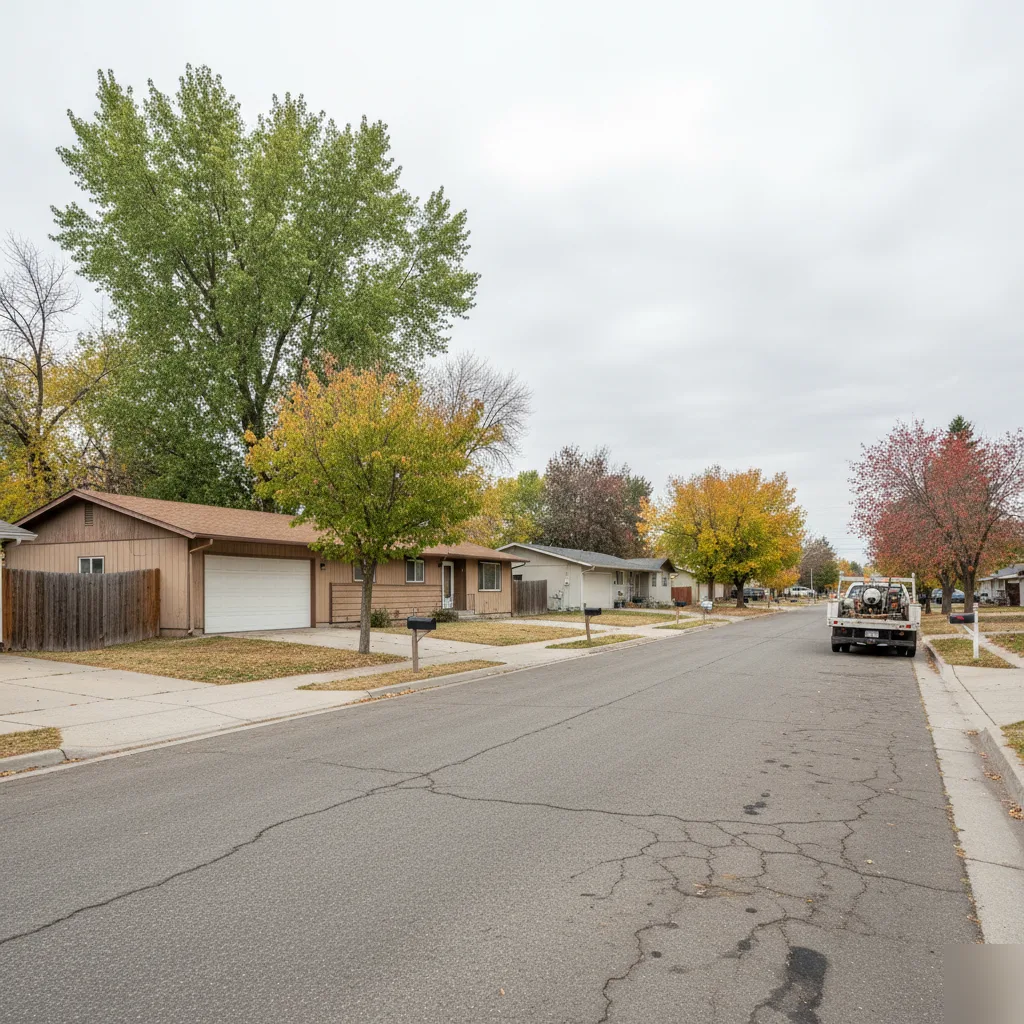
The homes around the church are mostly mid-length, two-car-width driveways poured back when this tract was built out in the mid-1980s. these slabs well. The mix designs from that era hold up decent, but close to four decades of freeze-thaw cycles leave their mark. Cracks along the control joints. Surface spalling near the garage apron. Same patterns, block after block.
The blocks between Park Road and Pines Road keep us busy through spring and fall especially. Homeowners here take pride in their properties, and when a crack opens up after a hard winter, they don't sit on it long. A cracked driveway drags down curb appeal, and people around here notice.
One thing that makes jobs on these streets straightforward is access. Roads are wide enough for our trucks and trailers. Most driveways have clear approaches without tight turns or steep grades, so we can get equipment staged without burning half the morning on setup. More time doing actual concrete crack repair, less time shuffling rigs around.
Parking near the church gets tighter on weekends and during evening services. We plan around that when we're working on nearby properties, keeping our equipment off the street and out of the way. Small thing, but neighbors notice.
If you live in this part of Spokane Valley and want to know what your driveway actually needs, we'll come take a look. Free estimates. We drive out, assess the damage, and tell you straight what kind of driveway repair makes sense for your slab's age and condition.
Give us a call or send a message. We're 15 minutes away and already know your neighborhood.
What Late-1980s Spokane Valley Driveways Actually Need
Most homes in the St. Mary's Catholic Church neighborhood went up in the mid-1980s. That puts the typical driveway at close to 40 years old. Forty Spokane Valley winters. Forty rounds of freeze-thaw. That's a lot of punishment for a slab poured when Reagan was still in office.
We see the same patterns on nearly every call in this area. The concrete looks solid from the street, but up close you'll find:
- Hairline cracks that have slowly widened into quarter-inch gaps, especially along the edges closest to landscaping beds
- Surface spalling where the top layer flakes off in thin sheets, usually worst near the garage apron
- Settlement cracks where one section has dropped a half-inch or more, creating a lip that catches snowmelt
- Joint sealant that dried out years ago, letting water seep straight into the base gravel
Over 80% of the houses in this tract are single-family detached homes. Long driveways, two-car garages, a lot of exposed concrete surface area taking the full force of Spokane Valley's temperature swings. A driveway from 1986 wasn't poured with modern mix designs or fiber reinforcement. Rebar spacing was often wider. The finish was basic broom-swept. It did the job for two decades, but now it needs real attention.
Here's what most homeowners in this part of Spokane Valley don't realize. A cracked driveway isn't just an eyesore. Water gets into those cracks every fall, freezes in November, expands, and the crack grows. By March you've got a chunk missing. Concrete crack repair done at the right time stops that cycle cold.
The neighborhood around St. Mary's sits on well-drained glacial outwash soil compared to some of the lower areas closer to the river. That's actually good news for driveway repair, because it means the base underneath most slabs here is still in decent shape. The damage is usually surface-level or in the top few inches. So instead of a full tear-out, a lot of these driveways respond well to targeted concrete driveway repair. We can grind down lifted sections, fill and seal cracks, and resurface the top layer to buy you another 15 to 20 years.
But timing matters. And this is the part most people wait too long on.
The homeowners along Pines Road and the side streets off Bowdish tend to wait until the damage is obvious from the car window. By then it's more work, more material, more time. A small crack in September is manageable, that same crack in April is three times the size. We've seen it play out that way more times than we can count. The Concrete Pavement Preservation Guide from the American Concrete Pavement Association backs this up — early intervention on surface cracks and joint deterioration consistently outperforms deferred repair in both cost and longevity.
Folks in this area take care of their property. They mow, they edge, they keep up the paint. But the driveway gets overlooked because it's just concrete, it's always been there. Walk your slab every spring. Look at the joints. Check the edges near the lawn. Run your hand across any rough patches. If it catches your fingernail, it's time to call.
Driveway resurfacing is the other strong option for late-80s slabs that are structurally sound but look worn down. The bones are good, the surface just needs help. We can bring it back without jackhammering the whole thing out, and the result holds up to Spokane Valley winters the way a patched-together job never will. Build it once, build it right.
Frequently Asked Questions
Do driveways near St. Mary's Catholic Church need full replacement after 40 years?
Most don't. The mid-1980s slabs in this neighborhood were poured solid, and many just need targeted crack repair or resurfacing. We assess the base first. If the structure is sound, we repair it and save you the cost of a full tear-out. Replacement only makes sense when the base has failed — and that's not what we find on most driveways in this area.
What damage should homeowners near St. Mary's Catholic Church expect on a 40-year-old driveway?
The same patterns show up block after block here: surface spalling from decades of ice melt, cracks running from the garage pad toward the sidewalk, and settled sections where backfill shifted under the slab. These are classic freeze-thaw problems on mid-1980s pours. Most of it is repairable without tearing out the whole slab.
Does weekend traffic near St. Mary's Catholic Church affect when you schedule driveway work?
Yes, and we plan around it. Church services bring extra parking to the surrounding streets on weekends and some evenings. We schedule nearby jobs early in the morning when access is clear and keep our trucks and trailers off the street entirely. It keeps the work from disrupting neighbors and lets our crew focus on the actual repair.
Ready to Experience the Concrete Revival Difference?
Complete Service Area Coverage
- Spokane and Spokane Valley
- Coeur d'Alene metro area
- Deer Park and Newport
- Liberty Lake and Otis Orchards
- Cheney and Medical Lake
- Post Falls and Rathdrum