Driveway Repair Near Spokane Washington Temple in Veradale, Spokane Valley
You can spot the temple spires from a mile off, that white stone just grabs the morning light hitting off Bowdish. It's the highest point for a long stretch, grounding this whole area of Spokane Valley. All around it, you've got everything from old ramblers to new builds. Driveways poured in different years, by different crews. Concrete mixes varied, too. This is exactly where cookie-cutter driveway repair just won't cut it. You need someone who's driven these specific streets, someone who knows where to look for trouble spots. Hire a reliable concrete contractor today.
We handle driveway repair near Spokane Washington Temple all the time. The patterns are always the same. Homes closer to the temple grounds often have longer driveways. Some even slope a little toward the street. That slope matters big time. Water runs downhill. It pools right at the low edge, finding every tiny crack you've got. Come January, that water freezes. It expands. A tiny crack becomes a real headache. We see this play out every single winter here in the valley.
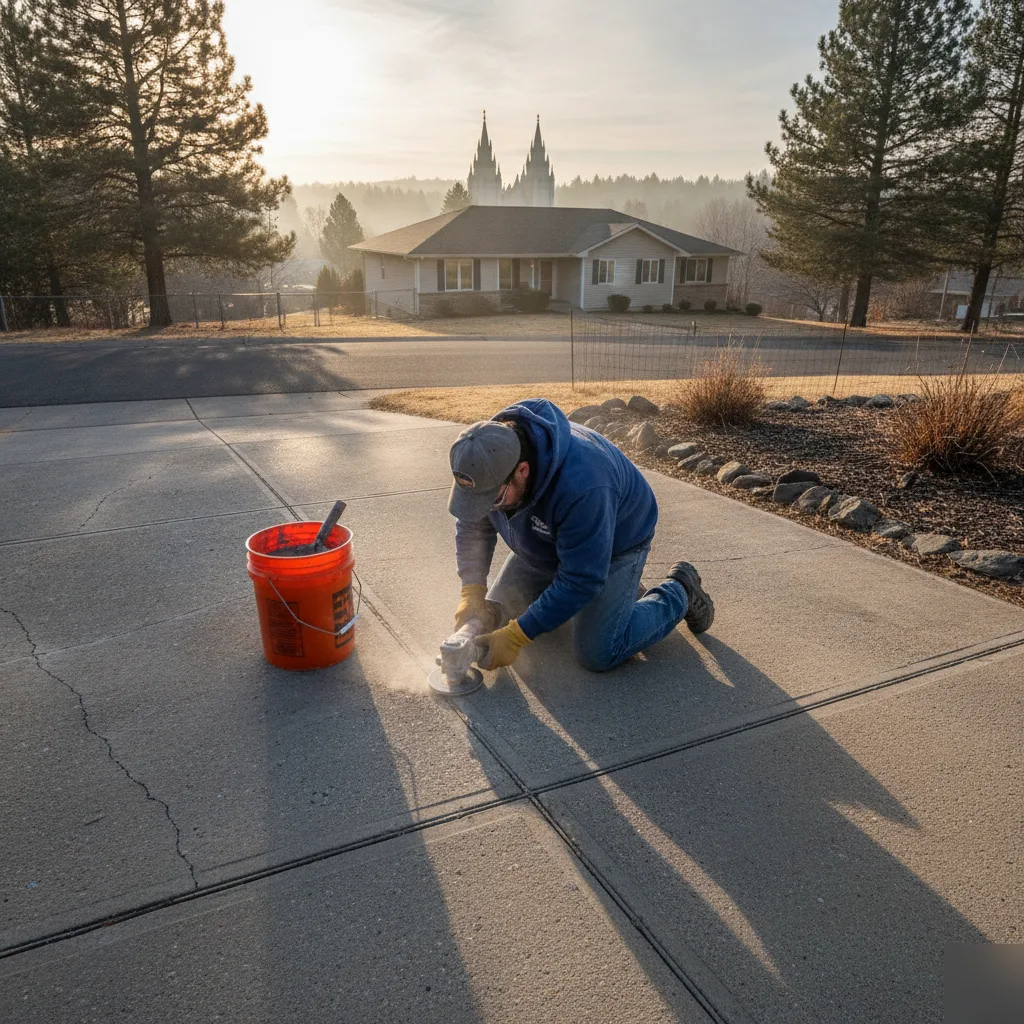
Here's some of what we always run into around this part of Spokane Valley:
- Original concrete driveways showing surface spalling. Decades of freeze-thaw cycles do that.
- Cracks running along the garage. Water collects there and refreezes.
- Driveways poured with too few control joints, meaning one crack can become three.
- Slabs settling funny near big, mature landscaping. Especially true close to the temple property line.
- Resurfacing work needed on homes. Many original pours are 20-plus years old.
Folks living near the temple tend to keep their places looking sharp. Makes perfect sense, given the view. But a cracked or heaving driveway sticks out like a sore thumb. The rest of the yard might be perfect, but that concrete? It screams for attention. We don't just patch things up and leave you hanging. What we find dictates the fix. That might mean precise concrete crack repair. We stop the water before another brutal winter sets in. Or maybe it’s full driveway resurfacing. That’s if the slab’s too far gone for simple patchwork to hold.
And here’s the real kicker about this stretch of Spokane Valley, the temperature swings are killer. We’ll get nights in the single digits in December. Then a warm spell hits, melting everything. And then it refreezes hard. That cycle repeats all winter long near the temple grounds. It’s the same story everywhere in the valley, but the traffic patterns here are a bit different. Sunday mornings bring more cars up and down these residential streets than you’d ever guess for a neighborhood this size. More weight on the concrete, more freeze-thaw stress, more wear on driveways already feeling their age. We’ve noticed this over the years. This kind of consistent stress demands lasting repairs.
So, when you call us about driveway repair, we’re not just guessing about your slab's problems. We’ve worked this exact stretch of Spokane Valley for 11 years now. We know which streets near the temple have the worst drainage. We know which ones settle first. We know which repairs hold up through a real Spokane winter instead of failing again by February.
How Our Team Reaches the Veradale Area from Our Shop
Our shop sits at 16823 E Sprague Ave. Getting out to the Spokane Washington Temple takes us maybe ten to twelve minutes. That’s on a regular day, of course. Traffic can back up near Sullivan Road more often than you'd think, especially during the evening commute. We’ve driven this route so many times we could practically do it blindfolded. Not that we'd ever recommend that, especially hauling a trailer full of professional-grade concrete tools.
Here’s our usual route:
- We head east on Sprague Avenue from the shop. Stay in the main lane past the Sullivan Road intersection.
- Turn south onto Bowdish Road. We cut down into the residential streets that wrap around the temple grounds.
- Work our way east toward 8th Avenue. Many of the older single-family homes near the temple sit on quiet, tree-lined lots there.
- Pull right into the driveway or the job site. Usually, we have plenty of daylight left to walk the whole slab before we even start talking repair options.
Knowing that route means more than folks realize. Spokane Valley isn’t just one big flat grid. It's a mix of busy arterial roads and quiet residential cul-de-sacs. They don’t always connect the way a map might make them look. But we've learned which streets near the temple flood after a hard rain. We know which ones ice up first when temperatures drop. And we definitely know which driveways get shaded most of the day by big, mature trees. That means the concrete underneath stays wet longer, taking more brutal freeze-thaw damage over a winter.
We're out here every week. Not just for driveway repair jobs, but for concrete crack repair and driveway resurfacing projects too. So, when a homeowner near the temple calls us for a free estimate, we're not fumbling with directions or guessing on travel time. We already know the neighborhood. We know what it takes to build it once and build it right.
Heavy traffic can add a few minutes during peak hours. Sprague Avenue sometimes gets jammed near the shopping centers by Sullivan. Even with that, we’re rarely looking at more than fifteen minutes door-to-door. That's a short drive for us. It means we can schedule morning estimates and still get back to the shop for an afternoon pour somewhere else. It means if you need a follow-up visit, or a second look at a lasting repair, your address isn’t out of our way. It’s part of our regular route. It has been for 11 years.
What Veradale's Established Neighborhoods Mean for Concrete Work
Veradale isn't some new development. The streets around Spokane Washington Temple have decades of history. And those driveways? They sure show it. This part of Spokane Valley didn't grow up overnight. It grew slow, house by house, over a long, long time. That means the concrete here has fought through a lot of brutal winters. You see it in ways a homeowner notices long before we ever roll up in our truck.
Walk a block from the temple grounds. You’ll spot the pattern fast. Original poured slabs, all aged and weathered. They sit under big, mature trees that have had decades to send roots under the pavement. Established landscaping means established root systems. And established root systems mean cracks that start small but don't stay that way. We've pulled up sections of driveway near the temple where a maple root lifted one corner clean off its base. This isn't rare out here. That’s just what happens when a neighborhood gets old enough to grow real trees. And, this is the part most people overthink, wondering if it's too late.
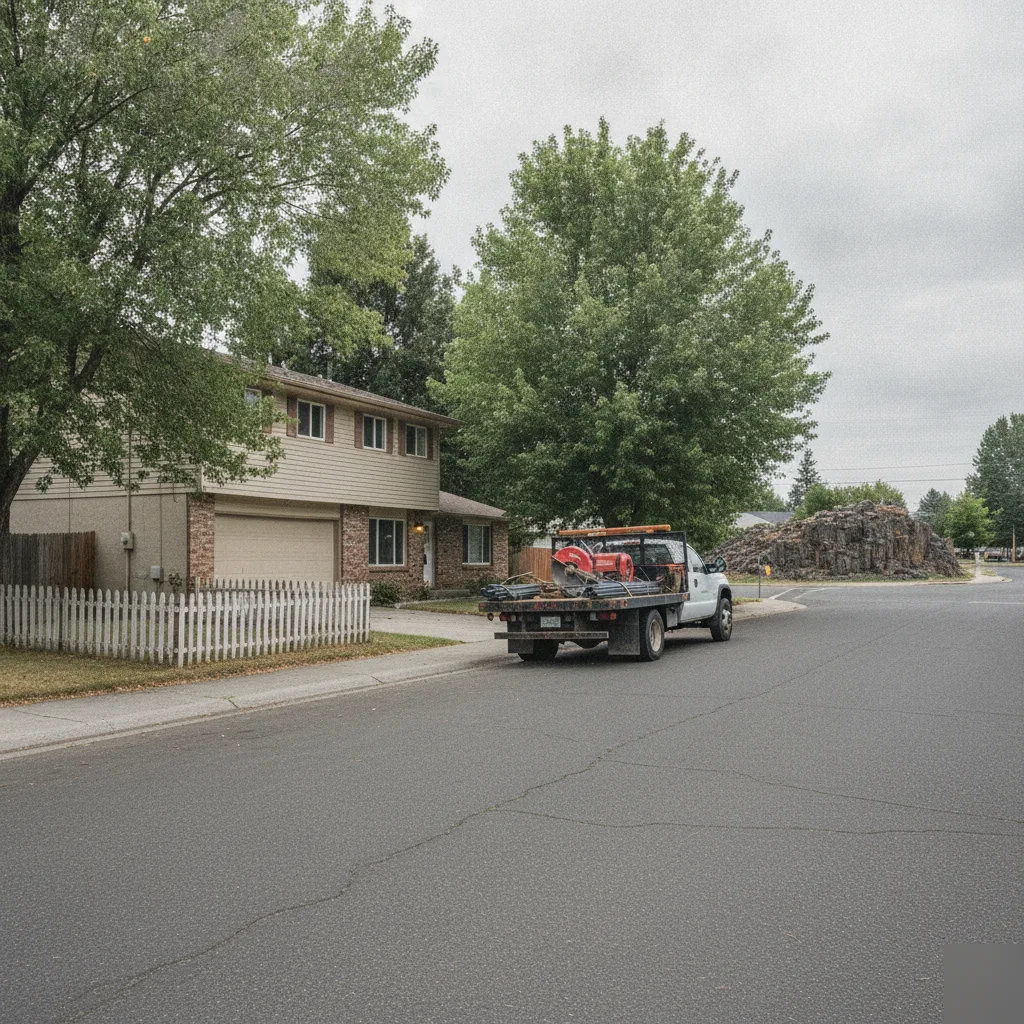
- Original 1970s and 1980s poured driveways. Many never saw a resurface.
- Long, sloped approaches. Common on the rolling lots near the temple grounds.
- Mature tree cover causing root intrusion. That leads to slab lifting.
- Attached garages with original concrete floors, often unsealed.
- Wide double driveways. These were built for families who've lived here for generations.
Established neighborhoods bring established problems. Concrete crack repair is a bigger part of our work near the temple than it is in newer developments across the valley. That's simple math: the concrete has had more years. More freeze-thaw cycles. Spokane's brutal winters don't care how nice your street looks. Ice gets into a hairline crack. It freezes. It expands. Next spring, that hairline is a fault line. Do that for forty winters straight. You get the driveways we see all over Veradale: cracked, heaved in spots, probably patched over more than once by some previous owner who didn't know any better. That's where we come in, your concrete problem-solvers.
But older doesn't mean it’s a lost cause. Most of these original slabs are solid underneath the surface damage. They were poured thick back then. Thicker than a lot of what gets poured today, by the way. That’s good news for you. It means driveway resurfacing often makes more sense here than a full tear-out. We can restore the surface. We can seal it against the next round of Spokane freeze-thaw cycles. We get another couple decades out of concrete that’s already outlasted three different owners. Our winter-proof methods are engineered to survive Spokane winters.
Garage floor concrete near the temple tells a similar story. Many of these attached garages still have their original unsealed floors. After all these years, oil stains and surface pitting are the norm. Not the exception. We see it every week working this part of Spokane Valley.

Frequently Asked Questions
How fast can you get to a home near the Spokane Washington Temple?
It usually takes us ten to twelve minutes from our shop on Sprague Avenue. We take Sprague east, then turn south on Bowdish Road right into the neighborhoods around the temple. Traffic near Sullivan Road can add a few minutes during the evening commute, but we're rarely more than fifteen minutes out door-to-door.
Do you need special access for driveways close to the temple property line?
Not usually, since most homes near the temple are single-family with private driveways we can pull right up to. We do watch for slabs settling near mature landscaping close to the property line, which is common in this older, established part of Veradale.
Why do older driveways near the temple crack so much in winter?
Many original driveways in this area are 20-plus years old, and decades of freeze-thaw cycles cause surface spalling and cracking. Water pools at low edges, especially on sloped driveways near the temple grounds, then freezes and expands come January. That turns small cracks into bigger structural problems fast.
Ready to Experience the Concrete Revival Difference?
Complete Service Area Coverage
- Spokane and Spokane Valley
- Coeur d'Alene metro area
- Deer Park and Newport
- Liberty Lake and Otis Orchards
- Cheney and Medical Lake
- Post Falls and Rathdrum