
Driveway Repair Near Spokane Valley Church of the Nazarene
You drive the streets near the church. You notice something right away. These aren't the run-down places you find closer to Sprague Avenue. Work with a professional concrete contractor.
Most of these homes went up around 2000. Give or take a year or two. That means those driveways are hitting the twenty to twenty-five-year mark. This is when original concrete starts to really show its age.
Every house we've worked on in this Spokane Valley pocket is single-family. Owners live there. They plan on staying.
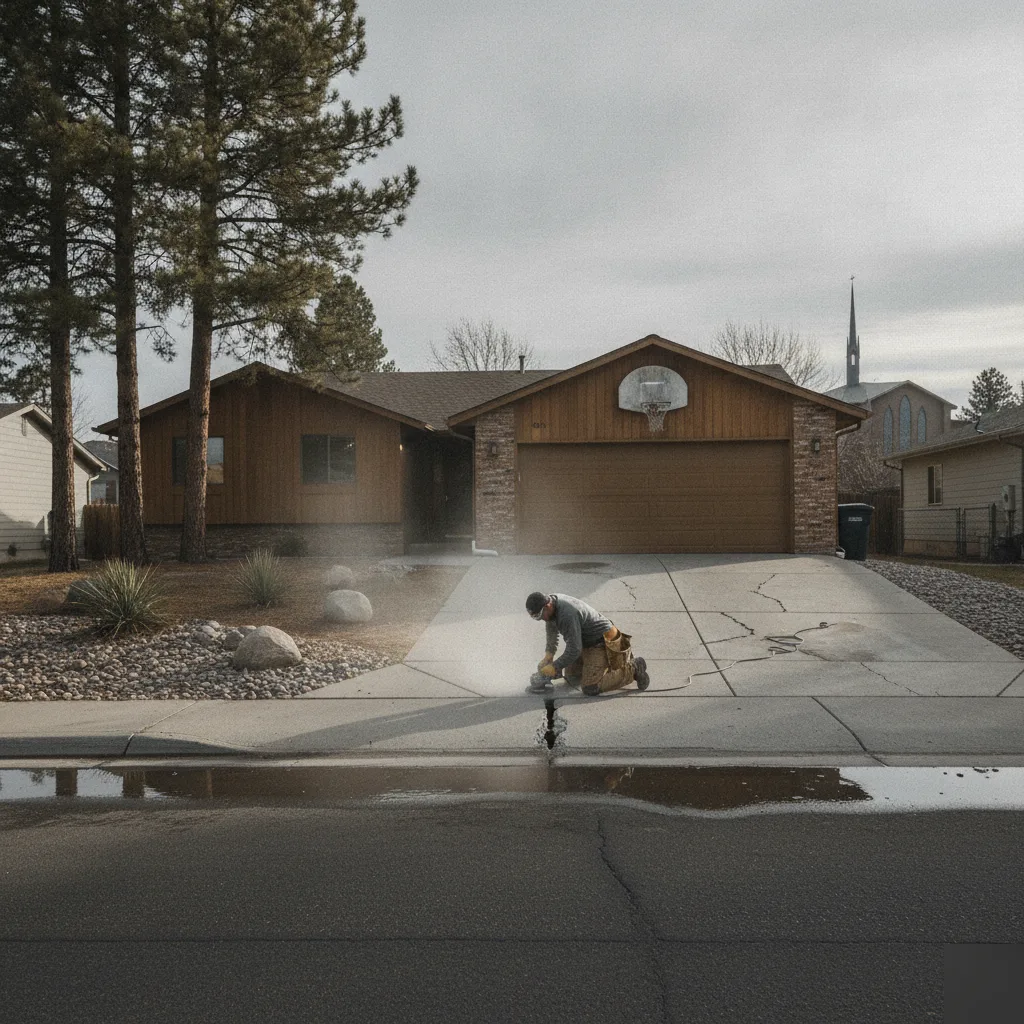
Nobody's renting here. This changes how homeowners think about their concrete. You're not calling us for some temporary patch before a tenant moves. You want a durable driveway, one that lasts as long as you plan to live in that house. We understand that goal.
We're out here every few weeks. We work on driveways that look good from the street, but tell a different story up close. We've seen a lot.
A typical home in this neighborhood often has a longer driveway than older Spokane Valley blocks. Many are wide enough for two vehicles side-by-side. Plus a boat or a trailer parked off to the side.
That extra concrete means more surface exposed to our brutal freeze-thaw cycles. It means more joints, the places where cracks always like to start. We consistently see a few common issues in this specific area:
- Hairline cracking near garage aprons where the slab meets the foundation.
- Edge crumbling along driveways bordered by those automatic sprinkler systems and the landscaping beds.
- Surface scaling on driveways that get de-iced heavily every Spokane winter.
- Settling cracks. This happens when original concrete was poured over less compacted fill during that early-2000s building boom.
- Stains and discoloration. We see this often on driveways used for boat or RV storage.
Last fall, a homeowner a few streets from the church gave us a call. She was sure her driveway had a drainage problem. Water was pooling by the garage every time the rain hit.
It turned out the slab had settled just a bit on one side. Just enough to send runoff back toward the house. That's a common story in homes built on this older grading. The concrete is old enough to shift, but the house feels young, so owners don't expect it yet. We fix these kinds of concrete problems.
These homes are valuable properties. A cracked or sinking driveway sticks out. We handle driveway resurfacing for slabs that are still solid but just look old. We do concrete crack repair for the joint and surface damage that freeze-thaw cycles always create. And we do full driveway repair when a section needs more than a simple patch.
For homeowners who want their driveway to match the quality of their house, stamped concrete and colored concrete options are available. They hold up just as well against Spokane winters. They look a step above a plain gray slab too. It's a real curb appeal upgrade.
How Our Team Reaches This Area
Our shop sits right on 16823 E Sprague Ave. Getting to the church from there? We've driven that route more times than we can count. We aren't guessing at directions out here, not for a minute.
We know which traffic lights back up during the school rush. We know which side streets stay clear when Sprague Avenue gets slow near the retail strip., that local knowledge saves us time and keeps us on schedule. And time means we get your job done right, on schedule.
Here's the path our crew takes most days:
- We head east or west on Sprague Ave. It depends on where the job site sits from our shop.
- Then we cut over toward the residential grid. That's where the streets settle into quiet cul-de-sacs and looped lanes around the church.
- We turn onto the block where the church sits. We then work through those neighboring streets to the specific driveway that needs our attention.
- We park the trailer. We make sure it's clear of mailboxes and sprinkler heads-most of these lots have both pretty close to the curb, by the way.
It's a short haul. Nothing that eats up the workday. That really matters when we're pouring concrete or patching a crack. Timing the mix right depends on getting equipment on site while conditions are still good.
Spokane weather doesn't wait around. We don't either.
This neighborhood feels different than many of the blocks we work near Sprague. Houses here went up mostly in the early 2000s. We're not dealing with the same brittle, decades-old slabs we see on the older parts of Spokane Valley. But newer concrete isn't bulletproof. Every driveway here has sat through twenty-plus freeze-thaw cycles already. Each one leaves a mark. You can see it if you know where to look.
We time our visits around the church calendar too. Sunday mornings bring extra cars. They're parked along the curb and up driveways that back right up to the property line. We schedule around that. No sense showing up with a trailer full of tools when the street is lined with visitors heading into service, trying to get to a Spokane driveway repair.
Getting a free estimate started is simple. Just give us a call. Tell us which street you're on nearby. We'll work out a time to swing by. We're already routing through this part of Spokane Valley often. Adding another stop rarely means rearranging much.
Some homeowners in this area have even flagged us down mid-job. They'll stop us on a neighbor's driveway. Just to ask about a crack they'd been watching for a season or two. That's this kind of area, tight enough that word travels between houses before it ever hits a phone call. We like that. It means when we tell you a concrete driveway repair will hold up, the house two doors down already knows if we were telling the truth. We've built that trust over more than 20 years.
What Homes Built Around 2000 Expect From Driveway Repair
Most driveways in this neighborhood went in around the year 2000. That's not ancient by Spokane standards. But it's old enough.
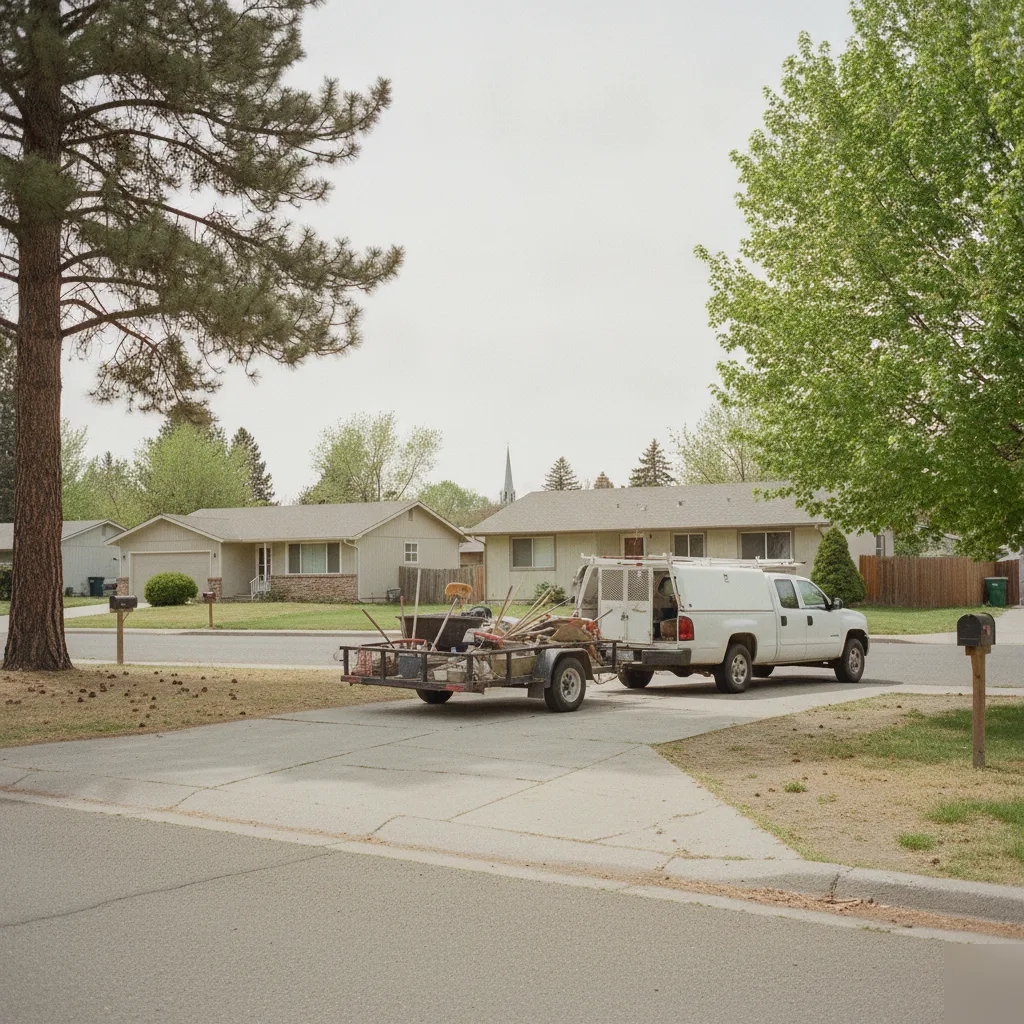
Twenty-plus brutal winters of freeze-thaw cycling? That will find every weak spot in a concrete pour, even a good one. We've worked on plenty of these driveways along these streets. And the issue is almost always the same: solid original concrete with cracking that shows up right at the control joints or along the garage apron. These are typical spots for concrete crack repair.
These aren't builder-grade slabs either. This tract holds homes with a median value of $439,200. Every house we've looked at nearby is a single-family detached home, no exceptions.
That kind of build quality buys you time, it doesn't buy you immunity. Spokane just doesn't care what your home is worth. Water gets into a hairline crack in October, freezes solid in December, and by March that crack has doubled in width. We see it every spring driving through this neighborhood, it's a constant problem.
Homeowners here tend to be settled. The median age in this tract runs 45.4. Every house is owner-occupied. Nobody's flipping these properties for a quick buck. Folks who live near the church plan to stay. They want driveway repair done once, and done right, no patch job that fails again in two winters. That's the mindset we work with out here. And it's the right one for lasting repairs.
The typical job we run in this area isn't a full driveway replacement. It's concrete crack repair on a slab that's still structurally sound. But it's showing its age at the joints and edges. We'll route out the cracks. We clean them properly. Then we seal them. We do this before winter locks moisture in for good. For driveways with more wear, especially aprons that catch runoff from the roofline, we look at concrete resurfacing. This avoids tearing the whole thing out.
Resurfacing lets a 2000-era driveway get another decade or more out of the original base. And it costs a fraction of a full tear-out. That's smart value.
Garages matter too, in this stretch of Spokane Valley. Many of these homes have finished garage space. The concrete inside takes abuse from tires, road salt, and moisture tracked in all winter. Garage floor concrete work and epoxy floor coating come up often on these properties. Especially for owners who use the garage as more than just parking, maybe for a workshop or extra living space.
One thing we always check in this neighborhood: drainage grading around the slab edges. Homes built in this era often have decorative landscaping close to the driveway. Over twenty years, that landscaping settles. It shifts water toward the concrete, instead of away from it. Fix the grading. Fix the crack. A driveway from 2000 can easily outlast another brutal Spokane winter, maybe ten more.

Frequently Asked Questions
How far is your shop from homes near Spokane Valley Church of the Nazarene?
It's a short drive, just a quick trip down Sprague Ave from our shop at 16823 E Sprague Ave. We route through this area often, so we know the fastest way to your driveway without getting stuck at school-rush traffic lights. That local knowledge keeps your job on schedule.
Do you work around Sunday service traffic near Spokane Valley Church of the Nazarene?
Yes, we schedule around it. Sunday mornings bring extra cars parked along curbs and driveways near the church property line, so we avoid showing up with a trailer during service times. We'll work out a time that keeps our equipment clear of visitor parking.
Should homeowners near Spokane Valley Church of the Nazarene expect different driveway problems than older parts of the valley?
Yes, your driveway problems look different because most homes here were built around 2000. You won't see the brittle, decades-old slabs common near Sprague. Instead, expect hairline cracking near garage aprons and settling cracks from fill compacted during that early-2000s building boom.
Ready to Experience the Concrete Revival Difference?
Complete Service Area Coverage
- Spokane and Spokane Valley
- Coeur d'Alene metro area
- Deer Park and Newport
- Liberty Lake and Otis Orchards
- Cheney and Medical Lake
- Post Falls and Rathdrum