
Driveway Repair Near Flying Squirrel | Concrete Revival
Families hauling kids to Flying Squirrel Trampoline Park on East Indiana Avenue pass over cracked driveways the whole way there. Most don't notice until it's their own slab splitting apart after a hard January freeze. The homes around this stretch of Spokane Valley went up in the mid-1980s, and that means the original concrete is pushing 40 years old. Four decades of freeze-thaw cycles will punish any driveway that hasn't been touched.
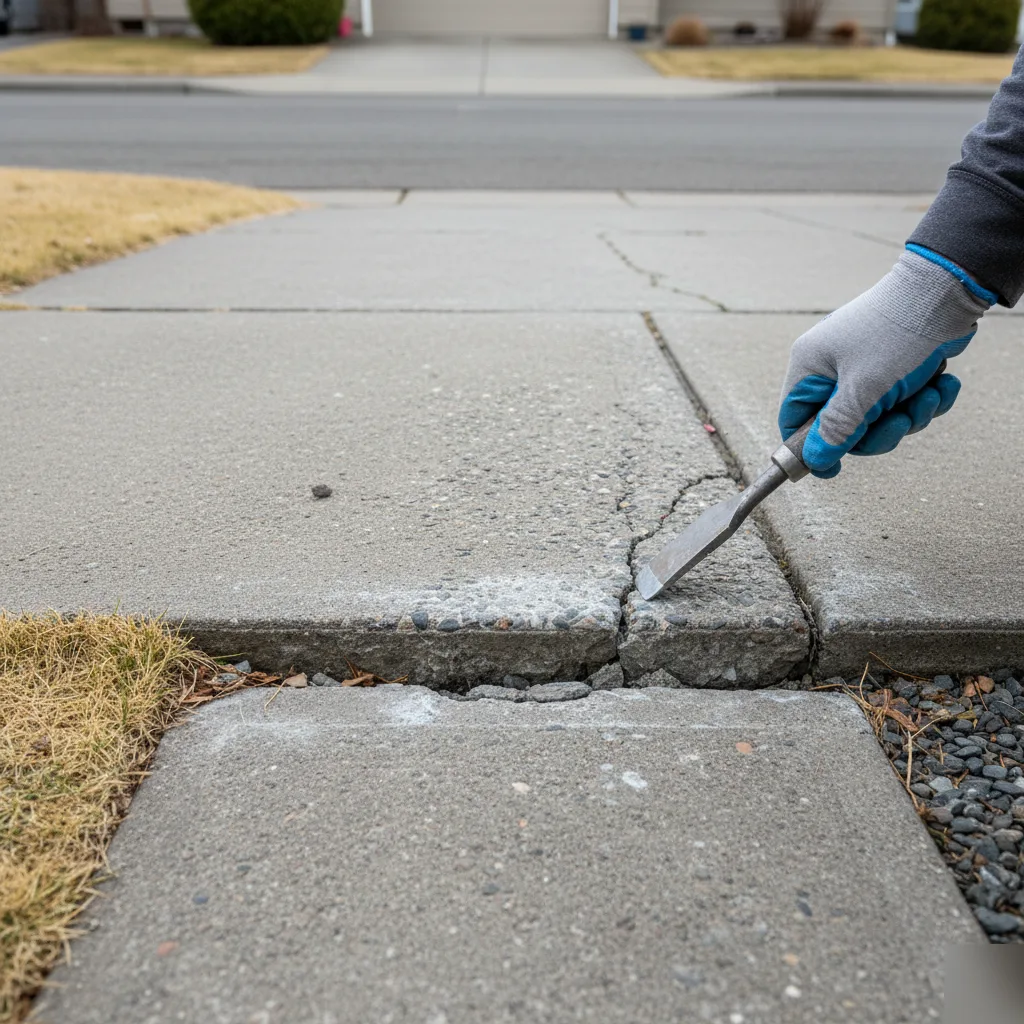
We're out in this part of the Valley constantly. The neighborhoods between Indiana and Trent, running east toward Sullivan Road, keep us busy with driveway repair calls from October through May. The damage patterns here are predictable once you know what you're looking at.
Over 80% of the homes in this area are owner-occupied single-family houses. That matters because homeowners here tend to stay put. They're invested. But a lot of them inherited driveways poured with the original construction, back when builders used thinner slabs and skipped proper control joints. Here's what we see most often in this part of Spokane Valley:
- Longitudinal cracks running the full length of the slab from inadequate joint spacing
- Corner breaks near garage aprons where water pools and freezes every winter
- Surface spalling from decades of salt exposure and temperature swings
- Settlement cracks where the sandy Spokane Valley soil has shifted under the pad
That sandy, gravelly soil is a big part of the story. It drains, which sounds good until sections of your sub-base wash out and leave voids under the concrete. One heavy spring runoff and you've got a slab sitting on air in spots. That's when you get the rocking, the cracking, the uneven surface that catches a snow shovel blade every single time.
Concrete crack repair on a mid-80s driveway isn't the same job as patching a five-year-old pour. The aggregate is different. The finish has weathered. You can't slap a tube of caulk in a crack and call it done. Industry-standard concrete driveway repair procedures outline why matching repair materials to the existing slab composition matters for long-term performance. We match the repair to the existing slab so it holds through another round of Spokane Valley winters, because if your driveway's got a crack that wasn't there last spring, it's not getting smaller on its own.
A lot of the homes along the streets south of East Indiana Avenue have two-car garages with wider aprons. Wider pours are more prone to mid-slab cracking because the original builders didn't always cut enough relief joints for the square footage. We see it over and over in this neighborhood. The fix isn't complicated, but it needs to be done right or the crack just migrates.
Driveway repair near Flying Squirrel Trampoline Park is one of our most common service areas. The housing stock, the soil conditions, the age of the concrete all line up. We've seen how these slabs fail and how to make the repair last.
And if you've been putting it off because the crack "isn't that bad yet," think about what another winter does to exposed concrete. Water gets in. Freezes. Expands. The crack doubles. Then you're looking at a full driveway resurfacing job instead of a simple repair. Catch it now while it's still a fix, not a replacement.
How Our Team Reaches the Flying Squirrel Trampoline Park Area
Our shop sits on East Sprague Ave out near the 99037 zip. Getting to the park neighborhood is a straight shot west, and we're on those roads constantly.
- We head west on E Sprague Ave from our shop at 16823 E Sprague.
- Continue on Sprague past the Sullivan Road corridor, staying right through the commercial stretch.
- Turn north on N Progress Road. Flying Squirrel Trampoline Park sits right there off E Indiana Ave, and the residential streets fan out in every direction from that intersection.
- From Progress we can cut east or west to reach homes along E Marietta Ave, E Cataldo Ave, or any of the side streets between Evergreen Road and Sullivan.
Total drive is about 10 minutes on a clear morning. During afternoon traffic near Sullivan and Sprague, add five. We've made this run so many times we stop thinking about it.
That matters for driveway repair because our crew isn't burning half the day getting to you. Short travel means we show up on time, get the truck unloaded, and start work while the morning is still cool. Concrete crack repair goes better when the slab hasn't been baking in July sun for six hours.
The streets around the park are mostly residential loops and cul-de-sacs. Quiet neighborhoods with wide driveways and room for our equipment trailer. We don't have to block a busy road or park three blocks away. That's a real advantage compared to jobs we do closer to the Sprague commercial strip, where parking a concrete saw next to moving traffic gets complicated.
Here's something most homeowners in this area don't realize. Because this neighborhood sits so close to our daily route along Sprague, we can stop by for a free estimate without scheduling a special trip. Heading to a job near Sullivan? We'll swing through on the way back. Need us to check on a driveway resurfacing cure before your cars go back on it? Same deal. We're already in the neighborhood.
Homes along E Indiana Ave and the blocks just south of the park sit on flat ground with decent drainage. That helps with concrete work. Water runs off instead of pooling against your garage slab. But flat lots create their own problems, and we've seen it play out here over 20 years of Spokane driveway repair. Freeze-thaw cycles push moisture under the surface, and without proper slope at the edges, ice forms right where your tires sit every morning.
Which blocks around here drain toward the street and which ones send water toward the foundation. That local knowledge shapes how we approach every concrete driveway repair in this part of Spokane Valley. A crew driving in from across town won't notice the subtle grade changes between Progress Road and the lots east of the park. We notice because we've fixed the damage those grade changes cause.
So if you're near Flying Squirrel Trampoline Park and your driveway's showing cracks, give us a call. We know the area and we'll come take a look.
What the Sprague Corridor Neighborhood Tells Us About Driveway Wear
Most homes near Flying Squirrel Trampoline Park were built in the mid-1980s. That puts the original concrete at close to 40 years old. Forty Spokane Valley winters. Forty rounds of freeze-thaw. And it shows.
Over 80% of the houses in this tract are single-family detached homes. Owner-occupied, well-kept yards, two-car garages. The kind of neighborhood where people care about curb appeal, they just don't always notice the driveway cracking until it's past the hairline stage. We see it constantly along the streets between Sprague Avenue and the commercial strip near the park, a slab that looked fine two summers ago now has a network of cracks running from the garage apron to the sidewalk.
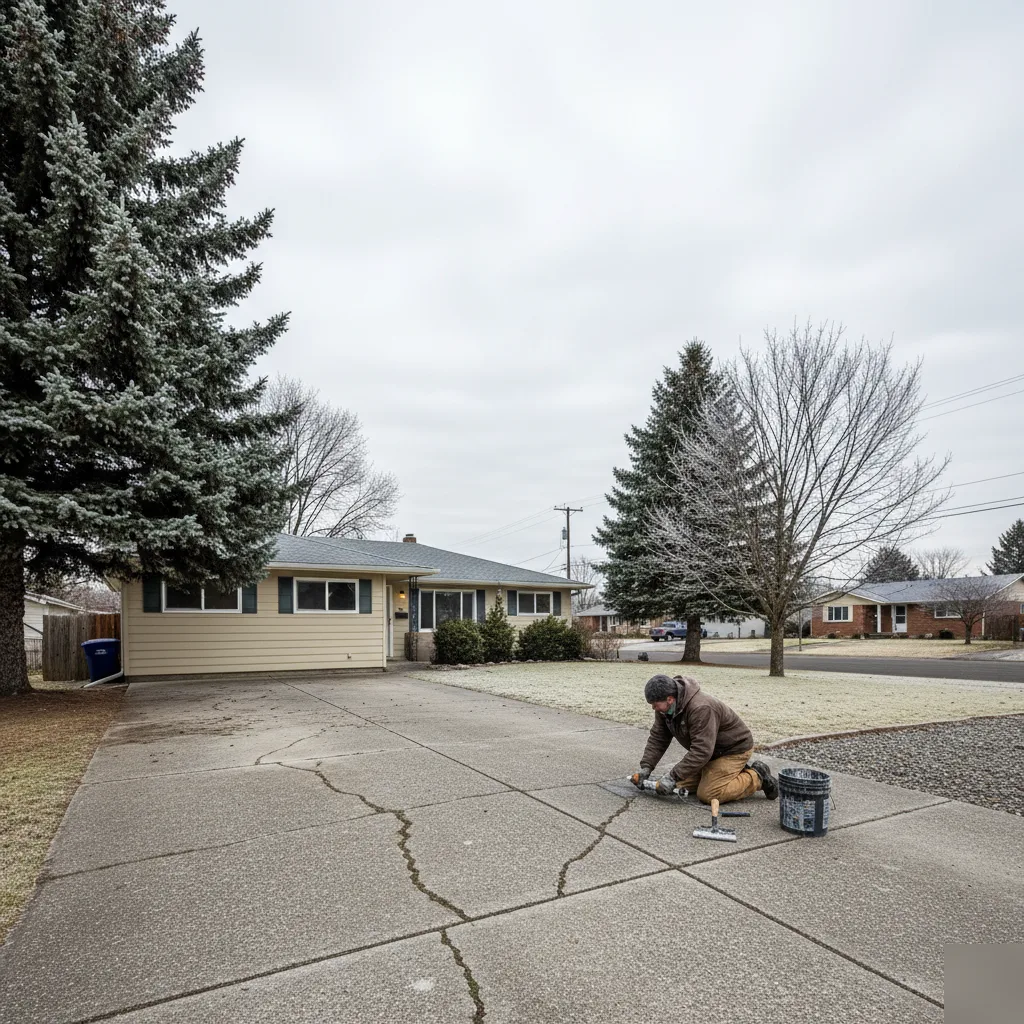
Here's what makes this stretch of the valley different from newer builds further south. The soil along the Sprague corridor has decades of settled fill beneath it. Homes built in '85 or '86 sit on ground that's shifted, compacted unevenly, and reacted to every irrigation cycle since. That creates low spots where water pools. Water pools, freezes, expands. Concrete crack repair becomes a yearly conversation for a lot of these homeowners.
This part of Spokane Valley has a specific pattern we've tracked across hundreds of projects:
- Corner lot driveways along East 16th and nearby cross-streets take extra abuse from city plow runoff and road salt splash
- Homes with south-facing slabs see faster surface scaling because of rapid freeze-thaw cycling on sunny winter days
- Original 1980s pours in this area tend to be thinner than current standards, so they crack deeper and sooner
- Mature trees along the residential blocks push roots under slab edges, lifting sections a half-inch or more
That last one catches people off guard. A raised slab edge is a trip hazard and a water trap at the same time.
Families in this part of Spokane Valley invest in their properties. But driveway repair gets pushed down the list behind roof work and HVAC replacements. By the time someone calls us, the damage has usually spread from one control joint to three or four sections. We get it. A driveway doesn't leak into your living room. It just quietly gets worse.
And the commercial traffic along Sprague doesn't help residential side streets. Delivery trucks, parents heading to the trampoline park on weekends, school traffic. These roads vibrate. That vibration transfers through the ground to nearby driveways, especially the ones built without proper expansion joints.
So if you're in one of those '80s-era homes off the Sprague corridor and your driveway has more cracks than you remember from last spring, that's not random. It's the neighborhood telling you something. The soil, the age of the pour, the climate, the traffic. It all adds up. Driveway repair done right in this area means understanding what's happening beneath the slab, not just patching what you see on top.
Frequently Asked Questions
Do driveways near Flying Squirrel Trampoline Park have specific crack problems I should know about?
Yes — homes in this stretch of Spokane Valley were mostly built in the mid-1980s, so original concrete slabs are pushing 40 years old. That age, combined with the sandy sub-base soil common near East Indiana Avenue, means voids form under slabs after spring runoff. You end up with rocking sections and mid-slab cracks that get worse every winter if you leave them alone.
How quickly can your crew reach the Flying Squirrel Trampoline Park area for a driveway repair estimate?
We can reach the neighborhood off East Indiana Avenue in about 10 minutes from our shop on East Sprague Ave. Because we run the Sprague corridor daily, we often swing through on the way to or from another job near Sullivan Road. That means no special scheduling trip just for an estimate — we're already passing through.
My driveway on a street south of Flying Squirrel has a crack that appeared last winter — is that normal for this neighborhood?
It's very common here. Over 80% of homes in this area are owner-occupied single-family houses, and most were built with thinner slabs and too few control joints. Freeze-thaw cycles do the rest. A crack that showed up last January will be wider by next spring. Getting it repaired now is a much smaller job than waiting until the whole slab needs resurfacing.
Ready to Experience the Concrete Revival Difference?
Complete Service Area Coverage
- Spokane and Spokane Valley
- Coeur d'Alene metro area
- Deer Park and Newport
- Liberty Lake and Otis Orchards
- Cheney and Medical Lake
- Post Falls and Rathdrum