Driveway Repair in Veradale WA | Concrete Revival
Most driveways along Progress Road were poured in the mid-1970s. That's nearly fifty years of Spokane Valley freeze-thaw cycles grinding away at the same slabs. Drive through the corridor and you'll see it. Hairline cracks that turned into spider webs. Settlement near garage aprons. Edges crumbling where the concrete meets the lawn.
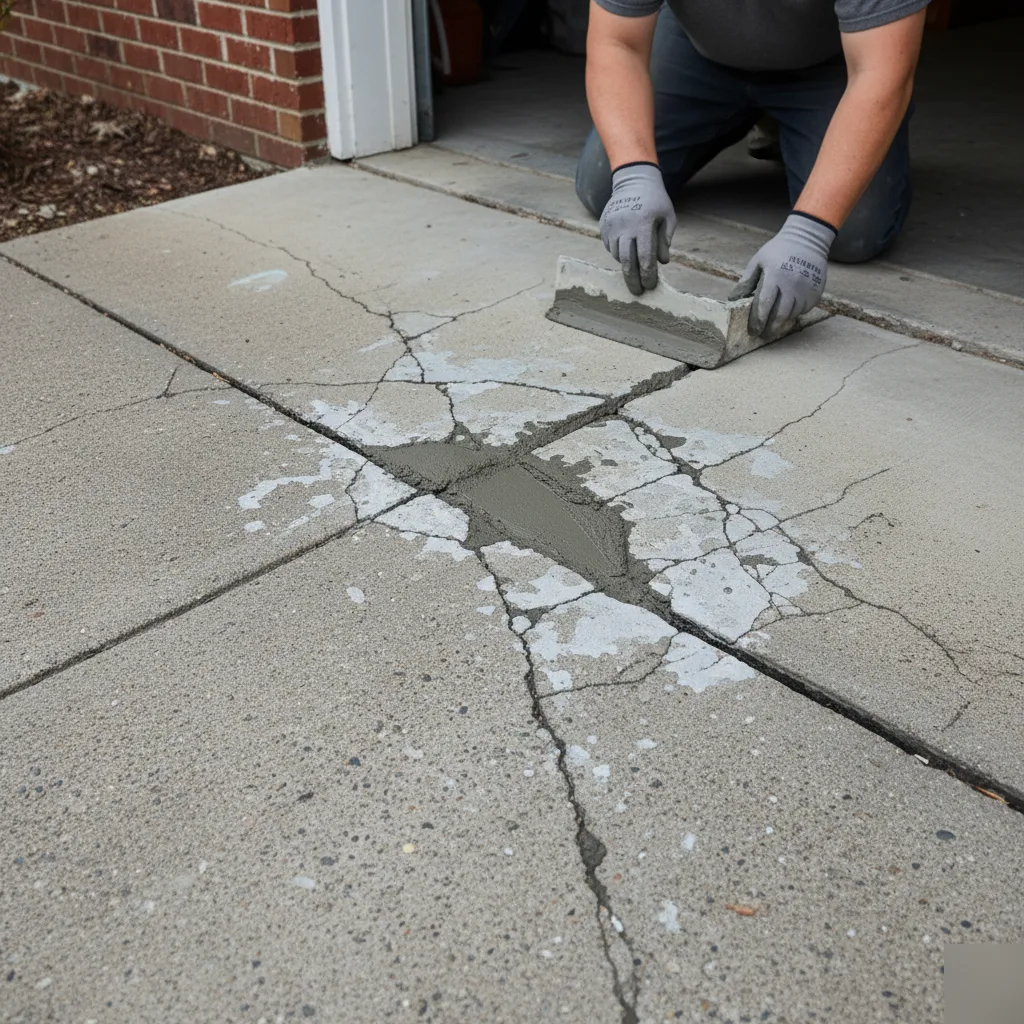
The Progress Road corridor runs through one of Veradale's most established pockets. About three out of four homes here are single-family detached, and most owners have lived in the area long enough to watch their concrete age through decades of hard winters. These aren't new-build driveways with fresh rebar and modern mix designs. They're older pours, many sitting on native soil that shifts when spring runoff saturates the ground.
Here's what we see on almost every call in this part of Veradale:
- Longitudinal cracks running the full length of the driveway, caused by decades of frost heave along Progress Road's gentle grade changes
- Spalling near the street edge where city plows push ice and salt against the concrete every winter
- Sunken sections near the garage where original compaction wasn't enough for the silty soil common in this corridor
- Control joint failures that let water seep underneath, accelerating damage each freeze cycle
We're out on Progress Road and the surrounding streets regularly. The neighborhood keeps us busy.
A typical scenario goes like this. A homeowner notices a crack widening after snowmelt in March. They ignore it through summer because it looks cosmetic. But by the following spring, water has worked underneath and frozen, lifting one side of the slab a half inch above the other. Now it's a trip hazard and a real structural problem. Concrete crack repair done in September would've stopped that whole chain of events.
Timing matters more than people think. The soil here doesn't drain well. Water sits. It freezes. It expands. A small fix before the first hard frost saves a big headache come April.
The homes along Progress Road between Sprague Avenue and 8th sit on lots that slope slightly toward the street. That grade means water naturally runs across the driveway surface and finds every weak spot over time. Driveway repair in this area almost always involves addressing drainage patterns, not just patching what's broken on top. Following environmentally sensitive driveway maintenance practices helps protect the surrounding soil and runoff pathways that are already stressed by Spokane Valley's seasonal freeze-thaw cycles.
So if your driveway near Verdale WA has cracks you've been stepping over, don't wait for another winter to make the call. The freeze-thaw damage in Veradale is real, it's predictable, and it gets worse every season you put it off.
We also handle driveway resurfacing for slabs that are structurally sound but look rough on the surface. Plenty of Progress Road corridor homes have driveways with good bones underneath -- the top layer just needs work. That's a different job than a full tear-out. It costs less and still restores the surface to something solid.
Twenty years of doing this work across Spokane Valley means what the soil does here, what the weather does here, and what repairs actually hold. Progress Road driveways need someone who understands this specific ground -- not a crew that drove in from out of town with no idea what's under the slab.
How Our Team Reaches the Veradale Corridor from Our Spokane Valley Shop
Our shop sits at 16823 E Sprague Ave in Spokane Valley. The Progress Road corridor is a short drive east. We're loaded up and on-site before most contractors have finished their morning coffee.
Here's the route our crews take:
- Head east on Sprague Ave past the Sullivan Road intersection.
- Continue on Sprague through the Veradale commercial stretch near Progress Road.
- Turn north or south off Sprague depending on the job site, using Progress Road, Evergreen Road, or one of the residential side streets that branch into the neighborhoods.
- Most driveways in the Veradale corridor are less than 15 minutes from our door.
No freeway merges. No downtown bottlenecks. Just a straight shot down Sprague Ave into the heart of the corridor.
And that short distance matters more than you'd think. Concrete crack repair and driveway resurfacing jobs need materials mixed and placed within a tight window. A crew sitting in traffic is a crew burning daylight. Because we're right down the road, we show up when we say we will. Morning pours in the Veradale area start on time -- every time.
the neighborhood grid well. The residential streets south of Sprague between Progress and Evergreen have a particular layout -- lots are generous but driveways are often narrow, built in the mid-1970s when two-car garages weren't standard yet. Our trucks fit. We've done it plenty of times. The streets north of Sprague toward the Trent Avenue corridor open up a bit more, but those properties tend to have longer apron sections connecting to the road. Different setup, different approach to the repair.
During morning rush, Sprague near Sullivan can slow down. So our crews heading to Progress Road jobs usually leave the shop by 7:15 to beat the school traffic stacking up around Bowdish and 16th. By the time parents are queued up near the elementary schools, we're already parked and unloading.
We've been running jobs in this part of Spokane Valley for over two decades. We don't need GPS to find your street. which Veradale blocks have the older concrete that's taken the worst freeze-thaw punishment. the sections near Progress Road where the soil shifts and slabs settle unevenly. That local knowledge saves time on every estimate and every pour.
We offer free estimates for driveway repair throughout the Progress Road corridor. One of our crew can be at your place the same week you call, sometimes the same day. That's the advantage of being this close to where you live.
What the 1975 Housing Stock Means for Driveways in This Part of Spokane Valley
Most homes along the Progress Road corridor went up around 1975. That's close to fifty years of Spokane Valley winters hitting the same slabs. And those original driveways? Many are still in place -- cracked, settled, but hanging on.
The concrete work from that era was solid for its time. But mid-70s residential pours didn't get the fiber reinforcement or modern control joints we use now. Builders back then poured thinner slabs on compacted fill, sometimes four inches instead of five or six. After decades of freeze-thaw cycles grinding away at that concrete, the damage shows up in predictable ways:
- Long cracks running parallel to the garage, where the slab meets older expansion joints
- Corner spalling near the street apron, where snowplow runoff pools and refreezes
- Settlement dips halfway down the drive, where original fill has compressed unevenly
- Surface scaling across the middle third, where deicing salt ate through worn sealer years ago
We see these patterns every week in the Veradale area. The houses between Progress Road and Sprague share the same soil conditions, the same builder specs from that era. So the failures look similar from one block to the next.
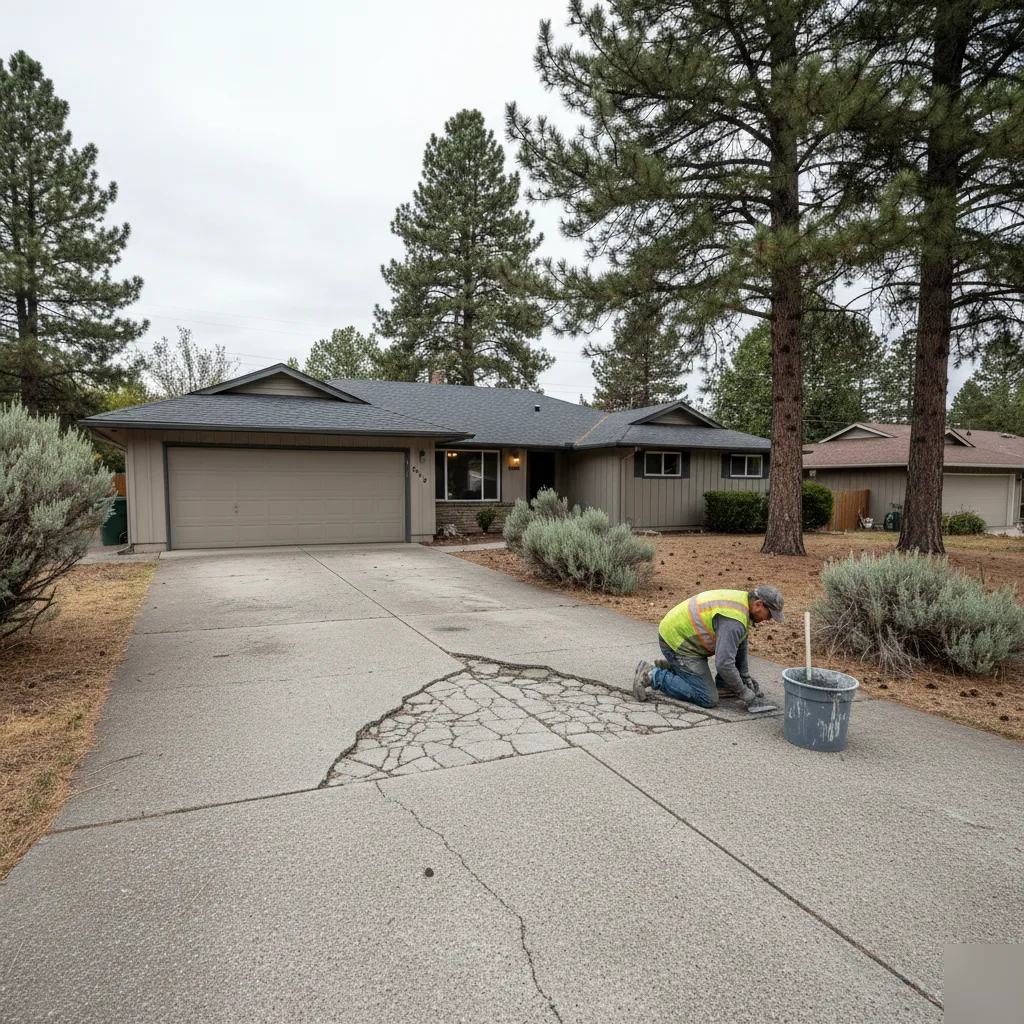
About three out of four homes here are single-family detached. Standalone driveways, not shared parking areas. Each homeowner owns the full slab and the full problem. And because roughly 70% of residents in this tract are owner-occupied, people care about keeping their property right. They're not passing the repair off to a landlord. They're the ones walking across that cracked concrete every morning.
Here's what a typical call from this neighborhood sounds like. A homeowner on one of the side streets off Progress notices a new crack after spring thaw. They've been patching it with hardware store filler for a couple of seasons. But now the crack is wider, the edges are lifting, and water pools against the garage foundation when it rains. That's not a patch job anymore. That's concrete crack repair done right -- with proper routing and a flexible sealant built to handle Spokane Valley's temperature swings.
Some of these driveways need full driveway resurfacing. The surface is too far gone for spot fixes, the aggregate is exposed, the whole thing looks worn out. But the base underneath is still stable. In those cases we resurface over the existing slab instead of tearing everything out. Saves time, saves the landscaping along the edges that took years to grow in.
But some slabs from 1975 are past saving. The base has shifted, the cracks go all the way through, sections have dropped an inch or more. We'll tell you straight if that's the case. Concrete driveway repair only makes sense when the foundation under it can still do its job.
The Progress Road corridor sits at a median home value just under $290,000. A failing driveway drags that number down. It's the first thing buyers see, and the first thing neighbors notice. We've done driveway repair on enough streets in Veradale to know that one solid repair job on a block usually brings a phone call from next door within the month.
Frequently Asked Questions
Why are so many driveways along the Progress Road corridor cracking at the same time?
Most driveways in this part of Veradale were poured around 1975, so they're all hitting the same age at once. Fifty years of Spokane Valley freeze-thaw cycles wear down any concrete slab. Add the silty soil along Progress Road that holds moisture and shifts in spring, and you get widespread cracking across the whole corridor — not just your driveway.
Can I schedule a driveway repair estimate without taking time off work?
Absolutely. Our shop is right on Sprague Ave in Spokane Valley, about 15 minutes from most Progress Road addresses. We leave early to beat school traffic near Bowdish and 16th, so morning appointments start on time. Most homeowners in the corridor get a same-week estimate — sometimes same-day if you call early enough.
Does the slope on Progress Road lots make driveway repairs more complicated?
Yes, and it's something we see on almost every job between Sprague Avenue and 8th. The gentle grade pushes water across your driveway surface and into every crack. Patching the surface alone won't hold if drainage isn't addressed. We look at how water moves across your specific lot before we start any repair — that's what makes the fix last.
Ready to Experience the Concrete Revival Difference?
Complete Service Area Coverage
- Spokane and Spokane Valley
- Coeur d'Alene metro area
- Deer Park and Newport
- Liberty Lake and Otis Orchards
- Cheney and Medical Lake
- Post Falls and Rathdrum