Driveway Repair in East Spokane Valley | Concrete Revival
Frost heave doesn't care how new your slab is. Out near the Saltese Uplands, where the terrain climbs toward the conservation area and drainage shifts from lot to lot, we see concrete driveways crack in ways that catch homeowners completely off guard. The soil east of Sullivan Road holds moisture differently than what you'd find down on the Valley floor, and that moisture is exactly what freeze-thaw cycles go after every winter.
We've been handling driveway repair in East Spokane Valley for over 20 years. The Saltese Uplands area keeps us busy because homes out here sit on larger lots with longer driveways. More surface area means more exposure to Spokane's temperature swings. A crack that starts small in October becomes a real problem by March.
Homes along Henry Road and the streets branching off toward the uplands share a few common driveway problems:
- Surface spalling from repeated freeze-thaw cycles and road salt runoff
- Settling cracks where the subgrade shifts on the area's sloped terrain
- Joint separation in older pours that weren't cut deep enough for this soil type
- Edge crumbling along driveways without proper curb borders
That last one is something we see constantly near the Saltese Uplands. Lots out here tend to have gravel shoulders or natural landscaping right up against the concrete edge. No containment means the slab edge takes a beating from snowplows, tire traffic, and water working its way in from the side.
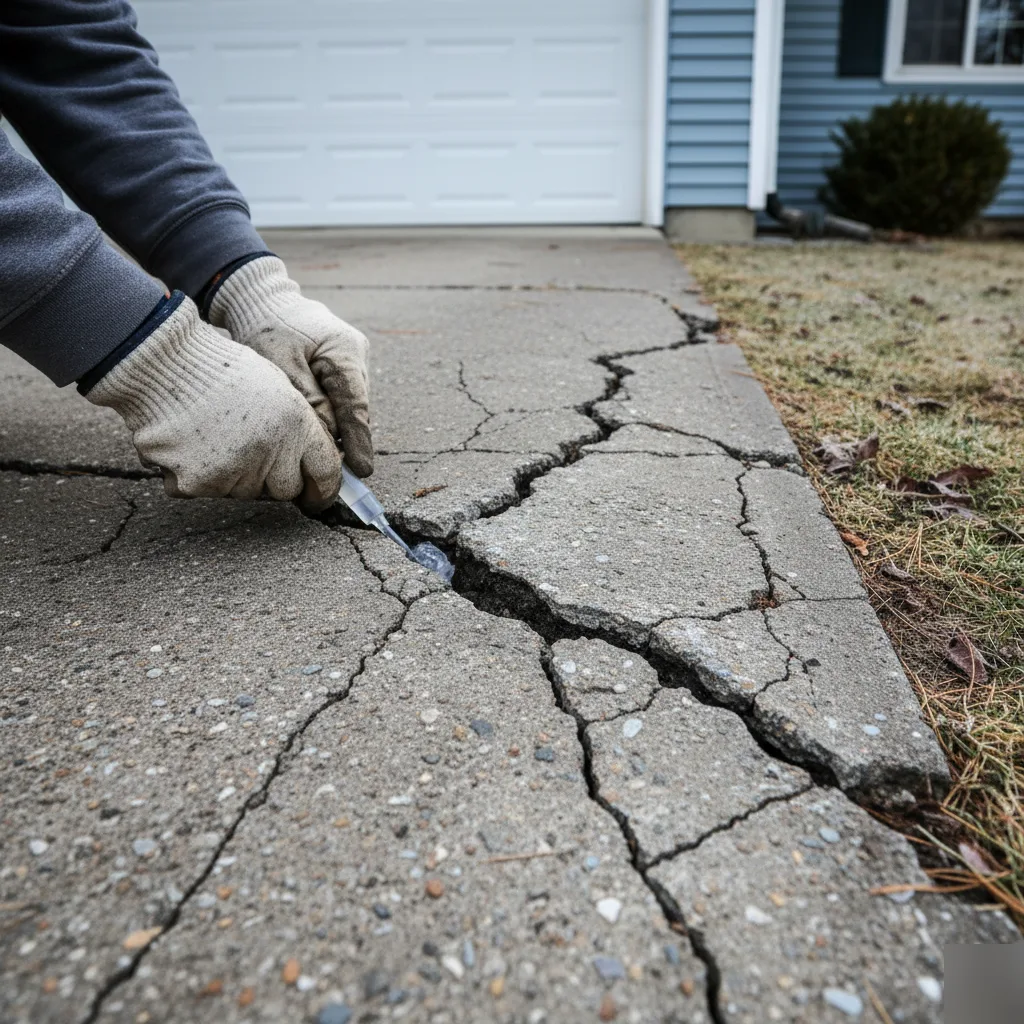
A typical call from this neighborhood goes like this. A homeowner spots a crack running across the apron where the driveway meets the garage pad. Looks cosmetic. But water gets in, freezes, and the crack widens a quarter inch over one winter. By the time they call us, the slab sections have shifted and a straightforward concrete crack repair has turned into a partial replacement. We'd rather catch it early, and most of the time we can.
The Saltese Uplands area picks up slightly more snow than central Spokane Valley because of the elevation gain. Your concrete takes more hits per season. Small fixes matter more out here, not less.
We handle everything from crack filling and concrete repair to full driveway resurfacing. Some homeowners near the uplands ask about colored or stamped concrete when they're replacing damaged sections. That's a smart move if you're already tearing out a panel, match the new work to something that looks intentional rather than patched together.
But most jobs out here are straightforward. Fix the cracks. Seal the surface. Make sure water drains away from the garage.
One thing we always check on Saltese Uplands driveways is slope and grade. Water pooling is the enemy. If your driveway holds puddles after rain, that's tomorrow's crack forming right now. We address the root cause during every driveway repair, not just the damage you can see standing in your garage doorway.
How Our Team Reaches the East Spokane Valley Area
Our shop sits right on Sprague Ave at 16823 E Sprague, so getting out to the Saltese Uplands area is a straight shot east. No freeway. No downtown traffic. We load up and go.
- Head east on E Sprague Ave past Sullivan Road. Stay on Sprague through the heart of Spokane Valley.
- Continue past Barker Road where Sprague starts to open up, fewer strip malls, more space between properties.
- Turn south toward the Saltese Uplands neighborhood. The roads climb a bit here, and the lots get bigger as you move away from the main corridor.
- We're pulling up to your driveway in about 15 minutes on a clear day. Morning traffic near Sullivan might add a few minutes, but that's it.
this route well. Our crew runs it regularly for driveway repair jobs on the east side, and the short drive means we're not burning half the morning just getting to you. That matters when you've got a cracked slab and want it handled the same week.
The Saltese Uplands stretch sits east of where a lot of contractors bother to go. Many outfits cluster around the central Valley corridor and treat anything past Barker like it's a different county. We've been out on those quieter streets off Henry Road and down near the Saltese Conservation Area more times than we can count. The homes out there sit on larger parcels with longer driveways, more surface area exposed to Spokane's freeze-thaw punishment every winter.
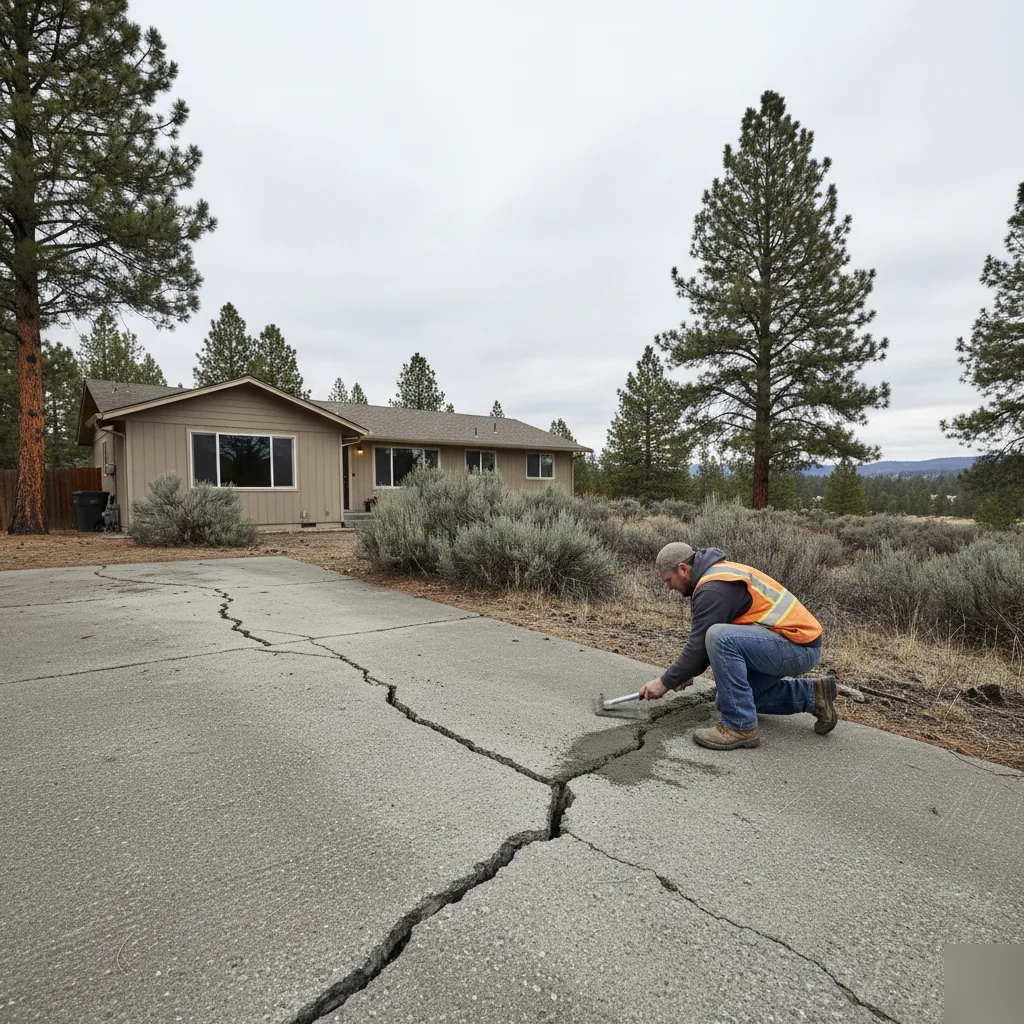
Bigger driveways mean more joints, more potential crack points. A 60-foot driveway on a half-acre lot takes a beating differently than a short pad in a subdivision closer to town. We see it every season.
Sprague Ave is flat and direct. Once we're past the busier commercial stretch near Evergreen and Sullivan, the road opens up. By the time we hit the east end near the Idaho border, we're already in your neighborhood.
One thing homeowners in the Saltese Uplands area tell us they appreciate is that we show up when we say we will. Short drive, no excuses. If we tell you 8:30 Tuesday morning for a driveway repair estimate, we're there at 8:30. We've driven this route in every season and know exactly how long it takes, even when the roads are sketchy in February.
So if you're sitting in your kitchen looking out at a driveway with spider cracks spreading from the garage apron toward the street, give us a call. We'll come out from our Sprague Ave location, take a look at what Spokane Valley winters have done to your concrete, and give you a free estimate on the spot. No trip charge. No runaround. Just a contractor who already knows your neighborhood.
What East Spokane Valley's Older Driveways Have in Common
Drive down Sullivan Road past the Saltese Uplands trailhead and turn into any neighborhood east of there. Same story, driveway after driveway. Cracks running from the garage apron to the street. Spalling along the edges where plows scraped too close. Sunken spots near the seams where the ground shifted over years of freeze-thaw cycles.
Most homes in the Saltese Uplands area were built when four-inch slabs were standard. That's barely enough for a passenger car, let alone the trucks and SUVs parked in East Spokane Valley driveways today. The concrete took decades of Spokane winters without the reinforcement or base prep we'd use now.
Here's what we run into over and over in this part of Spokane Valley:
- Longitudinal cracks down the center of the slab from settling soil beneath the Saltese flats
- Surface scaling and pitting from years of de-icer use on those steep upland grades
- Tree root heave near property lines where ponderosa pines push up slab edges
- Joint failure at expansion seams that were never sealed after the original pour
That root heave problem is a real one out here. The natural landscape around Saltese Uplands means mature trees are everywhere, and their roots don't care about your driveway. They'll push a two-inch lift into the middle of a slab in just a few seasons. Once that lift happens, water pools on the low side. One hard freeze turns a cosmetic crack into a concrete crack repair job.
We're out in this neighborhood regularly. The homes along the corridor between Sullivan and the Idaho state line keep us busy because the soil conditions are different from central Spokane Valley. That silty loam near the Saltese wetlands holds moisture longer, freezes deeper, and shifts more than the gravel-heavy soils closer to the river. Driveways that look fine on top can be failing underneath.
A typical call from the Saltese Uplands area goes like this. A homeowner notices their driveway slab rocking when they drive over it. They peek underneath and see a gap between the concrete and the ground. That void formed because water drained through a crack, eroded the base, then froze and pushed the gap wider each winter. By the time they call for driveway repair, the slab is floating on air in spots.
Not every cracked driveway needs a full tear-out. That's the part most people don't realize. Many of these older East Spokane Valley driveways have solid aggregate underneath the damaged surface. Concrete crack repair and driveway resurfacing can bring them back for a fraction of what replacement costs. It depends on the base condition, the crack pattern, and how deep the frost damage went.
The freeze-thaw cycle out here runs hard from late October through March. Five months of expansion and contraction, five months of moisture working into every unsealed joint and hairline crack. Driveways near the Saltese Uplands take it worse than neighborhoods closer to the river, the elevation is slightly higher and the ground stays colder longer.
If your driveway has that familiar web of cracks or a sinking corner, you're not alone. It's the most common call we get from this side of Spokane Valley. And it's exactly the kind of problem we've been solving out here for over 20 years.
Frequently Asked Questions
Do you actually service homes out near the Saltese Uplands, or is that too far east for most contractors?
Yes, we service the Saltese Uplands area regularly — it's about 15 minutes from our shop on E Sprague Ave. We run that route east past Sullivan and Barker Road constantly. A lot of contractors treat anything past Barker like it's out of their way. We don't. If you're off Henry Road or near the conservation area, we're already familiar with your neighborhood.
Can I schedule a driveway repair estimate without taking time off work?
Absolutely — we work around your schedule, including early morning slots. Our drive from Sprague Ave to the Saltese Uplands area is short and predictable. If we say 8:30 Tuesday, we're there at 8:30. We've run this route in every season, including February when the roads get rough, so weather doesn't push your appointment.
Why do driveways near the Saltese Uplands seem to crack faster than homes closer to the Valley floor?
The elevation gain near the Saltese Uplands means your concrete takes more freeze-thaw hits per season than driveways down on the Valley floor. The soil east of Sullivan Road also holds moisture differently, and that trapped moisture is exactly what winter goes after. Larger lots out here mean longer driveways with more joints — more potential crack points exposed to Spokane's temperature swings every year.
Ready to Experience the Concrete Revival Difference?
Complete Service Area Coverage
- Spokane and Spokane Valley
- Coeur d'Alene metro area
- Deer Park and Newport
- Liberty Lake and Otis Orchards
- Cheney and Medical Lake
- Post Falls and Rathdrum