
Does Homeowners Insurance Cover Driveway Repair?
Quick Summary: Homeowners insurance almost never covers normal driveway wear and tear, freeze-thaw damage, or gradual deterioration. Coverage may apply for sudden, unexpected events like fallen trees, vehicle collisions, fire, lightning, or vandalism. Understanding which category your damage falls into — before you file a claim — saves time and protects your policy. Call Concrete Revival at (509) 608-3211 for a free estimate.
Most Standard Homeowners Policies Do Not Cover Normal Driveway Wear and Tear
Here's the part nobody wants to hear. Your homeowners insurance almost certainly won't pay to fix a driveway that's simply getting old. Cracks from years of use, surface erosion, fading, and settling? That's all considered normal wear and tear. Insurance companies don't cover it.
Think of it this way. Insurance exists for sudden, unexpected events. A tree falls on your driveway during a windstorm. A vehicle crashes into it. Those are the kinds of things a policy might help with. But the slow, steady breakdown that happens over five, ten, or twenty years? That's on you.
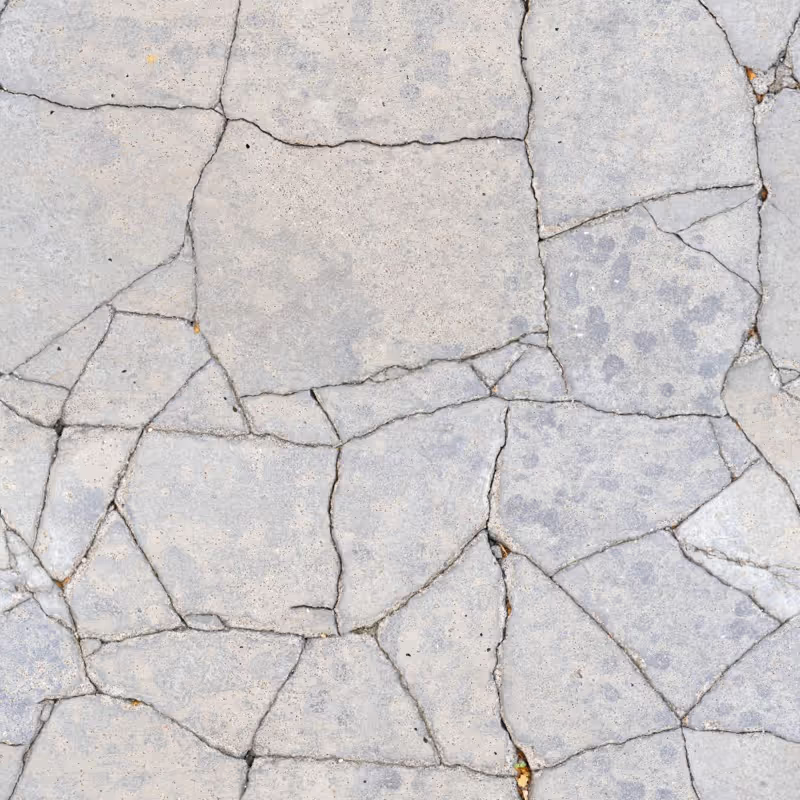
We see this cause confusion all the time with Spokane Valley homeowners. Someone notices deep cracks spreading across their concrete after a particularly rough winter and assumes the freeze-thaw cycle counts as storm damage. It doesn't. Insurance adjusters classify freeze-thaw deterioration as a maintenance issue, not a covered peril. The Insurance Information Institute confirms that standard homeowners policies specifically exclude damage from wear and tear, aging, and lack of maintenance.
What falls under "normal wear and tear"? Quite a lot:
- Hairline cracks that spread over several seasons
- Surface spalling from repeated freezing and thawing
- Sinking or settling caused by soil compaction underneath
- Weed growth pushing through existing cracks
- Oil stains and general surface degradation
Every single one of those is a maintenance responsibility. Not an insurance claim.
Here's a real scenario we run into regularly. A homeowner near the Greenacres area had a concrete driveway about 15 years old — heavy cracking throughout, water pooling in low spots every spring. They contacted us looking for driveway repair in Spokane after filing a claim, thinking the snowmelt water damage qualified as a covered event. Their insurer denied it within a week. The reasoning was straightforward: the driveway had reached the end of its expected lifespan, and the homeowner hadn't performed routine maintenance like crack sealing along the way. It's a situation we see often — and a reminder that staying ahead of issues with timely driveway repair in Spokane can protect both your property and your ability to make a valid claim down the road.
That last part matters more than you might think. If an adjuster sees evidence of neglected upkeep, it strengthens their case for denial. Keeping up with small repairs isn't just smart for your driveway's longevity — it also protects your ability to file a legitimate claim if something sudden does happen later.
The bottom line is simple. Insurance protects against surprises. Your driveway wearing out isn't a surprise. It's inevitable.
Specific Events That May Trigger Driveway Coverage Under Your Policy
Not every crack or pothole means you're out of luck. Certain events can trigger coverage for driveway damage under a standard homeowners policy. The key is understanding which ones qualify and why.
Most policies cover what insurers call "named perils" — specific events listed in your policy documents. If your driveway gets damaged by one of these, you may have a valid claim.
Falling trees and large limbs. A big windstorm knocks a mature pine onto your driveway and cracks the concrete. That's typically a covered peril. We see this happen more than you'd think, especially in neighborhoods near Dishman Hills or along older tree-lined streets in the Greenacres area. The wind event itself is the covered peril, and the tree damage to your driveway falls under "other structures" coverage in most policies.
Vehicle damage from others. If a delivery truck backs into your driveway and breaks a section of it, your homeowners policy might step in if the driver's insurance won't pay or the driver is unidentified.
Fire. A garage fire that spreads and scorches or cracks your driveway surface could be covered. So could damage from a neighbor's fire that reaches your property.

Lightning strikes. Direct lightning hits can fracture concrete. Most people don't realize lightning can do that kind of damage to a hard surface, but the force and heat involved are enormous. If you can document the strike and resulting damage, this is generally a covered event.
Vandalism. If someone deliberately damages your driveway, that's usually a named peril. We've had customers in Spokane Valley discover intentional concrete destruction. Frustrating — but at least the policy may help.
Explosion damage also qualifies under most standard policies. A gas line issue or vehicle explosion near your driveway could cause real structural harm to the surface.
What about water and ice? This is where things get tricky. A sudden, accidental water discharge might be covered — for example, a water main bursting under your driveway unexpectedly. But gradual freeze-thaw damage from Spokane Valley's cold winters is almost always excluded. Insurers view that as a maintenance issue, not a sudden event.
That distinction matters more than anything else in this conversation: sudden and accidental versus slow and predictable. Your insurer will ask one simple question — did this happen all at once because of a specific event, or did it develop over time?
According to the Insurance Information Institute, standard homeowners policies generally cover about 16 named perils under an HO-3 policy. Your driveway falls under "other structures" coverage, typically set at 10 percent of your dwelling coverage amount.
One scenario we run into often: a homeowner notices driveway damage after a storm but waits weeks to document it. By then, it's harder to prove the storm caused the problem. Take photos immediately after any severe weather event — even if you're not sure there's damage. A quick photo with a timestamp protects you later.
How the Claims Process Works If Your Driveway Damage Is Covered
So your driveway took a hit from a fallen tree or a vehicle accident and you believe your policy covers it. Now what? The claims process isn't complicated, but skipping a step can slow things down or even get your claim denied.
Start by documenting everything. Right away. Take photos from multiple angles — close-up shots of the cracks or broken sections, and wider shots showing what caused the damage. If a tree fell across your driveway after a windstorm, photograph the tree, the root base, and the driveway together. Context matters to adjusters. We've seen homeowners lose ground on legitimate claims simply because they cleaned up the debris before snapping a single picture.
Call your insurance company to file a claim as soon as possible. Give them the basics: when the damage happened, what caused it, and how bad it looks. They'll assign you a claim number and schedule an adjuster visit.
The adjuster's visit is the most important part of this process. This person will inspect your driveway, review your photos, and determine whether the damage falls under a covered peril. Be home for this visit if you can. Walk the adjuster through what happened and point out details they might miss. And don't start permanent repairs before the adjuster visits — fixing the driveway before inspection removes the evidence your insurer needs to approve the claim.
Here's something most people don't realize: your adjuster's initial assessment isn't always the final word. If the payout seems low or the claim gets partially denied, you have the right to request a re-inspection or file an appeal. You can also hire a public adjuster to advocate on your behalf.
One scenario we run into often in Spokane Valley: a homeowner files a claim after spring thaw reveals major driveway damage. The insurer pushes back, saying it's wear and tear from freeze-thaw cycles. But if you can show that a specific covered event — like a heavy branch falling during an ice storm — caused the initial crack that worsened over winter, you've got a stronger case. Timing and documentation make the difference.
After the adjuster approves your claim, you'll receive a settlement offer — the amount your insurer will pay toward repairs, minus your deductible. Review it carefully and compare it against repair estimates from local contractors. If the numbers don't line up, push back with written quotes.
A few practical tips from years of working with homeowners through this process:
- File your claim as soon as possible — waiting weeks can raise red flags with your insurer
- Keep a written log of every phone call, including the date, the rep's name, and what was discussed
- Get at least two repair estimates before accepting a settlement
- Save all receipts if you need temporary fixes to prevent further damage — most policies reimburse reasonable emergency measures
The whole process typically takes two to six weeks from filing to settlement, according to the National Association of Insurance Commissioners. Complex claims or disputes can stretch longer. Patience and good records are your best tools.
Frequently Asked Questions
Does homeowners insurance cover driveway damage from Spokane Valley's freeze-thaw winters?
No, freeze-thaw damage is almost never covered by homeowners insurance. Insurers classify it as a maintenance issue, not a sudden event. Spokane Valley winters are tough on driveways — repeated freezing and thawing breaks down concrete and asphalt over time. Because it happens gradually, adjusters treat it like normal wear and tear. Your best protection is sealing cracks early each season before water gets in and makes things worse.
Is it a mistake to assume all driveway cracks after winter are storm damage?
Yes, that's one of the most common mistakes homeowners make. Cracks that spread slowly over several seasons are not storm damage, even if a bad winter made them worse. Insurance adjusters look at the history of the damage — if your driveway was already deteriorating, they will likely deny the claim. Keeping up with small repairs over the years actually helps protect you if you ever need to file a real claim later.
Does neglecting small driveway repairs hurt my chances of filing a claim later?
Yes, it can. If an adjuster sees that you skipped routine maintenance like crack sealing, it strengthens their case for denying your claim. Even if a covered event like a fallen tree caused damage, a history of neglect can complicate things. Staying on top of small repairs shows you took reasonable care of your property.
What driveway damage events might actually be covered by my policy?
Sudden, unexpected events are what your policy is built for. A falling tree during a windstorm, a vehicle crashing into your driveway, vandalism, lightning strikes, fire damage, and a water main bursting under your driveway unexpectedly are examples that may qualify. The key word is sudden — if the damage happened fast because of a specific event and wasn't caused by years of neglect, it's worth calling your insurance agent to ask.
When should I call a professional instead of trying to fix my driveway myself?
Call a professional when cracks are wider than a quarter inch, water is pooling in low spots, or sections are sinking or lifting. Small hairline cracks are often a DIY fix with the right filler. But deeper structural problems need a trained eye. Spokane Valley's soil conditions and clay-heavy ground can cause settling that looks simple on the surface but runs deeper underneath. A professional can tell you whether you need a patch or a full repair before you spend money on the wrong fix.
What counts as normal wear and tear on a Spokane Valley driveway?
Normal wear and tear includes hairline cracks, surface spalling, sinking from soil settling, weed growth through cracks, and general surface fading. None of these are covered by insurance. In Spokane Valley, the combination of cold winters, clay soil, and temperature swings speeds up this process compared to warmer climates. Most driveways start showing these signs between 10 and 20 years. Catching them early with regular maintenance is the only real way to slow things down.
Ready to Experience the Concrete Revival Difference?
Complete Service Area Coverage
- Spokane and Spokane Valley
- Coeur d'Alene metro area
- Deer Park and Newport
- Liberty Lake and Otis Orchards
- Cheney and Medical Lake
- Post Falls and Rathdrum