
Cracked Driveway: Should You Repair, Replace, or Ignore It? in Spokane Valley
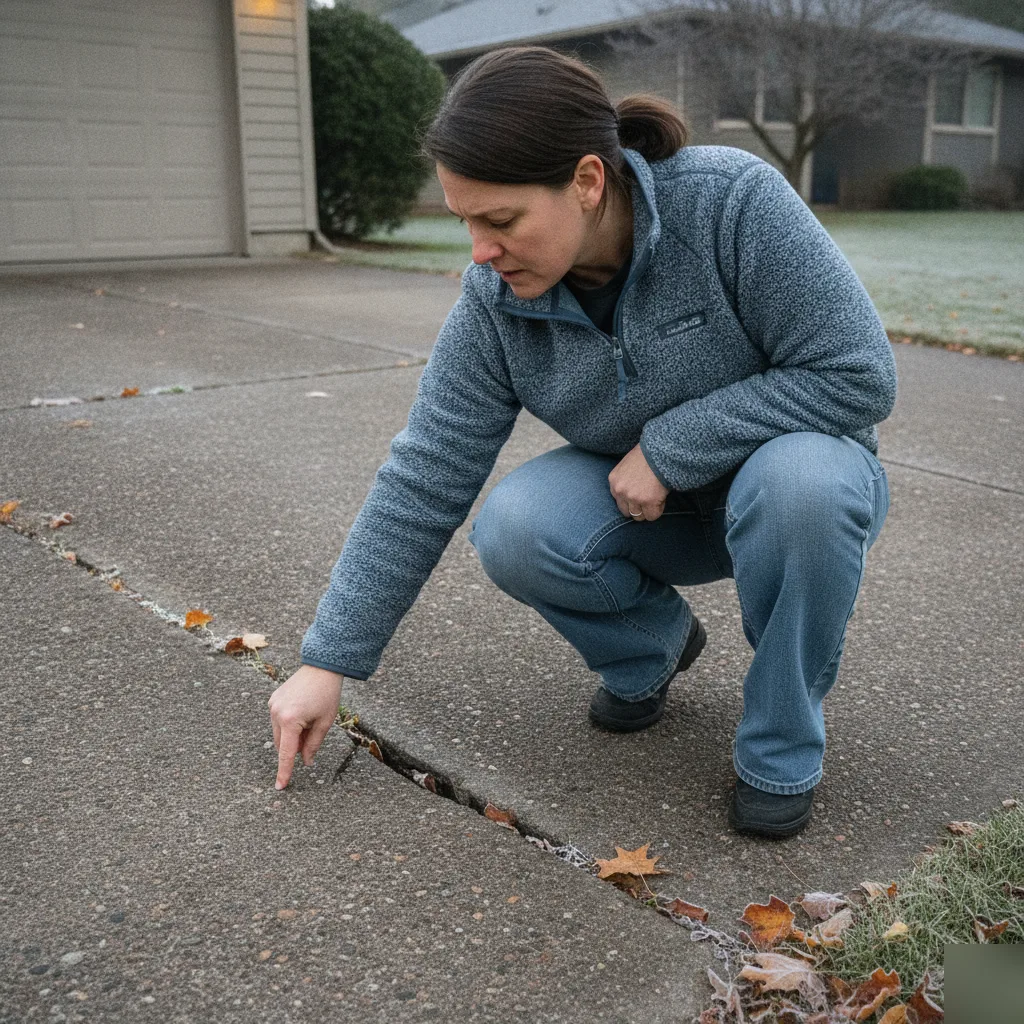
Structural vs. Cosmetic Cracks: What They Mean
A crack in your driveway speaks. But it doesn't always say the same thing. We've been working concrete driveways all over Spokane Valley for 11 years. We read cracks. It's like a mechanic hearing an engine knock. Some are no big deal. Others mean real trouble is coming. That’s where concrete driveway repair restores the slab.
Cosmetic cracks stay on the surface. They’re usually thin, like a hairline. And they won't budge if you push on the slab edges. These often show up from concrete shrinking as it dries. Or just general surface wear. They never reach the base or the rebar. Every driveway picks up a few of these. It's not a panic button on its own.
Structural cracks are another beast entirely. They go deeper. Often right through the entire slab. You'll see them wider on one end. Or they snake along, not a straight line at all. Here’s how we tell the difference on site:
- Width: Cosmetic cracks clock in under 1/8 inch, usually. Structural cracks? Those often blow past 1/4 inch. And they keep getting bigger each year.
- Movement: Push on a structural crack. You'll feel one side sink lower. Cosmetic ones stay put. They’re flush.
- Pattern: A straight line, that’s usually cosmetic. But branching patterns, or what we call "map cracking," mean the base is failing.
- Location: Cracks near downspouts, under tree roots, or in low spots are almost always structural. Not just normal wear.
Here’s what a lot of homeowners miss. Spokane Valley's freeze-thaw cycles make small cracks worse, and fast. Water finds its way into that hairline in October. Come November, it freezes. Ice expands, it always does. This pushes the gap wider. By March, after a whole winter of freezing and thawing, maybe a dozen times over, that same crack can be double or even triple its size. We see this all the time. Drive through neighborhoods off Sullivan Road. Or head out toward Cheney. A minor crack in September becomes a real headache by April.
How can you tell if it's settlement? Not just weather damage? Look at the whole slab. Don't just focus on the crack. If one section dips lower than the piece beside it, that’s structural. It points to base failure. Or soil moving around underneath. We see this often on older driveways. Many were built over fill that wasn’t packed down well. That used to be standard practice decades ago, before our code requirements got stricter.
We had a job last year that sticks with me. It was on the North Side of Spokane Valley. The homeowner called about "a few cracks." But when we arrived, a slab corner had dropped almost an inch. From the street, the cracks seemed small. But beneath it? Water had been eroding the soil for years. That won't ever be a patch job. That’s a section replacement. Build it once, build it right.
Why Freeze-Thaw Cycles Make Cracks Worse Over Time
A hairline crack in October won't last. Not in Spokane Valley. Give it just one of our brutal winters. You've got a real problem. Three winters? Your driveway will fall apart, chunk by chunk. Most homeowners don't grasp this until they've been here for a few years, but we see it unfold constantly.
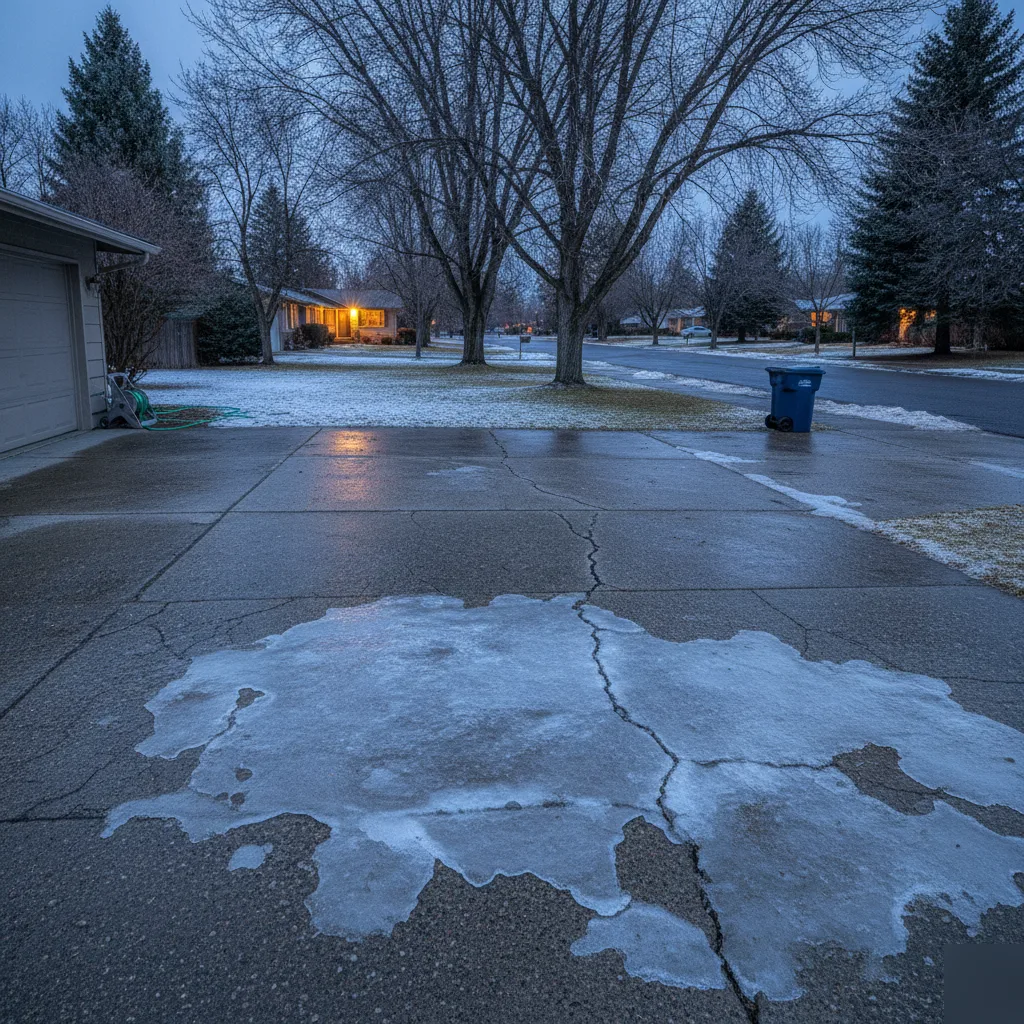
Here's the physics under your feet. Water seeps into a tiny crack. Temperatures dip below freezing. That water turns to ice. Ice takes up about 9% more space than liquid water. That expansion shoves outward on your concrete. With real force. Then the sun appears, temps climb again, and the ice melts. The crack just opened wider than before. Repeat that cycle 40 or 50 times a winter, and you'll see why small cracks become big problems around here. Fast.
Spokane Valley is not a gentle climate. We get brutal freezes. Sudden thaws. Then brutal freezes again. Some winters, the freeze-thaw cycle hits a couple times in a week. Your driveway takes that abuse every year. And it's not just the visible crack. It’s what happens underneath. Water gets past that surface crack. It can erode the base material. That's when sections heave. Or settle. Or crumble at the edges. Concrete problem-solvers know this pattern well.
We've pulled up driveways near the Sullivan Road corridor. Homeowners there called a crack "cosmetic" for two years. But it had already undermined half the slab. They never saw it from the surface. Once we cut in? The base material was gone, washed out and soft. That’s not a simple patch job at that stage. That calls for a full section replacement.
So, what makes freeze-thaw damage different from other driveway wear? We see a few things.
- It works inside-out. Surface damage can be misleading. It might look worse than it is, or far better.
- It accelerates yearly. An unsealed crack lets in more water. Every season.
- Age doesn't matter. New concrete cracks just as easily. If water gets under it.
- Control joints and existing cracks take the biggest hit. That’s where water finds its path in first.
Timing makes all the difference for concrete crack repair. Seal that crack before the first hard freeze hits. You stop water from getting in. Period. Wait until spring? You're already fixing damage. A whole winter's worth of expansion and contraction. We tell every client the same thing each fall: don't put it off.
Concrete is tough. But it isn't flexible, Spokane's climate gives it no breaks. A crack that seems minor in September? It can be a full structural issue by March. That's if water gets in and works through it all winter. This isn't scare tactics, by the way. It's just how freeze-thaw physics operates. And it's why we see this exact failure pattern. On driveway after driveway. Across Spokane Valley, Cheney, and heading out toward Hillyard. Every single year.
Repair, Replace, or Wait: A Scenario-Based Decision Guide
Every driveway has its own story. After 11 years handling concrete across Spokane Valley, we know this well. The right fix? It usually falls into one of a few categories. We'll go over the common ones. The real-world problems we see on Sullivan Road, near Cheney, and up through the North Side.
Scenario one: Hairline cracks, less than a year old, no movement. Did you just pour a new driveway? Or buy a house with one? And a few thin cracks appeared after its first winter? This is expected. Concrete shrinks as it cures. Spokane’s freeze-thaw cycles speed that up. If both sides of the crack stay level, no height difference, watch it. And seal it. This keeps water out. Don't worry too much. Concrete crack repair now will prevent bigger issues later. Even on a young slab, it's lasting repairs.
Scenario two: A spiderweb of cracks on one panel. We had a call last spring. A homeowner off Sprague had a driveway panel that looked like a shattered car window. But the rest of the concrete was solid. This usually means a bad pour underneath. Maybe too much water in the mix. Or the base wasn't packed right. One bad panel doesn’t condemn the whole driveway. Concrete driveway repair on that section, or a targeted resurfacing patch, will fix it. No need to touch the solid parts. It’s about being concrete problem-solvers.
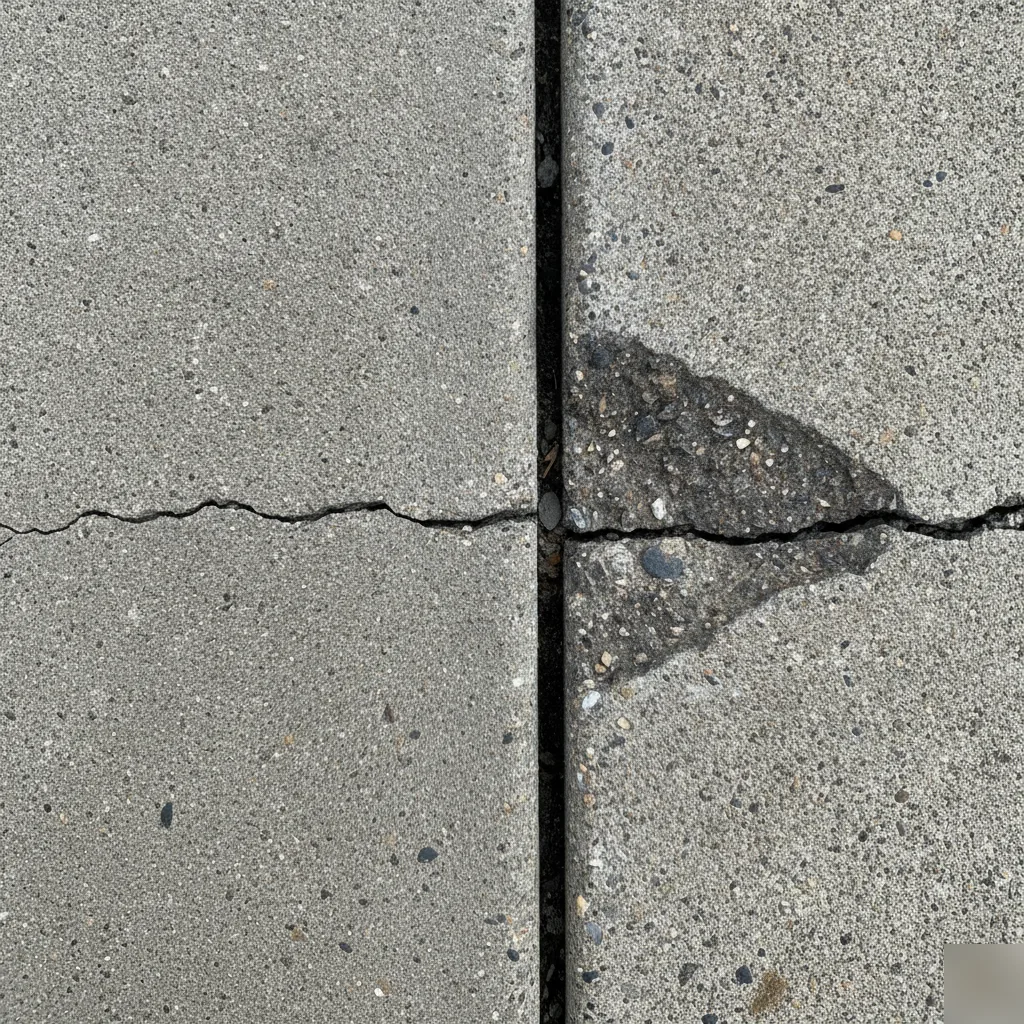
Scenario three: Cracks with a visible lip or step. Drag your hand over the crack. Does one side sit higher than the other? You can feel it. That’s not a cosmetic issue anymore. This means the soil beneath your slab has shifted. Or settled. Or simply washed out. This scenario? Waiting only makes it more expensive. Water gets under that lip. It freezes, that pries the gap wider every single winter. We see this nonstop in older Spokane Valley neighborhoods, especially with their clay-heavy soil. This calls for serious driveway repair. Or, if it spans multiple panels, driveway resurfacing. We bring it back to level. That's how we build it once, build it right.
Scenario four: The whole driveway is a maze of cracks, and it's 20-plus years old. This is the hard talk we often have. If over a third of your slab is cracked, sinking, or crumbling at the edges, simple patch jobs won’t stick. You stop fixing things. You start chasing problems. A full driveway repair and restoration, or a complete replacement, makes more financial sense. You quit throwing money at a slab that's already lost the war against Spokane winters. We engineer every pour to survive Spokane's brutal freeze-thaw cycles, guaranteed for 10 years or we'll fix it free.
Scenario five: Cracks near the garage or a step-down entry. These areas get hammered. Constant tire weight. Water runoff. If cracks show up at these exact stress points, don't wait. We see failure often starts right there.
So, which bucket fits your situation? Ask yourself these three things.
- Is that crack still thin as a hair? Or has it gotten wider since last year?
- Feel it. Does one side sit higher than the other?
- Is this crack alone? Or one of many spiderwebbing across the slab?
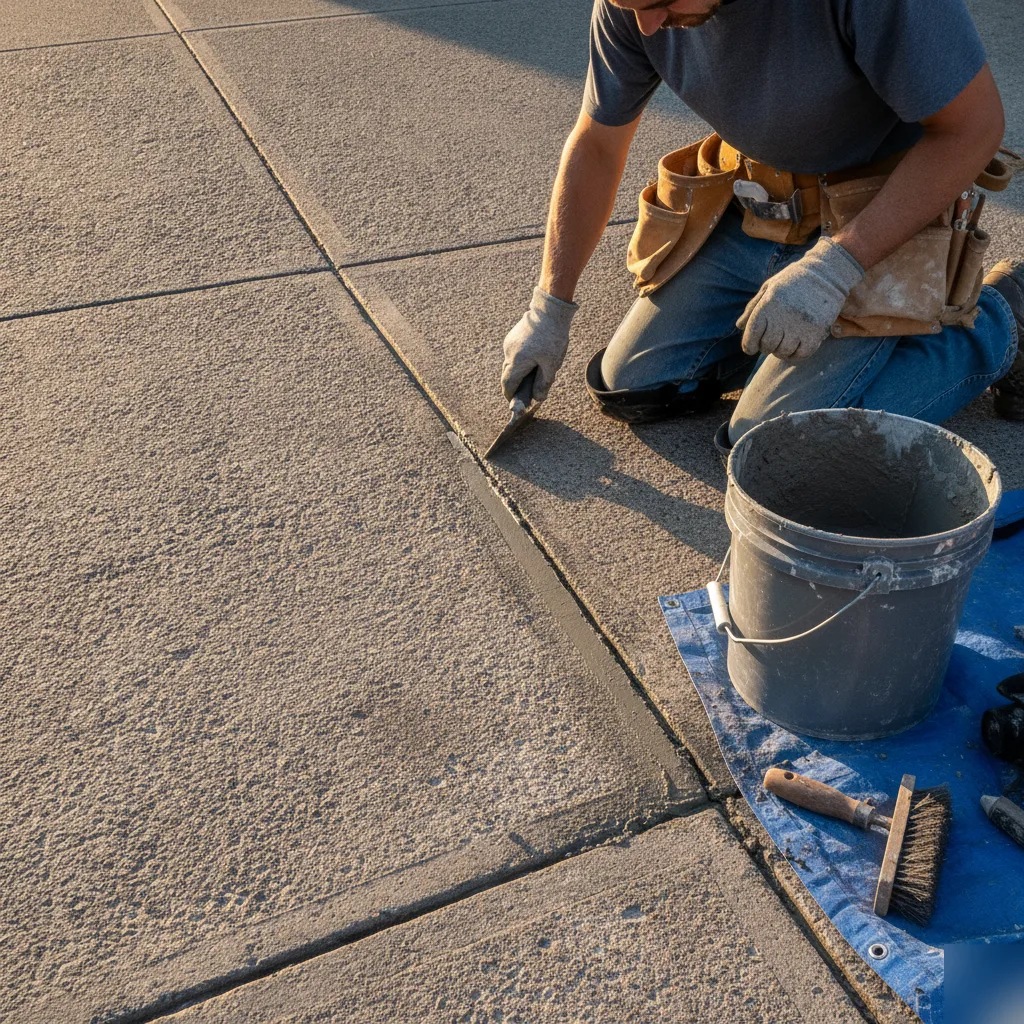
Most homeowners can't answer that last question with full confidence. And that’s okay. That's exactly why we offer a free estimate. We walk your slab. We check its base. And we tell you exactly what you're facing: simple repair, full resurfacing, or a complete tear-out. No guessing games. Just straight talk from concrete problem-solvers who know Spokane winters.

Frequently Asked Questions
How can I tell if a driveway crack is cosmetic or structural?
Check the width and see if the slab moves when you press on it. Cosmetic cracks are thin, under 1/8 inch, and the concrete stays flush on both sides. Structural cracks are wider, often over 1/4 inch, and one side dips lower when you push. Branching or map-like patterns also point to structural trouble. If you're unsure which type you have, a quick professional inspection can save you from a costly surprise later.
Should I try to fix a cracked driveway myself, or call a professional?
Small cosmetic cracks can often be sealed at home with a basic filler. But if you see a section that has settled, water pooling near the crack, or a slab edge that moves, call a professional. Those signs usually mean the base underneath has failed. A trained eye can tell the difference between surface wear and a real structural problem before it costs you more.
Does Spokane Valley's soil or climate affect whether I should repair or replace my driveway?
Yes, both play a big role in that decision. Many older driveways in Spokane Valley were poured over fill that wasn't packed down well, which leads to settling over time. Add our freeze-thaw winters, and a small crack can turn into a sinking slab section within a few years. If your driveway is showing dips or wider cracks, our guide on repairing versus replacing a cracked driveway walks through how to judge which option fits your situation.
Why do small driveway cracks get worse during Spokane Valley winters?
Water gets into the crack, freezes, and expands, pushing the gap wider each time. Ice takes up about 9% more space than liquid water, so this happens with real force. Spokane Valley often sees multiple freeze-thaw cycles in a single week. A hairline crack in October can double or triple in size by March. This is why sealing cracks before the first hard freeze matters so much here.
What's the biggest mistake homeowners make with driveway cracks?
The biggest mistake is calling a crack "cosmetic" just because it looks small from the surface. We've seen driveways off Sullivan Road where a thin crack sat untreated for two years while water quietly washed out the base underneath. By the time it was cut open, half the slab had no support left. Small doesn't always mean minor, so it pays to look closer.
When does a cracked driveway need full section replacement instead of a simple patch?
Full replacement is usually needed when a slab section has sunk, or when water has eroded the base material underneath. A patch only fixes what you see on the surface. If the ground below has washed out or shifted, a patch will crack again within a season or two. Checking the whole slab, not just the crack itself, is the best way to know which repair path makes sense.
Ready to Experience the Concrete Revival Difference?
Complete Service Area Coverage
- Spokane and Spokane Valley
- Coeur d'Alene metro area
- Deer Park and Newport
- Liberty Lake and Otis Orchards
- Cheney and Medical Lake
- Post Falls and Rathdrum