Concrete Driveway Repair Near Progress Road | Concrete Revival
Most driveways in the Veradale area have been through forty-plus winters. The typical home near Progress Road went up in the mid-1970s, and the original concrete has taken decades of freeze-thaw punishment. That's a lot of expansion and contraction cycles grinding away at slabs poured before modern mix designs existed. And it shows.
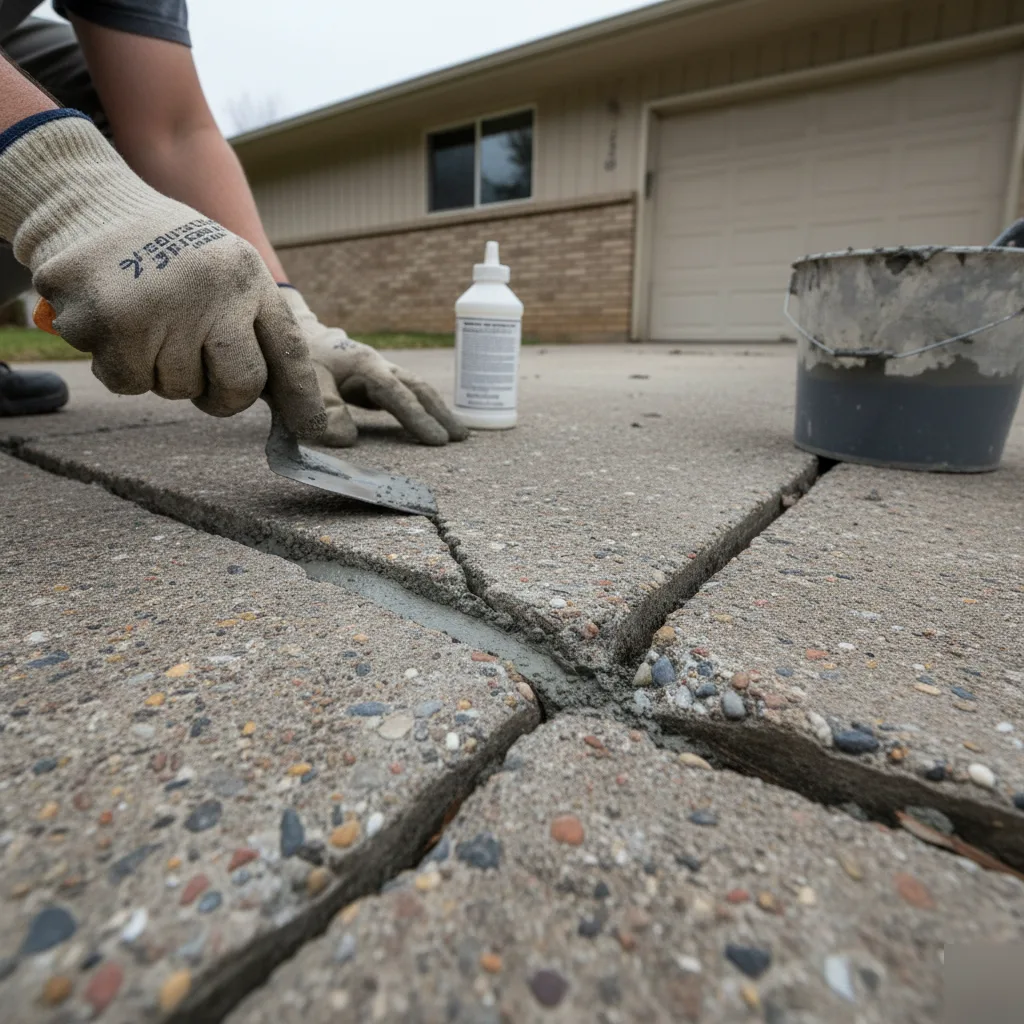
We're out on Progress Road and the surrounding streets regularly, and the pattern never changes. Hairline cracks from the '90s have widened into gaps you can fit a finger into. Water gets in every fall, freezes hard by November, and pries those cracks open a little more each year. By spring, you've got spalling, heaved edges, sunken sections near the garage apron. The damage compounds once it starts.
Three out of four homes in this part of Spokane Valley are single-family detached. That means most properties have their own dedicated driveway. A few things make concrete driveway repair near Progress Road different from other parts of Spokane Valley:
- Older slab foundations often sit on compacted fill that's settled unevenly over the decades, creating low spots where water pools
- Many driveways here are wider two-car designs typical of 1970s ranch-style builds, so partial slab replacement is often smarter than a full tear-out
- Mature tree roots from the big pines and maples common to Veradale yards push up against slab edges, cracking concrete from underneath
- Soil in this neighborhood drains slower than the sandier ground closer to the river, keeping moisture against the concrete longer
We see a lot of homeowners near Progress Road who've tried patching cracks themselves with hardware store filler. That stuff doesn't bond well to old concrete. It peels out after one hard freeze. Concrete crack repair done right means routing the crack, cleaning it down to solid material, and filling it with a flexible compound that moves with the slab instead of fighting it.
Here's a scenario we run into constantly. A homeowner on one of the side streets off Progress Road notices their driveway sinking near the garage. They've owned the place fifteen years, the concrete looked fine when they bought it. But the original base wasn't thick enough for the soil conditions in Veradale, the slab cracked along a control joint, and now one side sits half an inch lower than the other. Water runs toward the garage instead of away from it. That's not cosmetic. That's a drainage problem heading for your foundation.
Concrete driveway repair near Progress Road catches problems like that before they get expensive. We can lift and level sunken sections, seal the joints properly, and resurface areas where the top layer has flaked away from salt and freeze damage. Understanding the full range of concrete driveway repair options helps homeowners in this area make the right call before spending money on the wrong fix.
But not every driveway in this neighborhood needs the same fix. Some just need crack sealing and a fresh surface. Others have sections so far gone that partial replacement makes more sense than trying to save concrete that's lost its structural integrity. We look at every slab individually, because a driveway poured in 1973 on Veradale clay is a different animal than one poured ten years later on better base material.
The homes in this area are owner-occupied at a high rate. People here take care of their properties. A cracked, settling driveway stands out on a street full of well-kept yards, and it drags your home's value down quietly, year after year.
How Our Team Reaches the Veradale and Progress Road Area
Our shop sits on Sprague Ave in Spokane Valley. Getting to the Progress Road area takes us about ten minutes on a good morning. We make this drive constantly, it's one of our most active areas for concrete driveway repair.
Here's the typical route our crews take:
- Head east on E Sprague Ave from our office at 16823 E Sprague Ave.
- Continue past the Sullivan Road intersection toward Veradale.
- Turn south onto Progress Road near the Sprague and Progress junction.
- From there we can reach any street in the neighborhood, from homes closer to 8th Avenue down to the neighborhoods near 16th.
During morning rush, the Sprague corridor gets sluggish around Sullivan. But once we're past that stretch, traffic thins out. We're pulling into Veradale driveways before most folks finish their coffee. That matters more than people think. Concrete driveway repair jobs need early starts in Spokane Valley, especially in summer. You want fresh concrete poured before the afternoon heat speeds up the cure. Our proximity to the Progress Road area lets us get set up early and work through the cooler morning hours. That's a real advantage for the finished product.
The side streets here are familiar territory. The neighborhoods between Progress and Park Road have a lot of mid-1970s homes with original driveways showing their age. Forty-plus years of Spokane Valley freeze-thaw cycles will do that. We've worked on streets off Bowdish, along Sprague east of Progress, and down toward Valleyway. These aren't neighborhoods we look up on a map. We've been running trucks through them for over 20 years.
If you want to meet us at our shop first, that's easy. Head west on Sprague from Progress Road, pass the Sullivan corridor, and we're on the south side of Sprague a few minutes from your neighborhood. But most of the time, we come to you. Our crews load up at the shop and roll east. We carry everything we need for concrete crack repair, driveway resurfacing, and full slab work. No return trips for forgotten materials.
Progress Road is close enough that we treat it like working in our own backyard. One thing homeowners near Progress Road appreciate: we don't charge extra for the drive. Some contractors tack on travel fees once you're outside a certain radius. We're less than five miles from most homes in Veradale. There's no reason to nickel-and-dime people who live this close. Call us for a free estimate. We can usually swing by a Progress Road area home the same week you reach out.
What 1970s Driveways in This Neighborhood Actually Need
Most homes near Progress Road went in during the mid-1970s. That means the original driveways are pushing 50 years old. Fifty years of Spokane Valley freeze-thaw cycles, salt, studded tires, and summer heat. Some of those slabs have held up better than others, but almost none are still in original condition.
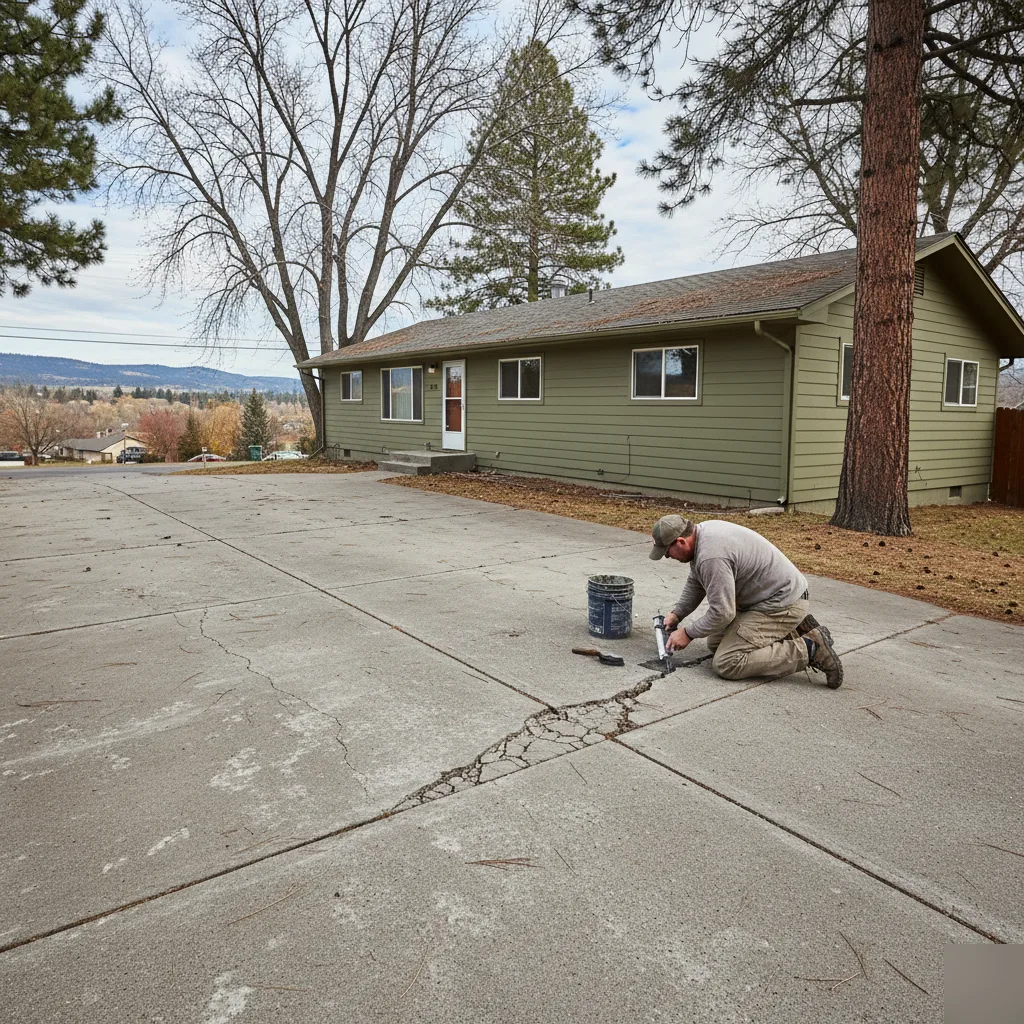
We see the same patterns every time we pull up to a Veradale property for concrete driveway repair. The damage isn't random. It follows the age of the pour and the way this neighborhood was built.
Here's what shows up most on driveways in this part of Spokane Valley:
- Surface spalling from decades of freeze-thaw exposure, where the top layer flakes off in sheets
- Deep settlement cracks along the garage apron where the original subgrade has shifted
- Tree root heaving from mature pines and maples that have grown since the lots were first landscaped
- Joint failure where old control joints have eroded and let water penetrate the base
That spalling issue is the big one. 1970s concrete in this part of Spokane Valley often used a higher water-to-cement ratio than what's standard now. The mix was softer. It absorbed more moisture. After 40-plus winters of water freezing inside the slab, the surface starts to pop apart. A lot of homeowners near Progress Road think the whole driveway needs to come out. Sometimes it does. But more often, concrete crack repair and targeted driveway resurfacing can save the slab underneath. The base on these 1970s pours is usually solid, it's the top inch or two that's failing.
The Veradale neighborhood runs about 77% single-family homes. Owner-occupied, established families who've been in their houses for years and plan to stay. So the goal isn't a cosmetic patch. You need driveway repair that handles another 20 winters without cracking open again.
One situation we run into constantly in this neighborhood: driveways that slope toward the garage. Water pools at the door, freezes overnight, and pries the concrete apart right where your car sits. That's not just ugly. That's structural. And it gets worse every season you wait.
Here's what most people don't realize. A cracked driveway in Veradale doesn't automatically mean a full tear-out. We can grind down heaved sections, fill and seal cracks before they spread, and resurface areas that have lost their top layer. The original 1970s slab becomes the foundation for the fix.
The mature trees along these lots create another problem. Roots push up through the edges of driveways poured right next to the property line. We see it on nearly every block between Progress Road and Sullivan. Root barriers and partial slab replacement handle that without killing the tree.
These driveways weren't built for the loads we put on them now either. Trucks are heavier. Families run three vehicles instead of one. The concrete was poured at 4 inches when 5 or 6 would've been better. You can't change that after the fact, but knowing it shapes how we approach the repair. Build it once, build it right, and engineer it to survive what Spokane Valley winters throw at it for the next two decades.
Frequently Asked Questions
Why do so many driveways near Progress Road seem to crack and sink faster than newer neighborhoods?
Most homes in the Veradale and Progress Road area were built around 1975, and those original slabs have taken fifty years of Spokane Valley freeze-thaw cycles. The clay soil here drains slower than sandier ground near the river, keeping moisture against old concrete longer. That combination — aging slabs plus slow-draining soil — accelerates cracking and settling faster than you'd see in newer parts of the valley.
How do I schedule concrete driveway repair near Progress Road without blocking the street for my neighbors?
The side streets off Progress Road are tight, and our crews know that. We stage equipment in your driveway whenever possible and plan work during morning hours before traffic builds on Sprague. Since roughly seven in ten homes here are owner-occupied, most neighbors are around and we coordinate with you directly. A quick heads-up to the neighbors next door is usually all it takes.
My driveway near Progress Road is sinking toward the garage — is that something you can fix without replacing the whole slab?
Yes, in most cases you don't need a full replacement. Sunken sections near garage aprons are one of the most common repairs we do in this neighborhood. We can lift and level the settled slab, seal the joint properly, and redirect drainage away from your foundation. A full tear-out only makes sense when the concrete has lost structural integrity — and we check that before recommending anything.
Ready to Experience the Concrete Revival Difference?
Complete Service Area Coverage
- Spokane and Spokane Valley
- Coeur d'Alene metro area
- Deer Park and Newport
- Liberty Lake and Otis Orchards
- Cheney and Medical Lake
- Post Falls and Rathdrum