Can You Apply a Skim Coat Over Old Concrete? A Spokane Valley Homeowner's Guide
A skim coat fixes surface damage like scaling, pitting, small chips, and stains on concrete that's still solid underneath. It won't fix slabs that are sinking, heaving, or cracking from movement below. If the base is sound, a skim coat can make old concrete look new again.
What a Skim Coat Fixes (and What It Can't)
Here's the honest answer most people don't want to hear. A skim coat is a cosmetic fix. It's a thin layer, usually just a fraction of an inch thick. It bonds to the top of your slab and gives you a fresh new surface. But it can't make bad concrete good.
So what does it handle? Surface stuff. And in Spokane Valley, we see plenty of surface damage. Our winters swing above and below freezing over and over. Water soaks into the top of the slab, freezes, and pops off little flakes. Add de-icing salt and the damage speeds up.
A skim coat does a solid job on problems like these:
- Scaling, where the top layer flakes or peels off after winter
- Pitting and pockmarks from salt or worn-out finish work
- Small chips and shallow divots in the surface
- Oil stains and blotchy color you can't scrub out
- Hairline cracks that aren't moving or growing
If your slab looks rough but feels solid, you're probably a good fit. Walk on it. Tap it. Does it sound hollow anywhere? Hollow spots mean the top has come loose from the concrete below, and those need attention first.
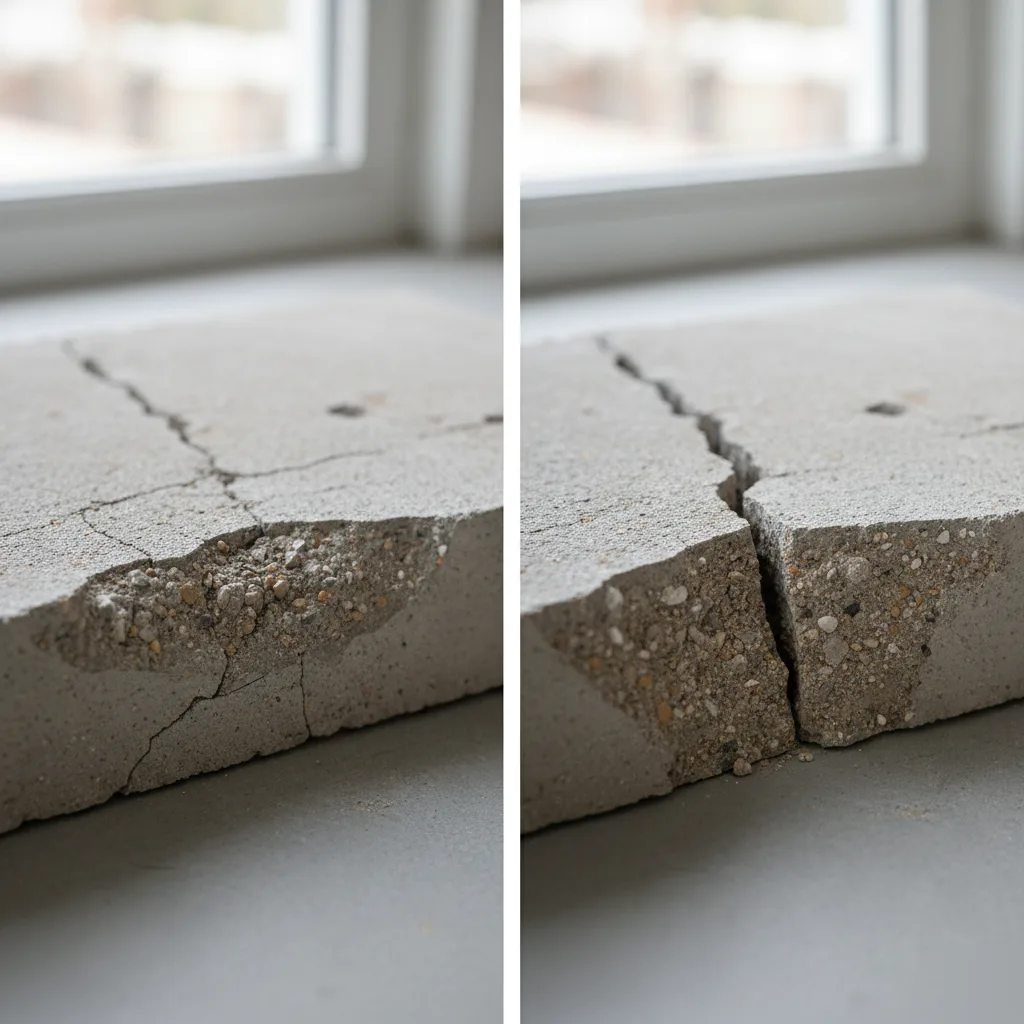
Now for the limits. A skim coat follows whatever's under it. If the slab moves, the skim coat cracks right along with it. We call that reflective cracking. It's the number one reason we see skim coats fail around here.
A skim coat won't fix a slab that's sinking or tilting. It won't fix heaving from frost pushing up the soil. It won't fix wide cracks that open and close with the seasons. And it won't fix a base that's crumbling or washing out from bad drainage.
We see this mistake all the time.
Last fall a homeowner off the Sullivan Road corridor called us about a patio. Someone had skim coated it two years earlier. It looked great the first summer. By spring, a big crack had come right back through, same spot as the old one. The patio had a low corner sinking toward the yard, water pooled there every thaw. Nobody fixed the drainage or the settling, they just covered it up. The new surface never stood a chance.
That's why we always look at the slab before we talk about surfaces. Sometimes the right call is concrete crack repair first, then a skim coat on top. Sometimes driveway resurfacing or decorative concrete overlays make more sense. And sometimes the slab is too far gone, and covering it would just waste your money.
Think of it this way. Is the problem on the surface or under it? Surface problems are skim coat problems. Problems underneath need to be fixed first, or the skim coat will crack the same way the old slab did.
Skim Coat vs. Concrete Overlay: What's the Difference
People mix these two up all the time. We get calls every spring from folks asking for a skim coat. Half the time, what they really need is an overlay. And the other half? A skim coat is exactly right.
The difference comes down to thickness and job. One is a cosmetic fix. The other rebuilds the surface.
Skim coat vs. overlay: a skim coat is a very thin layer of cement-based patch material. It's usually spread about 1/16 to 1/8 inch thick. Its job is to smooth out small flaws. Think light pitting, minor scaling and shallow surface wear. It fills the low spots and gives you a clean, even face. But it doesn't add strength, it just evens things out.
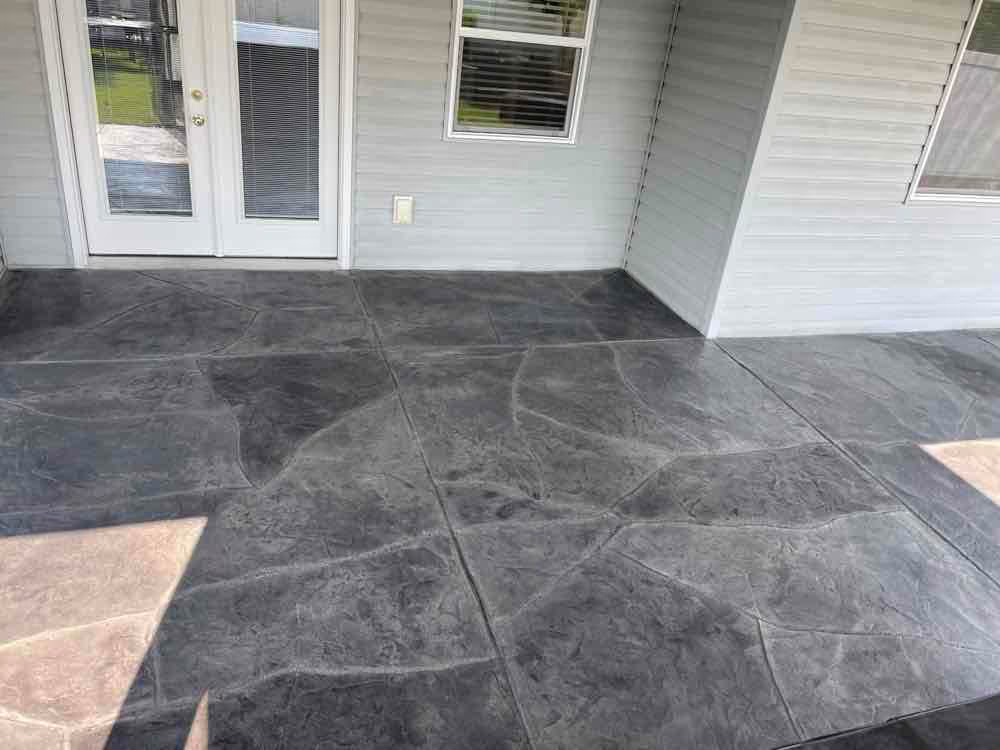
A concrete overlay is a heavier system. Most go down at 1/4 inch or more, depending on the product. It's made with polymer-modified cement that bonds hard to the old slab. An overlay can take a texture, a color or even a stamped pattern. That's why we use overlays for Decorative Concrete Overlays and Driveway Resurfacing. It's basically a new top surface on your old base.
So which one fits your slab? Here's a quick way to sort it out.
- Light pitting or a blotchy, worn look usually points to a skim coat.
- Heavy scaling that's flaked off deeper than a fingernail calls for an overlay.
- Want a new color, texture or stamped look? That's overlay territory.
- Interior floors and covered patios with small blemishes are good skim coat spots.
- Driveways that take daily traffic and plow salt tend to need the toughness of an overlay.
Neither one fixes a slab that's moving. If your concrete has heaved, sunk or split into big chunks, a topping won't hold. It'll crack right along the old break lines. We've seen this crack pattern a hundred times on driveways around Spokane Valley. Somebody skims over a shifting slab, and by March the lines are back.
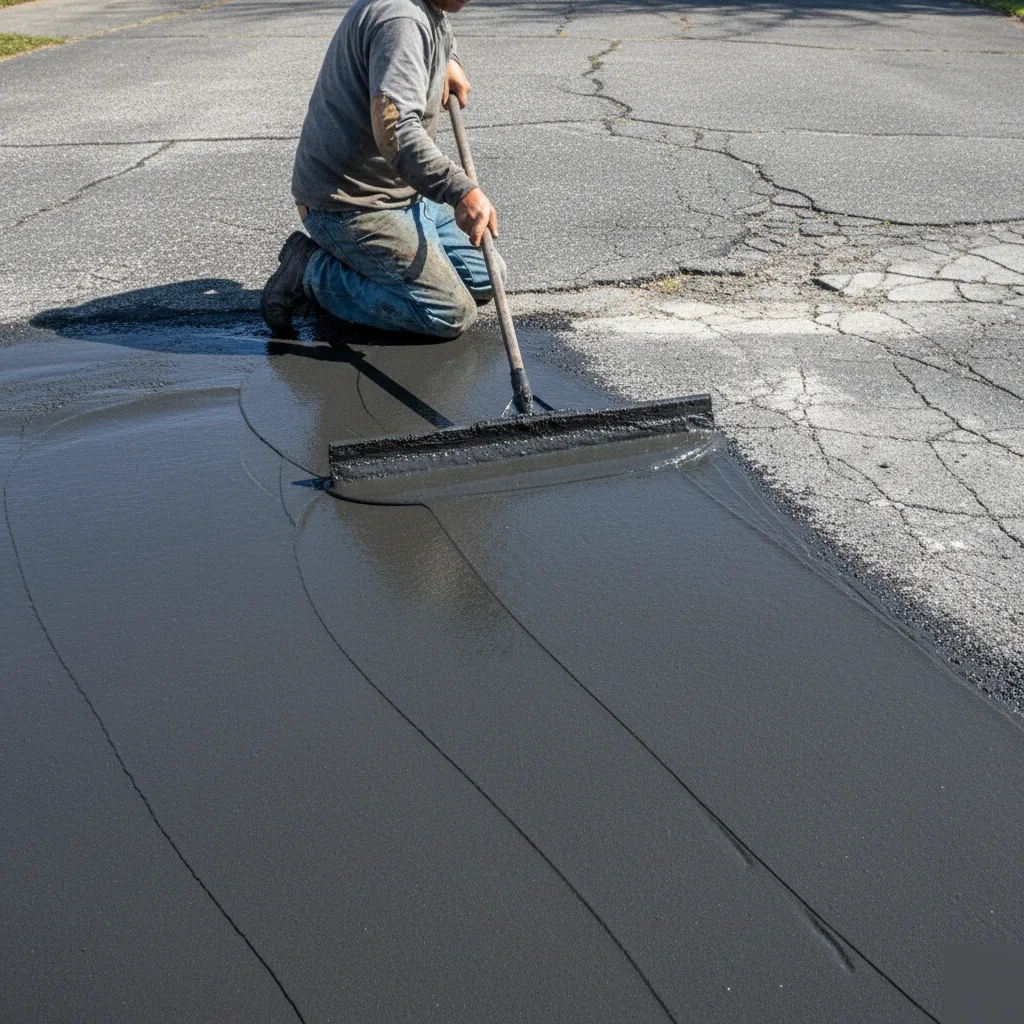
Our winters make this choice matter more. Spokane Valley sees freeze-thaw swings over and over from November into spring. Water sneaks into thin, weak layers and freezes. Then it pops the surface loose. A skim coat on an exposed driveway takes that beating with very little thickness to protect it. An overlay has more body to stand up to it.
Here's a real one. A homeowner off the Sullivan Road corridor had a patio with scaling from years of deicer. He'd skimmed it himself twice. Both times it flaked off after one winter. We ground it down, handled the cracks with Concrete Crack Repair and laid an overlay. That surface has held up because it was built for the conditions.
Prep is the same for both. The old concrete has to be clean, sound and opened up so the new layer can grab. Skip that and it doesn't matter which product you pick.
Most homeowners guess wrong because they're looking at the top, not what's under it.
In 11 years of Resurfaced Concrete work, our rule is simple. Small cosmetic flaws on a solid slab get a skim coat. Deeper damage or a full new look gets an overlay. If you're stuck between the two, we'll come take a look.
Is Your Slab a Good Candidate? Three Common Scenarios
Not every old slab deserves a skim coat. Some are perfect for it. Others will eat a skim coat alive in one Spokane winter.
We've walked hundreds of driveways and patios around Spokane Valley in 11 years. Almost every one fits into one of three buckets. Figure out which bucket yours is in, and you'll know your next move.
Scenario one: the tired but solid slab. This is the best case. Picture a 20-year-old driveway off Sullivan Road. The surface is gray and blotchy. Salt and freeze-thaw cycles have flaked off the top layer in patches. But the slab sits flat, it doesn't rock when you jump on it. That's a great candidate. The problem is skin deep, so a skin-deep fix works.
Scenario two: the slab with some cracks. This one's a maybe. Hairline cracks are normal in our climate. Water gets in, freezes, and pushes the crack a little wider each year. So can you skim over them? Only after they're repaired. A skim coat laid straight over an open crack will crack in the same spot. We see this mistake all the time. Someone does a quick DIY resurfacing in June. By February the old crack lines are showing right through it.
The fix is simple. Concrete Crack Repair comes first. Then the skim coat goes on over a stable surface. Done in that order, a cracked slab can turn into a good candidate.
Scenario three: the slab that's moving. Bad news here. If sections have heaved up or sunk down, the problem is underneath. Frost heave and washed-out base soil are common culprits in the Valley. A skim coat is maybe an eighth of an inch thick. It can't hold together a slab that's shifting below it. Pouring new product over a moving slab is like painting a car with a cracked frame.
Anyway. You get the idea.
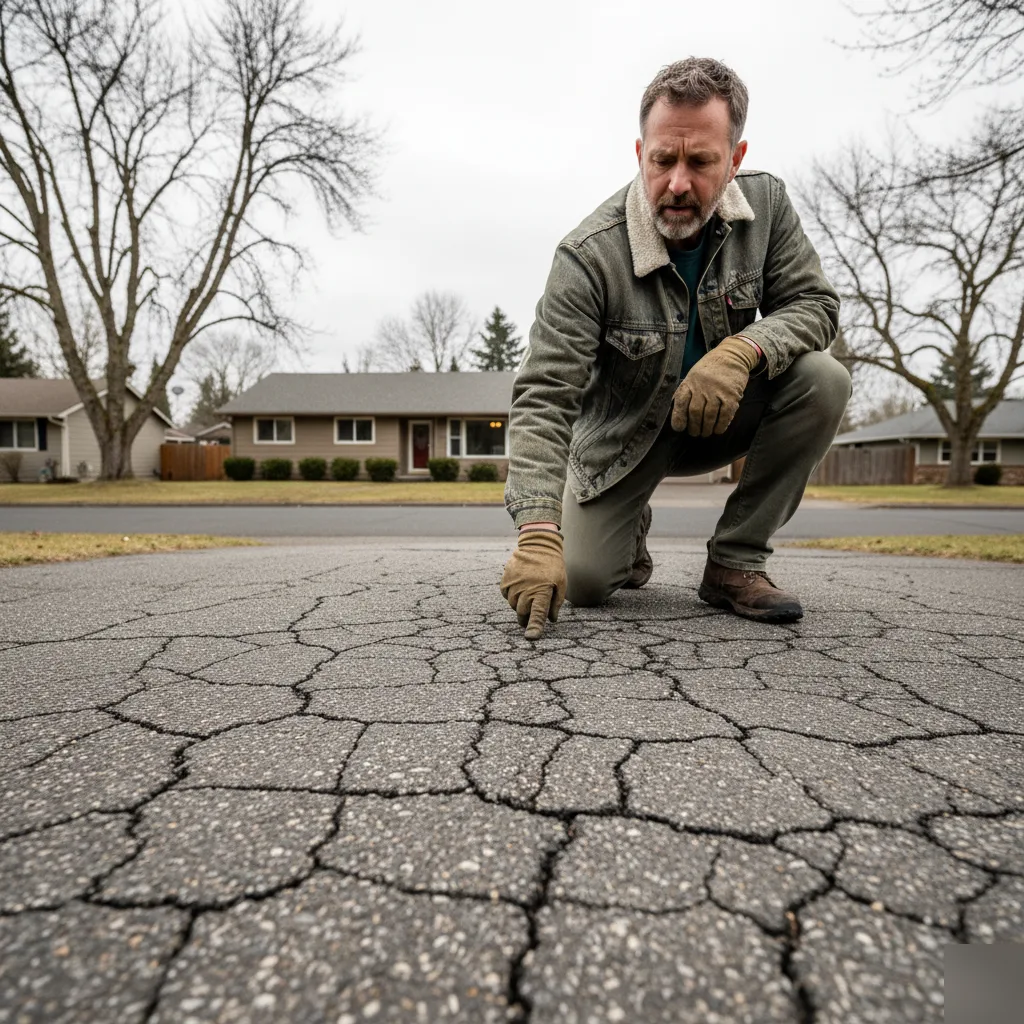
Not sure which bucket you're in? Grab a tape measure and walk your slab. Check for these warning signs before you plan any skim coat:
- Cracks wider than a quarter inch, or cracks with one side higher than the other
- Sections that tilt toward your house instead of away from it
- Hollow sounds when you tap the surface with a hammer
- Crumbling edges where you can pull chunks loose by hand
- Standing water that pools in the same low spot after every rain
One or two minor marks? You're probably fine. Three or more, and you need a closer look before anything goes on top.
Here's a real one from last fall. A homeowner near Mirabeau Park had a patio that looked rough. Spalled, stained, ugly. She figured it was a lost cause. But the slab was flat and sound underneath. We fixed two small cracks and resurfaced the whole thing. It looked new by the weekend.
And the flip side happens too. Plenty of folks are sure their driveway just needs a refresh. Then we find the base has washed out under one corner.
Most homeowners wait too long to have someone look.
Small surface damage is cheap to stop. Left alone through a few more Spokane winters, it turns into deeper damage. That's when a skim coat stops being an option.
Frequently Asked Questions About Skim Coating Old Concrete
How do I know if my concrete is a good candidate for a skim coat?
Your concrete is a good candidate if the slab feels solid but looks rough on top. Walk across it and tap it with a hammer. Hollow sounds mean the surface has separated from the base below, and that needs attention first. Scaling, pitting, stains, and shallow chips usually respond well to a skim coat. Sinking, heaving, or wide moving cracks mean the problem is underneath, not on the surface. If you're unsure, a quick look at your slab can settle the question fast.
Will a skim coat crack again if my old concrete already had cracks?
Yes, if the slab is still moving, the skim coat will crack in the same spot. This is called reflective cracking, and it's the top reason skim coats fail in Spokane Valley. The thin layer simply follows whatever the concrete underneath does. If your cracks aren't growing or shifting with the seasons, a skim coat can cover them fine. If they open and close, you need the movement fixed before any topping goes down.
Why does Spokane Valley weather cause so much surface damage to concrete?
Spokane Valley gets repeated freeze-thaw swings from November through spring, and that's hard on concrete surfaces. Water soaks into the top layer, freezes, and pops off small flakes. Add de-icing salt from winter driveways and sidewalks, and the damage speeds up even more. This is why so many local slabs show scaling, pitting, and blotchy stains even when the base underneath is still strong. It's also why choosing the right fix matters more here than in milder climates.
What's the biggest mistake homeowners make when trying to fix old concrete themselves?
The biggest mistake is covering up a problem without fixing what's causing it. A homeowner off the Sullivan Road corridor skimmed a patio twice, and both times it flaked off within a year because deicer damage and poor drainage were never addressed. A skim coat only fixes surface flaws. If water is pooling, soil is settling, or the slab is tilting, the new surface will fail the same way the old one did. Getting a proper slab check first saves you from repeating the same fix.
Should I get a skim coat or a concrete overlay for my driveway or patio?
It depends on how deep the damage goes and how much traffic the surface sees. Light pitting or a worn, blotchy look usually just needs a skim coat. Heavy scaling, daily driveway traffic, or plow salt exposure usually calls for a thicker overlay built to take that beating. Interior floors and covered patios tend to do fine with a skim coat, while exposed driveways often need more protection. A quick look at your slab's condition and use will point you to the right option.
Can a skim coat fix a sinking or heaving concrete slab?
No, a skim coat cannot fix a slab that's sinking, heaving, or shifting from movement below. It's a thin cosmetic layer that bonds to the surface, and it will crack right along with the concrete underneath if the base keeps moving. Problems like frost heave, soil settling, or drainage issues have to be corrected first. Once the slab is stable, a skim coat can give it a clean, even finish again.