
Can a pickleball court be added to an existing tennis court surface in Spokane?
Can you add a pickleball court to an existing tennis court surface in Spokane? Absolutely. We see this all the time, especially across Spokane Valley. A tennis court measures 78 feet long and 36 feet wide. Pickleball needs only 44 feet by 20 feet. That's a big difference, giving you room to breathe. And it means you've got solid options for conversion.
Most tennis courts fit two full pickleball courts side by side. Some even fit four. We work with the concrete that's already there, often the same tough stuff that handles both sports.
Here's what makes the conversion work on most existing surfaces:
- The slab is already poured. Most tennis courts in Spokane Valley sit on a concrete base. It's thick enough for pickleball. We rarely need structural changes.
- The dimensions fit. Pickleball lines go right over the old tennis lines. Different colors keep both sports clear. You can play both.
- Drainage already exists. A tennis court should slope right for water runoff. That slope works for pickleball too. It's built in.
- Net post locations are flexible. Pickleball nets sit lower, 34 inches at center. Tennis nets are taller. Portable systems or new sleeves fix this easy. We've put in plenty.
Not every court is ready for a simple line job, though.
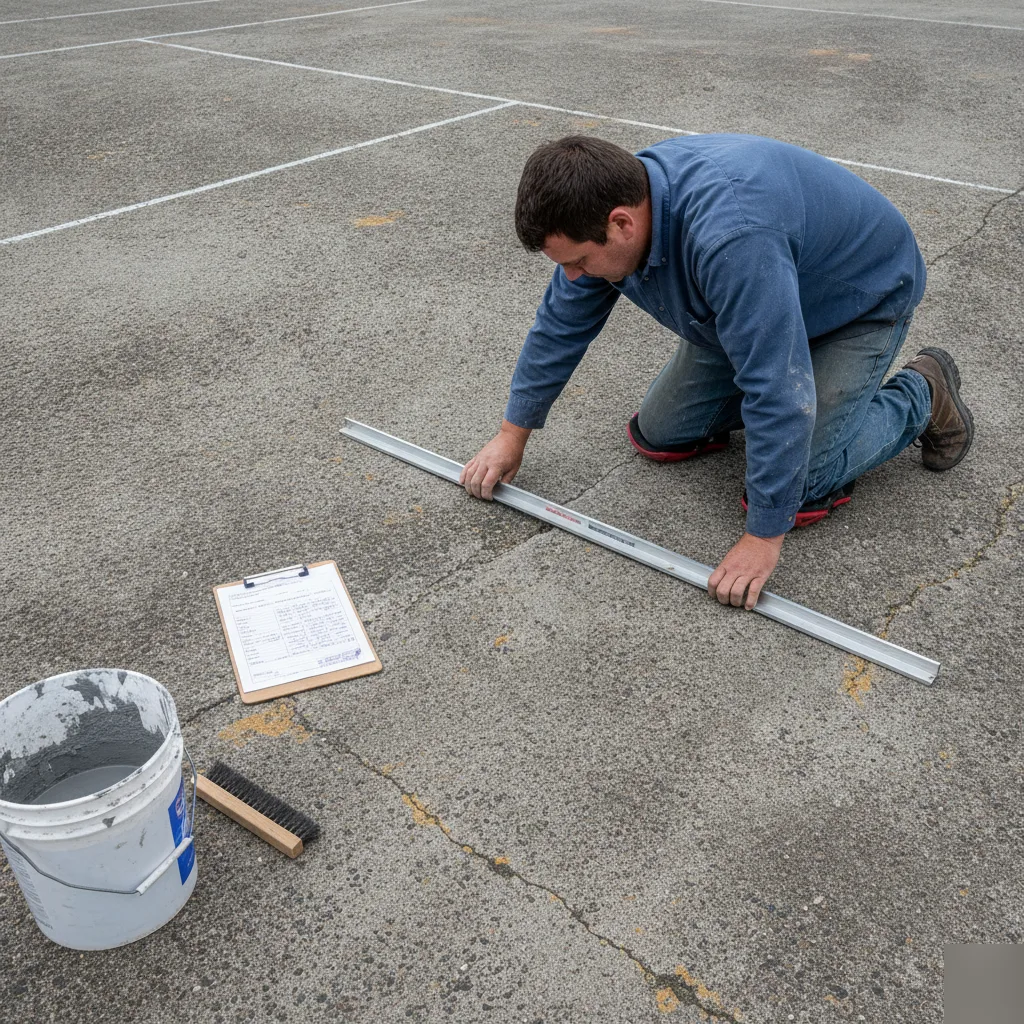
We've walked courts near the Sullivan Road corridor, they had serious freeze-thaw damage. Cracks ran everywhere. Heaved sections showed years of brutal Spokane winters. You can't just paint lines over a broken slab. That's how people trip. Or worse, get hurt. Concrete crack repair always comes first. Sometimes concrete resurfacing too, long before any court markings go down. Build it once, build it right.
What Condition Does the Surface Need to Be In?
This is where most folks get tripped up,. They see a flat concrete pad. They think it's ready for games. It's rarely that simple.
The surface has to be level. Puddles on a pickleball court are a safety hazard, a real playability killer. Your existing tennis court can't hold water after a rain. If it does, that surface needs work before we convert it. Resurfaced concrete fixes low spots and gets the drainage pitch right. No guesswork here.
Cracks bigger than a quarter-inch need professional concrete repair. Smaller ones? We might get away with a solid fill and seal. But wider cracks mean section replacement. Sometimes a full overlay. After 11 years doing this concrete work in Spokane, I've seen it all. Our freeze-thaw cycles here don't forgive shortcuts. That little crack you ignore in September? It's a two-inch gap come March. Happens every winter. Spokane's temperature extremes are no joke.
Surface texture matters a lot, too. Too smooth, players slip. Too rough, the ball bounces weird. A colored concrete or decorative concrete finish can give you the right texture. And clean lines. All in one shot.
Here's what I tell every homeowner and HOA board who calls: get that slab evaluated first. The conversion? That's the easy part. The surface underneath makes or breaks the whole project. Trust me on this. If you're adding pickleball to a court in Spokane Valley, start with the concrete. Everything else falls into place then. And it saves you headaches later.
Want to know what your surface needs? Our concrete contractor services page shows how we prep existing slabs for these projects. Give us a call for a free estimate.
How Many Pickleball Courts Fit on a Tennis Court
A tennis court runs 60 by 120 feet. A pickleball court is 20 by 44 feet. The math checks out. You can fit up to four pickleball courts on one tennis court surface.
That's the number most folks hear. But there's a catch. Most don't realize it until it's too late.
Four courts is the absolute max if you use every inch. It works. But it's tight. Players bump elbows during rallies. (We've seen it happen on courts in North Side parks). Rec leagues and community play have exploded in Spokane Valley over the past few years. Cramped courts lead to frustrated players. And faster surface wear. Trust us.
The Realistic Layout Options
We've done plenty of concrete finishing and resurfacing on sport surfaces. "Fits" and "plays well" are different ideas. Here's how the layouts actually shake out:
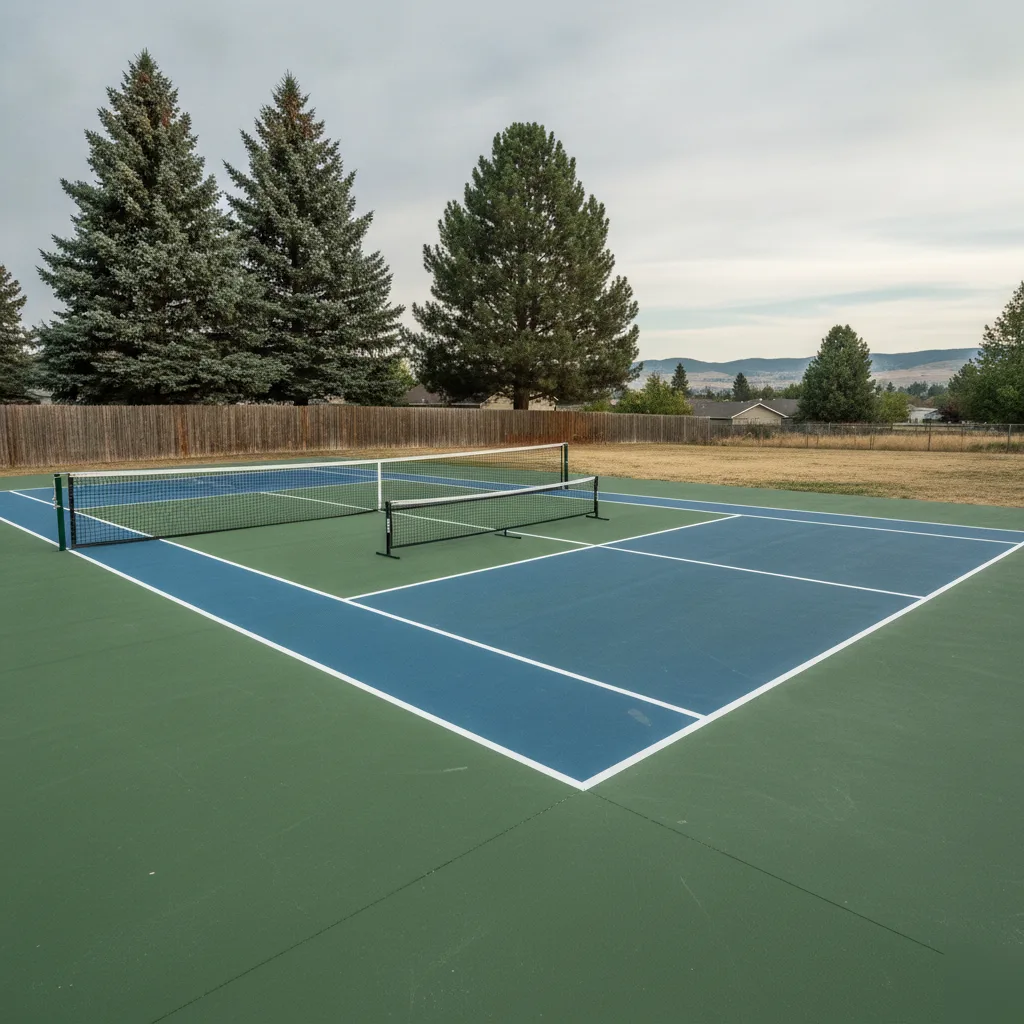
- Four courts, no run-out space. All four fit inside the tennis lines. Players share sidelines. It's okay for casual play. Not for organized games.
- Three courts with proper spacing. Each court gets a few extra feet of buffer. Parks and rec departments like this setup. It cuts down collisions. Keeps the game safe.
- Two courts with full regulation spacing. The USA Pickleball Association wants a minimum 30 by 60 feet per court. Two courts with that spacing fit comfortably. Leaves room for benches. Or net storage.
The right choice depends on who plays. And how often.
Why Spacing Matters on Spokane Valley Concrete
Here's something we see on job sites all the time. A homeowner or business owner on the Sullivan Road corridor wants a tennis court converted. One they barely use. They think four pickleball courts is the smart move. More courts, more value. Looks good on paper, right?
But Spokane's freeze-thaw cycles punish concrete. Especially surfaces that get heavy, concentrated foot traffic. Four courts with minimal spacing? Players pound the same narrow strips. Over and over. That speeds up cracking. It hits hardest along the seams where new lines meet old ones. We've seen it. Any professional concrete contractor in Spokane will tell you the same. Give the surface room to breathe. And save yourself money later.
Three courts with proper run-out zones spread the wear. More even. The concrete lasts longer. You spend less on concrete crack repair down the road. It’s simple math.
We've been doing this work for 11 years. The pattern never changes. Folks who squeeze in four courts? They call us back sooner for resurfacing. People who go with three courts? They get years of extra life out of that slab. It’s a fact. Our winter-proof methods focus on longevity.
Line Marking and Surface Prep
No matter how many courts you pick, the old tennis surface needs an evaluation first. Old cracks always need concrete crack repair. That's before any new lines go down. If Spokane Valley's harsh winters caused heaving or settling? That gets fixed too. No skipping steps.
New pickleball lines go right onto the existing concrete. Or acrylic surface. Some owners keep the tennis lines. They add pickleball lines in a different color. That dual-line approach works for multi-use courts. But it can create visual clutter. Talk to us about color contrast. We make sure players actually see the right boundaries. Not a messy blur.
Thinking about converting a tennis court on your property? Get that concrete assessed first. Our concrete resurfacing and repair team will walk the surface. We'll tell you exactly what needs attention. That's before any pickleball lines go down. Call us for a free estimate.
Your Tennis Court Surface Condition Determines What Comes Next
Not every tennis court is ready for pickleball lines. Some are. Most need work first. And the difference between a smooth conversion and a costly redo? It's all about what's under your feet.
We've walked onto courts in Spokane Valley. They looked fine from twenty feet. Up close? Hairline cracks ran everywhere. Slabs heaved near the net posts. Surface coating peeled in sheets. That's not a court you just paint. That's a court needing concrete crack repair. Before anything else. We're concrete problem-solvers.
What Good Condition Looks Like
A tennis court surface ready for pickleball conversion has key elements. The slab is level, first off. No big cracks, nothing over a quarter inch across. The surface coating bonds tight to the concrete. Drainage works right. Water moves off, it doesn't pool in low spots.
If your court checks those boxes, you're in solid shape. The conversion gets much simpler. You're mostly looking at layout, line placement. And a fresh surface application. That's the easy part.
Red Flags That Mean More Work
Here's what we look for when we evaluate an existing court surface:
- Cracks wider than a quarter inch. Or cracks that shift underfoot.
- Uneven slab sections. Where freeze-thaw cycles pushed concrete up or down.
- Standing water after rain. Especially near the pickleball net spot.
- Surface delamination. Where the top coating flakes from the base concrete.
Any one of those needs fixing first. Painting pickleball lines over damage? That's like putting fresh paint on a rotting fence. Looks okay for a month. Then it falls apart by winter. We build it once, build it right.
Spokane Valley's freeze-thaw cycles are brutal on outdoor concrete. Temperatures can swing 40 degrees in a single spring day. Water gets into small cracks, freezes overnight, it expands, and makes those cracks bigger. Next season, you've got real structural problems. We've seen this play out over 11 years of concrete work here, especially down around the Cheney area, where some of those older courts just crumble.
The Evaluation Process
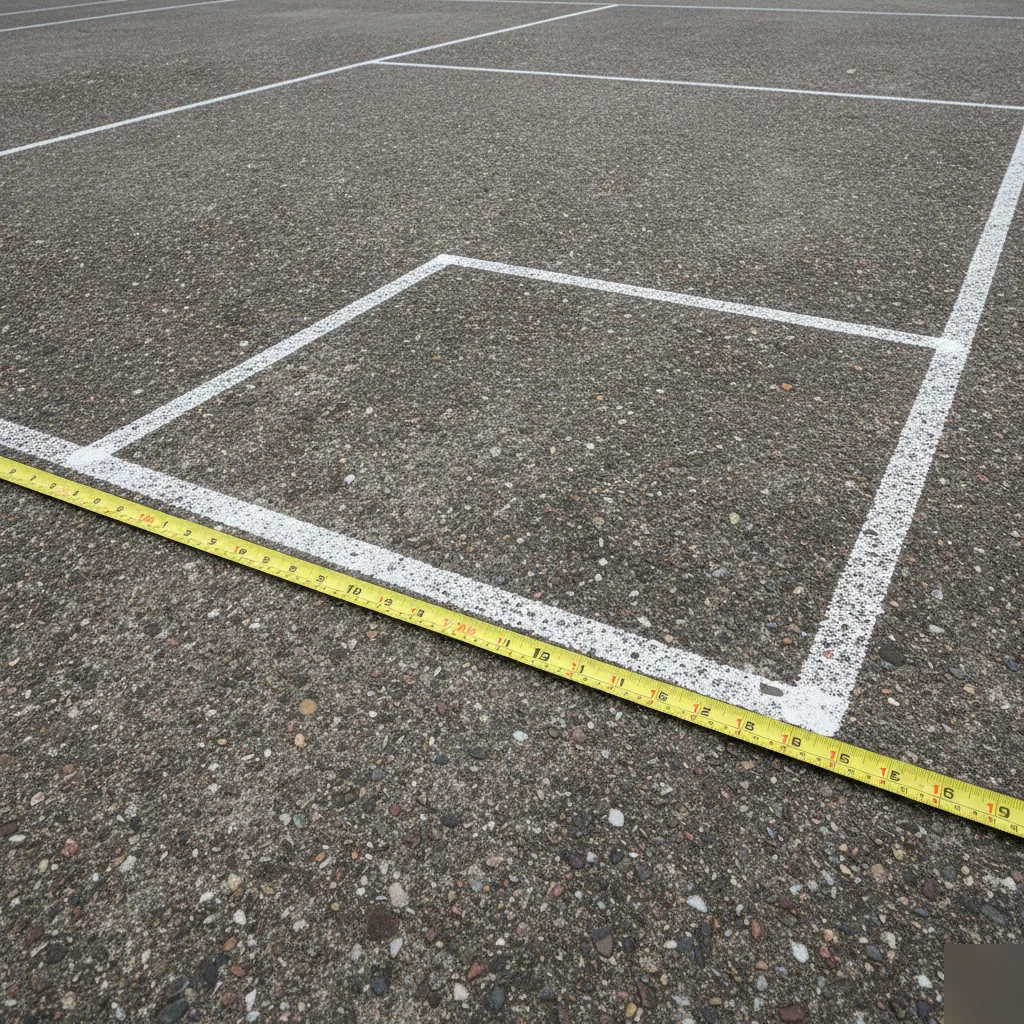
Before any conversion starts, a professional concrete contractor should walk the entire surface. Here's what that process looks like:
- Visual check of the slab for cracks, spalling. And general wear.
- Level check across the court. We find the high spots. The low spots.
- Drainage assessment. We confirm water flows right. Off the playing area.
- Bond test on the old surface coating.
- Subbase evaluation. We check if the foundation underneath is still solid. That's where it all starts.
Most people don't realize how much the subbase matters. A tennis court poured 20 years ago? It might have used compacted gravel that's shifted. That movement shows up as uneven spots. On the surface. You can't fix that with a coat of paint. It just doesn't work. We engineer every pour to survive Spokane's brutal freeze-thaw cycles, guaranteed.
But if the slab is sound? And the surface just needs concrete repair and resurfacing? That's a straightforward project. We handle resurfaced concrete work all the time. For homeowners and commercial properties. Along the Sullivan Road corridor and throughout Spokane Valley.
The honest answer is this: your existing surface tells the whole story. A quick on-site evaluation saves you guesswork. Thinking about adding pickleball to your property? Start by getting professional eyes on the concrete you already have. Check our concrete contractor services. We help you figure out your next step. Give us a call for a free estimate.
Frequently Asked Questions
Does Spokane Valley's freeze-thaw cycle affect whether a tennis court can be converted to pickleball?
Yes, Spokane Valley's freeze-thaw cycles directly affect whether your court is ready for conversion. A small crack in September can become a two-inch gap by March. That's not an exaggeration — we see it every year. Before any pickleball lines go down, the slab needs a professional inspection. Cracks wider than a quarter-inch need repair first. Skipping that step means a broken surface and a safety hazard. The good news? Once the concrete is solid, the conversion goes smoothly.
What's a common mistake people make when converting a tennis court to pickleball in Spokane Valley?
The most common mistake is painting pickleball lines over a damaged or uneven surface. A flat-looking slab isn't always a ready slab. If the court holds puddles after rain, or has cracks running through it, those problems have to be fixed first. Painting over damage doesn't hide it — it makes it worse and creates a trip hazard. Always get the concrete evaluated before the conversion starts. That step protects players and protects your investment.
Is two pickleball courts or four pickleball courts the better choice when converting a tennis court near Sullivan Road?
Two courts with full regulation spacing is usually the smarter choice. Four courts fit on a tennis court, but the spacing gets tight. Players crowd each other, and concentrated foot traffic speeds up surface wear — especially on Spokane Valley concrete that takes a beating from freeze-thaw cycles. Two courts with proper run-out zones spread the wear more evenly, the surface lasts longer, and the playing experience is safer. More courts on paper doesn't always mean more value in practice.
Can you still play tennis after pickleball lines are added to the court?
Yes, you can still play tennis after pickleball lines are painted on. The key is using different colors for each sport. Most courts use one color for tennis lines and a contrasting color for pickleball. Players can tell them apart at a glance. This dual-use setup is one of the biggest reasons homeowners and HOAs in Spokane Valley choose conversion over building a separate court. You get two sports on one slab without losing either one.
How do I know if my existing tennis court slab is thick enough for pickleball use?
Most tennis courts in Spokane Valley are poured on a concrete base thick enough to handle pickleball without structural changes. Pickleball is a lighter-impact sport than tennis, so the slab requirements are similar. The bigger concern isn't thickness — it's surface condition. Cracking, heaving, and poor drainage are the real issues to check. A concrete contractor can assess your slab and tell you exactly what prep work is needed before conversion begins. Our concrete contractor services page covers how we evaluate and prep existing slabs for sport court projects.
When should I call a professional instead of handling a tennis-to-pickleball conversion myself?
Call a professional any time the surface has visible cracks, standing water, or heaved sections. Painting lines is straightforward. Fixing concrete is not a DIY job — especially in Spokane Valley where freeze-thaw damage can run deeper than it looks. Improper repairs fail fast and cost more to fix later. A professional can assess the slab, handle crack repair or resurfacing, and apply the right surface texture so the court plays safely. Get the foundation right, and the line work is easy.
Ready to Experience the Concrete Revival Difference?
Complete Service Area Coverage
- Spokane and Spokane Valley
- Coeur d'Alene metro area
- Deer Park and Newport
- Liberty Lake and Otis Orchards
- Cheney and Medical Lake
- Post Falls and Rathdrum