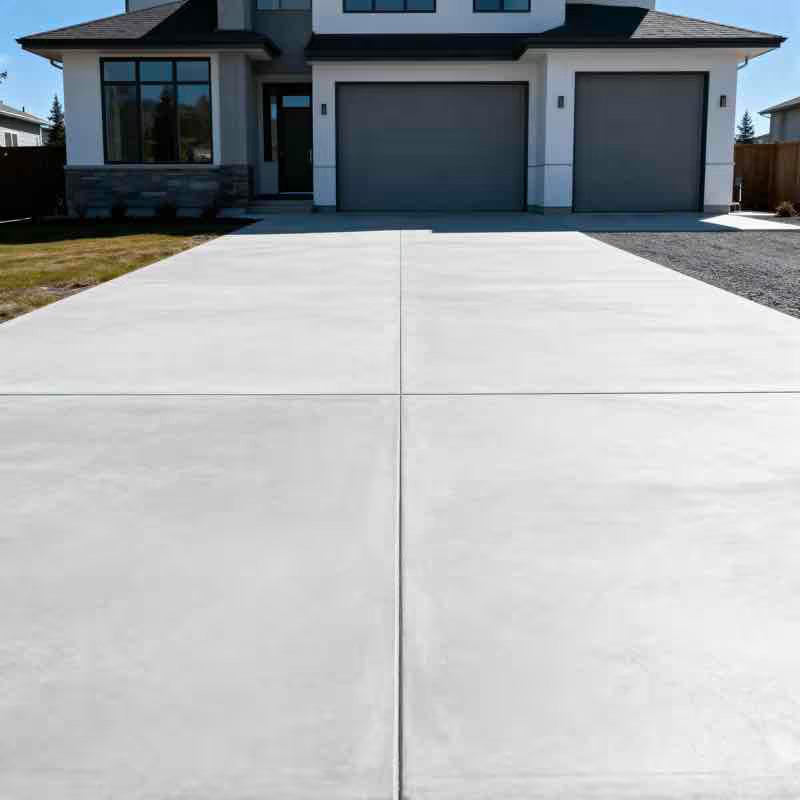
Can a Cracked Driveway Be Resurfaced? Here's What to Know in Spokane Valley
Driveway resurfacing fixes surface problems like hairline cracks, scaling, spalling, and stains. It can't fix a slab that's sinking, heaving, or breaking apart from below. If the base under your concrete has failed, a new top layer only hides the problem until the next hard winter.
What Resurfacing Fixes (And What It Doesn't)
Here's the honest truth. Driveway resurfacing is a skin, not a skeleton. It bonds a thin new layer to the top of your old concrete. So it can only fix what's happening on the surface.
That covers a lot more than most people think.
We've done driveway resurfacing around Spokane Valley for 11 years. These are the problems it handles well, as long as the slab underneath is solid:
- Hairline cracks thinner than a credit card, once we clean and fill them
- Scaling and flaking from freeze-thaw cycles and de-icer salt
- Spalling, where small chips pop loose from the top
- Oil stains, rust marks, and faded gray that pressure washing won't touch
- Light pitting and a worn, dusty finish
Most of that damage comes from winter. Water soaks into the top of the slab. Then it freezes and expands. Spokane goes through that cycle over and over each season, and the surface eventually starts to give up.
But resurfacing has limits. Big ones.
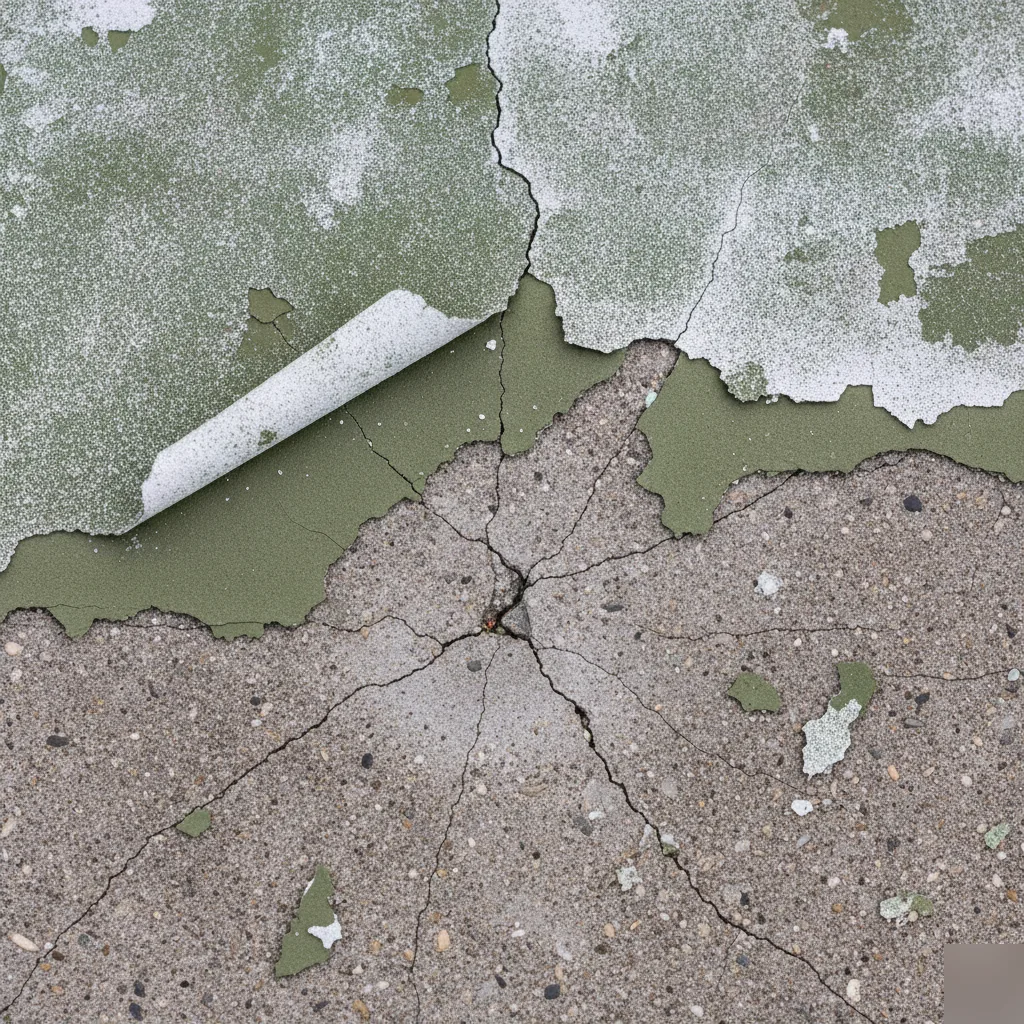
In our experience, a crack wider than a quarter inch usually means trouble below. The same goes for a crack where one side sits higher than the other. That slab has moved. The ground under it shifted, and the overlay can't stop that.
Sunken panels, heaved sections, crumbling edges - all of these point below the surface. Plenty of Spokane Valley sits on sandy, gravelly soil. It drains fast. But it can wash out under a slab where a downspout dumps water all spring. Frost heave and tree roots do their share too.
So what happens if you resurface over that anyway? The old crack shows right back up through the new layer. Usually by the first thaw.
We got a call last spring from a homeowner near the Sullivan Road corridor. Another crew had resurfaced their driveway the fall before. By March, the old crack had punched straight through. One side had dropped about half an inch. The base under it was washed out, so no top coat was ever going to hold.
We see this mistake all the time.
Want a quick way to check your own driveway? Lay a straight board across the worst crack. Does it rock? Can you slide a coin under one end? If so, the slab has shifted. You'll need Concrete Crack Repair or bigger driveway repairs before resurfacing makes sense. Sometimes a section has to come out completely.
And that's not bad news. Lots of Spokane driveways need a little crack repair first, then driveway resurfacing on top. That combo is the job we do most often. Fix the structure. Then make it look new.
Cosmetic Cracks vs. Structural Cracks: How to Tell the Difference
Not every crack is a crisis. Some are just skin deep. Others tell you the slab underneath is failing, and no amount of driveway resurfacing will hide that for long.
So how do you know which one you've got? You look at three things: width, height, and movement.
Cosmetic cracks are usually thin. Think hairline, or about the width of a credit card. Both sides of the crack sit at the same level. You can run your shoe across it and feel nothing catch. These cracks often show up as the concrete cures and shrinks, or after a few Spokane Valley winters push and pull on the surface. They're ugly, but they're not dangerous.
This is the kind of crack driveway resurfacing handles well.
Structural cracks are a different animal. They go deeper than the top layer. They often mean the base under your slab has shifted, washed out, or heaved from frost. We've seen this crack pattern a hundred times on driveways around Spokane Valley, especially where downspouts dump water right onto the edge of the slab.
Here are the warning signs that point to a structural problem:
- Cracks wider than a quarter inch
- One side of the crack sits higher than the other
- A spiderweb pattern spreading out from one spot
- Sections of the slab that have sunk or tilted
- Cracks that keep getting longer or wider each spring
If you're checking off two or more of those, the problem isn't on the surface. It's underneath.
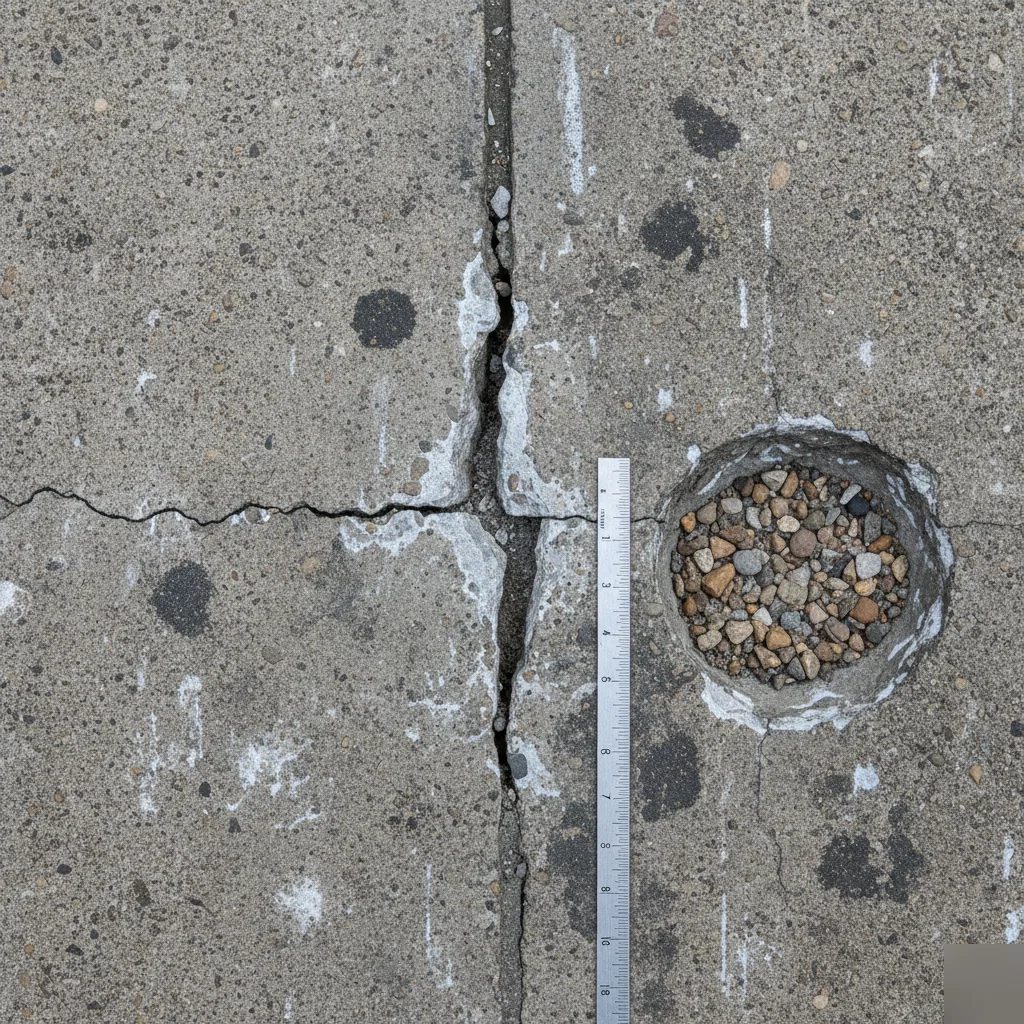
Our freeze-thaw cycle makes this worse fast. Water slips into a crack, freezes overnight, and expands. Then it thaws in the afternoon sun and does it all over again. A small crack in November can turn into a trip hazard by March, and most homeowners don't notice until a chunk breaks loose.
Want a simple way to check your own driveway this weekend? Try this:
- Sweep the driveway clean so you can see every crack.
- Slide a quarter into the widest cracks. If it drops in easily, note it.
- Lay a straightedge or level across each crack to check for height changes.
- Mark the ends of a few cracks with chalk or tape.
- Check those marks again in a month to see if anything grew.
That last step tells you a lot. A crack that stays put is usually stable. A crack that moves is active, and active cracks come back through a new overlay.
We had a homeowner off Sullivan Road call us about resurfacing last year. From the street, the driveway looked like a classic surface job. But when we laid a level across it, one slab had dropped almost half an inch near the garage. Water had been running under it for years. Resurfacing that slab would've been money down the drain. We repaired the base and the sunken section first, then resurfaced the rest so it all matched.
And that's the honest truth about cracks. The surface lies sometimes.
Mixed cracks are common too. A driveway can have mostly cosmetic damage with one or two problem spots. In those cases, we fix the bad sections with concrete crack repair or slab work, then go over the whole thing. You don't always need to rip it all out.
Resurfacing, Patching, or Replacement: Matching the Fix to the Problem
Not every crack needs the same fix. Pick the wrong one and you'll end up paying for it twice.
We've walked a lot of Spokane Valley driveways in 11 years. The right fix almost always comes down to one question. Is the problem on the surface or underneath it?
Patching vs resurfacing. Concrete crack repair works best when you've got a few isolated cracks. Think hairline lines or one crack running off a corner. We clean the crack, fill it and seal it. It's quick. But patches don't blend in well, and you'll usually see exactly where the repair sits.
Driveway resurfacing makes more sense when the damage is spread out. Lots of small cracks. Flaking and pitting from deicer salt. A faded, worn-out surface that makes the whole house look tired. We repair the cracks first. Then we bond a new overlay across the entire slab. You get one clean, even surface instead of a patchwork quilt.
Resurfacing fixes the top, but it can't fix what's below it.
Resurfacing vs replacement. This is where most homeowners get tripped up. An overlay needs a solid base to grip. If the slab underneath is shifting, the new surface will crack right along with it. And Spokane winters make this worse every year. Water slips under a broken slab, freezes, and pushes it up a little more each cycle.
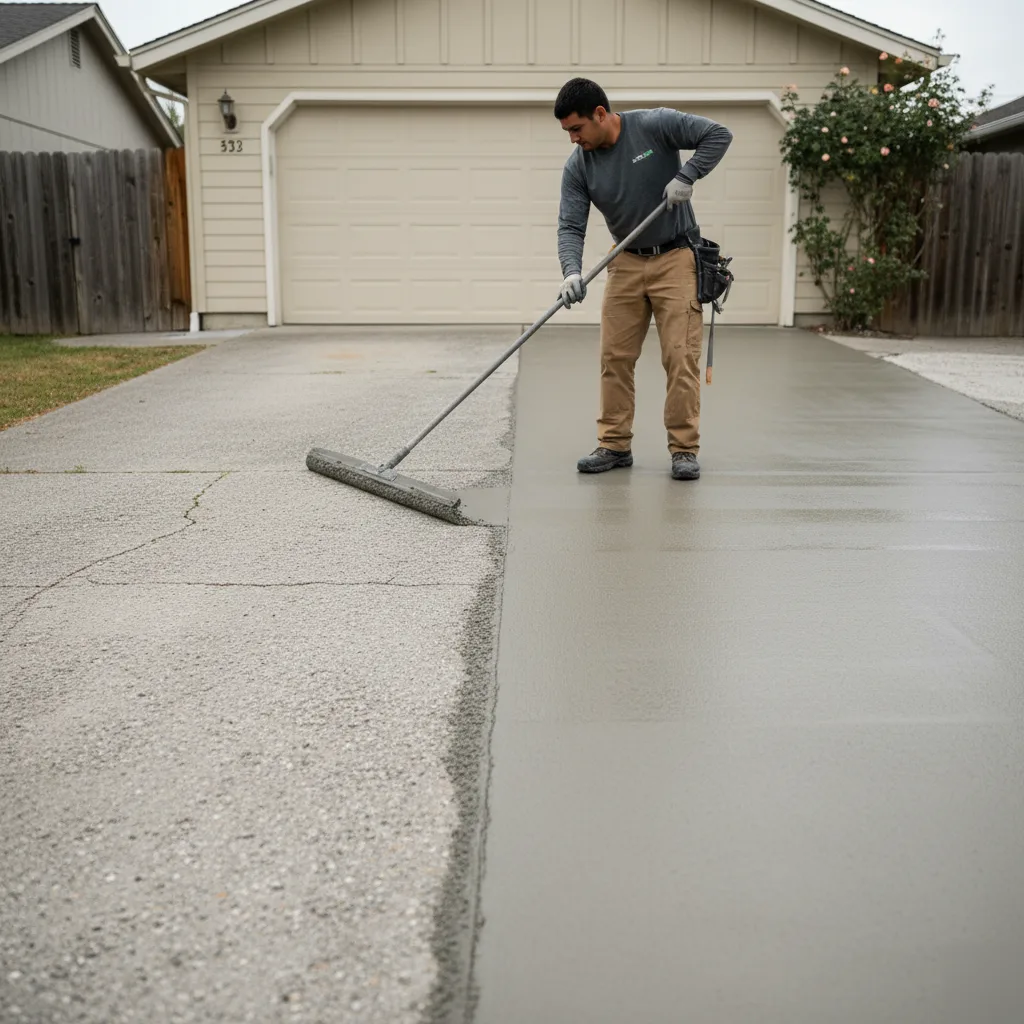
So how do you know the base is the real problem? Walk your driveway and look for these signs before you book anything.
- Sections that sit higher or lower than the slab next to them
- Cracks wider than a quarter inch
- Cracks that seem to open up a little more every spring
- Spots that rock or sound hollow when you step on them
- Big chunks that have broken loose
Spot one or two of these? Get a pro to look at it before you spend money on resurfacing. A heaved or sinking panel usually needs to come out and be repoured.
Here's one we see all the time. A homeowner near the Sullivan Road corridor called us about a spiderweb of cracks across her driveway. She figured the whole thing was shot. It wasn't. The slab was flat and solid, and the damage was all on top. We did crack repair and a full driveway resurfacing over a couple of days. Her neighbor had the opposite problem. One panel by his garage had dropped almost two inches. No overlay would've held there.
Sometimes the answer is a mix. We'll replace one sunken panel and resurface the rest so the whole driveway matches. That beats tearing out a full slab when most of it is still good.
And that's the whole idea. The surface shows you what's wrong. The base tells you what it needs.
Frequently Asked Questions About Resurfacing Cracked Driveways
Should I fill driveway cracks before sealing?
Yes, you should always fill cracks before sealing a driveway. Sealing over an open crack traps water underneath, and freeze-thaw cycles common in Spokane Valley will push that crack wider. Clean the crack first, fill it with the right material, then seal once it's cured. If the crack is wider than a quarter inch or one side sits higher than the other, skip sealing for now and have the slab checked, since that points to a structural issue resurfacing or sealing won't fix.
Can I fill driveway cracks with polymeric sand?
Polymeric sand works for narrow joints between pavers, but it's not the right fix for concrete driveway cracks. Concrete cracks need a flexible crack filler or epoxy made for slabs, since sand won't bond or move with temperature changes the way concrete needs. Using the wrong filler often means the repair fails by the next freeze-thaw season. If you're unsure which product fits your crack, that's a good sign to get a professional look before resurfacing.
How do I know if my driveway needs professional repair instead of a DIY fix?
You need a professional if the crack is wider than a quarter inch, one side is higher than the other, or the crack keeps growing each year. Lay a straight board across the crack and see if it rocks, or slide a coin under one end. Movement means the base has shifted, and that's beyond a weekend fix. Our page on Can a Cracked Driveway Be Resurfaced? Here's What to Know walks through exactly how to spot these warning signs before you call anyone.
What's the biggest mistake homeowners make with cracked driveways?
The biggest mistake is resurfacing over a crack that's a structural problem. A thin top layer can't fix a sinking or washed-out base, so the old crack usually reappears by the first thaw. We've seen this happen to homeowners near the Sullivan Road corridor who paid for resurfacing only to watch the crack punch right back through months later. Always check for movement first, then fix the base if needed before adding any new surface layer.
How does Spokane Valley's weather affect driveway cracking?
Spokane Valley's freeze-thaw cycle is the main reason driveways crack here. Water seeps into tiny cracks, freezes overnight, and expands, then thaws again the next afternoon. This repeats all winter and slowly widens even small cracks into bigger problems. Sandy, gravelly soil in parts of Spokane Valley also drains fast, which can wash out the base under a slab near downspouts. Knowing this cycle helps you catch cracks early, before they turn into a full driveway repair.
Can a driveway have both cosmetic and structural cracks at the same time?
Yes, this is common and doesn't mean you need a full replacement. A driveway can have mostly hairline, cosmetic cracks along with one or two spots where the slab has shifted or sunk. In these cases, you fix the problem sections with crack repair or base work first, then resurface the whole driveway so it all matches. This mixed approach saves you from tearing out concrete that's still structurally sound.