Best Time of Year to Resurface a Concrete Driveway for Lasting Results in Spokane Valley
Late Spring and Early Fall Are the Sweet Spot for Spokane Valley Driveways
If you're figuring out the best time of year to resurface a concrete driveway for lasting results, the answer here in Spokane Valley comes down to two windows. Late spring and early fall. That's it. Those are your golden periods.
Here's why this matters so much.
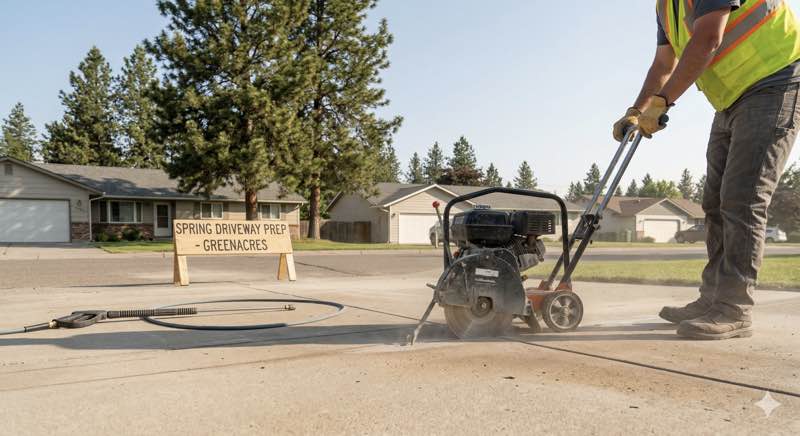
Concrete resurfacing products need specific conditions to cure properly. Too hot, and the surface dries before the material bonds. Too cold, and the chemical reaction that makes concrete hard simply stalls out. You end up with a weak, flaky surface that peels within months. We've seen driveways that were resurfaced in July heat start chipping before the first snowfall. And we've seen late-November projects that never fully hardened because temperatures dropped too fast overnight.
That's why professional driveway resurfacing services are scheduled around the conditions, not just the calendar. The sweet spot sits in a temperature range of roughly 50°F to 75°F. According to the American Concrete Institute, concrete needs to stay above 50°F for at least 48 hours after placement to develop proper strength. In Spokane Valley, that range lines up almost perfectly with mid-May through mid-June and again from mid-September through mid-October.
So what makes these two windows so reliable here? Let's break it down.
Late Spring: Mid-May Through Mid-June
By mid-May, Spokane Valley has usually shaken off the last frost risk. Daytime highs settle into the mid-60s to low 70s. Nighttime lows hover in the mid-40s to low 50s. That's close to ideal.
But here's the detail most people miss. It's not just about the air temperature. The concrete slab itself needs to be warm enough. After a long winter, your driveway surface can stay surprisingly cold well into April, even on sunny days. The ground underneath holds that chill. By mid-May, the slab has had weeks of warming sun, and its surface temperature catches up to the air.
We typically tell homeowners near the Greenacres area and along Sprague Avenue to wait until they've had at least a solid week of nights above 45°F. That's when the slab is ready to accept a resurfacing overlay without bonding issues.
Late spring also gives you something else working in your favor. Lower humidity. Spokane Valley's spring air tends to be dry compared to places west of the Cascades. Moderate humidity helps resurfacing compounds cure at an even, predictable rate. Too much moisture in the air slows drying and can cause discoloration or a chalky finish.
One thing to watch for in late spring is surprise rain. May can still bring scattered showers. Rain hitting fresh resurfacing material is a disaster. It pits the surface, washes out the finish, and weakens the bond. Always check the forecast for a dry window of at least 24 to 48 hours before starting any resurfacing work.
Most people don't realize how much a single rain event can ruin a freshly resurfaced driveway. We had a homeowner near Sullivan Road who scheduled their project on a clear Monday. Everything looked perfect. By Tuesday afternoon, an unexpected storm rolled through. The crew hadn't applied a curing compound yet. The result was a blotchy, rough surface that had to be redone entirely.
That's a preventable problem. Check the extended forecast. Build in a buffer day. And if the weather looks uncertain, push the project back a few days rather than gambling.
Early Fall: Mid-September Through Mid-October
Fall is actually our favorite window for driveway resurfacing in Spokane Valley. And there are several reasons it edges out spring for many projects.
First, the ground is warm. Your driveway slab has been soaking up heat all summer long. Even as air temperatures start to cool in September, the concrete itself retains that warmth. This gives resurfacing materials an excellent base to bond with. The thermal mass of the slab works in your favor, keeping surface temperatures stable even as nights get cooler.
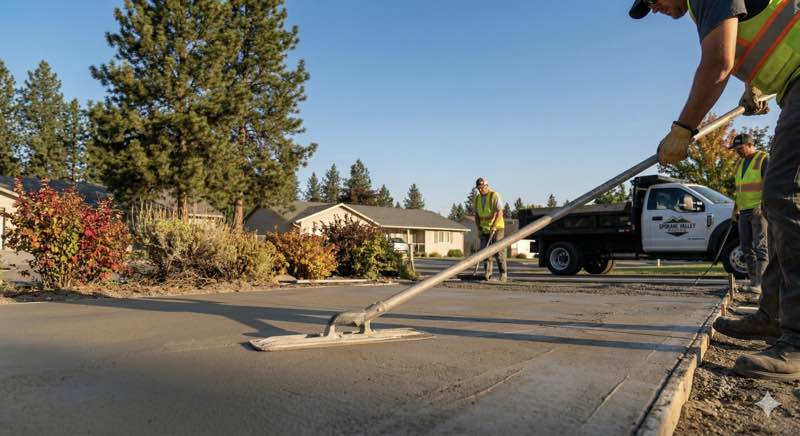
Second, fall weather in Spokane Valley tends to be more predictable than spring. September usually brings clear, dry days with highs in the upper 60s to low 70s. That's textbook resurfacing weather. You're less likely to get surprised by a random storm compared to May.
Third, there's a practical advantage. Your driveway has the entire curing period ahead of it before heavy use. A properly resurfaced driveway needs time to reach full strength. The Portland Cement Association notes that concrete reaches about 70% of its design strength within seven days and continues gaining strength for weeks after. If you resurface in early October, your driveway has several weeks of mild weather to cure before the hard freezes of December arrive.
That matters enormously. A fully cured surface handles freeze-thaw cycles far better than one that was still gaining strength when the first hard freeze hit.
But don't push it too late. We see homeowners every year who wait until late October or early November, thinking they still have time. Spokane Valley's first freeze often arrives in mid to late October. Once nighttime temperatures start dipping below 35°F regularly, you're taking a real risk. The resurfacing material can freeze before it cures, and frozen concrete is permanently weakened concrete.
Our rule of thumb? Have the project completed and cured by October 15th at the latest. That gives you a comfortable margin before cold weather sets in.
What About Summer? It's Trickier Than You Think
A lot of homeowners assume summer is the obvious choice. Warm weather, no rain, long days. Sounds perfect, right?
Not exactly.
July and August in Spokane Valley regularly push into the 90s. Sometimes over 100°F. When your driveway surface is baking in direct sun, it can reach 130°F or higher. That's way too hot for resurfacing.
At those temperatures, the water in the resurfacing mix evaporates before the material has time to bond with the existing slab. The top layer dries out and shrinks. You get surface cracking, sometimes within days. The overlay might look fine at first, but those tiny cracks let water in. Come winter, that water freezes, expands, and pops the resurfacing right off.
Professional crews can work around summer heat by starting very early in the morning, before the slab heats up. Some will mist the surface or use retarding agents to slow the cure. But even with those techniques, a 95°F day is fighting against you the whole time.
If summer is your only option, aim for a cooler stretch. Every year has a week or two in July or August where temps drop into the 70s. That's your window. But, if you can wait until September, you'll get a better result with less hassle.
Why Winter Is Off the Table
This one's straightforward. Spokane Valley winters mean freezing temperatures, snow, ice, and road salt. None of those are compatible with concrete resurfacing.
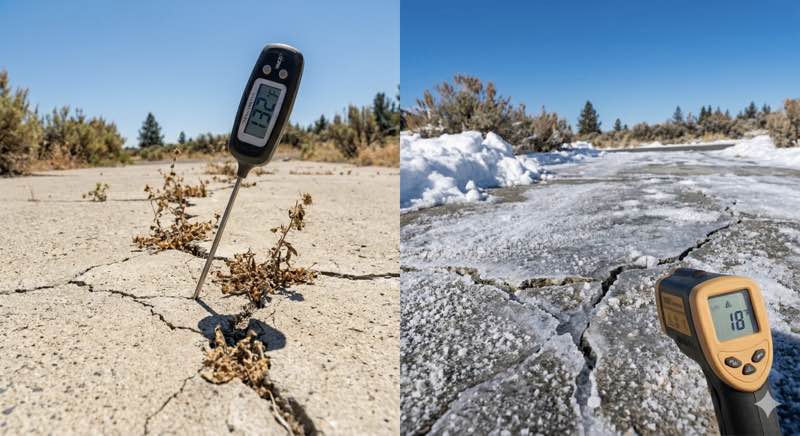
Resurfacing material won't cure below 50°F. Period. And even if you catch a rare warm day in January, the nights will drop below freezing. That freeze-thaw cycle during the first 48 hours is the single most damaging thing that can happen to fresh concrete work.
We've had calls from homeowners who tried a DIY resurfacing patch in December because they had a crack they were worried about. Every single time, the patch failed before spring. It's tempting to "just get it done," but winter work on concrete is throwing money away.
If your driveway has damage that needs attention before winter, a temporary repair or sealant can protect it until the right season arrives. That's a much smarter approach than rushing a full resurfacing job in bad conditions.
How to Pick Your Exact Week
Knowing the right season is step one. Picking the right week within that season is step two. Here's what to look for.
Check the 10-day forecast for a stretch of at least three consecutive dry days. You need one day for surface prep, one day for application, and at least one day of dry curing time. More is better.
Look at overnight lows. You want them above 50°F for at least 48 hours after the resurfacing is applied. In Spokane Valley, that's easy to find in late May, June, and September. It gets tighter in October.
Consider your driveway's sun exposure. A north-facing driveway near the Dishman Hills stays cooler and takes longer to warm up in spring. A south-facing driveway in the Ponderosa neighborhood might be ready a week or two earlier. Sun exposure also affects how fast the surface dries during application, so your crew needs to account for it.
Wind matters too. A gusty day speeds up surface evaporation, which can cause the same problems as extreme heat. Calm days are better for resurfacing work.
And here's a tip from years of doing this work. Schedule your project for a Tuesday or Wednesday if possible. Why? Because you'll have the weekend forecast data to confirm conditions, and if weather shifts, you still have days to reschedule within the same week without losing your spot on the crew's calendar.
The Bottom Line on Timing
Timing isn't just a nice-to-have for driveway resurfacing. It's the single biggest factor you can control that affects how long the results last. The materials, the prep work, the crew's skill level all matter. But put perfect work on a slab in the wrong conditions, and it'll fail.
Spokane Valley's climate gives you two clear windows. Late spring and early fall. Plan for one of those, watch the weather carefully, and you'll set your driveway up for years of solid performance.
If you're thinking about concrete driveway resurfacing and want to figure out the right timing for your specific situation, we're happy to walk you through it. Getting the schedule right is half the battle, and it costs nothing to plan ahead.
Frequently Asked Questions About Driveway Resurfacing
What is the best time of year to resurface a concrete driveway in Spokane Valley?
Late spring and early fall give you the best results for driveway resurfacing in Spokane Valley. Aim for mid-May through mid-June or mid-September through mid-October. During these windows, air and slab temperatures stay in the 50°F to 75°F range that resurfacing materials need to bond and cure correctly. Summer heat and winter cold both cause problems.
Why does fall work so well for driveway resurfacing in Spokane Valley?
Fall is actually the favorite window for many resurfacing projects here. Your concrete slab has been soaking up heat all summer, so it holds warmth even as the air cools in September. That warm slab gives resurfacing materials a great surface to bond with. September also brings clear, dry days with highs in the upper 60s to low 70s. That's close to perfect. Just make sure the project is finished and cured by October 15th before hard freezes arrive.
Is it a mistake to wait until late October to resurface your driveway?
Yes, waiting until late October is a common mistake in Spokane Valley. Many homeowners think they still have time, but the first hard freeze often arrives in mid to late October. Once nighttime temperatures drop below 35°F regularly, resurfacing material can freeze before it cures. Frozen concrete during the curing process is permanently weakened. A good rule of thumb is to have the project fully completed and cured by October 15th to stay safely ahead of the cold.
Can you resurface a concrete driveway in the summer in Spokane Valley?
Summer is trickier than most people think. July and August in Spokane Valley regularly hit the 90s, and your driveway surface can reach 130°F or higher in direct sun. At those temperatures, the water in the resurfacing mix evaporates too fast. The material can't bond properly. You end up with surface cracking within days. If summer is your only option, work very early in the morning and avoid direct sun exposure on the slab.
How does Spokane Valley's climate affect when you can resurface a driveway?
Spokane Valley's climate creates two clear windows and two problem seasons. Winters bring hard freezes that stop the curing process cold. Summers push temperatures well past what resurfacing materials can handle. Spring can surprise you with late rain or frost. Fall can end quickly with early freezes in mid to late October. Knowing the local pattern is the difference between a driveway that lasts years and one that starts peeling before the first snowfall.
When should you call a professional instead of resurfacing your driveway yourself?
Call a professional when your driveway has deep cracks, major spalling, or sections that have shifted or heaved. Resurfacing only works on structurally sound concrete. If the base is damaged, a DIY overlay will fail fast no matter what time of year you apply it. Professionals can also monitor slab temperature, not just air temperature, which is something most homeowners miss. Near areas like Greenacres or along Sprague Avenue, ground conditions can vary, and getting that assessment right matters.
Ready to Experience the Concrete Revival Difference?
Complete Service Area Coverage
- Spokane and Spokane Valley
- Coeur d'Alene metro area
- Deer Park and Newport
- Liberty Lake and Otis Orchards
- Cheney and Medical Lake
- Post Falls and Rathdrum