

10 Signs Your Driveway Needs to Be Replaced in Spokane Valley
Some driveway problems can be fixed. But some damage is a clear sign the concrete slab has served its life — and recognizing that saves you from throwing money at repairs that won't hold.
After 11 years of concrete driveway work in Spokane Valley, we've learned to tell the difference between damage that can be repaired and damage that means it's time for a new driveway altogether.
Surface-Level Failures
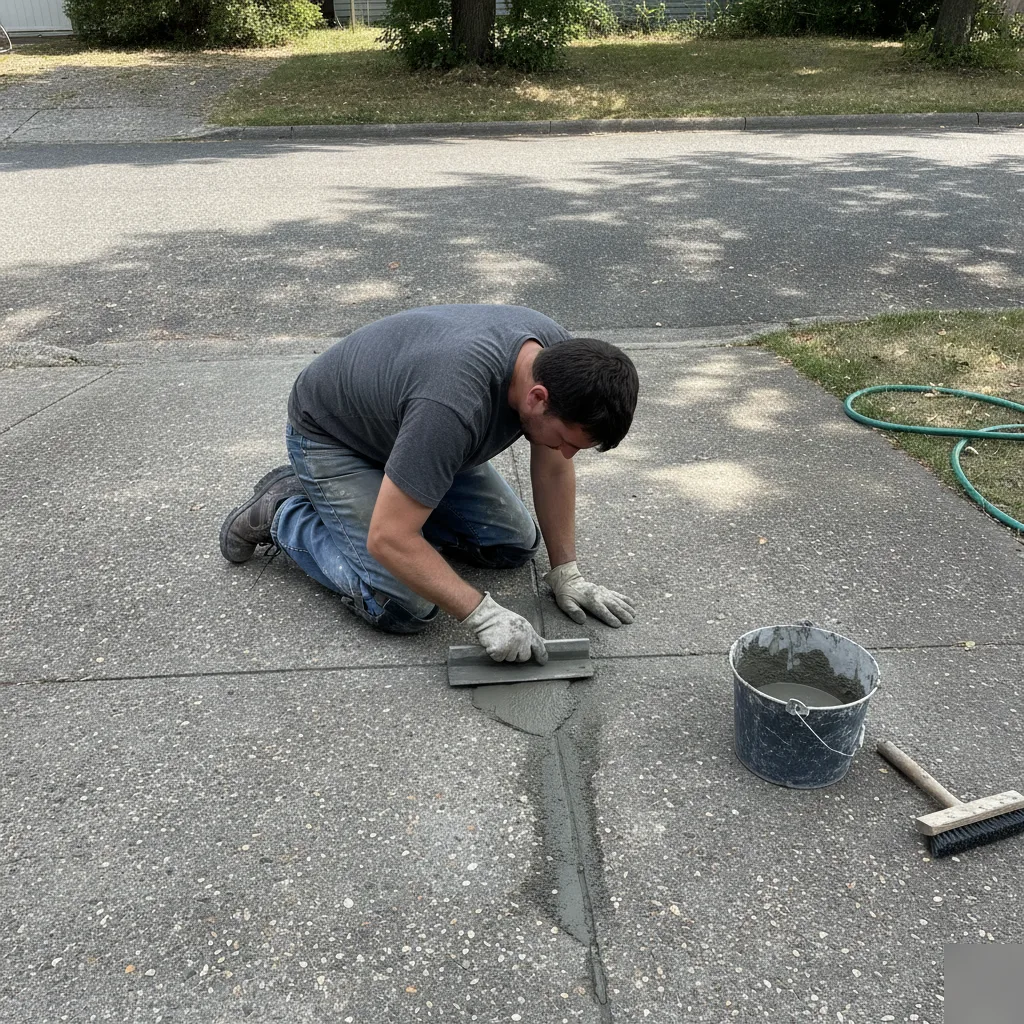
Spalling is one of the most common problems we see. This is when pieces of concrete on the top surface of the slab start flaking off after repeated freeze-thaw cycles, exposing the aggregate underneath. A small section of spalling around the edges can sometimes be patched. But when the entire driveway is peeling, the freeze-thaw cycles have won. Water got in, froze over winter, expanded, and caused damage throughout. No surface overlay or patching will fix a slab that has delaminated all the way through.
Pitting is another sign to watch for — lots of small holes in the surface that look like the concrete was poked with a pen. This usually happens when the original mix wasn't right or the surface was finished while water was still sitting on top. Once pitting appears across a slab, the surface integrity is gone for good.
Structural Red Flags
The type of cracking you're seeing matters a lot:
- Hairline cracks under a quarter inch are usually cosmetic and can be repaired.
- Cracks wider than half an inch that run across a full slab section signal subgrade failure underneath.
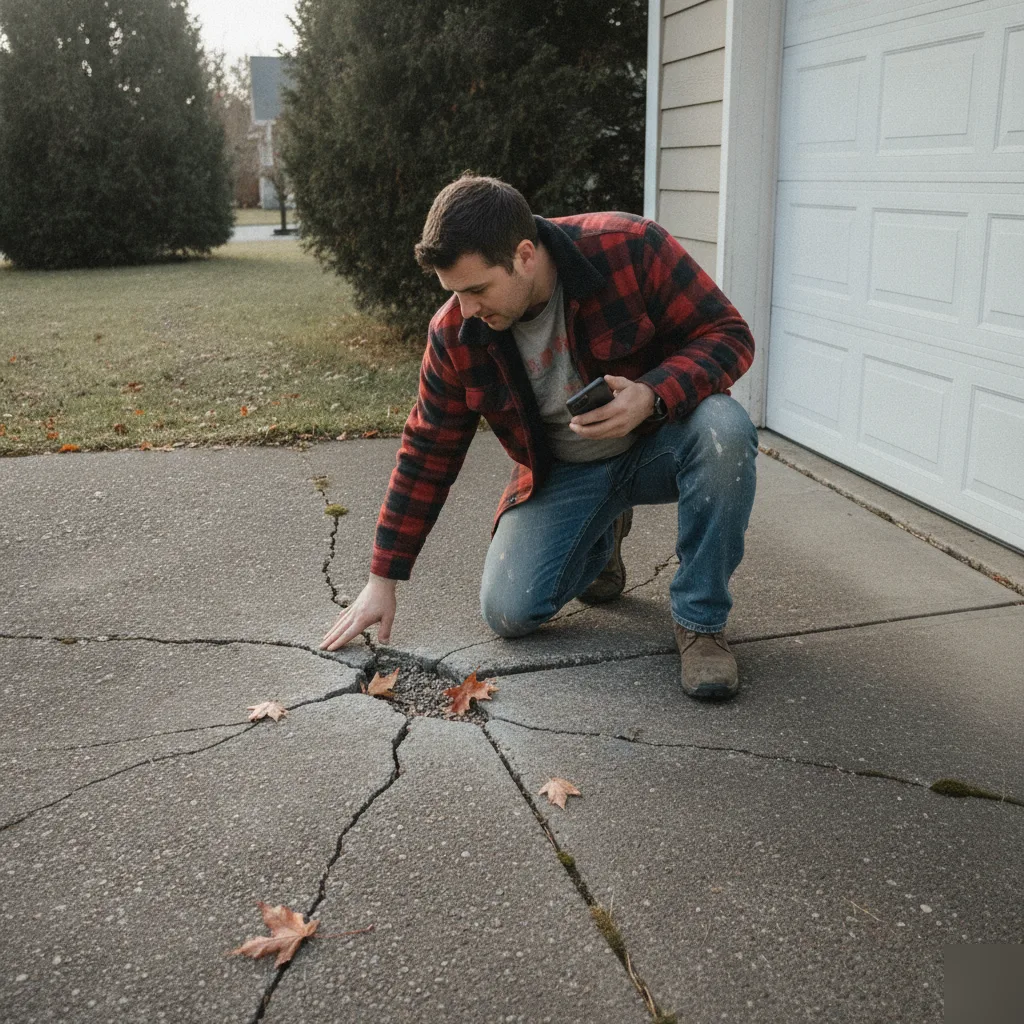
- Cracks with vertical displacement — where one side has dropped lower than the other — mean the ground below has shifted. You can't level the slab permanently without fixing the base first.
- Spider-web or map cracking across a large area means the concrete's integrity is compromised beyond repair.
People often look at these cracks and assume they're just surface damage. But most of them are caused by the soil underneath — not the concrete slab itself. If the soil has eroded or wasn't compacted enough, patching the cracks won't solve the real problem. It's a cosmetic fix on a structural issue, like putting a Band-Aid on a broken bone.
Drainage and Settlement Issues
Walk around your driveway after a rainstorm. If you see water pooling and sitting for a long time after the rain stops, sections of the concrete have settled and are blocking proper drainage. We see this constantly in Spokane Valley neighborhoods and along Sullivan Road.
A settled driveway creates a domino effect. That trapped water sits in low spots and can freeze overnight when temperatures drop below 32 degrees — which in Spokane Valley happens often.
How Age Factors In
A 25-year-old slab that has been through hundreds of Spokane Valley freeze-thaw cycles has simply lived its life. Concrete doesn't last forever. It breaks down from the inside out over decades — and at some point, no amount of patching changes that fact.
All Three Concrete Driveway Services in Spokane Valley
The National Weather Service reports more than a hundred freeze-thaw cycles every year in the Spokane area. Every one of those cycles widens existing cracks and stresses the slab a little more.
Here's a situation we face often. A homeowner calls about one sunken area near the garage. When we arrive, the entire driveway has settled at different rates, leaving an uneven surface with pooling water in three separate spots. At that point, resurfacing can't fix it. The base is failing.
If you're noticing two or more warning signs on your driveway, a professional opinion is worth getting now. Repair almost always wins on value when the base is solid. But when the base has broken down, every dollar spent on surface fixes is wasted money.
How Freeze-Thaw Cycles Turn Minor Cracks Into Major Problems
A small hairline crack doesn't seem urgent. Maybe a quarter inch across. Easy to ignore. But in Spokane Valley, that little crack is a ticking clock.
Here's what happens. During rain or snowmelt, water gets into the crack. When temperatures drop below freezing overnight, that water expands as it turns to ice and forces the concrete apart from the inside. The next day, the crack is slightly larger and slightly deeper — with even more room for water. That's the freeze-thaw cycle, and it's the main cause of concrete driveway failure in our region.
Concrete can withstand hundreds of freeze-thaw cycles over its lifespan, but each one does small, cumulative damage to the internal structure. In Spokane Valley, we don't get a few cycles per winter — in some years we see temperatures cross 32 degrees more than 80 times between November and March alone.
Why Small Cracks Grow So Fast Here
Most people don't realize how quickly this snowballs. A crack that was barely visible in September can be a half-inch gap by February. Here's the annual pattern:
- A small surface crack forms from settlement or curing stress
- Rain and snowmelt push water down into the crack
- The water freezes overnight and expands — about 9% — forcing the gap wider
- When it thaws during the day, even more water flows into the larger space
- That process repeats day after day through the winter
- By spring, you're seeing spalling, pitting, or chunks breaking off the surface
That last stage is when the question changes from "should I repair my cracked driveway?" to "do I need a replacement?" Once water reaches the sub-base, replacement is the only real answer.
Why Spokane Valley Is Especially Hard on Concrete
It's not just the cold — it's the dramatic temperature swings. In the middle of January, you might see an afternoon high of 38 degrees and a midnight low of 18. That rapid freeze-and-thaw is much harder on concrete than a slow, gradual freeze, because a slow freeze gives water time to drain toward the surface before it locks in place.
Road salt and de-icing chemicals from city streets also find their way onto driveways. These chemicals break down concrete that's already weakened from freeze-thaw stress, speeding up the damage even more.
The pattern we've seen repeat over 11 years: a homeowner cracks their driveway in fall, doesn't seal it, and comes back in spring to find the patch has popped off and the crack has tripled in size. If you're not addressing water penetration, you're not solving the problem — no matter how many times you patch it.
To Repair or Replace? A Simple Decision Matrix
This is the question we get more than any other. People across Spokane Valley — from Sullivan Road to the older neighborhood blocks near downtown — want to know if they should repair or replace. The answer usually isn't complicated once you know what to look for.
After 11 years of concrete driveway work here, we've narrowed the decision down to three things. Not five or ten — just three factors that tell you what you actually need to know.
The Three-Factor Decision
1. Depth of damage. Most cracks we see in Spokane Valley are under a quarter inch deep and can be handled with concrete crack repair. The ones that can't be saved are those that go all the way through the slab or where you can see the aggregate base from below. Those are structural failures — patching the surface just wastes your money because the damage will come back.
2. How much of the driveway is affected. If less than 25% of the driveway is damaged, repair usually makes good sense. Once you get to 30 to 40% damage, you're spending real money on a driveway that still won't be in good shape. When the majority of the slab has extensive deterioration, the base has likely failed and structural repair is no longer possible.
3. Age of the slab. A 25-year-old slab that's been through hundreds of Spokane Valley freeze-thaw cycles has lived its useful life. Concrete breaks down from the inside out over decades — and age combined with visible damage is a strong signal that repairs won't hold long-term.
When Repairs Are the Right Call
When your driveway has isolated problems — individual cracks, minor surface spalling, or slight settlement in one area — repair and restoration works well. These are straightforward problems with straightforward solutions. Fix it, seal it, move on.
When You Need Full Replacement
If you have four or more of the warning signs listed on this page, replacement is likely your path. Look for combinations like these:
- Multiple wide cracks running in different directions
- Areas heaving or sinking more than an inch
- Crumbling edges that get worse every winter
- Standing water pooling against the concrete or your home's foundation
If you've been patching the same driveway for several seasons and new problems keep showing up, you're probably headed toward full replacement anyway — and every patch job along the way was lost money.
Here's what to do right now. Walk your driveway. Count the problems. Look at the cracks closely and check whether the slab is level or has shifted. Apply the three factors above. If you're still not sure, call us. An experienced concrete contractor can spot problems below the surface that aren't visible from the top. We'll give you a free estimate and a straight answer — whether that's a repair or a replacement, we'll tell you honestly which one makes sense.
And don't wait until just before winter to act. Spokane Valley's freeze-thaw cycles can turn a repairable fall problem into a full replacement by spring. A driveway issue that could have been fixed in September might need to be replaced in April. If you see the signs, it pays to move sooner rather than later.
Frequently Asked Questions
How do I know if my driveway needs repair or full replacement?
You can usually tell by how deep the damage goes. Small hairline cracks or edge chipping often mean a repair will work fine. But wide cracks, sunken sections, or crumbling across the whole slab point to a failed base underneath. When two or more of these signs show up together, it's smart to get a professional opinion.
Is it a myth that patching a crack always solves the problem?
Yes, that's a common misconception. Patching fixes the surface but doesn't fix what's happening underneath. Many cracks form because the soil below has shifted or eroded, not because the concrete itself is weak. Patching over that kind of damage is like putting a bandage on a broken bone. It looks better for a while, but the real issue keeps growing until the slab fails again.
Can drainage problems really mean my whole driveway needs replacing?
Yes — standing water after a storm is often a sign of settlement, not just a surface flaw. When soil beneath the slab wasn't compacted well during the original pour, sections sink and trap water. That trapped water freezes overnight and speeds up the damage. If you see pooling in more than one spot, it usually means the base has failed and resurfacing won't solve it.
When should I call a professional instead of watching and waiting?
Call a professional once you notice standing water, a crack wider than half an inch, or any part of the slab that has sunk. Waiting rarely helps in Spokane Valley. Freeze-thaw cycles keep working on that damage all winter, turning small problems into big ones fast. A trained eye can tell in minutes whether the soil below is the real problem — saving you from paying for a fix that won't last.
Why does Spokane Valley weather cause so much driveway damage?
Spokane Valley sees more than a hundred freeze-thaw cycles every year. Each cycle pushes water into tiny cracks, freezes it, and forces the concrete apart a little more. Over years, this cumulative stress breaks down slabs from the inside out. That's why driveways here often fail sooner than in milder climates, even when they look fine on the surface.
How long should a concrete driveway last before I expect problems?
Most concrete driveways start showing serious wear after about 20 to 25 years — especially in areas with heavy freeze-thaw activity like Spokane Valley. Concrete breaks down slowly from the inside, so a slab that looks okay one year can crack or sink the next. Age alone isn't a reason to replace it, but combined with cracking or sinking, it's a strong signal that repair time is over.
Ready to Experience the Concrete Revival Difference?
Complete Service Area Coverage
- Spokane and Spokane Valley
- Coeur d'Alene metro area
- Deer Park and Newport
- Liberty Lake and Otis Orchards
- Cheney and Medical Lake
- Post Falls and Rathdrum